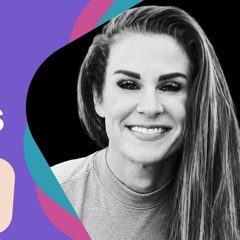
Nancy Anderson
Founder of Natal, a pre and postnatal fitness app
Where to hear and read about Nancy Anderson1 episode or test

Nancy Anderson is the founder of Natal, a pre and postnatal fitness app she built from ten years of in-person training. The lesson most worth taking from her is that trust built before the paywall, through real experts, fast replies and soft selling, can lift conversion even though no dashboard measures it.
You can't measure everything in your dashboard, not everything that's important in business will be in your dashboard.
How Removing the Free Trial Grew Monthly Subs 2000% – Nancy Anderson, Natal
Nancy Anderson: the story and the lessons
1Nancy Anderson's path from gym trainer to founder of Natal
Anderson started training at 18 with no clear way to earn a living. A quick search told her trainers average about $18,000 a year, and she decided to figure it out anyway. She worked mostly with women, one-on-one and in large group classes at studios.
For over ten years she trained in person only, first in Baltimore, then in California. What she cared about most was what motivated people, built their confidence and kept them coming back.
She built real credentials that set her apart from typical fitness influencers. She holds a master's degree in kinesiology and has 20 years in the industry. She trained hundreds of people each week for ten years, with different bodies and goals.
She argues that a founder whose only story is their own body can't adapt programs to varied motivation and plateaus.
She chose pre and postnatal fitness after seeing a gap in her early 20s. Pregnant and postpartum women had almost no science-based fitness support. The available programs were outdated and full of fear and misinformation.
She saw this long before she had children herself. Her goal was to leave the industry "a little bit better than I found it".
She went online while keeping her full in-person client book. She began with digital programs and ran both businesses side by side. She narrowed her clients to mostly moms before launching online.
Her first 30-day challenge turned before and after photos into marketing. She started with about 5,000 followers, mostly high school and college friends and gym community members. 100 people signed up, about 50 finished, and she coached them daily in Facebook groups. Participants sent photos on day one and day 30, and the winner got about $100.
She repeated it in February with 125 signups, then again in March. She coached everyone herself and ran no ads for years, relying on clients telling their friends.
2How Nancy Anderson builds trust before the paywall
Anderson credits trust, not the offer, for her checkout results. She rules out the offer, the checkout page, the button copy and the countdown timer. Users at the paywall aren't asking whether it's legit, because they already know the brand.
The connection forms through content, socials, DMs and emails. She says she has no growth hacks: "The hack is build trust." She calls this her founder growth approach.
Every DM, comment and email gets a real expert's reply within 24 hours. This has held for eight years. Replies come from coaches such as physical therapists, pelvic floor therapists and trainers, with no AI and no canned responses.
SOPs and workflows keep it efficient and affordable. Her clients are women "ignored by their doctors", so a real expert is the least she can offer, and she counts the higher cost as the value of the bond.
She sells softly and trains her team never to hard sell. Content ends with a gentle ask such as "click here to learn more" or "DM me to chat". In DMs, the link goes out only when someone asks a direct question.
She wants people to feel helped, never sold to. Words matter in a sensitive niche like pre and postpartum health, and she tried many content hires before it worked.
She mixes relatable personal content with product posts. Posting only about the product performs poorly, so she shares funny motherhood moments and clips from home cameras. An audit found her organic content outperforms competitors by 90%.
She wants followers to feel safe with her, like a friend. Her engagement lives in stories and DMs, where story views reach about 50,000, almost all from followers.
She brought Nordstrom-level service into her team's handling of followers. She has an undergrad degree in fashion merchandising and managed at Nordstrom, where she learned to say "my pleasure" and take returns with grace. Her team will find a link for a necklace a follower asks about.
Those links are never affiliate links. She calls ignored DMs "leaving money on the table".
She values audience quality over follower count. Anderson made about $10,000 a month in sales with roughly 10,000 followers, running Shopify, PDFs and Facebook groups alone. A peer with 300,000 followers and a clothing brand deal sold almost nothing.
She treated online clients like in-person ones: she was invited to clients' weddings and went to their homes for dinner. She had been hard on herself about reaching a follower count before she could succeed.
3How Natal removed the free trial and what its conversion numbers look like
Anderson dropped the free trial on the monthly plan and made it permanent. She took the idea from a Sub Club episode with Zumba. Monthly subs rose 2,000%, quarterly 46% and annual 21%.
High-intent users who already trust the brand just buy, so a trial only delays them. The 2,000% has no stated baseline, so it may come from a small starting number.
Natal converts at well above industry averages. Trial conversion is 68% against a 38% industry average. Download to trial is 17% against a 6% health and fitness average, at $25 a month, and 93% of web checkouts download the app.
These figures are self-reported. Anderson reads them as "a signal that trust has been built before the paywall".
The result surprised her, and it showed that customers differ. She doubted removing the monthly trial would work. Some users arrive ready to commit and want no trial.
She admits trust can't be A/B tested, which makes it hard to defend. Her intuitive, empathic leadership clashes with teams that ask why they would do something they can't measure. Revenue grew 20% in the first quarter, which she ties to trust compounding like a snowball.
She wants to do both well, and says stats on trust would make every meeting easier. The causal link is her inference, not something she can test.
4How Nancy Anderson turns user conversations into product
She found her hero program by reading DMs and comments. Repeated questions about postpartum core rehab in comments, DMs and Facebook groups showed her a gap, so she worked out how to scale it. App Rehab launched about eight years ago, has had over a million users and still drives the most traffic.
"That never would have showed up in my Shopify reports." Dashboards give numbers, but talking to users tells her why.
She lets customers set the roadmap to avoid building unused features. Close contact with users avoids spending $50,000 on a feature nobody uses. A posture assessment done by a real person, not AI, ends with a first program to start.
About 68 to 70% of women who take it complete a first workout. The assessment came from patterns in user conversations, not a report.
Onboarding by life stage hides content that doesn't apply. One stage question (trying to conceive, pregnant, postpartum or had a baby) cuts about 50 programs to about 15. Onboarding runs about 10 to 15 questions, with more on symptoms, goals and time available.
Overwhelmed women don't start. She is still tuning the balance, since too many questions frustrate people and too few leave them lost.
She gets new users into community and coach contact early. A real person DMs each new user to offer help. Among users who join the community, 31% return on day two and 14% on day three.
She credits feeling heard and not alone, not the feature. Expert coaches answer pelvic floor questions all day for free, which would cost a couple hundred dollars in a physical therapy session.
5Nancy Anderson's mistakes and what she changed
Launching four white-label apps created more problems than it solved. Pregnancy, postpartum, general fitness and a personal brand app were hard to maintain and hard to cross-sell. Users faced decision fatigue about which app to open.
Her lesson: "I should have just done one from the beginning." She merged everything into Natal, which let her cut the price, and she turned down two more scoped apps, telling her husband Max "we have to tell him no".
She regrets building the brand under her own name for so long. "Nancy Anderson Fit" says nothing to a pregnant woman, while Natal tells her in one word the app is for her. A founder name also makes it hard to share the spotlight with other coaches.
She is making a soft pivot away from her own name.
She built too many postpartum programs without routing users to the right one. Postpartum rehab alone grew to five, six or seven programs, and onboarding didn't match users to one. Users felt decision fatigue and didn't activate.
She named it the biggest fail of the year. Fixing onboarding is now a major initiative, with the goal of results for subscribers, not just subscribers.
She wishes she had invested more in ads before Apple's targeting update. Paid ads worked for a couple of years until the update hamstrung everyone.
The custom app, Natal, then became the single place to grow and scale.
6Nancy Anderson's rules on brand deals, content and free work
She turns down brand deals and affiliate links to protect trust. Agencies say she is leaving half a million to a million dollars a year on the table. She will post about a brand she loves for free if it helps followers.
She doesn't call brand deals wrong. She says they would "dilute my brand and will dilute the trust", and she wants value to build in the company, not in Nancy Anderson.
Her coaches, not outside creators, are the faces of the content. About ten physical therapists and coaches work for her. The team scopes ideas and the coaches shoot them, and clients already know them.
She doesn't want to be the face forever. She sees it as a way to do UGC without diluting it, after outside content hires struggled with the brand voice.
She never posts free workouts. She thinks free content attracts the wrong audience and devalues the experts' work. A free workout may not fix a complex problem, while custom coaching in the app can.
The posture assessment is free in the app but barely promoted, because real coaches review each one under the 24-hour reply rule and a flood would overwhelm them.
She picked the most underserved niche and bets on brand over features. As building apps gets cheaper, brand and real experience are what set an app apart. She points to Under Armour as a strong brand with a weaker product that faded.
She says she can train anyone, but demand and her expertise point to pre and postnatal.
7How Natal added HSA payments
Anderson added HSA billing after clients had long claimed costs from insurers. Natal blends fitness with corrective exercise and some physical therapy protocols, and clients kept telling her in DMs that insurance had covered it. Tens of thousands of dollars in revenue came through HSA in two weeks with no announcement.
The checkout is longer, but pre-tax money works like a 30 to 40% discount, and it opens the app to women who say they want the program but can't pay.
She offers HSA checkout on the annual plan only, with a trial. The longer checkout and the pre-tax incentive fit an annual subscription, priced around $170.
Whether HSA payers retain better is too early to know.
She sees year-end as the best moment to promote HSA. HSA dollars don't roll over, so campaigns can say "don't lose your HSA".
Coverage lines are still unclear: checkout lists postpartum categories such as diastasis recti and pelvic floor, and the lines are drawn between the app and Flex, the payments partner.

How Removing the Free Trial Grew Monthly Subs 2000% – Nancy Anderson, Natal
A founder-led, trust-first approach to growing a niche fitness app: answer every message with real experts, soft sell, and keep one focused app. It produced a 68% trial conversion rate, a 17% download to trial rate, and a 2,000% jump in monthly subscriptions after removing the free trial from the monthly plan.
Anderson started training at 18 with no clear way to earn a living. A quick search told her trainers average about $18,000 a year, and she decided to figure it out anyway. She worked mostly with women, one-on-one and in large group classes at studios.
For over ten years she trained in person only, first in Baltimore, then in California. What she cared about most was what motivated people, built their confidence and kept them coming back.
She built real credentials that set her apart from typical fitness influencers. She holds a master's degree in kinesiology and has 20 years in the industry. She trained hundreds of people each week for ten years, with different bodies and goals.
She argues that a founder whose only story is their own body can't adapt programs to varied motivation and plateaus.
She chose pre and postnatal fitness after seeing a gap in her early 20s. Pregnant and postpartum women had almost no science-based fitness support. The available programs were outdated and full of fear and misinformation.
She saw this long before she had children herself. Her goal was to leave the industry "a little bit better than I found it".
She went online while keeping her full in-person client book. She began with digital programs and ran both businesses side by side. She narrowed her clients to mostly moms before launching online.
Her first 30-day challenge turned before and after photos into marketing. She started with about 5,000 followers, mostly high school and college friends and gym community members. 100 people signed up, about 50 finished, and she coached them daily in Facebook groups. Participants sent photos on day one and day 30, and the winner got about $100.
She repeated it in February with 125 signups, then again in March. She coached everyone herself and ran no ads for years, relying on clients telling their friends.
Anderson credits trust, not the offer, for her checkout results. She rules out the offer, the checkout page, the button copy and the countdown timer. Users at the paywall aren't asking whether it's legit, because they already know the brand.
The connection forms through content, socials, DMs and emails. She says she has no growth hacks: "The hack is build trust." She calls this her founder growth approach.
Every DM, comment and email gets a real expert's reply within 24 hours. This has held for eight years. Replies come from coaches such as physical therapists, pelvic floor therapists and trainers, with no AI and no canned responses.
SOPs and workflows keep it efficient and affordable. Her clients are women "ignored by their doctors", so a real expert is the least she can offer, and she counts the higher cost as the value of the bond.
She sells softly and trains her team never to hard sell. Content ends with a gentle ask such as "click here to learn more" or "DM me to chat". In DMs, the link goes out only when someone asks a direct question.
She wants people to feel helped, never sold to. Words matter in a sensitive niche like pre and postpartum health, and she tried many content hires before it worked.
She mixes relatable personal content with product posts. Posting only about the product performs poorly, so she shares funny motherhood moments and clips from home cameras. An audit found her organic content outperforms competitors by 90%.
She wants followers to feel safe with her, like a friend. Her engagement lives in stories and DMs, where story views reach about 50,000, almost all from followers.
She brought Nordstrom-level service into her team's handling of followers. She has an undergrad degree in fashion merchandising and managed at Nordstrom, where she learned to say "my pleasure" and take returns with grace. Her team will find a link for a necklace a follower asks about.
Those links are never affiliate links. She calls ignored DMs "leaving money on the table".
She values audience quality over follower count. Anderson made about $10,000 a month in sales with roughly 10,000 followers, running Shopify, PDFs and Facebook groups alone. A peer with 300,000 followers and a clothing brand deal sold almost nothing.
She treated online clients like in-person ones: she was invited to clients' weddings and went to their homes for dinner. She had been hard on herself about reaching a follower count before she could succeed.
Anderson dropped the free trial on the monthly plan and made it permanent. She took the idea from a Sub Club episode with Zumba. Monthly subs rose 2,000%, quarterly 46% and annual 21%.
High-intent users who already trust the brand just buy, so a trial only delays them. The 2,000% has no stated baseline, so it may come from a small starting number.
Natal converts at well above industry averages. Trial conversion is 68% against a 38% industry average. Download to trial is 17% against a 6% health and fitness average, at $25 a month, and 93% of web checkouts download the app.
These figures are self-reported. Anderson reads them as "a signal that trust has been built before the paywall".
The result surprised her, and it showed that customers differ. She doubted removing the monthly trial would work. Some users arrive ready to commit and want no trial.
She admits trust can't be A/B tested, which makes it hard to defend. Her intuitive, empathic leadership clashes with teams that ask why they would do something they can't measure. Revenue grew 20% in the first quarter, which she ties to trust compounding like a snowball.
She wants to do both well, and says stats on trust would make every meeting easier. The causal link is her inference, not something she can test.
She found her hero program by reading DMs and comments. Repeated questions about postpartum core rehab in comments, DMs and Facebook groups showed her a gap, so she worked out how to scale it. App Rehab launched about eight years ago, has had over a million users and still drives the most traffic.
"That never would have showed up in my Shopify reports." Dashboards give numbers, but talking to users tells her why.
She lets customers set the roadmap to avoid building unused features. Close contact with users avoids spending $50,000 on a feature nobody uses. A posture assessment done by a real person, not AI, ends with a first program to start.
About 68 to 70% of women who take it complete a first workout. The assessment came from patterns in user conversations, not a report.
Onboarding by life stage hides content that doesn't apply. One stage question (trying to conceive, pregnant, postpartum or had a baby) cuts about 50 programs to about 15. Onboarding runs about 10 to 15 questions, with more on symptoms, goals and time available.
Overwhelmed women don't start. She is still tuning the balance, since too many questions frustrate people and too few leave them lost.
She gets new users into community and coach contact early. A real person DMs each new user to offer help. Among users who join the community, 31% return on day two and 14% on day three.
She credits feeling heard and not alone, not the feature. Expert coaches answer pelvic floor questions all day for free, which would cost a couple hundred dollars in a physical therapy session.
Launching four white-label apps created more problems than it solved. Pregnancy, postpartum, general fitness and a personal brand app were hard to maintain and hard to cross-sell. Users faced decision fatigue about which app to open.
Her lesson: "I should have just done one from the beginning." She merged everything into Natal, which let her cut the price, and she turned down two more scoped apps, telling her husband Max "we have to tell him no".
She regrets building the brand under her own name for so long. "Nancy Anderson Fit" says nothing to a pregnant woman, while Natal tells her in one word the app is for her. A founder name also makes it hard to share the spotlight with other coaches.
She is making a soft pivot away from her own name.
She built too many postpartum programs without routing users to the right one. Postpartum rehab alone grew to five, six or seven programs, and onboarding didn't match users to one. Users felt decision fatigue and didn't activate.
She named it the biggest fail of the year. Fixing onboarding is now a major initiative, with the goal of results for subscribers, not just subscribers.
She wishes she had invested more in ads before Apple's targeting update. Paid ads worked for a couple of years until the update hamstrung everyone.
The custom app, Natal, then became the single place to grow and scale.
She turns down brand deals and affiliate links to protect trust. Agencies say she is leaving half a million to a million dollars a year on the table. She will post about a brand she loves for free if it helps followers.
She doesn't call brand deals wrong. She says they would "dilute my brand and will dilute the trust", and she wants value to build in the company, not in Nancy Anderson.
Her coaches, not outside creators, are the faces of the content. About ten physical therapists and coaches work for her. The team scopes ideas and the coaches shoot them, and clients already know them.
She doesn't want to be the face forever. She sees it as a way to do UGC without diluting it, after outside content hires struggled with the brand voice.
She never posts free workouts. She thinks free content attracts the wrong audience and devalues the experts' work. A free workout may not fix a complex problem, while custom coaching in the app can.
The posture assessment is free in the app but barely promoted, because real coaches review each one under the 24-hour reply rule and a flood would overwhelm them.
She picked the most underserved niche and bets on brand over features. As building apps gets cheaper, brand and real experience are what set an app apart. She points to Under Armour as a strong brand with a weaker product that faded.
She says she can train anyone, but demand and her expertise point to pre and postnatal.
Anderson added HSA billing after clients had long claimed costs from insurers. Natal blends fitness with corrective exercise and some physical therapy protocols, and clients kept telling her in DMs that insurance had covered it. Tens of thousands of dollars in revenue came through HSA in two weeks with no announcement.
The checkout is longer, but pre-tax money works like a 30 to 40% discount, and it opens the app to women who say they want the program but can't pay.
She offers HSA checkout on the annual plan only, with a trial. The longer checkout and the pre-tax incentive fit an annual subscription, priced around $170.
Whether HSA payers retain better is too early to know.
She sees year-end as the best moment to promote HSA. HSA dollars don't roll over, so campaigns can say "don't lose your HSA".
Coverage lines are still unclear: checkout lists postpartum categories such as diastasis recti and pelvic floor, and the lines are drawn between the app and Flex, the payments partner.