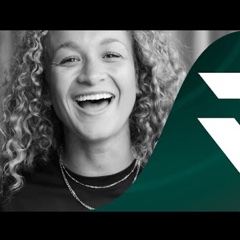
Miranda Paine
Head of Growth at Runna
Where to hear and read about Miranda Paine1 episode or test

Miranda Paine is Head of Growth at Runna, the running coach app acquired by Strava, where she took a growth team from three people to over twenty. The thing most worth learning from her is to pick the one differentiator that matters, here training for a race, and push it through product, creative, community and pricing.
Training for a race is a really, really core USP for us, and we know that our highest value users will be those who are training for races.
How Runna’s Laser Focus Led to Its Successful Acquisition by Strava
Miranda Paine: the story and the lessons
1Miranda Paine's path from fitness startups to Runna
Paine trained in marine biology, which shaped how she mixes data and marketing. She studied marine biology at master's level and says that is why she likes bringing data and marketing together.
She came to growth by solving product and marketing problems as one job.
At Flykick she found performance marketing and SEO. At the boutique fitness studio Flykick she did brand partnerships, influencers, events and digital marketing.
She says she discovered a love of performance marketing and SEO there.
At Fiit she ran growth marketing and helped manage the website as a product manager. Fiit is a home-workout subscription app. She joined during the pandemic, a period of very high growth for the brand.
The lack of dedicated engineering for growth at Fiit later shaped how she built the team at Runna.
She joined Runna in November 2023 for its bias for action. She values the fast pace and the way product and marketing are held together there.
Paine became a runner herself through the product she grows. She ran sporadically around netball and CrossFit before Runna. Now she runs two to three times a week and is training for her first marathon, in Lisbon in October.
She says three years ago she would have laughed at the idea.
2How Paine built Runna's growth team
Paine's growth team went from three people to over twenty. In late 2023 it was Paine, a growth engineer and a CRM lead, in a company of about 20. Today the company has about 140 people.
She embeds growth engineers in the growth team instead of siloing them. Dedicated growth product engineers let marketers move quickly, for example on onboarding changes and matching landing pages to the later funnel.
At Fiit, "we struggled a lot with getting engineering resource that was dedicated to growth", and that stunted growth.
Shared routines and ownership keep the team fast. Each person is bullish about decisions in their own area and hands high-quality work to the next team. Mondays and Fridays bring a push-up and squat challenge, and Wednesdays are group runs followed by lunch.
The one thing she would change is a bigger office, since the team has outgrown the current one.
3Why Runna focuses on runners training for races
Runna started by filling the gap between expensive coaches and free resources. Ben coached Dom and ran out of capacity for more clients. Dom, who has an engineering background, saw a way to reach more people, starting with a PDF plan under the name Run Buddy.
Ben's coaching logic then moved into an app to make it self-served. Paine says nothing sat between paying a lot for a top coach and digging through free resources.
Paine aims product and marketing at race trainers, the highest value users. Goals on Runna range from a first 5K to a 25th marathon, but training for a race is the core focus.
That focus let Runna hold a premium price and shape its acquisition and community work.
Runna recalculates each runner's plan from their actual run data. Data from a watch or phone is compared with the set paces and fed back into the engine to recalculate targets. Runners get prompts to raise or lower a pace, plus audio pacing in their ears.
Slowing a target can please runners as much as speeding it up, because the goal feels more achievable and training more enjoyable.
Paine tells growth leaders in crowded markets to amplify one differentiator. She says to focus on the product's edge and carry it into marketing, acquisition and community.
The aim is to be truly special for a niche rather than everything for everyone.
4Paine's creative flywheel at Runna
She split ad production into new concepts and iterations of winners. As performance budgets rose month on month, Runna doubled down on iterations because they yield more super winners. Output is now around 400 creatives a month across formats.
A weekly brainstorm with an external agency breaks down what is winning and aims to have iterations live the following week. Paine says she would not have believed that volume a year earlier.
Paine reskins any winning format across models and markets. One team member's video of fast cuts over the app's UI stayed a super winner for about 10 months. Runna redid it with new models and backgrounds for the US, Australia and the UK.
In her words, finding a winning UGC formula means thinking about how to "reskin that and rework it".
Her team uses its own staff as scrappy UGC creators. The winning employee video drew comments asking how long she had been training for that half marathon.
Race stories from before the app to race day perform best. UGC opens the story and statics convert viewers afterwards. Many hooks are tested on the opening, which Paine calls "very, very crazy".
"We find that race content is the content that performs the best for us."
Paine tells the same story differently on TikTok and Instagram. TikTok gets fast cuts, loud music and often no voiceover. Instagram runs longer, slower and with more voiceover.
Runna uses Suno and ElevenLabs to scale and localize ad audio. Suno makes original music, avoiding the "terrible" royalty-free tracks. ElevenLabs redoes a British-voice ad with US and Australian voices.
5How Runna builds ambassadors and community
Paine invested in a dedicated human ambassador team rather than tooling. One team does outreach by target region and another builds the relationships. Tools only check engagement and likely performance.
Deep relationships mean ambassadors make authentic content and bring Runna along on runs that are not paid deliverables. She says "we feel like we have one of the best ambassador programs in the world".
Anyone at Runna can nominate an ambassador in a Slack channel. Most staff are runners, so they post people they spot. So many names come in that Paine cannot count them.
Organic discovery works better than the tool.
Creators with the ambassador briefing scale content more cheaply. Creator content performs just as well as ambassador content, and a creative flywheel reaches creators regularly.
Ambassador content alone could not hit production targets cost-effectively.
Runna shows up in person to keep the app tied to real running. It appears at run clubs, shakeout runs and marathon majors so the brand is synonymous with the in-person running experience.
Runners share milestones like a first 5K or a new PR, and the follow-up question is how they did it.
Every logged run carries a visible Runna mark on Strava. Runs post as, for example, "long run completed with Runna", a constant organic hint inside a community that shares achievements.
After the acquisition the post carries an image as well as the Runna line.
6Runna's pricing, trials and discounts under Paine
Paine raised US prices after benchmarking and lifted conversion too. Runna moved the US price from $17.99 monthly and $109.99 yearly to $19.99 and $119.99, after seeing the US sat below the UK. Revenue, trial starts and conversion all rose.
She calls the first change slightly more finger in the air than it could have been. A later willingness-to-pay study of US and UK users showed the price was about right, so they did not raise again.
Runna locks the whole plan after a 7-day free trial. After the trial, users can only record workouts. Value shows within the first seven days, and beginners get a free plan to a first 5K.
Runna treats the whole app as the coach rather than splitting features: "everybody deserves like the same level of personalized coaching".
She avoids blanket discounts to protect the premium brand. Only blue-light workers and students get a standing discount, and extended free trials are the main promotion. A discount test timed to Wimbledon showed higher retention and revenue for users who got no offer.
The goal is to avoid training users to wait for a sale.
7Web checkout and the Strava acquisition
Paine's team launched web-to-app checkout in December to iterate faster. Until then all payments were inside the app. After about five months, trial starts, trial conversion and retention were all higher.
Flows change without an app release, vary by traffic warmth and can carry ambassador-specific pages built in the CMS. Web also opens Google search as a channel, with one hire on it full time. Meta performance is still short of target.
She let others test app-to-web first. Runna paused after the Apple versus Epic ruling and studied RevenueCat's published test on the Dipsy app. Engineering is now testing a plain link-out and an iframe.
"I'm pretty happy that we did a little pause first before jumping in."
Paine kept the Strava deal secret for seven or eight months. She was only lightly involved, since the exec team and others did most of the work. She kept the team focused while keeping quiet, and calls telling them the high point.
Talks began in September and the deal was announced in April.
The Strava integration is light and each team keeps its roadmap. Expected changes are richer run posts on Strava and single sign-on, with no Runna features moving into Strava. Runna wants to use Strava's localization work and route-mapping tech.
The biggest gains are a ready audience of runners and Strava's hiring and tooling experience. Many Strava users are cyclists, so Runna can segment its messaging.
She warns that AI personalization can erode the human touch. Consumers want more personalized fitness, and AI can deliver it at scale. Paine worries that human understanding of a person's goals could be lost for the sake of scale.

How Runna’s Laser Focus Led to Its Successful Acquisition by Strava
Runna's growth lead explains how a narrow focus on race-training runners, an in-house ambassador team, a high-volume creative flywheel, web-to-app checkout and premium pricing drove rapid growth. The result was growth from a 3-person growth team to over 20 and an acquisition by Strava.
Paine trained in marine biology, which shaped how she mixes data and marketing. She studied marine biology at master's level and says that is why she likes bringing data and marketing together.
She came to growth by solving product and marketing problems as one job.
At Flykick she found performance marketing and SEO. At the boutique fitness studio Flykick she did brand partnerships, influencers, events and digital marketing.
She says she discovered a love of performance marketing and SEO there.
At Fiit she ran growth marketing and helped manage the website as a product manager. Fiit is a home-workout subscription app. She joined during the pandemic, a period of very high growth for the brand.
The lack of dedicated engineering for growth at Fiit later shaped how she built the team at Runna.
She joined Runna in November 2023 for its bias for action. She values the fast pace and the way product and marketing are held together there.
Paine became a runner herself through the product she grows. She ran sporadically around netball and CrossFit before Runna. Now she runs two to three times a week and is training for her first marathon, in Lisbon in October.
She says three years ago she would have laughed at the idea.
Paine's growth team went from three people to over twenty. In late 2023 it was Paine, a growth engineer and a CRM lead, in a company of about 20. Today the company has about 140 people.
She embeds growth engineers in the growth team instead of siloing them. Dedicated growth product engineers let marketers move quickly, for example on onboarding changes and matching landing pages to the later funnel.
At Fiit, "we struggled a lot with getting engineering resource that was dedicated to growth", and that stunted growth.
Shared routines and ownership keep the team fast. Each person is bullish about decisions in their own area and hands high-quality work to the next team. Mondays and Fridays bring a push-up and squat challenge, and Wednesdays are group runs followed by lunch.
The one thing she would change is a bigger office, since the team has outgrown the current one.
Runna started by filling the gap between expensive coaches and free resources. Ben coached Dom and ran out of capacity for more clients. Dom, who has an engineering background, saw a way to reach more people, starting with a PDF plan under the name Run Buddy.
Ben's coaching logic then moved into an app to make it self-served. Paine says nothing sat between paying a lot for a top coach and digging through free resources.
Paine aims product and marketing at race trainers, the highest value users. Goals on Runna range from a first 5K to a 25th marathon, but training for a race is the core focus.
That focus let Runna hold a premium price and shape its acquisition and community work.
Runna recalculates each runner's plan from their actual run data. Data from a watch or phone is compared with the set paces and fed back into the engine to recalculate targets. Runners get prompts to raise or lower a pace, plus audio pacing in their ears.
Slowing a target can please runners as much as speeding it up, because the goal feels more achievable and training more enjoyable.
Paine tells growth leaders in crowded markets to amplify one differentiator. She says to focus on the product's edge and carry it into marketing, acquisition and community.
The aim is to be truly special for a niche rather than everything for everyone.
She split ad production into new concepts and iterations of winners. As performance budgets rose month on month, Runna doubled down on iterations because they yield more super winners. Output is now around 400 creatives a month across formats.
A weekly brainstorm with an external agency breaks down what is winning and aims to have iterations live the following week. Paine says she would not have believed that volume a year earlier.
Paine reskins any winning format across models and markets. One team member's video of fast cuts over the app's UI stayed a super winner for about 10 months. Runna redid it with new models and backgrounds for the US, Australia and the UK.
In her words, finding a winning UGC formula means thinking about how to "reskin that and rework it".
Her team uses its own staff as scrappy UGC creators. The winning employee video drew comments asking how long she had been training for that half marathon.
Race stories from before the app to race day perform best. UGC opens the story and statics convert viewers afterwards. Many hooks are tested on the opening, which Paine calls "very, very crazy".
"We find that race content is the content that performs the best for us."
Paine tells the same story differently on TikTok and Instagram. TikTok gets fast cuts, loud music and often no voiceover. Instagram runs longer, slower and with more voiceover.
Runna uses Suno and ElevenLabs to scale and localize ad audio. Suno makes original music, avoiding the "terrible" royalty-free tracks. ElevenLabs redoes a British-voice ad with US and Australian voices.
Paine invested in a dedicated human ambassador team rather than tooling. One team does outreach by target region and another builds the relationships. Tools only check engagement and likely performance.
Deep relationships mean ambassadors make authentic content and bring Runna along on runs that are not paid deliverables. She says "we feel like we have one of the best ambassador programs in the world".
Anyone at Runna can nominate an ambassador in a Slack channel. Most staff are runners, so they post people they spot. So many names come in that Paine cannot count them.
Organic discovery works better than the tool.
Creators with the ambassador briefing scale content more cheaply. Creator content performs just as well as ambassador content, and a creative flywheel reaches creators regularly.
Ambassador content alone could not hit production targets cost-effectively.
Runna shows up in person to keep the app tied to real running. It appears at run clubs, shakeout runs and marathon majors so the brand is synonymous with the in-person running experience.
Runners share milestones like a first 5K or a new PR, and the follow-up question is how they did it.
Every logged run carries a visible Runna mark on Strava. Runs post as, for example, "long run completed with Runna", a constant organic hint inside a community that shares achievements.
After the acquisition the post carries an image as well as the Runna line.
Paine raised US prices after benchmarking and lifted conversion too. Runna moved the US price from $17.99 monthly and $109.99 yearly to $19.99 and $119.99, after seeing the US sat below the UK. Revenue, trial starts and conversion all rose.
She calls the first change slightly more finger in the air than it could have been. A later willingness-to-pay study of US and UK users showed the price was about right, so they did not raise again.
Runna locks the whole plan after a 7-day free trial. After the trial, users can only record workouts. Value shows within the first seven days, and beginners get a free plan to a first 5K.
Runna treats the whole app as the coach rather than splitting features: "everybody deserves like the same level of personalized coaching".
She avoids blanket discounts to protect the premium brand. Only blue-light workers and students get a standing discount, and extended free trials are the main promotion. A discount test timed to Wimbledon showed higher retention and revenue for users who got no offer.
The goal is to avoid training users to wait for a sale.
Paine's team launched web-to-app checkout in December to iterate faster. Until then all payments were inside the app. After about five months, trial starts, trial conversion and retention were all higher.
Flows change without an app release, vary by traffic warmth and can carry ambassador-specific pages built in the CMS. Web also opens Google search as a channel, with one hire on it full time. Meta performance is still short of target.
She let others test app-to-web first. Runna paused after the Apple versus Epic ruling and studied RevenueCat's published test on the Dipsy app. Engineering is now testing a plain link-out and an iframe.
"I'm pretty happy that we did a little pause first before jumping in."
Paine kept the Strava deal secret for seven or eight months. She was only lightly involved, since the exec team and others did most of the work. She kept the team focused while keeping quiet, and calls telling them the high point.
Talks began in September and the deal was announced in April.
The Strava integration is light and each team keeps its roadmap. Expected changes are richer run posts on Strava and single sign-on, with no Runna features moving into Strava. Runna wants to use Strava's localization work and route-mapping tech.
The biggest gains are a ready audience of runners and Strava's hiring and tooling experience. Many Strava users are cyclists, so Runna can segment its messaging.
She warns that AI personalization can erode the human touch. Consumers want more personalized fitness, and AI can deliver it at scale. Paine worries that human understanding of a person's goals could be lost for the sake of scale.