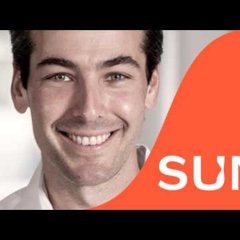
Mikey Shulman
Cofounder and CEO of Suno
Where to hear and read about Mikey Shulman1 episode or test

Mikey Shulman is cofounder and CEO of Suno, an AI music app that reached 2 million paying subscribers and $300M in ARR. The lesson most worth taking: make people fall in love with creating, and let better models and products, not paywall tuning, drive growth.
When things feel personal, you fall in love with them.
How Suno Grew to $300M in ARR by Democratizing Music Creation
Mikey Shulman: the story and the lessons
1Mikey Shulman's road from physics to Suno
Shulman was an average musician who became a physicist and ML engineer. He played in many bands growing up in New York but was 'only okay' and left music. After a physics PhD he worked at Kensho, which applies machine learning to financial services.
His physics mixed quantum information with low-temperature microwave engineering. He says his cofounder is the better physicist.
Suno began as a side project that was more fun than the day job. The cofounders started just before the ChatGPT moment, expecting AI only to help make sense of music. Early breakthroughs produced short, not great clips, and they stayed up late playing with them.
At some point they admitted they were lying to themselves, shut down the old work and shipped a Discord bot. Basement jam sessions were not why they started the company.
He says his edge is working across the boundaries between fields. His advantage is getting partly up to speed on many things at once. He sees the CEO job the same way: understand the boundary of what is possible, then decide.
Physics and machine learning were both team sports, and he loves working with others. His motive traces to band practice, which he remembers as more fun than performing.
Shulman started Suno when open-source text work could be reused. Six months earlier there was not enough open-source work from the text community to build on. Six months later, competition had started to creep in.
The window let a small team focus on what is particular to audio, and delight users and learn before others could.
2Why Shulman bet Suno on music, not speech
He saw audio as a neglected field with room to build. The team saw a lot of audio in the world but little AI attention, a 'second-class citizen' for no good reason.
Borrowing from the text community let them spend their energy on audio-specific problems.
Suno open-sourced Bark to test whether expressive audio had demand. Bark was costly and inefficient, so it was not commercially viable. It still earned many GitHub stars quickly, and a developer community formed around it.
Most people wanted text read aloud and ignored artistic uses. Shulman calls audio 'so much more subjective, so much more gnarly, and so much more beautiful than text'.
He judged Bark by how it sounded, not by speech metrics. Bark made some word errors but sounded far more lifelike and emotional than robotic systems tuned for word error rate and speed. It could even whisper, which no speech system did.
Asking 'how do I do the same application faster?' misses 'the beauty that comes with doing something that was only literally possible today'.
Shulman chose music even though many urged a speech company. People said speech looked bigger and more straightforward. Speech players like ElevenLabs and Speak innovate on accuracy, voice variety and coaching, not on music.
3How Suno launched: Discord, a paywall, then the web
Suno shipped a crude Discord bot to get feedback fast. The bot was modeled on Midjourney and made 12.5 seconds of audio from a one-sentence prompt. Discord meant no UI or login to build.
Users used the product, discussed it and told others in the same place. The audio was poor, yet people enjoyed it for hours, which matched the founders' own experience.
Shulman charged from day one to learn who valued the product. Against the advice to grow first and monetize later, Suno charged on the Discord bot from the start. Many people signed up in the first month.
The team could talk to every person who hit the paywall and did not pay, and ask why. He says he has no counterfactual on whether it was the right call.
Early feedback said the music was bad but making it was fun. The obvious message was 'your music is bad', with detail on how. Some users only wanted sounds for elsewhere, while others simply enjoyed working with a bot that helped them make music.
Discord's gaming culture made long sessions natural, and users felt good about themselves.
Shulman was wrong about staying on Discord, and his cofounders were right. He expected to stay a long time, as Midjourney did. His cofounders pushed for a web app, and about 90% of traffic moved over within 5 days of the December 2023 launch.
The web app lacked the bot's full functionality, and infrastructure crashed a few times. His explanation: nobody should need to recover a Discord password just to use a music machine.
4Shulman's growth rules: better models, untouched paywall
Model releases and the products they enable drive Suno's growth. Shulman says every inflection in users, revenue and subscribers came from making the product better. Of model releases he says 'basically nothing else ends up mattering'.
Suno judges each model on sound quality, song quality (catchy enough to get stuck in your head) and control. Sound may hit a ceiling set by human hearing, but song quality and control can improve forever.
He does not tune the paywall while the product changes monthly. The free plan has stayed at five creates a day since launch, about 3 years, while Suno reached $300M ARR. Any free-tier optimization would be stale in about two months.
He rules out squeezing users with a tighter paywall, and as a user he would hate a free offer that changed monthly. He accepts leaving a little money on the table.
New models go to paid users first, then to the free tier. Suno's rough rule is to give a new model only to the paid tier. The free model is upgraded later, once it is cheaper to serve.
Shulman admits it is not deeply thought out, is probably not right forever and will change.
5How Suno turns shared songs into new users
Sharing brings in most new users, so the shared page is the lever. Listeners are not forced to log in to hear a song. The page must still make clear that the song was made on Suno and that the visitor can make one: 'The biggest one is making it obvious.'
He says Suno has not figured this out, but each improvement pays off in a big way. His 90% conversion ceiling for shared-song visitors is an intuition, not a measured result.
A shared song solves the blank canvas problem for new users. Asking someone to make something from nothing stalls them. A song from a friend gives built-in inspiration to riff on, adapt, cover or sample.
Suno plans to build more on starting from an existing song, which he sees as the most intuitive path since music was meant to be adapted.
He does not dictate how people share; he improves the path to a song. Users share by text, WhatsApp, social media and slideshows of family pictures. Each time the path to a song gets easier and better, sharing behavior explodes.
Making a song yourself multiplies the pleasure of sharing it, by 10 or 100 times compared with sharing a Spotify find.
6How Suno makes a song feel like the user's own
Shulman ties retention to a song feeling personal and sounding good. Making a song should be more than typing six words into a text box, which is a product problem. Whether the song was good is mostly a model problem.
The first one or two sessions matter most. A user who reaches the magical moment will likely retain and subscribe, and releasing models and products together lifts both.
Suno adds editing steps that turn a gimmick into ownership. Users who see an okay result click in and edit the lyrics, then start writing their own. Singing into a microphone builds the same sense of ownership.
Editing and iterating is the first step toward spending an hour in Studio, the pro tool.
Suno 5.5 shipped Voices, My Taste and custom models for personalization. Voices needs about 15 seconds of singing and was among the most requested features. My Taste works like editable LLM memory, and custom models take uploaded music as context.
The aim is a personal producer who gets you. Unlike feeds, where people fall in love with creators, on Suno the attachment is to the process.
7Shulman's view of AI music and what comes next
He positions Suno around creating, not consuming music. Suno is explicitly not an AI-powered Spotify, which he calls an uncompelling product. The internal phrase is 'creative entertainment', aimed at the billion people who stream music.
His pyramid has utility at the base, entertainment above it and fulfillment at the top. He calls 'coexist' a low bar because it assumes a fixed pie. His claim that AI is not replacing anybody comes without data.
He expects the next music format to be music you play with. Technology has most changed music by changing its format: tapes, vinyl, CDs, MP3, streaming. He expects a new format in about five years, and interactive music is it.
He hopes music moves from background to foreground in culture, as the iPhone camera and Instagram expanded imagery. He says this is not a given and must be worked toward.
Shulman keeps Suno on the phone because creativity strikes at odd times. People get creative urges at random moments and the phone is usually with them. They can start without waiting for a band or a desk.
He treats the music labels as potential partners, not enemies. The RIAA sued Suno in 2024, and Warner Music Group settled in November 2025 with a licensing partnership. He avoids specifics because litigation is ongoing.
He calls the idea that the major labels are cooked 'pretty stupid'. Co-creating with a favorite artist could bring super fandom to everyone, beyond the fewer than one concert a year the average person attends.
Suno is run as an in-person company of music lovers. Most staff love music, and a studio at the end of the office is used most days to make music for fun.
His main regret is that the team is split across four offices: Cambridge, New York, LA and San Francisco. He wishes everyone shared one.

How Suno Grew to $300M in ARR by Democratizing Music Creation
Suno's CEO explains how an AI music app reached 2 million paying subscribers and $300M in ARR, mostly through model and product releases and word of mouth rather than paywall tuning. He covers launching on Discord, charging from day one, making shared song pages convert, and why he sees AI music as creative entertainment.
Shulman was an average musician who became a physicist and ML engineer. He played in many bands growing up in New York but was 'only okay' and left music. After a physics PhD he worked at Kensho, which applies machine learning to financial services.
His physics mixed quantum information with low-temperature microwave engineering. He says his cofounder is the better physicist.
Suno began as a side project that was more fun than the day job. The cofounders started just before the ChatGPT moment, expecting AI only to help make sense of music. Early breakthroughs produced short, not great clips, and they stayed up late playing with them.
At some point they admitted they were lying to themselves, shut down the old work and shipped a Discord bot. Basement jam sessions were not why they started the company.
He says his edge is working across the boundaries between fields. His advantage is getting partly up to speed on many things at once. He sees the CEO job the same way: understand the boundary of what is possible, then decide.
Physics and machine learning were both team sports, and he loves working with others. His motive traces to band practice, which he remembers as more fun than performing.
Shulman started Suno when open-source text work could be reused. Six months earlier there was not enough open-source work from the text community to build on. Six months later, competition had started to creep in.
The window let a small team focus on what is particular to audio, and delight users and learn before others could.
He saw audio as a neglected field with room to build. The team saw a lot of audio in the world but little AI attention, a 'second-class citizen' for no good reason.
Borrowing from the text community let them spend their energy on audio-specific problems.
Suno open-sourced Bark to test whether expressive audio had demand. Bark was costly and inefficient, so it was not commercially viable. It still earned many GitHub stars quickly, and a developer community formed around it.
Most people wanted text read aloud and ignored artistic uses. Shulman calls audio 'so much more subjective, so much more gnarly, and so much more beautiful than text'.
He judged Bark by how it sounded, not by speech metrics. Bark made some word errors but sounded far more lifelike and emotional than robotic systems tuned for word error rate and speed. It could even whisper, which no speech system did.
Asking 'how do I do the same application faster?' misses 'the beauty that comes with doing something that was only literally possible today'.
Shulman chose music even though many urged a speech company. People said speech looked bigger and more straightforward. Speech players like ElevenLabs and Speak innovate on accuracy, voice variety and coaching, not on music.
Suno shipped a crude Discord bot to get feedback fast. The bot was modeled on Midjourney and made 12.5 seconds of audio from a one-sentence prompt. Discord meant no UI or login to build.
Users used the product, discussed it and told others in the same place. The audio was poor, yet people enjoyed it for hours, which matched the founders' own experience.
Shulman charged from day one to learn who valued the product. Against the advice to grow first and monetize later, Suno charged on the Discord bot from the start. Many people signed up in the first month.
The team could talk to every person who hit the paywall and did not pay, and ask why. He says he has no counterfactual on whether it was the right call.
Early feedback said the music was bad but making it was fun. The obvious message was 'your music is bad', with detail on how. Some users only wanted sounds for elsewhere, while others simply enjoyed working with a bot that helped them make music.
Discord's gaming culture made long sessions natural, and users felt good about themselves.
Shulman was wrong about staying on Discord, and his cofounders were right. He expected to stay a long time, as Midjourney did. His cofounders pushed for a web app, and about 90% of traffic moved over within 5 days of the December 2023 launch.
The web app lacked the bot's full functionality, and infrastructure crashed a few times. His explanation: nobody should need to recover a Discord password just to use a music machine.
Model releases and the products they enable drive Suno's growth. Shulman says every inflection in users, revenue and subscribers came from making the product better. Of model releases he says 'basically nothing else ends up mattering'.
Suno judges each model on sound quality, song quality (catchy enough to get stuck in your head) and control. Sound may hit a ceiling set by human hearing, but song quality and control can improve forever.
He does not tune the paywall while the product changes monthly. The free plan has stayed at five creates a day since launch, about 3 years, while Suno reached $300M ARR. Any free-tier optimization would be stale in about two months.
He rules out squeezing users with a tighter paywall, and as a user he would hate a free offer that changed monthly. He accepts leaving a little money on the table.
New models go to paid users first, then to the free tier. Suno's rough rule is to give a new model only to the paid tier. The free model is upgraded later, once it is cheaper to serve.
Shulman admits it is not deeply thought out, is probably not right forever and will change.
Sharing brings in most new users, so the shared page is the lever. Listeners are not forced to log in to hear a song. The page must still make clear that the song was made on Suno and that the visitor can make one: 'The biggest one is making it obvious.'
He says Suno has not figured this out, but each improvement pays off in a big way. His 90% conversion ceiling for shared-song visitors is an intuition, not a measured result.
A shared song solves the blank canvas problem for new users. Asking someone to make something from nothing stalls them. A song from a friend gives built-in inspiration to riff on, adapt, cover or sample.
Suno plans to build more on starting from an existing song, which he sees as the most intuitive path since music was meant to be adapted.
He does not dictate how people share; he improves the path to a song. Users share by text, WhatsApp, social media and slideshows of family pictures. Each time the path to a song gets easier and better, sharing behavior explodes.
Making a song yourself multiplies the pleasure of sharing it, by 10 or 100 times compared with sharing a Spotify find.
Shulman ties retention to a song feeling personal and sounding good. Making a song should be more than typing six words into a text box, which is a product problem. Whether the song was good is mostly a model problem.
The first one or two sessions matter most. A user who reaches the magical moment will likely retain and subscribe, and releasing models and products together lifts both.
Suno adds editing steps that turn a gimmick into ownership. Users who see an okay result click in and edit the lyrics, then start writing their own. Singing into a microphone builds the same sense of ownership.
Editing and iterating is the first step toward spending an hour in Studio, the pro tool.
Suno 5.5 shipped Voices, My Taste and custom models for personalization. Voices needs about 15 seconds of singing and was among the most requested features. My Taste works like editable LLM memory, and custom models take uploaded music as context.
The aim is a personal producer who gets you. Unlike feeds, where people fall in love with creators, on Suno the attachment is to the process.
He positions Suno around creating, not consuming music. Suno is explicitly not an AI-powered Spotify, which he calls an uncompelling product. The internal phrase is 'creative entertainment', aimed at the billion people who stream music.
His pyramid has utility at the base, entertainment above it and fulfillment at the top. He calls 'coexist' a low bar because it assumes a fixed pie. His claim that AI is not replacing anybody comes without data.
He expects the next music format to be music you play with. Technology has most changed music by changing its format: tapes, vinyl, CDs, MP3, streaming. He expects a new format in about five years, and interactive music is it.
He hopes music moves from background to foreground in culture, as the iPhone camera and Instagram expanded imagery. He says this is not a given and must be worked toward.
Shulman keeps Suno on the phone because creativity strikes at odd times. People get creative urges at random moments and the phone is usually with them. They can start without waiting for a band or a desk.
He treats the music labels as potential partners, not enemies. The RIAA sued Suno in 2024, and Warner Music Group settled in November 2025 with a licensing partnership. He avoids specifics because litigation is ongoing.
He calls the idea that the major labels are cooked 'pretty stupid'. Co-creating with a favorite artist could bring super fandom to everyone, beyond the fewer than one concert a year the average person attends.
Suno is run as an in-person company of music lovers. Most staff love music, and a studio at the end of the office is used most days to make music for fun.
His main regret is that the team is split across four offices: Cambridge, New York, LA and San Francisco. He wishes everyone shared one.