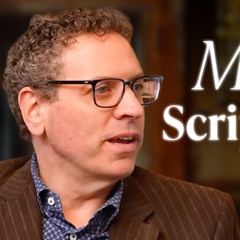
Michael Jamin
Hollywood sitcom writer and memoirist
Where to hear and read about Michael Jamin1 episode or test

Michael Jamin has written Hollywood sitcoms for 28 years, including King of the Hill and Beavis and Butt-Head, and now writes and performs personal essays. The thing most worth learning from him is to build comedy on a story with an emotional core and flawed, human characters, and to ask in every draft what the story is really about.
it's never look how cute I am look how interesting I am it's always look how human I am
Learn Scriptwriting in 83 Minutes — Michael Jamin
Michael Jamin: the story and the lessons
1Michael Jamin's story-first approach to comedy
Jamin layers jokes on top of story and character. A TV writer for 28 years, he builds sitcoms from rich characters and deep storylines, with punchlines coming last.
He says that if the story doesn't hold together, all the jokes in the world won't make it funny. He judges a story by how long it stays with you after you finish it.
He started as the joke person, with a partner who was the story person. Writers used to split into joke people and story people. Jamin was the joke person, who gets the credit for the home run line that brings down the house.
Jamin says funny can be sharpened a little, but it cannot be installed from nothing.
He learned character entrances and rooms on Just Shoot Me. His first job was Just Shoot Me, where boss Steve Levitan taught him to give each character an introduction. The show built father-daughter stories on purpose.
In that writers' room an offensive line was fine if it got a laugh. If it got none, the boss sent you on a pie run to Du-par's.
Jamin tells writers to finish the script and start the next one. The advice he got was to stop polishing that turd. He guarantees script five will be light years better than script one.
The early scripts are not wasted, since you needed them to reach script five. He says a finished script is not yet a ready script, and writing more is the only way to get good.
2How Jamin finds what a story is really about
Jamin asks what the story is about, not what happens. He says new writers confuse plot, which is stuff happening, with story, which is the emotional layer underneath. He names it plainly: redemption, forgiveness, judgment.
Ferris Bueller's Day Off looks like a day of hooky, but it is about a friend trying to save his friend's life, and the film says so in its second scene. "A story is the emotional underpinning underneath it."
He breaks the story on a whiteboard before writing anything. With his partner he divides a board into three acts and fixes the act breaks and the top of act three first.
They ask out loud what the story is about on a deeper level, and nobody starts writing until the story is broken.
Jamin tests stakes by asking what happens if the hero fails. Personal stakes beat cosmic ones, and family stakes run highest. Even a meteor movie works because a father must make peace with his daughter.
His essay about a dead, creepy neighbor only worked once it became about his daughter Roxy and a neighbor who understood her better than he did.
He lets the theme appear as repeated words, then disguises them. He does not aim at a theme. In a forgiveness episode, forgive and apology keep showing up in the draft.
After the first draft he and his partner go through the repeats like a drinking game and swap in synonyms so the theme isn't obvious.
Jamin picks premises that have the conflict built in. He praises Severance because its innie and outie split already contains the conflict, while an apocalypse story must invent its conflict.
He warns against serving a premise's rules too much. He says Lost drifted toward the rules of its island by season six and became less about its characters. Nothing writes itself.
3How Jamin builds characters and writes from his own flaws
Jamin never lets a character try to be funny. Archie Bunker was just a bigot and Larry David just gives his opinions. A strong, extreme attitude is the simplest comedy tool.
"It's okay" is a flat answer about soup, while "the best soup I've ever had" is funny. The character's goal should be to say something truthful.
He gives characters contradictions that are blind spots, not breaks. His team fills out a character questionnaire with questions that may never reach the script, like a stance on legalized marijuana.
A troll used a Goodfellas meme to say he did not care about Hollywood, loving the movie while hating the industry. Push a contradiction too far and the character stops making sense.
Jamin gives every new character an entrance that shows who they are. He treats a first appearance as an event, and a TV room may spend a day on a reveal that takes two or three seconds.
Instead of a farmer walking in with a pitchfork, show him with a sick cow and let his treatment of it tell us who he is.
He makes the audience like a dark lead before showing the dark. The Sopranos pilot opens on Tony as a nervous patient feeding ducks, so viewers are on his side before he beats a man.
He prefers Lestat to Darth Vader because Vader never shows what is fun about the dark side. A soft side or sympathetic want, like Walter White providing for his family, buys back harsh behavior.
Jamin writes from his weaknesses, never from look how cute I am. He keeps two lists on his phone, one of flaws and one of memories, and pairs a memory with a flaw to make a story.
His memoir of personal essays, also a one-man show, was built this way. He calls it a collection of apologies and confessions, and says memoirists who try to charm readers put them off.
He rejects the sitcom version of a motive and finds the real one. Writing the memoir, he asked why his ten-year-old self acted as he did, and when the answer felt like the TV version he asked for the real one.
Network notes always round off a character's edges. He writes the character of himself dialed up about 10% so his flaws are easier to see.
4Jamin's craft rules for jokes, the page and AI
Jamin tests each line by swapping it into another character's mouth. If a line could come from any character, it will never be great. The best lines could only come from that one character.
He admits writers sometimes give a generic line to whoever has been quiet all scene, but it stays merely fine. He also pitches lines aloud in the character's voice to check them.
He writes punch lines as statements with the funniest word last. A question makes the audience wait for the answer, while a statement tells them it is over and they can laugh.
He favors hard K sounds, such as Cleveland over Cincinnati, and warns the rule of three can sound jokey. Rhetorical questions like "Are you an idiot?" are the exception.
Jamin asks what we are literally watching in every scene. TV training taught him to write what a camera could film, and to include only details the story needs.
The nicotine-stained walls of his dead neighbor's house say who Fred was, and the color of his hair never appears.
He makes readers laugh first, then hits hard and leaves the silence. The first half of his stories is funny to lower the reader's guard, and in the second half he stops trying to get laughs.
He told a writer friend that closing an emotional piece with a joke ruined it. "Allow us to sit in that awful moment."
Jamin refuses to hand the writing to AI. He says AI replaces the writing instead of helping it, like boasting about your driving from a Waymo. He would not use it to find a joke.
David Perell disagreed and uses it as a collaborator. Jamin warns that an AI joke won't match the voice of the rest of the piece. "Writing is hard. It's supposed to be hard."

Learn Scriptwriting in 83 Minutes — Michael Jamin
Michael Jamin, a TV writer for 28 years, argues that comedy is layered on top of story and character, and that the emotional core of a piece is what readers remember. The most useful habit is to pair a list of your weaknesses with a list of memories, and to ask in every draft what the story is really about.
Jamin layers jokes on top of story and character. A TV writer for 28 years, he builds sitcoms from rich characters and deep storylines, with punchlines coming last.
He says that if the story doesn't hold together, all the jokes in the world won't make it funny. He judges a story by how long it stays with you after you finish it.
He started as the joke person, with a partner who was the story person. Writers used to split into joke people and story people. Jamin was the joke person, who gets the credit for the home run line that brings down the house.
Jamin says funny can be sharpened a little, but it cannot be installed from nothing.
He learned character entrances and rooms on Just Shoot Me. His first job was Just Shoot Me, where boss Steve Levitan taught him to give each character an introduction. The show built father-daughter stories on purpose.
In that writers' room an offensive line was fine if it got a laugh. If it got none, the boss sent you on a pie run to Du-par's.
Jamin tells writers to finish the script and start the next one. The advice he got was to stop polishing that turd. He guarantees script five will be light years better than script one.
The early scripts are not wasted, since you needed them to reach script five. He says a finished script is not yet a ready script, and writing more is the only way to get good.
Jamin asks what the story is about, not what happens. He says new writers confuse plot, which is stuff happening, with story, which is the emotional layer underneath. He names it plainly: redemption, forgiveness, judgment.
Ferris Bueller's Day Off looks like a day of hooky, but it is about a friend trying to save his friend's life, and the film says so in its second scene. "A story is the emotional underpinning underneath it."
He breaks the story on a whiteboard before writing anything. With his partner he divides a board into three acts and fixes the act breaks and the top of act three first.
They ask out loud what the story is about on a deeper level, and nobody starts writing until the story is broken.
Jamin tests stakes by asking what happens if the hero fails. Personal stakes beat cosmic ones, and family stakes run highest. Even a meteor movie works because a father must make peace with his daughter.
His essay about a dead, creepy neighbor only worked once it became about his daughter Roxy and a neighbor who understood her better than he did.
He lets the theme appear as repeated words, then disguises them. He does not aim at a theme. In a forgiveness episode, forgive and apology keep showing up in the draft.
After the first draft he and his partner go through the repeats like a drinking game and swap in synonyms so the theme isn't obvious.
Jamin picks premises that have the conflict built in. He praises Severance because its innie and outie split already contains the conflict, while an apocalypse story must invent its conflict.
He warns against serving a premise's rules too much. He says Lost drifted toward the rules of its island by season six and became less about its characters. Nothing writes itself.
Jamin never lets a character try to be funny. Archie Bunker was just a bigot and Larry David just gives his opinions. A strong, extreme attitude is the simplest comedy tool.
"It's okay" is a flat answer about soup, while "the best soup I've ever had" is funny. The character's goal should be to say something truthful.
He gives characters contradictions that are blind spots, not breaks. His team fills out a character questionnaire with questions that may never reach the script, like a stance on legalized marijuana.
A troll used a Goodfellas meme to say he did not care about Hollywood, loving the movie while hating the industry. Push a contradiction too far and the character stops making sense.
Jamin gives every new character an entrance that shows who they are. He treats a first appearance as an event, and a TV room may spend a day on a reveal that takes two or three seconds.
Instead of a farmer walking in with a pitchfork, show him with a sick cow and let his treatment of it tell us who he is.
He makes the audience like a dark lead before showing the dark. The Sopranos pilot opens on Tony as a nervous patient feeding ducks, so viewers are on his side before he beats a man.
He prefers Lestat to Darth Vader because Vader never shows what is fun about the dark side. A soft side or sympathetic want, like Walter White providing for his family, buys back harsh behavior.
Jamin writes from his weaknesses, never from look how cute I am. He keeps two lists on his phone, one of flaws and one of memories, and pairs a memory with a flaw to make a story.
His memoir of personal essays, also a one-man show, was built this way. He calls it a collection of apologies and confessions, and says memoirists who try to charm readers put them off.
He rejects the sitcom version of a motive and finds the real one. Writing the memoir, he asked why his ten-year-old self acted as he did, and when the answer felt like the TV version he asked for the real one.
Network notes always round off a character's edges. He writes the character of himself dialed up about 10% so his flaws are easier to see.
Jamin tests each line by swapping it into another character's mouth. If a line could come from any character, it will never be great. The best lines could only come from that one character.
He admits writers sometimes give a generic line to whoever has been quiet all scene, but it stays merely fine. He also pitches lines aloud in the character's voice to check them.
He writes punch lines as statements with the funniest word last. A question makes the audience wait for the answer, while a statement tells them it is over and they can laugh.
He favors hard K sounds, such as Cleveland over Cincinnati, and warns the rule of three can sound jokey. Rhetorical questions like "Are you an idiot?" are the exception.
Jamin asks what we are literally watching in every scene. TV training taught him to write what a camera could film, and to include only details the story needs.
The nicotine-stained walls of his dead neighbor's house say who Fred was, and the color of his hair never appears.
He makes readers laugh first, then hits hard and leaves the silence. The first half of his stories is funny to lower the reader's guard, and in the second half he stops trying to get laughs.
He told a writer friend that closing an emotional piece with a joke ruined it. "Allow us to sit in that awful moment."
Jamin refuses to hand the writing to AI. He says AI replaces the writing instead of helping it, like boasting about your driving from a Waymo. He would not use it to find a joke.
David Perell disagreed and uses it as a collaborator. Jamin warns that an AI joke won't match the voice of the rest of the piece. "Writing is hard. It's supposed to be hard."