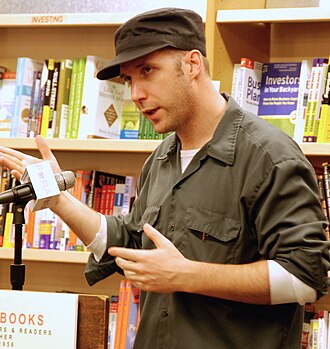
Michael Arndt
Academy Award-winning screenwriter and script doctor
Where to hear and read about Michael Arndt1 episode or test

Michael Arndt is an Oscar-winning screenwriter and script doctor who wrote Little Miss Sunshine and worked on Toy Story 3, after reading about a thousand scripts as a freelancer. The habit most worth stealing is to name what is at stake externally, internally and philosophically, then test the worst case on all three.
Your second act is just an expression of whatever you set up in your first act.
Oscar-Winning Writer Teaches Storytelling (Michael Arndt Interview)
Michael Arndt: the story and the lessons
1How Michael Arndt learned story before he won the Oscar
Arndt read about a thousand scripts before he wrote a good one. He read freelance for about ten years at $50 a script, writing a page-and-a-half synopsis and a half-page comment on each. Only a handful earned his wholehearted recommendation.
He said no to 90 to 95% of what he read, and he found he could tell a real story from a simulation of one. He read Election on the L train and told his boss, Matthew Broderick, who then took it on.
Arndt wrote 11 scripts before he sold his first. He started by assuming he would write about 50 scripts, see five produced and have one be good. He compares it to a startup founder who fails six times out of seven.
A reference book showed William Goldman had about 15 unproduced scripts beside his famous ones. Arndt treats writing as a craft that takes about 10 years to learn.
Little Miss Sunshine worked because he started with characters, not plot. His five earlier scripts were imitation movies built on plot. This one began with characters, and he feared the road-trip story was too slight even for a 65-page script.
The slight story let the characters talk to each other, and halfway through he phoned his brother to say this was the one. He wrote about 100 drafts, won the Oscar in 2007, and Pixar hired him on the strength of the script before it was made.
Arndt memorized his Oscar speech out of fear. Winners get 45 seconds before they are cut off, so he recited the speech on every drive to Pixar for about a month.
Sound engineer Gary Rydstrom has won seven Oscars and still thinks "Oh god, not me" when the envelope opens.
2Why Arndt makes the audience care before the plot starts
Arndt says win the audience's sympathy, never assume it. Audiences arrive behind a defensive barrier after a zillion heroes. The hero has to do or say something early that makes viewers want to ride along.
The most common mistake in his thousand scripts was presuming sympathy because the writer loves the hero. He wants a hero unlike anyone the audience has met on screen.
Arndt rejects the advice to rush the inciting incident. Great films spend 20 to 25 minutes on the hero's world and wants, then move fast to the first act break. In Tootsie the inciting incident lands about 22 to 25 minutes in, and the hero is in a dress four minutes later.
He says rushing mistakes creating action for getting the audience on board with the character. Streaming does not change that job.
Arndt fixes a sagging act two or three by rewriting act one. He agrees with Billy Wilder that a third-act problem is a first-act problem, and goes further: act two is just an expression of what act one set up.
First acts deceive writers because they are almost always entertaining. A hero who leaves act one with a clear long-term goal and short-term plan carries act two almost alone.
Arndt roots stories in a specific place with specific people. Good scripts he read felt tied to a real location and real characters. Bad ones sat in a generic American city, imitating a genre.
He calls that second kind "movie world": a sellable copy of films the writer has seen.
Arndt builds villains who are convincing, not powerful. A villain embodies the negative values the hero fights. In Toy Story 3, Lotso stands over a dumpster saying toys end up as trash, and the audience agrees with him.
He adds that the hero and world are two sides of one coin: Robin Hood is made by King John's taxes, and Katniss becomes the antidote to Panem. A hero need not be flawed if the world is.
3Michael Arndt's stakes method for diagnosing a story
Arndt writes down the stakes three ways. He lists what is at stake externally (blow the bridge, kill Hitler), internally (love, self-respect) and philosophically (the values the story argues over). He calls himself a story mechanic who puts a script on blocks.
For Finding Nemo: Nemo's life, Marlin winning back his son's love, and Marlin learning to stop being overprotective. Philosophical stakes are where many stories are least clear.
Arndt tests the worst case on all three levels. He asks what the worst outcome is externally, emotionally and philosophically. That is the true low moment, and the best endings flip all three to success in 45 seconds or less.
In Finding Nemo the bad ending has Nemo die, or Marlin save him but stay an overprotective parent and lose his son's love.
Arndt makes the hero's goal and plan specific and pass or fail. He warns against muddy stakes, such as making the world better by spreading song. He sharpens the inciting incident, first act break, midpoint and second act break until each turn is distinct.
Blow the bridge or don't, win the girl or don't. The second act break is a point of no return, not simply the worst thing that can happen.
Arndt maps structure onto fairy tale phrases. David Magee showed him the match: once upon a time, and then one day, therefore, suddenly, and then there was no going back.
He walks through Hamlet: after the ghost appears, the players arrive and give Hamlet a long-term goal (avenge his father) and a short-term plan (stage a play).
Arndt boils each story to a bumper-sticker line. The line becomes the North Star for judging every scene. Writers rarely know it at the start, so it is found by writing.
Little Miss Sunshine is that fun matters more than winning. Toy Story 3 is the wisdom of letting go.
Arndt sorts stories into therapy movies and war movies. In a therapy movie the conflict is inside the hero, like Marlin's bias toward safety. In a war movie the hero is innocent and the world is the problem, like Luke blowing up the Death Star.
Casablanca sits in the middle, with Nazis outside and a flaw inside Rick.
Arndt cuts the big emotional line and lets a character say nothing. He says the deadliest flaw in a bad script is feeling contrived. When Dwayne melts down in Little Miss Sunshine, he had written himself into a corner.
The answer for what Olive says to him was that she says nothing.
4How Arndt rewrites, tests and stays humble
Arndt tests drafts on small audiences with fresh eyes each round. At Pixar each film is built in rough versions seven or eight times before final animation: write, direct, edit, repeat. The first screening is for 20 to 30 people, and each later one adds people who have never seen it.
A joke nobody laughs at is proven not funny. Toy Story 3 took three years, and he says one or two years would have made it mediocre.
Arndt expects dozens of drafts on exposition-heavy scenes. Simple sequences were finished first, after five or six drafts. The opening staff meeting of Toy Story 3, loaded with exposition, took about 60.
He says to fail quickly and get a version on its feet, and to split the film into 25 to 30 sequences to see which parts work.
Arndt learned that the director decides but everyone helps. Pixar's teams are democratic, but the director gets no notes from executives, producers or marketing and picks which ideas to use. Arndt says ideas belong to everyone.
The cost was fear: directors were sometimes fired and replaced, and Arndt feared it for three years.
Arndt treats writing as the way he finds his ideas. He used to wait for an idea and then write it down. Now he believes the act of writing generates the ideas.
He did not realize Grandpa, not Uncle Frank, was the mentor in Little Miss Sunshine until a year after release.
Arndt mines his own embarrassing memories for scenes. The pushed VW bus came from his childhood, when the clutch broke in Maine and his father had to start the bus in third gear. The stuck horn came from the same bus.
Specific, humiliating details land even with audiences who never lived them.
Arndt calls humility the most important trait for a writer. He cites Kurosawa saying at his honorary Oscar in his 80s that he was only now beginning to understand movies.
He also cites Billy Wilder: audiences are idiots individually and geniuses collectively, so they see through your tricks.

Oscar-Winning Writer Teaches Storytelling (Michael Arndt Interview)
Arndt, who read about a thousand scripts and then wrote Little Miss Sunshine and Toy Story 3, teaches story as a system: make the audience care first, sharpen the stakes, and set up everything in act one. The habit worth stealing is to name what is at stake externally, internally and philosophically, then test the worst case on all three.
Arndt read about a thousand scripts before he wrote a good one. He read freelance for about ten years at $50 a script, writing a page-and-a-half synopsis and a half-page comment on each. Only a handful earned his wholehearted recommendation.
He said no to 90 to 95% of what he read, and he found he could tell a real story from a simulation of one. He read Election on the L train and told his boss, Matthew Broderick, who then took it on.
Arndt wrote 11 scripts before he sold his first. He started by assuming he would write about 50 scripts, see five produced and have one be good. He compares it to a startup founder who fails six times out of seven.
A reference book showed William Goldman had about 15 unproduced scripts beside his famous ones. Arndt treats writing as a craft that takes about 10 years to learn.
Little Miss Sunshine worked because he started with characters, not plot. His five earlier scripts were imitation movies built on plot. This one began with characters, and he feared the road-trip story was too slight even for a 65-page script.
The slight story let the characters talk to each other, and halfway through he phoned his brother to say this was the one. He wrote about 100 drafts, won the Oscar in 2007, and Pixar hired him on the strength of the script before it was made.
Arndt memorized his Oscar speech out of fear. Winners get 45 seconds before they are cut off, so he recited the speech on every drive to Pixar for about a month.
Sound engineer Gary Rydstrom has won seven Oscars and still thinks "Oh god, not me" when the envelope opens.
Arndt says win the audience's sympathy, never assume it. Audiences arrive behind a defensive barrier after a zillion heroes. The hero has to do or say something early that makes viewers want to ride along.
The most common mistake in his thousand scripts was presuming sympathy because the writer loves the hero. He wants a hero unlike anyone the audience has met on screen.
Arndt rejects the advice to rush the inciting incident. Great films spend 20 to 25 minutes on the hero's world and wants, then move fast to the first act break. In Tootsie the inciting incident lands about 22 to 25 minutes in, and the hero is in a dress four minutes later.
He says rushing mistakes creating action for getting the audience on board with the character. Streaming does not change that job.
Arndt fixes a sagging act two or three by rewriting act one. He agrees with Billy Wilder that a third-act problem is a first-act problem, and goes further: act two is just an expression of what act one set up.
First acts deceive writers because they are almost always entertaining. A hero who leaves act one with a clear long-term goal and short-term plan carries act two almost alone.
Arndt roots stories in a specific place with specific people. Good scripts he read felt tied to a real location and real characters. Bad ones sat in a generic American city, imitating a genre.
He calls that second kind "movie world": a sellable copy of films the writer has seen.
Arndt builds villains who are convincing, not powerful. A villain embodies the negative values the hero fights. In Toy Story 3, Lotso stands over a dumpster saying toys end up as trash, and the audience agrees with him.
He adds that the hero and world are two sides of one coin: Robin Hood is made by King John's taxes, and Katniss becomes the antidote to Panem. A hero need not be flawed if the world is.
Arndt writes down the stakes three ways. He lists what is at stake externally (blow the bridge, kill Hitler), internally (love, self-respect) and philosophically (the values the story argues over). He calls himself a story mechanic who puts a script on blocks.
For Finding Nemo: Nemo's life, Marlin winning back his son's love, and Marlin learning to stop being overprotective. Philosophical stakes are where many stories are least clear.
Arndt tests the worst case on all three levels. He asks what the worst outcome is externally, emotionally and philosophically. That is the true low moment, and the best endings flip all three to success in 45 seconds or less.
In Finding Nemo the bad ending has Nemo die, or Marlin save him but stay an overprotective parent and lose his son's love.
Arndt makes the hero's goal and plan specific and pass or fail. He warns against muddy stakes, such as making the world better by spreading song. He sharpens the inciting incident, first act break, midpoint and second act break until each turn is distinct.
Blow the bridge or don't, win the girl or don't. The second act break is a point of no return, not simply the worst thing that can happen.
Arndt maps structure onto fairy tale phrases. David Magee showed him the match: once upon a time, and then one day, therefore, suddenly, and then there was no going back.
He walks through Hamlet: after the ghost appears, the players arrive and give Hamlet a long-term goal (avenge his father) and a short-term plan (stage a play).
Arndt boils each story to a bumper-sticker line. The line becomes the North Star for judging every scene. Writers rarely know it at the start, so it is found by writing.
Little Miss Sunshine is that fun matters more than winning. Toy Story 3 is the wisdom of letting go.
Arndt sorts stories into therapy movies and war movies. In a therapy movie the conflict is inside the hero, like Marlin's bias toward safety. In a war movie the hero is innocent and the world is the problem, like Luke blowing up the Death Star.
Casablanca sits in the middle, with Nazis outside and a flaw inside Rick.
Arndt cuts the big emotional line and lets a character say nothing. He says the deadliest flaw in a bad script is feeling contrived. When Dwayne melts down in Little Miss Sunshine, he had written himself into a corner.
The answer for what Olive says to him was that she says nothing.
Arndt tests drafts on small audiences with fresh eyes each round. At Pixar each film is built in rough versions seven or eight times before final animation: write, direct, edit, repeat. The first screening is for 20 to 30 people, and each later one adds people who have never seen it.
A joke nobody laughs at is proven not funny. Toy Story 3 took three years, and he says one or two years would have made it mediocre.
Arndt expects dozens of drafts on exposition-heavy scenes. Simple sequences were finished first, after five or six drafts. The opening staff meeting of Toy Story 3, loaded with exposition, took about 60.
He says to fail quickly and get a version on its feet, and to split the film into 25 to 30 sequences to see which parts work.
Arndt learned that the director decides but everyone helps. Pixar's teams are democratic, but the director gets no notes from executives, producers or marketing and picks which ideas to use. Arndt says ideas belong to everyone.
The cost was fear: directors were sometimes fired and replaced, and Arndt feared it for three years.
Arndt treats writing as the way he finds his ideas. He used to wait for an idea and then write it down. Now he believes the act of writing generates the ideas.
He did not realize Grandpa, not Uncle Frank, was the mentor in Little Miss Sunshine until a year after release.
Arndt mines his own embarrassing memories for scenes. The pushed VW bus came from his childhood, when the clutch broke in Maine and his father had to start the bus in third gear. The stuck horn came from the same bus.
Specific, humiliating details land even with audiences who never lived them.
Arndt calls humility the most important trait for a writer. He cites Kurosawa saying at his honorary Oscar in his 80s that he was only now beginning to understand movies.
He also cites Billy Wilder: audiences are idiots individually and geniuses collectively, so they see through your tricks.