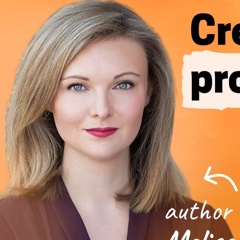
Melissa Perri
Product consultant and educator, founder of Produxt Labs and Product Institute, teaches at Harvard Business School, author of Escaping the Build Trap
Where to hear and read about Melissa Perri1 episode or test

Melissa Perri is a product consultant and educator who founded Produxt Labs and Product Institute, teaches at Harvard Business School, and wrote Escaping the Build Trap. The lesson most worth taking from her: write strategy down as a linked chain of short memos from company vision to team work, so every team can tell the same story.
everybody should be telling the same story
How to create a winning product strategy | Melissa Perri
Melissa Perri: the story and the lessons
1Melissa Perri's reach across product organizations
Perri has trained or worked with close to 5,000 product managers. Teaching and consulting together have put her in front of nearly 5,000 PMs. Training has reached multiple hundreds of companies, and she has gone deep with over 30 since founding Produxt Labs.
Her first estimate was north of 4,000, then she corrected it to approaching 5,000. Asked if she is a top-five person for PMs worked with, she said probably.
She has set up product management in high-growth SaaS, banks and pharma. Consulting since 2014, she worked as interim CPO in high-growth SaaS companies through a partnership with Insight Venture Partners. She also set up product management for the first time at banks and pharmaceutical companies.
Some clients she followed for eight years. The recurring problem she saw was turning strategy into something hundreds of employees can follow.
Perri moved from consulting to teaching product executives. She stepped back from deep consulting at the end of 2020. She teaches a Harvard elective to second-year MBAs, and Product Institute has run since 2016 and has trained almost all of the Fortune 100.
Training product executives is her bet for better products and better PMs. She also runs CPO Accelerator for VPs and heads of product moving into the C-suite, and is writing a book on product operations with Denise, her former VP of product.
2How Perri spots a missing product strategy
Perri reads exhausted teams with flat metrics as a sign of no strategy. She sees teams working 80 hours a week, heads down, while the executive team asks what is happening. Without strategy, teams work on isolated features and one team rarely moves a hard business metric.
Teams get spread thin across many initiatives. She says she sees this all the time.
She asks every team what it works on and why. Her first step with multi-team companies is to ask each team what it is doing, what the most important thing it could do is, and why. She then tries to ladder the answers into one strategy herself.
If she cannot connect them, nobody at the top is forming and deploying strategy. The question: "what are you working on what's the most important thing you could be doing and why".
Perri calls the gap between company intents and team work the missing middle. When the link from strategic intents to what teams build is gone, executives see product as a black box. They ask how bug fixes and feature enhancements ladder up to the year's goals.
Repeated "why are we building this?" questions from teams point to a leadership failure to explain the goal.
She says a training problem is almost always a strategy problem. Perri says about 99% of the time, a supposed training problem is really how goals are set and strategy deployed. Trained people still have no context on what to work toward.
Her advice is to fix goal setting and deployment before buying more training.
Perri wants executives to act as one team with shared goals. When executives chase separate goals, such as sales going after net new logos with no link to product priorities, infighting follows. Shared strategic intents make trade-offs calm and objective.
She has seen bad CEOs set executives against each other. Shared priorities also help PMs push back on stakeholders, because the reasons one thing wins over another are known. Her line: "the executive team should be one team".
3Perri's method for writing strategy and vision
Perri interrogates leaders to pull out strategy held in their heads. When strategy seems missing, it is often unwritten. She asks what good looks like, whether hitting certain numbers is good or bad and why, and what numbers or behaviors change if a thing ships.
Different answers across the organization show a lack of alignment.
She builds strategy as a chain of linked two-page memos. The CEO writes two pages: where the company came from, how it differs today, external threats, competition, what to do and not do, and prioritized intents for the next two to three years. Directors and VPs write product initiatives, and teams write the solutions.
Each memo answers the same five questions: vision, market position, where the product is today, priorities, and outcomes sought. Docs live in Google Docs or a wiki, linked so anyone can read up the tree. Companies with an existing template keep it.
Perri tests a strategy by whether every team tells the same story. She asks all teams what they do and why. If strategy is deployed, each connects tactical work through initiatives and customer value up to business metrics and new markets.
Intents are the big business movers, such as going up or down market, expanding geographically, or entering a new market.
She wants visions that are concrete and say what the company won't do. A good vision is concrete, says how the company differs from competitors, names future customers, and is far enough away that one build cannot reach it. A healthcare team's "backbone of healthcare" vision was a tagline no one could explain.
Without a stated no, a team can easily decide to copy a competitor. She starts with a written brain dump of what competitors do and what you would not copy.
Perri pairs a written vision with visuals made with a designer. Diagrams of customer interaction or the ecosystem, plus rough prototypes, show relationships that words miss. Executives are often visual.
At athenahealth, a head of UX and a VP of product mocked up prototypes of the vision. They were untested, yet they aligned people.
She treats strategy as a best-informed bet that gets rechecked. Leaders start from internal data, customer research and company goals, and a data analyst helps. Waiting for 100% certainty is the hardest trap.
"we make the best possible guess to go in one direction and then we just keep reevaluating it", and pivot if wrong.
4When Perri says to hire a CPO, and when to bring her in
Perri hires a CPO when portfolio or market complexity outgrows a VP. Triggers are moving from one product to several, geographic expansion, drastically new markets, a pivot or a merger. In SaaS this tends to land around $20 to 30M in ARR.
Seven to eight PMs is a rough guide, not a rule. A VP of product can cover one or two products, but multi-product or platform strategy is where she would look for a CPO.
She sees executive skill as what separates a CPO from a VP. A CPO faces the board, understands financials well enough to turn a roadmap into revenue projections, and works with the chief revenue officer and CFO. A CPO can also oversee several functions, such as design and product.
She treats head of product and VP of product as near-identical roles.
Perri treats executives who can't see what product does as a warning. If executives and the board say they do not know whether goals are being met, and the person reporting to them is below CPO level, you likely need a CPO. Other signs are frustrated PMs with no direction and junior PMs with no training path.
"if your executives don't know what you're doing that's a big problem".
She takes consulting work only where leaders will act on her advice. A consultant cannot change things for you, and nothing changes if leaders ignore the advice. She tells some companies up front that they are not ready for drastic change, including changes in people.
Clients have told her to just change it. Her answer: you can't just tell me to do your job. Her stated goal is to put herself out of business one day.
Perri uses interim CPO roles as a three-month bridge. At Insight, the rule was never to be hands-on in a company for more than three months. In that time they hired a CPO and kept teams moving with a roadmap, light training and some processes.
They handed the new CPO customer background, the strategy so far, the current roadmap and customer interviews.
5Perri on product operations and how a PM keeps learning
Perri standardizes what must roll up and leaves team-owned work alone. Product operations has three parts: internal data and insights, customer and market research, and standard cadences. Roadmap format and ties with sales and product marketing get standardized, not how a team runs stand-ups.
At athenahealth, 350 PMs had asked the same hospital staff one question ten times from ten teams. Recording and searching interviews scales research without centralizing it. Her next book covers this.
She says PMs learn most from execution, then deep dives on weak spots. Review the job, pick one gap such as user research or data analytics, and study that. Her test for a topic: what is this going to do to help me get to the next level.
New product owners were writing 8,000 user stories for tiny features, so she interviewed people who wrote the Agile Manifesto and taught Scrum to trace why. She suggests a retrospective with yourself and dropping dogmatic processes that don't serve the team.
Perri tells PMs to practice strategy by imagining they are the CPO. Without strategy scope, imagine what you would do in the CPO's seat, dig into data, and ask your CPO how priorities were chosen. Ask sales about win-loss analysis and why competitors win.
A CPO graduate of her program credited this habit for building her strategy reps. Perri also studied how companies like Netflix moved from point A to point B.

How to create a winning product strategy | Melissa Perri
Melissa Perri explains how to spot a missing product strategy, write one down in two-page memos, and connect team work to business goals. She draws on training over 4,000 PMs and working with 30+ companies in deep consulting.
Perri has trained or worked with close to 5,000 product managers. Teaching and consulting together have put her in front of nearly 5,000 PMs. Training has reached multiple hundreds of companies, and she has gone deep with over 30 since founding Produxt Labs.
Her first estimate was north of 4,000, then she corrected it to approaching 5,000. Asked if she is a top-five person for PMs worked with, she said probably.
She has set up product management in high-growth SaaS, banks and pharma. Consulting since 2014, she worked as interim CPO in high-growth SaaS companies through a partnership with Insight Venture Partners. She also set up product management for the first time at banks and pharmaceutical companies.
Some clients she followed for eight years. The recurring problem she saw was turning strategy into something hundreds of employees can follow.
Perri moved from consulting to teaching product executives. She stepped back from deep consulting at the end of 2020. She teaches a Harvard elective to second-year MBAs, and Product Institute has run since 2016 and has trained almost all of the Fortune 100.
Training product executives is her bet for better products and better PMs. She also runs CPO Accelerator for VPs and heads of product moving into the C-suite, and is writing a book on product operations with Denise, her former VP of product.
Perri reads exhausted teams with flat metrics as a sign of no strategy. She sees teams working 80 hours a week, heads down, while the executive team asks what is happening. Without strategy, teams work on isolated features and one team rarely moves a hard business metric.
Teams get spread thin across many initiatives. She says she sees this all the time.
She asks every team what it works on and why. Her first step with multi-team companies is to ask each team what it is doing, what the most important thing it could do is, and why. She then tries to ladder the answers into one strategy herself.
If she cannot connect them, nobody at the top is forming and deploying strategy. The question: "what are you working on what's the most important thing you could be doing and why".
Perri calls the gap between company intents and team work the missing middle. When the link from strategic intents to what teams build is gone, executives see product as a black box. They ask how bug fixes and feature enhancements ladder up to the year's goals.
Repeated "why are we building this?" questions from teams point to a leadership failure to explain the goal.
She says a training problem is almost always a strategy problem. Perri says about 99% of the time, a supposed training problem is really how goals are set and strategy deployed. Trained people still have no context on what to work toward.
Her advice is to fix goal setting and deployment before buying more training.
Perri wants executives to act as one team with shared goals. When executives chase separate goals, such as sales going after net new logos with no link to product priorities, infighting follows. Shared strategic intents make trade-offs calm and objective.
She has seen bad CEOs set executives against each other. Shared priorities also help PMs push back on stakeholders, because the reasons one thing wins over another are known. Her line: "the executive team should be one team".
Perri interrogates leaders to pull out strategy held in their heads. When strategy seems missing, it is often unwritten. She asks what good looks like, whether hitting certain numbers is good or bad and why, and what numbers or behaviors change if a thing ships.
Different answers across the organization show a lack of alignment.
She builds strategy as a chain of linked two-page memos. The CEO writes two pages: where the company came from, how it differs today, external threats, competition, what to do and not do, and prioritized intents for the next two to three years. Directors and VPs write product initiatives, and teams write the solutions.
Each memo answers the same five questions: vision, market position, where the product is today, priorities, and outcomes sought. Docs live in Google Docs or a wiki, linked so anyone can read up the tree. Companies with an existing template keep it.
Perri tests a strategy by whether every team tells the same story. She asks all teams what they do and why. If strategy is deployed, each connects tactical work through initiatives and customer value up to business metrics and new markets.
Intents are the big business movers, such as going up or down market, expanding geographically, or entering a new market.
She wants visions that are concrete and say what the company won't do. A good vision is concrete, says how the company differs from competitors, names future customers, and is far enough away that one build cannot reach it. A healthcare team's "backbone of healthcare" vision was a tagline no one could explain.
Without a stated no, a team can easily decide to copy a competitor. She starts with a written brain dump of what competitors do and what you would not copy.
Perri pairs a written vision with visuals made with a designer. Diagrams of customer interaction or the ecosystem, plus rough prototypes, show relationships that words miss. Executives are often visual.
At athenahealth, a head of UX and a VP of product mocked up prototypes of the vision. They were untested, yet they aligned people.
She treats strategy as a best-informed bet that gets rechecked. Leaders start from internal data, customer research and company goals, and a data analyst helps. Waiting for 100% certainty is the hardest trap.
"we make the best possible guess to go in one direction and then we just keep reevaluating it", and pivot if wrong.
Perri hires a CPO when portfolio or market complexity outgrows a VP. Triggers are moving from one product to several, geographic expansion, drastically new markets, a pivot or a merger. In SaaS this tends to land around $20 to 30M in ARR.
Seven to eight PMs is a rough guide, not a rule. A VP of product can cover one or two products, but multi-product or platform strategy is where she would look for a CPO.
She sees executive skill as what separates a CPO from a VP. A CPO faces the board, understands financials well enough to turn a roadmap into revenue projections, and works with the chief revenue officer and CFO. A CPO can also oversee several functions, such as design and product.
She treats head of product and VP of product as near-identical roles.
Perri treats executives who can't see what product does as a warning. If executives and the board say they do not know whether goals are being met, and the person reporting to them is below CPO level, you likely need a CPO. Other signs are frustrated PMs with no direction and junior PMs with no training path.
"if your executives don't know what you're doing that's a big problem".
She takes consulting work only where leaders will act on her advice. A consultant cannot change things for you, and nothing changes if leaders ignore the advice. She tells some companies up front that they are not ready for drastic change, including changes in people.
Clients have told her to just change it. Her answer: you can't just tell me to do your job. Her stated goal is to put herself out of business one day.
Perri uses interim CPO roles as a three-month bridge. At Insight, the rule was never to be hands-on in a company for more than three months. In that time they hired a CPO and kept teams moving with a roadmap, light training and some processes.
They handed the new CPO customer background, the strategy so far, the current roadmap and customer interviews.
Perri standardizes what must roll up and leaves team-owned work alone. Product operations has three parts: internal data and insights, customer and market research, and standard cadences. Roadmap format and ties with sales and product marketing get standardized, not how a team runs stand-ups.
At athenahealth, 350 PMs had asked the same hospital staff one question ten times from ten teams. Recording and searching interviews scales research without centralizing it. Her next book covers this.
She says PMs learn most from execution, then deep dives on weak spots. Review the job, pick one gap such as user research or data analytics, and study that. Her test for a topic: what is this going to do to help me get to the next level.
New product owners were writing 8,000 user stories for tiny features, so she interviewed people who wrote the Agile Manifesto and taught Scrum to trace why. She suggests a retrospective with yourself and dropping dogmatic processes that don't serve the team.
Perri tells PMs to practice strategy by imagining they are the CPO. Without strategy scope, imagine what you would do in the CPO's seat, dig into data, and ask your CPO how priorities were chosen. Ask sales about win-loss analysis and why competitors win.
A CPO graduate of her program credited this habit for building her strategy reps. Perri also studied how companies like Netflix moved from point A to point B.