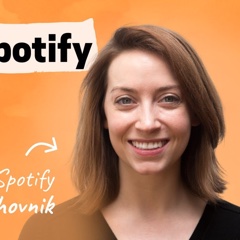
Maya Prohovnik
Head of Podcast Product at Spotify, formerly employee #1 at Anchor
Where to hear and read about Maya Prohovnik1 episode or test

Maya Prohovnik was Anchor's first employee and now runs podcast product at Spotify, where Anchor became the core of the hosting platform. The thing most worth learning from her is to hold the mission fixed, treat every tactic as changeable, and use your own product so you know what users feel.
the one thing that was unwavering for us was our mission and everything else was mutable
Building Anchor, selling to Spotify, and lessons learned | Maya Prohovnik (Head of Podcast Product)
Maya Prohovnik: the story and the lessons
1Maya Prohovnik's path from Anchor's first hire to Spotify
Prohovnik was Anchor's first employee and now runs Spotify's podcast product. She oversees the product, design and engineering teams that build tools for podcasters and listeners. Spotify bought Anchor five years ago, and it became the core of Spotify's hosting platform.
The Hollywood Reporter named her one of the Most Important People in Podcasting in 2023.
She started in customer support, which made her very user focused. That background shapes how she argues for roadmap time for current user pain over distant strategic bets.
Anchor had about 20 people at acquisition, and Spotify is her first big tech company.
Spotify now leads podcasting on both the listening and hosting sides. Spotify holds officially over a third of global podcast listening. More than 75% of new shows on Spotify are hosted with Spotify for Podcasters, the new name for Anchor.
Anchor already hosted about 40% of new podcasts by the time Spotify acquired it.
She runs four podcasts as test beds for what creators feel. Her Stephen King show peaked at 5,000 listeners an episode and taught her production, SEO and marketing. Her Big Brother show is recorded on a phone with almost no editing, and callers have kept it going for six or seven years. Her Children of Time show drew only about 25 listeners.
She does not think of herself as a creator: "I'm just too much of a product person."
2How Prohovnik and Anchor found growth
She and the CEO rebuilt a loved product because it could not reach the mission. Anchor 1.0 was a voice-messaging app with retained users, some of whom met and married on it. The founders felt it would never be big enough to democratize audio, so they rebuilt it as 2.0, a content creation tool. The build took a few months and the numbers shot up after launch.
The team doubted the move and felt guilty throughout, and it cost the people who loved 1.0. New kinds of people arrived and used it as a replacement for hard, traditional podcasting.
Anchor resisted its top user request for six months, and it started the hockey stick. Users wanted to export episodes as a podcast, but the team wanted to be bigger than podcasting and avoided the word, using nautical terms like waves. After a small export test, they rebuilt the whole app around RSS, and growth took off.
The first change ignored users and was right. The second meant giving up something the team believed was inherently true.
She held the mission fixed and treated everything else as changeable. Anchor's mission to democratize audio never changed, while the app, the terminology and even the avoidance of podcasts all did. Anchor moved through three versions before it took off.
Small product changes can turn out to be existential moments, so she advises keeping your eyes open as the user base matures.
Paid interns made Apple Podcasts distribution feel like magic. College interns manually made Apple accounts and submitted hundreds of thousands of podcasts behind one button. Users appeared on Apple about a day later, an advantage over commoditized hosting platforms.
Many people assumed Anchor had a secret deal with Apple, and it did not. "We'll get back to you in three days" saves no time, while a button felt automatic. The workaround was eventually dropped, and one intern is still a PM on her team.
Anchor answered odd ideas with "yes, and" instead of "no, because". The team humored silly ideas such as hand-submitting podcasts with interns and built on them. Doing the unscalable thing for a while is why nobody else understood how Anchor was different.
Anchor built for the 80% of users, not the vocal 20%. The louder 20% pull a product deeper into a niche. The rule matters most for a creative platform aimed at everyone.
3Prohovnik on dogfooding and trusting your gut
She makes everyone on her product team start a podcast. Looking at research and data is not the same as feeling the problem. Teammates who finally make a show say they get it.
Creators depend on these tools for a living, so feature request lists alone rank the work wrongly.
She builds dogfooding into team habits instead of leaving it optional. She elevates teammates who have shows, includes making a podcast in every offsite, and listens to every episode her team makes. A late-night DM about an iOS bug led to a fix the next day.
She treats her gut as data, but only when she can explain it. In a large organization, "I believe this, so do it" does not work. She backs instinct with past experience, her own use of the product and user stories, as one data point beside quantitative data.
Projects forced through against the team's belief are doomed from the start. She calls big shifts evolutions, not pivots, because wording matters when persuading people.
She uses data to feed creativity, not replace it. Her sequence is a hypothesis shaped by data, user research, success metrics set before launch, then follow-up.
She warns against running the same insights process on every feature, and says product work has lost some of its early-internet playfulness.
She learned that creators keep publishing when they know who listens. Her Big Brother show has lasted six or seven years mostly because of its weekly callers. Without knowing who listens or what they like, it is hard to keep investing time.
Her own struggles became a playbook for new podcasters. Record with a friend, not alone, and do not follow a script. Do not publish a 30-second test, and pick a topic you could talk about for hours.
"You have to make yourself feel the pain that we're trying to understand in our users." The playbook could become onboarding education for new creators.
4How Prohovnik kept a startup's pace inside Spotify and leads her team
Anchor kept its four core values after the acquisition, including "move fast". Daniel Ek asked the team to keep moving fast and help teach the rest of Spotify to do the same. Anchor had shipped a feature every two weeks and never built anything over three months, while Spotify's "small" was about a quarter.
Prohovnik sees it as her job to push people on unnecessary delays, while accepting that a large company needs some added thoughtfulness.
Anchor stayed valuable to Spotify by marketing itself and helping other teams. The team was vocal, did internal marketing, built relationships and kept asking how it could help. Spotify's strategy has shifted dozens of times in almost five years.
Anchor did not follow blindly but got excited about each next thing, anchored to the shared goal of making podcasting a huge business.
Isolating the team for a year helped speed but left it detached. Ek told the team to say no to meetings and keep being Anchor for a year. A year later relationships were weak and staff felt cut off from Spotify's work.
They stopped calling themselves Anchor internally and worked more with other teams, accepting some slowdown.
She says acquired founders commonly hit a deep slump and need peers. She talked with other founders Spotify acquired and heard the same pattern. They lose ownership, direct impact and speed, and then choose to stay or leave.
She feared becoming a cog in a wheel, wished for more support, and is now nearly five years in and loves how Spotify runs.
She gives feedback by caring personally and challenging directly. Every manager on her team reads Radical Candor. She treats underperformance as a likely wrong-role problem, opens by saying she wants the person to succeed, and offers mentoring even if the next step is off her team.
"You need to care personally and challenge directly."
She triages every task at day's end as do, defer, delegate or delete. She writes everything down in Todoist and will not stop working until she has gone through whatever she did not finish. She uses a plain list, not the grid view of the Eisenhower matrix.
Writing tasks down frees her for deep thinking, and when stressed she lists everything and finds it is only about four things.

Building Anchor, selling to Spotify, and lessons learned | Maya Prohovnik (Head of Podcast Product)
Maya Prohovnik explains how Anchor reached its early growth through hands-on dogfooding, unscalable tricks and willingness to drop products that were working. She also covers how the team kept a startup pace inside Spotify, where more than 75% of new shows are now hosted on what used to be Anchor.
Prohovnik was Anchor's first employee and now runs Spotify's podcast product. She oversees the product, design and engineering teams that build tools for podcasters and listeners. Spotify bought Anchor five years ago, and it became the core of Spotify's hosting platform.
The Hollywood Reporter named her one of the Most Important People in Podcasting in 2023.
She started in customer support, which made her very user focused. That background shapes how she argues for roadmap time for current user pain over distant strategic bets.
Anchor had about 20 people at acquisition, and Spotify is her first big tech company.
Spotify now leads podcasting on both the listening and hosting sides. Spotify holds officially over a third of global podcast listening. More than 75% of new shows on Spotify are hosted with Spotify for Podcasters, the new name for Anchor.
Anchor already hosted about 40% of new podcasts by the time Spotify acquired it.
She runs four podcasts as test beds for what creators feel. Her Stephen King show peaked at 5,000 listeners an episode and taught her production, SEO and marketing. Her Big Brother show is recorded on a phone with almost no editing, and callers have kept it going for six or seven years. Her Children of Time show drew only about 25 listeners.
She does not think of herself as a creator: "I'm just too much of a product person."
She and the CEO rebuilt a loved product because it could not reach the mission. Anchor 1.0 was a voice-messaging app with retained users, some of whom met and married on it. The founders felt it would never be big enough to democratize audio, so they rebuilt it as 2.0, a content creation tool. The build took a few months and the numbers shot up after launch.
The team doubted the move and felt guilty throughout, and it cost the people who loved 1.0. New kinds of people arrived and used it as a replacement for hard, traditional podcasting.
Anchor resisted its top user request for six months, and it started the hockey stick. Users wanted to export episodes as a podcast, but the team wanted to be bigger than podcasting and avoided the word, using nautical terms like waves. After a small export test, they rebuilt the whole app around RSS, and growth took off.
The first change ignored users and was right. The second meant giving up something the team believed was inherently true.
She held the mission fixed and treated everything else as changeable. Anchor's mission to democratize audio never changed, while the app, the terminology and even the avoidance of podcasts all did. Anchor moved through three versions before it took off.
Small product changes can turn out to be existential moments, so she advises keeping your eyes open as the user base matures.
Paid interns made Apple Podcasts distribution feel like magic. College interns manually made Apple accounts and submitted hundreds of thousands of podcasts behind one button. Users appeared on Apple about a day later, an advantage over commoditized hosting platforms.
Many people assumed Anchor had a secret deal with Apple, and it did not. "We'll get back to you in three days" saves no time, while a button felt automatic. The workaround was eventually dropped, and one intern is still a PM on her team.
Anchor answered odd ideas with "yes, and" instead of "no, because". The team humored silly ideas such as hand-submitting podcasts with interns and built on them. Doing the unscalable thing for a while is why nobody else understood how Anchor was different.
Anchor built for the 80% of users, not the vocal 20%. The louder 20% pull a product deeper into a niche. The rule matters most for a creative platform aimed at everyone.
She makes everyone on her product team start a podcast. Looking at research and data is not the same as feeling the problem. Teammates who finally make a show say they get it.
Creators depend on these tools for a living, so feature request lists alone rank the work wrongly.
She builds dogfooding into team habits instead of leaving it optional. She elevates teammates who have shows, includes making a podcast in every offsite, and listens to every episode her team makes. A late-night DM about an iOS bug led to a fix the next day.
She treats her gut as data, but only when she can explain it. In a large organization, "I believe this, so do it" does not work. She backs instinct with past experience, her own use of the product and user stories, as one data point beside quantitative data.
Projects forced through against the team's belief are doomed from the start. She calls big shifts evolutions, not pivots, because wording matters when persuading people.
She uses data to feed creativity, not replace it. Her sequence is a hypothesis shaped by data, user research, success metrics set before launch, then follow-up.
She warns against running the same insights process on every feature, and says product work has lost some of its early-internet playfulness.
She learned that creators keep publishing when they know who listens. Her Big Brother show has lasted six or seven years mostly because of its weekly callers. Without knowing who listens or what they like, it is hard to keep investing time.
Her own struggles became a playbook for new podcasters. Record with a friend, not alone, and do not follow a script. Do not publish a 30-second test, and pick a topic you could talk about for hours.
"You have to make yourself feel the pain that we're trying to understand in our users." The playbook could become onboarding education for new creators.
Anchor kept its four core values after the acquisition, including "move fast". Daniel Ek asked the team to keep moving fast and help teach the rest of Spotify to do the same. Anchor had shipped a feature every two weeks and never built anything over three months, while Spotify's "small" was about a quarter.
Prohovnik sees it as her job to push people on unnecessary delays, while accepting that a large company needs some added thoughtfulness.
Anchor stayed valuable to Spotify by marketing itself and helping other teams. The team was vocal, did internal marketing, built relationships and kept asking how it could help. Spotify's strategy has shifted dozens of times in almost five years.
Anchor did not follow blindly but got excited about each next thing, anchored to the shared goal of making podcasting a huge business.
Isolating the team for a year helped speed but left it detached. Ek told the team to say no to meetings and keep being Anchor for a year. A year later relationships were weak and staff felt cut off from Spotify's work.
They stopped calling themselves Anchor internally and worked more with other teams, accepting some slowdown.
She says acquired founders commonly hit a deep slump and need peers. She talked with other founders Spotify acquired and heard the same pattern. They lose ownership, direct impact and speed, and then choose to stay or leave.
She feared becoming a cog in a wheel, wished for more support, and is now nearly five years in and loves how Spotify runs.
She gives feedback by caring personally and challenging directly. Every manager on her team reads Radical Candor. She treats underperformance as a likely wrong-role problem, opens by saying she wants the person to succeed, and offers mentoring even if the next step is off her team.
"You need to care personally and challenge directly."
She triages every task at day's end as do, defer, delegate or delete. She writes everything down in Todoist and will not stop working until she has gone through whatever she did not finish. She uses a plain list, not the grid view of the Eisenhower matrix.
Writing tasks down frees her for deep thinking, and when stressed she lists everything and finds it is only about four things.