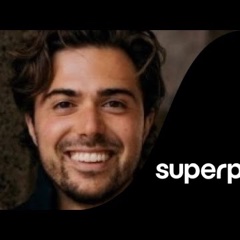
Max Marchione
Cofounder and CEO of Superpower, a digital health membership
Where to hear and read about Max Marchione1 episode or test

Max Marchione is cofounder and CEO of Superpower, a $499 a year health membership built on blood tests, health data and clinicians. The lesson most worth taking from him is to launch at the price you want long term, so the price forces a product most people can own.
Experts reason from the past whereas the nature of founding something is thinking about the future.
How Superpower is Reinventing Healthcare
Max Marchione: the story and the lessons
1Max Marchione's path from sick teenager to Superpower
Marchione was ill for ten years before one doctor tested his whole body. From age 8 to 18 he had chronic migraines and sinusitis, had surgery, and saw over a dozen doctors. A doctor who tested his whole body finally connected the dots.
At 12 his liver enzymes were worse than 97.5% of the population and he was told that was okay. He was also told to medicate for life until that one doctor tested everything.
He tested everything on himself while other people mocked him. Sleep took him 3 hours every night and he slept through half his high school classes. He played semi-professional soccer yet fell asleep 10 minutes before races. In 2016 he wore a big first-generation Oura ring, blue light glasses and mouth tape.
He kept a list of the companies he tried and invested in a longevity biosciences company at 17. These experiments showed him the gap between mainstream care and the best care.
He has built companies since age 8 and distrusts neat origin stories. Before Superpower he ran two small companies and worked at Goldman Sachs. He says founders tend to invent a linear story after the fact.
He sees US founders as trained to fabricate tidy origin stories, and says he wants to give the real reasoning instead.
He screened ideas for personal meaning, global meaning and $100 billion scale. He required that the idea be deeply personal, important to the world, and able to support a company worth at least $100 billion. Health was the one problem that passed all three.
He chose between building a new city and a new healthcare system, and picked the system because it comes first. He quit Goldman Sachs about three years ago and moved to the US. The $100 billion test forces him to think about what can compound over 30 to 50 years.
2Why Marchione launched Superpower at $499, not $10,000
Marchione planned a Tesla-style price ladder and later called it a mistake. The plan was to start at $10,000, then $2,000, then $799, and productize bit by bit. The first product came out too service-led and high-touch, and it set too many expectations.
Starting high meant making decisions for that price point instead of for a product most people could own. He cut the scope to a $499 yearly membership, about $42 a month.
He chose $499 by feel because the price forces the product. At $799 to $1,000 the membership becomes a serious expense that is hard to charge up front, and customers often need split payments. At $2,000 the pull is to add doctors, because people want to chat with a human.
He does not want that pull, because it is not the company he is building. There was no formal pricing study.
He holds one price so engineering can build product instead. Consumers anchor to a price, and a price can define a category. Changing it is complex for engineering because legacy users, renewals and changing inclusions all have to be handled.
He would rather put that effort into understanding customers and building something people love than into micro price tweaks.
The membership turns test results into a report and a care team. Members get twice-yearly tests of 100+ biomarkers, one place for all their health data, a large report that connects the dots, and a medical team reachable by text. The team also reaches out proactively.
Follow-up diagnostics, pharmaceuticals, supplements and referrals are bought through Superpower and are not covered by the $499, and some can get expensive. The aim is a membership so valuable that 150 million Americans own one, as they own Amazon Prime.
3How Superpower built a near-200,000 waitlist without paid ads
Marchione launched with a manifesto saying healthcare is broken. It cited 80% of Americans being metabolically unhealthy, thousands of environmental toxins and falling fertility. It said the system misses red flags and reacts too late. Hundreds of people messaged their own stories at the announcement.
The team keeps a large Notion page of those stories. The message landed because people felt let down by healthcare after Covid.
He made Superpower orange because every health company was blue. The brand rests on two layers: the beliefs underneath and how the company shows up. Marchione ties it to shared beliefs, almost like a religion.
With a good product, word of mouth and marketing drops, this drove most of a waitlist of almost 200,000 people.
A hoodie drop sold out in 10 minutes and replaced ad spend. The "world's healthiest hoodie" used organic cotton and algae-based screen printing, and came with a story about polyester and microplastics. It launched through celebrity insiders and resold for $2,000 on eBay.
Buyers became walking billboards at little cost. His rule is that every dollar that would go to Meta or Google should go into something emotional and creative with similar return. Several other drops have run since.
The first customers were friends and family who gave heavy feedback. Launch meant a product they loved and would want for their own friends and family. Early customers came from people the founders knew, then spread by word of mouth.
Members finding missed problems gave the brand its proof. Marchione himself found pre-diabetes and mold toxicity. Other members found mold or plastic exposure, unbalanced hormones, or high genetic heart risk from LPA.
One case is a story, but the same findings across many members make real data. He concludes that a blood test is a helpful starting point for many people.
Word of mouth cooled once clinicians stopped asking for referrals. Early on, clinicians in the loop asked members whether their parents should join. That human touchpoint is gone, and referrals are not a current focus because resources are limited.
He says driving word of mouth takes a product that supports it and a deliberate focus, including teaching members how to sign others up.
He wants growth to come from the business model, not ads. Marchione believes great consumer businesses are not built on Meta and Google ads. No paid ads have run yet, though media buying will ramp later because few consumer companies grow without some.
Free products have growth built in but risk monetization, while high-priced models fund growth from margin. Superpower sits between them and won't lose money on what it sells.
4Marchione's bet on tastemakers and a category with no playbook
He targets tastemakers first, though they pay off slowest. He names media and wellness in LA, finance and fashion in NY, and technology in SF. B2B pays off fastest, then women aged 40 to 55, then men of that age, then tastemakers.
Tastemakers bring little money early. The bet is that they create the brand, identity and movement that reach many more people later.
Early sign-ups were far more varied than he expected. Sign-ups span geographies, ages, demographics and income brackets. Tastemakers are a deliberate focus, not the only customers.
He reasons from customers because no consumer health company has won yet. He sets success at the level of Apple, Nvidia or Amazon and sees none in consumer health. Even OpenAI, Figma and Canva only count as being on the path.
He calls this empowering and liberating, because the company is free to create instead of copy. "There's no playbook. There's nothing to copy."
He tells founders to start with one narrow wedge. Pick one thing that works today and use it as a wedge into the next thing. Pair the big ambition with a hypothesis about what works now.
He sees the future as built by doing what works now as a stepping stone.
He warns founders off expert advice in a new category. Experts reason from the past and list what can go wrong, while founding means thinking about what happens if it goes right.
He advises not letting expert dogma define what is possible in a new category.
5How Marchione prices healthcare like a commodity
He cuts prices through partnerships, thinner margins and bundling. Partnerships lower Superpower's own costs. Marchione believes healthcare is overpriced, so the company deliberately makes less money.
Like Costco or Amazon Prime, the membership lets Superpower undercharge on everything else.
He argues Hims only earns 80% margin because it must spend it. He asks in what industry companies make 80% gross margin selling commodities. His answer is that they spend it on customer acquisition every time.
If people come to Superpower first, it skips that spend, so what Hims sells at 80% margin can be sold lower.
He sells vetted supplements near cost to earn member trust. Members said they did not know which supplements to trust, so a team picks the best products, shows the research and criteria, and sells them cheaper than anywhere else. The marketplace earns almost nothing.
What a member takes feeds the AI and the doctors. Members who start using it keep using it, though Marchione says the company has not educated members well about it yet.
He won't lose money on what Superpower sells and won't go free. There are no plans to go free for the foreseeable future. Lifetime value is probably too early to know, since high retention takes years to measure.
6Marchione's view of AI as the first stop for care
He wants an AI doctor that members consult before Google or a GP. Every member would carry a super app with an AI doctor that knows them in full. It would come before Google, ChatGPT or a primary care doctor.
He says people will have to trust the algorithm, because it knows their preferences and the medicine. A member should get the highest quality, lowest price answer.
He says AI beats doctors on context and current research. A doctor spends 5 to 10 minutes with a patient, while AI can hold the full record and every new paper. He cites doctors lagging research by 17 years.
Superpower centralizes records, wearables and labs in one place to build toward this.
He thinks AI can restore the family doctor's breadth. Thirty or 40 years ago one doctor knew a patient from childhood and could catch cases far from the average. Hurried doctors now handle the normal band well but struggle with corner cases.
AI can pattern match across the whole internet to find needles in a haystack. He calls new diagnoses and therapies nobody has found "a little bit more farfetched", but not unrealistic.
He says the next two years decide who gains most from AI. He expects AI to square most curves: 10x people become 100x, and 1x people stay 1x. He advises working extremely hard now, even at a short-term cost to health.
He expects future biotech to fix any short-term health hit, and wants to be positioned to access new therapies when they arrive.
7How Marchione builds the team and what he would change
He built a small, founder-heavy team that is strange by design. Four founding engineers are exited Y Combinator founders, and one partnerships lead just sold a company for $60 million. The office has a supplement drawer instead of snacks.
Staff inject NAD before all-hands, three have Superpower tattoos, and a blood-oath fingerprint hangs on the wall.
He regrets compromising on in-person work and the talent bar. He says these compromises feel expedient in the short term but are long-term bad.
A team full of founders also generates many ideas, so focus suffers and the company can be more focused.
He favors choosing to be healthy over tracking everything. He says many supposed harms show no effect in epidemiology, and constant tracking raises anxiety and lowers happiness. He feels amazing on four hours of sleep without an Oura ring, though he still values the data.

How Superpower is Reinventing Healthcare
Superpower's founder explains how a $499/year health membership grew a waitlist of almost 200,000 people mostly by word of mouth, a distinct brand and viral product drops, with no paid ads yet. He also covers why launching at a $10,000 price point was a mistake and why targeting tastemakers comes before the bigger short-term markets.
Marchione was ill for ten years before one doctor tested his whole body. From age 8 to 18 he had chronic migraines and sinusitis, had surgery, and saw over a dozen doctors. A doctor who tested his whole body finally connected the dots.
At 12 his liver enzymes were worse than 97.5% of the population and he was told that was okay. He was also told to medicate for life until that one doctor tested everything.
He tested everything on himself while other people mocked him. Sleep took him 3 hours every night and he slept through half his high school classes. He played semi-professional soccer yet fell asleep 10 minutes before races. In 2016 he wore a big first-generation Oura ring, blue light glasses and mouth tape.
He kept a list of the companies he tried and invested in a longevity biosciences company at 17. These experiments showed him the gap between mainstream care and the best care.
He has built companies since age 8 and distrusts neat origin stories. Before Superpower he ran two small companies and worked at Goldman Sachs. He says founders tend to invent a linear story after the fact.
He sees US founders as trained to fabricate tidy origin stories, and says he wants to give the real reasoning instead.
He screened ideas for personal meaning, global meaning and $100 billion scale. He required that the idea be deeply personal, important to the world, and able to support a company worth at least $100 billion. Health was the one problem that passed all three.
He chose between building a new city and a new healthcare system, and picked the system because it comes first. He quit Goldman Sachs about three years ago and moved to the US. The $100 billion test forces him to think about what can compound over 30 to 50 years.
Marchione planned a Tesla-style price ladder and later called it a mistake. The plan was to start at $10,000, then $2,000, then $799, and productize bit by bit. The first product came out too service-led and high-touch, and it set too many expectations.
Starting high meant making decisions for that price point instead of for a product most people could own. He cut the scope to a $499 yearly membership, about $42 a month.
He chose $499 by feel because the price forces the product. At $799 to $1,000 the membership becomes a serious expense that is hard to charge up front, and customers often need split payments. At $2,000 the pull is to add doctors, because people want to chat with a human.
He does not want that pull, because it is not the company he is building. There was no formal pricing study.
He holds one price so engineering can build product instead. Consumers anchor to a price, and a price can define a category. Changing it is complex for engineering because legacy users, renewals and changing inclusions all have to be handled.
He would rather put that effort into understanding customers and building something people love than into micro price tweaks.
The membership turns test results into a report and a care team. Members get twice-yearly tests of 100+ biomarkers, one place for all their health data, a large report that connects the dots, and a medical team reachable by text. The team also reaches out proactively.
Follow-up diagnostics, pharmaceuticals, supplements and referrals are bought through Superpower and are not covered by the $499, and some can get expensive. The aim is a membership so valuable that 150 million Americans own one, as they own Amazon Prime.
Marchione launched with a manifesto saying healthcare is broken. It cited 80% of Americans being metabolically unhealthy, thousands of environmental toxins and falling fertility. It said the system misses red flags and reacts too late. Hundreds of people messaged their own stories at the announcement.
The team keeps a large Notion page of those stories. The message landed because people felt let down by healthcare after Covid.
He made Superpower orange because every health company was blue. The brand rests on two layers: the beliefs underneath and how the company shows up. Marchione ties it to shared beliefs, almost like a religion.
With a good product, word of mouth and marketing drops, this drove most of a waitlist of almost 200,000 people.
A hoodie drop sold out in 10 minutes and replaced ad spend. The "world's healthiest hoodie" used organic cotton and algae-based screen printing, and came with a story about polyester and microplastics. It launched through celebrity insiders and resold for $2,000 on eBay.
Buyers became walking billboards at little cost. His rule is that every dollar that would go to Meta or Google should go into something emotional and creative with similar return. Several other drops have run since.
The first customers were friends and family who gave heavy feedback. Launch meant a product they loved and would want for their own friends and family. Early customers came from people the founders knew, then spread by word of mouth.
Members finding missed problems gave the brand its proof. Marchione himself found pre-diabetes and mold toxicity. Other members found mold or plastic exposure, unbalanced hormones, or high genetic heart risk from LPA.
One case is a story, but the same findings across many members make real data. He concludes that a blood test is a helpful starting point for many people.
Word of mouth cooled once clinicians stopped asking for referrals. Early on, clinicians in the loop asked members whether their parents should join. That human touchpoint is gone, and referrals are not a current focus because resources are limited.
He says driving word of mouth takes a product that supports it and a deliberate focus, including teaching members how to sign others up.
He wants growth to come from the business model, not ads. Marchione believes great consumer businesses are not built on Meta and Google ads. No paid ads have run yet, though media buying will ramp later because few consumer companies grow without some.
Free products have growth built in but risk monetization, while high-priced models fund growth from margin. Superpower sits between them and won't lose money on what it sells.
He targets tastemakers first, though they pay off slowest. He names media and wellness in LA, finance and fashion in NY, and technology in SF. B2B pays off fastest, then women aged 40 to 55, then men of that age, then tastemakers.
Tastemakers bring little money early. The bet is that they create the brand, identity and movement that reach many more people later.
Early sign-ups were far more varied than he expected. Sign-ups span geographies, ages, demographics and income brackets. Tastemakers are a deliberate focus, not the only customers.
He reasons from customers because no consumer health company has won yet. He sets success at the level of Apple, Nvidia or Amazon and sees none in consumer health. Even OpenAI, Figma and Canva only count as being on the path.
He calls this empowering and liberating, because the company is free to create instead of copy. "There's no playbook. There's nothing to copy."
He tells founders to start with one narrow wedge. Pick one thing that works today and use it as a wedge into the next thing. Pair the big ambition with a hypothesis about what works now.
He sees the future as built by doing what works now as a stepping stone.
He warns founders off expert advice in a new category. Experts reason from the past and list what can go wrong, while founding means thinking about what happens if it goes right.
He advises not letting expert dogma define what is possible in a new category.
He cuts prices through partnerships, thinner margins and bundling. Partnerships lower Superpower's own costs. Marchione believes healthcare is overpriced, so the company deliberately makes less money.
Like Costco or Amazon Prime, the membership lets Superpower undercharge on everything else.
He argues Hims only earns 80% margin because it must spend it. He asks in what industry companies make 80% gross margin selling commodities. His answer is that they spend it on customer acquisition every time.
If people come to Superpower first, it skips that spend, so what Hims sells at 80% margin can be sold lower.
He sells vetted supplements near cost to earn member trust. Members said they did not know which supplements to trust, so a team picks the best products, shows the research and criteria, and sells them cheaper than anywhere else. The marketplace earns almost nothing.
What a member takes feeds the AI and the doctors. Members who start using it keep using it, though Marchione says the company has not educated members well about it yet.
He won't lose money on what Superpower sells and won't go free. There are no plans to go free for the foreseeable future. Lifetime value is probably too early to know, since high retention takes years to measure.
He wants an AI doctor that members consult before Google or a GP. Every member would carry a super app with an AI doctor that knows them in full. It would come before Google, ChatGPT or a primary care doctor.
He says people will have to trust the algorithm, because it knows their preferences and the medicine. A member should get the highest quality, lowest price answer.
He says AI beats doctors on context and current research. A doctor spends 5 to 10 minutes with a patient, while AI can hold the full record and every new paper. He cites doctors lagging research by 17 years.
Superpower centralizes records, wearables and labs in one place to build toward this.
He thinks AI can restore the family doctor's breadth. Thirty or 40 years ago one doctor knew a patient from childhood and could catch cases far from the average. Hurried doctors now handle the normal band well but struggle with corner cases.
AI can pattern match across the whole internet to find needles in a haystack. He calls new diagnoses and therapies nobody has found "a little bit more farfetched", but not unrealistic.
He says the next two years decide who gains most from AI. He expects AI to square most curves: 10x people become 100x, and 1x people stay 1x. He advises working extremely hard now, even at a short-term cost to health.
He expects future biotech to fix any short-term health hit, and wants to be positioned to access new therapies when they arrive.
He built a small, founder-heavy team that is strange by design. Four founding engineers are exited Y Combinator founders, and one partnerships lead just sold a company for $60 million. The office has a supplement drawer instead of snacks.
Staff inject NAD before all-hands, three have Superpower tattoos, and a blood-oath fingerprint hangs on the wall.
He regrets compromising on in-person work and the talent bar. He says these compromises feel expedient in the short term but are long-term bad.
A team full of founders also generates many ideas, so focus suffers and the company can be more focused.
He favors choosing to be healthy over tracking everything. He says many supposed harms show no effect in epidemiology, and constant tracking raises anxiety and lowers happiness. He feels amazing on four hours of sleep without an Oura ring, though he still values the data.