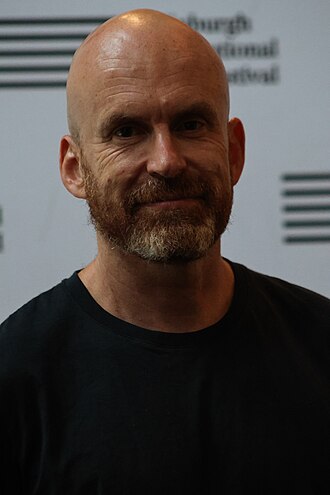
Matt Haig
Novelist and author of The Midnight Library
Where to hear and read about Matt Haig1 episode or test
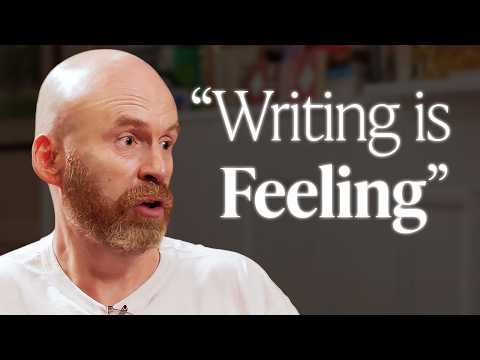
Matt Haig is a British novelist whose The Midnight Library has sold more than 10 million copies, after years of rejections, being dropped by publishers and about 20 books. The thing most worth learning from him is to ignore the market, write the book you would want to read, and trust your own feelings about it.
the moment you try and be commercial or try and research the market is the moment you will fail to be commercial and fail to reach the market.
How to Write a Book Millions of People Read (Matt Haig Interview)
Matt Haig: the story and the lessons
1Matt Haig's path from literary hopeful to The Midnight Library
Haig grew up feeling he did not belong anywhere. He grew up in a working-class town but was seen as posh, since his mother taught and his father was an architect. In publishing he felt at the lower end, having gone to neither an expensive school nor a top university.
He traces his sense of not belonging to his mother, who was adopted and very class conscious. His real influences were children's books, choose-your-own-adventure stories, John Hughes films and Borges, not only Woolf and Eliot.
His first three novels were literary, and he was not being himself. A highbrow publisher pushed him toward a self-consciously literary style, to the point that he was not truly himself on the page.
Being dropped, left on the metaphorical scrap heap, is what let him find his own voice. He still fits no single box and now likes that.
Two years of business books made him want to write what he loved. He wrote business books for a publisher for about two years, though he was far from a businessman. It felt pointless and a drag, though it taught him deadlines and he needed the money.
The impulse to write what he actually wanted grew during that time.
Dropped with a newborn and no money, he wrote the strange book. He was dropped just after his first child was born. He ignored the pressure to play safe and wrote The Humans, with an alien as its central character, swinging from comedy to serious and fitting no single genre.
It became his most successful book in the UK to that point.
The Humans, his most fantastical book, turned out to be his most personal. He thought he was writing a Douglas Adams tribute, but readers thanked him for a fable of autism. Years later his son was diagnosed autistic, and so was he.
He now thinks the alien who cannot grasp human rules was his own neurodivergence. He compares fiction to an unknown lagoon where things bubble up.
The Midnight Library was roughly his 20th book. It came after many rejections and being dropped by a couple of publishers. It has sold more than 10 million copies and has over 288,000 reviews on Amazon.
He is proudest of having no set demographic: his events draw men, women, young and old.
After his biggest hit, Haig stopped writing for six months to a year. He gave up alcohol and had therapy while his father had cancer and his son was ill. He had nowhere else to put his energy, so he came back with A Brief Life Impossible.
He wrote it for himself, like a first novel. It was not reader-centric, just ordering the world.
2Haig's rules for writing the book you would want to read
Haig refuses to research the market. A book on a store table now was taken on 2 years ago, written 3 years ago and conceived 4 or 5 years ago. A trend chased today is about five years out of date by publication.
He says trying to be commercial is how you fail to be commercial.
He writes for the only reader he can know: himself. Haig says you should be honest about the book you want to read and hope the two are the same. With ADHD he cannot write what bores him, so it has to be the most interesting thing he could write.
For him, writing for readers and writing for yourself is the same impulse: he wants to be understood as himself.
He names two traps: pleasing everyone and being taken seriously. One temptation is being too liked, a people pleaser on the page. The other is the capital L literary trap, wanting awards and respect. Haig fell into both at different points, out of insecurity.
The aim is an inner voice immune to both. Others may still call the result too commercial or too literary, but it was written from a pure place.
Haig treats nervousness about a project as a good sign. A little nervousness in his stomach about what he is writing tells him it will work. He leans into it and pushes past the self-consciousness instead of retreating to something safe.
He checks his own feelings before anyone else weighs in. He tells his son, who checks Reddit for the collective opinion, that his own response to a song or book is the correct one. He tries to note what he really feels about a book as he sends it off, before anyone has read it.
He says writers can be difficult, and that stubbornness protects the work from commercial pressure pushing it one way or the other.
Haig defines his career by what he says no to. He turned down more money from a bigger publisher for a nonfiction book he was not comfortable with, and has turned down film adaptations.
He says it is not selfless: work that does not feel like him gives him no kick.
3How Matt Haig drafts a book
Haig counts the thinking time before a book as real work. He calls himself 90% stop and 10% start. Ideas linger until they are developed enough to write, and his writer's block is not knowing which idea to choose.
He can only find out which idea works by writing it. He held the title The Memory Thief for ages before finding whose memory it was and who the thief was.
He gets ideas away from the Word document. Ideas more often arrive when he is in another country or traveling, because he needs to be taken out of himself a little.
Once an idea lands he rushes to get it down, driven by fear of forgetting it.
He lets the title shrink the concept to one sentence. The Midnight Library was first going to be The Library of Lost Lives, which was too long and a bit pretentious. He had the library idea for years, and it became simple only with the right title.
His objection is to complexity that only says aren't I a clever writer.
He drafts fast and keeps the story moving. His first drafts read like a six-year-old telling the sandpit story, with every sentence starting 'and then'. He has 'and then' tattooed on his wrist as a reminder.
The upside is that he does not linger where he does not need to. The story gets down first and he embellishes in editing.
He values the first draft as the one time he is a reader. Everything in a first draft is new to him, which he says is the point of writing a novel. He compares drafting to fishing in his own imagination and waiting to see what bites.
He is not a planner: he wants a title, a concept and characters, and not much more. Editing, by contrast, is monotonous and familiar.
Haig writes the feeling he wants the reader to have. Feelings are contagious, so the joy of writing a silly scene is what the reader feels. Writing to a quota such as 1,000 words a day would not carry that feeling.
He sees this especially in children's books, such as a silly scene with a rude elf.
He uses short words and ends chapters on them. He favors monosyllables like home, sky and love because they are the most shared and understood. Ending a chapter on one leaves a gentle note.
He does not ban words like nice, which a teacher forbade, because how a word is used matters more than how often.
He changes the narrator when the character is too close to him. The first Midnight Library draft starred a middle-aged man called Adam, and he nearly gave up. Changing the gender, age and place made Nora.
More of his mental illness, regret and guilt went into Nora than into a character who was just him.
When an adult novel stalls, he asks for the children's version. The first draft of The Midnight Train was an AI dystopia and did not work. Magic trains from The Railway Children, Harry Potter and The Polar Express pulled it right.
He values children as readers because they follow the daydream: a unicorn can walk down a London street and a child believes it.
4How Haig edits: a trusted editor, deep cuts and a stopping point
Haig learned his editor's taste over 15 years. He has worked with Francis Bickmore for 15 years, so he can tell when a note is the editor's own taste and when a general reader would say the same.
The editor is kind, so Haig translates the polite note into what he really means and asks him to be more brutal.
He treats a small note as a clue to a bigger problem. When an editor flags a line, Haig pulls at it until a whole character or premise turns out to be the problem. On The Humans, about 40,000 of 80,000 words went, then about 55,000 were added between first and second draft.
Fixing sentences while the structure is broken wastes the draft.
He stops revising around the fourth or fifth round. Haig goes into editing knowing there is no perfect novel. Returns shrink by the fourth or fifth round, and after that the book drifts from what it was and gets worse.
He sees the same over-meddling in overworked films.
5Why Haig writes toward hope and what drives his ambition
Haig treats a story as a vehicle for an emotion. For him the story delivers a feeling or a thought as well as he can. He looks for authentic optimism, not unicorns and rainbows, a light found inside the darkness of life.
He chose hope after writing the most depressing book he could. His third book, The Possession of Mr. P, was written while he was depressed: everyone dies and there is no hope. He does not think it badly written, only pointless.
He now writes uplifting books as something harder, not because he feels happy, since hope is more useful to offer with the one life we have.
He sees the most troubled minds make the most comforting work. He reread Winnie the Pooh at 24, agoraphobic and having a breakdown at his parents' house. A. A. Milne wrote it after the Battle of the Somme, with what we would now call PTSD.
Haig reads each character as an archetype of a mental state and the Hundred Acre Wood as Milne's escape.
Haig learned that chasing status never ends. Before publication he thought a book would make him happy forever, but two weeks later he wanted more. His ladder ran from bookstore tables to the window, the Sunday Times list, foreign publishers, the New York Times list, number one, then an adaptation.
With age he resists the pull more.
He says ambition works only when it rests on something to say. Drive and hunger are useful, but you need more than that. Beneath his ambition is the wish to be understood after a troubled adolescence.
Many readers means to him that he is not the weirdo he once thought he was.
6What Haig thinks AI means for writers
Haig argues messy human feeling gains value as AI spreads. AI looks at everything that came before and is set up to weed out errors, while life evolves through mistakes and mutations. Perfect, polished work feels flat and human mess feels alive.
He compares super-pop EDM, with every note on the beat, to a live band's chaos. His one optimistic take is that AI will make humans more human.
He expects readers to crave work made by someone who felt it. Art makes us feel less alone, so knowing a human felt the pain behind a book adds to its power. He pictures human-made as a label, like organic or fair trade.
He expects readers to want voice and forgive imperfection, and says he has no idea what books will look like in 20 or 30 years.
Haig defines originality as new feeling or a new way of telling. Human feeling is creative because it says what has not been said: new emotions articulated, or an old story told differently, not new media or shock.
With many books behind him, he says the hardest rival is his own past work, so even a character name must not repeat an earlier one.

How to Write a Book Millions of People Read (Matt Haig Interview)
Matt Haig explains how he finds ideas by letting them percolate, drafts fast, and cuts hard with an editor he has trusted for 15 years. His most useful habit is to ignore the market, write the book he would want to read, and trust his own feelings about it.
Haig grew up feeling he did not belong anywhere. He grew up in a working-class town but was seen as posh, since his mother taught and his father was an architect. In publishing he felt at the lower end, having gone to neither an expensive school nor a top university.
He traces his sense of not belonging to his mother, who was adopted and very class conscious. His real influences were children's books, choose-your-own-adventure stories, John Hughes films and Borges, not only Woolf and Eliot.
His first three novels were literary, and he was not being himself. A highbrow publisher pushed him toward a self-consciously literary style, to the point that he was not truly himself on the page.
Being dropped, left on the metaphorical scrap heap, is what let him find his own voice. He still fits no single box and now likes that.
Two years of business books made him want to write what he loved. He wrote business books for a publisher for about two years, though he was far from a businessman. It felt pointless and a drag, though it taught him deadlines and he needed the money.
The impulse to write what he actually wanted grew during that time.
Dropped with a newborn and no money, he wrote the strange book. He was dropped just after his first child was born. He ignored the pressure to play safe and wrote The Humans, with an alien as its central character, swinging from comedy to serious and fitting no single genre.
It became his most successful book in the UK to that point.
The Humans, his most fantastical book, turned out to be his most personal. He thought he was writing a Douglas Adams tribute, but readers thanked him for a fable of autism. Years later his son was diagnosed autistic, and so was he.
He now thinks the alien who cannot grasp human rules was his own neurodivergence. He compares fiction to an unknown lagoon where things bubble up.
The Midnight Library was roughly his 20th book. It came after many rejections and being dropped by a couple of publishers. It has sold more than 10 million copies and has over 288,000 reviews on Amazon.
He is proudest of having no set demographic: his events draw men, women, young and old.
After his biggest hit, Haig stopped writing for six months to a year. He gave up alcohol and had therapy while his father had cancer and his son was ill. He had nowhere else to put his energy, so he came back with A Brief Life Impossible.
He wrote it for himself, like a first novel. It was not reader-centric, just ordering the world.
Haig refuses to research the market. A book on a store table now was taken on 2 years ago, written 3 years ago and conceived 4 or 5 years ago. A trend chased today is about five years out of date by publication.
He says trying to be commercial is how you fail to be commercial.
He writes for the only reader he can know: himself. Haig says you should be honest about the book you want to read and hope the two are the same. With ADHD he cannot write what bores him, so it has to be the most interesting thing he could write.
For him, writing for readers and writing for yourself is the same impulse: he wants to be understood as himself.
He names two traps: pleasing everyone and being taken seriously. One temptation is being too liked, a people pleaser on the page. The other is the capital L literary trap, wanting awards and respect. Haig fell into both at different points, out of insecurity.
The aim is an inner voice immune to both. Others may still call the result too commercial or too literary, but it was written from a pure place.
Haig treats nervousness about a project as a good sign. A little nervousness in his stomach about what he is writing tells him it will work. He leans into it and pushes past the self-consciousness instead of retreating to something safe.
He checks his own feelings before anyone else weighs in. He tells his son, who checks Reddit for the collective opinion, that his own response to a song or book is the correct one. He tries to note what he really feels about a book as he sends it off, before anyone has read it.
He says writers can be difficult, and that stubbornness protects the work from commercial pressure pushing it one way or the other.
Haig defines his career by what he says no to. He turned down more money from a bigger publisher for a nonfiction book he was not comfortable with, and has turned down film adaptations.
He says it is not selfless: work that does not feel like him gives him no kick.
Haig counts the thinking time before a book as real work. He calls himself 90% stop and 10% start. Ideas linger until they are developed enough to write, and his writer's block is not knowing which idea to choose.
He can only find out which idea works by writing it. He held the title The Memory Thief for ages before finding whose memory it was and who the thief was.
He gets ideas away from the Word document. Ideas more often arrive when he is in another country or traveling, because he needs to be taken out of himself a little.
Once an idea lands he rushes to get it down, driven by fear of forgetting it.
He lets the title shrink the concept to one sentence. The Midnight Library was first going to be The Library of Lost Lives, which was too long and a bit pretentious. He had the library idea for years, and it became simple only with the right title.
His objection is to complexity that only says aren't I a clever writer.
He drafts fast and keeps the story moving. His first drafts read like a six-year-old telling the sandpit story, with every sentence starting 'and then'. He has 'and then' tattooed on his wrist as a reminder.
The upside is that he does not linger where he does not need to. The story gets down first and he embellishes in editing.
He values the first draft as the one time he is a reader. Everything in a first draft is new to him, which he says is the point of writing a novel. He compares drafting to fishing in his own imagination and waiting to see what bites.
He is not a planner: he wants a title, a concept and characters, and not much more. Editing, by contrast, is monotonous and familiar.
Haig writes the feeling he wants the reader to have. Feelings are contagious, so the joy of writing a silly scene is what the reader feels. Writing to a quota such as 1,000 words a day would not carry that feeling.
He sees this especially in children's books, such as a silly scene with a rude elf.
He uses short words and ends chapters on them. He favors monosyllables like home, sky and love because they are the most shared and understood. Ending a chapter on one leaves a gentle note.
He does not ban words like nice, which a teacher forbade, because how a word is used matters more than how often.
He changes the narrator when the character is too close to him. The first Midnight Library draft starred a middle-aged man called Adam, and he nearly gave up. Changing the gender, age and place made Nora.
More of his mental illness, regret and guilt went into Nora than into a character who was just him.
When an adult novel stalls, he asks for the children's version. The first draft of The Midnight Train was an AI dystopia and did not work. Magic trains from The Railway Children, Harry Potter and The Polar Express pulled it right.
He values children as readers because they follow the daydream: a unicorn can walk down a London street and a child believes it.
Haig learned his editor's taste over 15 years. He has worked with Francis Bickmore for 15 years, so he can tell when a note is the editor's own taste and when a general reader would say the same.
The editor is kind, so Haig translates the polite note into what he really means and asks him to be more brutal.
He treats a small note as a clue to a bigger problem. When an editor flags a line, Haig pulls at it until a whole character or premise turns out to be the problem. On The Humans, about 40,000 of 80,000 words went, then about 55,000 were added between first and second draft.
Fixing sentences while the structure is broken wastes the draft.
He stops revising around the fourth or fifth round. Haig goes into editing knowing there is no perfect novel. Returns shrink by the fourth or fifth round, and after that the book drifts from what it was and gets worse.
He sees the same over-meddling in overworked films.
Haig treats a story as a vehicle for an emotion. For him the story delivers a feeling or a thought as well as he can. He looks for authentic optimism, not unicorns and rainbows, a light found inside the darkness of life.
He chose hope after writing the most depressing book he could. His third book, The Possession of Mr. P, was written while he was depressed: everyone dies and there is no hope. He does not think it badly written, only pointless.
He now writes uplifting books as something harder, not because he feels happy, since hope is more useful to offer with the one life we have.
He sees the most troubled minds make the most comforting work. He reread Winnie the Pooh at 24, agoraphobic and having a breakdown at his parents' house. A. A. Milne wrote it after the Battle of the Somme, with what we would now call PTSD.
Haig reads each character as an archetype of a mental state and the Hundred Acre Wood as Milne's escape.
Haig learned that chasing status never ends. Before publication he thought a book would make him happy forever, but two weeks later he wanted more. His ladder ran from bookstore tables to the window, the Sunday Times list, foreign publishers, the New York Times list, number one, then an adaptation.
With age he resists the pull more.
He says ambition works only when it rests on something to say. Drive and hunger are useful, but you need more than that. Beneath his ambition is the wish to be understood after a troubled adolescence.
Many readers means to him that he is not the weirdo he once thought he was.
Haig argues messy human feeling gains value as AI spreads. AI looks at everything that came before and is set up to weed out errors, while life evolves through mistakes and mutations. Perfect, polished work feels flat and human mess feels alive.
He compares super-pop EDM, with every note on the beat, to a live band's chaos. His one optimistic take is that AI will make humans more human.
He expects readers to crave work made by someone who felt it. Art makes us feel less alone, so knowing a human felt the pain behind a book adds to its power. He pictures human-made as a label, like organic or fair trade.
He expects readers to want voice and forgive imperfection, and says he has no idea what books will look like in 20 or 30 years.
Haig defines originality as new feeling or a new way of telling. Human feeling is creative because it says what has not been said: new emotions articulated, or an old story told differently, not new media or shock.
With many books behind him, he says the hardest rival is his own past work, so even a character name must not repeat an earlier one.