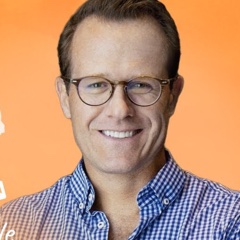
Matt Dixon
Sales researcher, author of The Challenger Sale and The JOLT Effect, co-founder of DCM Insights
Where to hear and read about Matt Dixon1 episode or test

Matt Dixon is a sales researcher, co-founder of DCM Insights and author of The Challenger Sale and The JOLT Effect, who builds his advice from data on what top salespeople do differently. The most useful lesson from him is that stalled deals come from buyers' fear of messing up, so sellers should ease that fear instead of pushing urgency.
They're not afraid of missing out, they're afraid of messing up.
The surprising truth about what closes deals: Insights from 2.5m sales conversations | Matt Dixon
Matt Dixon: the story and the lessons
1How Matt Dixon's research produced two sales books
Dixon builds sales advice from what the best sellers do differently. The Challenger Sale was a #1 Wall Street Journal bestseller and has sold over a million copies worldwide. The JOLT Effect, his latest book, builds on its lessons.
The goal is practical advice that anyone who sells, even part-time, can use.
The Challenger research matched survey answers from 6,000 salespeople to performance data. The study began in late 2008 at CEB, which Gartner acquired in 2017. Results went to clients in 2009 and the book came out in 2011.
The data has since grown to roughly a quarter million salespeople worldwide, and Dixon's team keeps going back to check the original findings and see what has changed.
Dixon studied recorded sales calls once selling moved online in 2020. The JOLT research began in March 2020, when every sales process moved to Zoom, Teams and Webex. Dozens of companies joined, and a machine learning platform analyzed 2.5 million calls.
He modeled it on Neil Rackham's SPIN Selling work, where psychologists sat in on 30-something thousand meetings. That was never affordable at scale. The calls were used to ask why customers choose no decision and what the best sellers do to avoid it.
2Why Dixon says deals die from fear of messing up
Dixon found 40 to 60% of qualified deals end in no decision. These are real opportunities where the seller has met the customer and run the process, then gets ghosted. The rate appears to be rising, especially in SaaS and tech.
He advises planning pipeline coverage and process fixes around indecision, not only competitors.
Most buyers who stall want to buy but fear blame. Only 44% of no-decision losses came from a true preference for the status quo. The other 56% were buyers stuck in indecision from fear of failure.
Omission bias explains it: people accept losses from doing nothing more readily than blame for a decision that goes wrong. Dixon's frame is FOMU, fear of messing up, which he says matters more than FOMO.
Dixon showed that pushing FOMO on hesitant buyers backfires. Reminding buyers of lost benefits, raising fear about competitors and offering a 10% end-of-quarter discount backfired 87% of the time. 75% of the salespeople studied reached for these moves first.
Scare tactics try to frighten someone who is already afraid of something else. Sellers are taught that the status quo is their biggest competitor, so they read cold feet as under-persuasion.
Dixon calls Challenger incomplete, not wrong. The finding troubled him at first, because Challenger also teaches breaking status quo bias. His conclusion: break status quo bias first, then fight the second battle against fear of blame.
The buyer needs confidence that the seller has their back and that they will look like a hero, not a fool.
Dixon warns big brands are not immune to buyer fear. Buyers fear choosing the wrong configuration, learning something after signing that makes the choice look bad, and not seeing the promised ROI. Large vendors worsen this with more options, more coverage and costlier deals.
A startup beat big incumbents to a first seven-figure deal. Two weeks later a Gartner Magic Quadrant rated it middle of the pack, and the buyer's CTO backed out. Dixon's line: "You guys aren't immune just because you're the big brand."
3The JOLT method Dixon built from 2.5 million calls
Dixon treats JOLT as a diagnostic loop, not four fixed steps. The steps are Judge indecision, Offer a recommendation, Limit the exploration, and take risk off the table. Judge works like a dividing rod that shows which step comes next, and the seller may loop back.
He calls indecision "the carbon monoxide poisoning of sales": everywhere, odorless, so you need a detector.
Buyers hide their indecision, so Dixon has sellers float a guess. 87% of buyers in the calls showed moderate or high indecision, yet nearly all call themselves decisive. A ping states a likely worry and frames it as normal. The buyer's echo shows whether it is choice overload, endless research or ROI doubt.
Example ping: many customers feel overwhelmed at this point, so are you and your team clear on what is in and out of the proposal? High performers used pings, and Dixon found the technique after writing the book.
Dixon says recommend one option instead of asking what buyers want. Options help early but stall the deal later and can lead to signed deals being reopened. Offer three options and say you would go with the middle one.
A recommendation shares the burden of the decision with the seller, the delegation effect. A waiter who asks "what are you in the mood for?" hands the problem back.
Dixon found top sellers admit weaknesses early to end endless research. Buyers keep researching because they assume sellers hide dirty laundry. High performers said things like "we get mixed reviews on that" and named use cases where a competitor was better.
They also avoid bringing a "clown car of experts" and stepping aside, which shrinks the seller into an emcee. Sellers need to know more than the buyer, not more than the product team.
Dixon has sellers under-promise ROI to protect the buyer. When a buyer wants the 10X result from a case study, propose a 5X business case, the figure seen in 100% of implementations. Then plan to beat it.
Few tech rollouts go as perfectly as the case study did, and a missed promise can cost the buyer their job. Reaching 7X leaves the CFO thrilled.
Dixon recommends safety nets built before signature. Bring the implementation team onto a pre-sale call and map the first six months with stage gates, owners, metrics and meeting cadence. Pitch professional services as an insurance policy.
Opt-out clauses or contract carve-outs are rare in B2B but possible. He casts the seller as a tandem skydiving instructor guiding the buyer safely to the ground.
Dixon says diagnose late cold feet before pushing anything. Pause and ask whether the buyer is indifferent or indecisive, because they are two very different cases. Pushing urgency on someone who already sees the status quo as bad adds fear to fear.
Price or delivery-window urgency is the usual reflex.
4Dixon's Challenger approach: lead with an insight
Dixon says sellers should create a fire and sell the extinguisher. A seller talks to about 10 times more customers in a week than a buyer does in a year, which makes the seller the buyer's window on the outside world. Insights must lead to the seller's unique benefits.
It is not free consulting. Dixon's phrase: "to create a fire and then be the only person in town who sells the fire extinguisher."
Dentsply sold a pricier wand by opening with hygienist injuries. Leading with features got nowhere: dentists loved the demo, asked the price, then put the wand away and asked about drill bits. Reps switched to asking about turnover, absenteeism and what they cost the practice.
They then cited Dentsply's independent research tying the old corded wand to those injuries. The cordless wand cost about three times the old one, and buyers accepted it once they cared about the problem.
Dixon boils a challenger message down to two questions. First: what do you do that nobody else can? Claims like "more customer-centric" are ones competitors copy. Second: what would have to be true for the customer to pay a premium for that?
Start with an insight the buyer may not know and show where things are heading, then move to how you solve it.
Dixon puts Challenger first, because buyers must see a reason to change. JOLT works on buyers who already want to change but fear the decision. Without a reason to leave the status quo, fear of messing up never becomes the issue.

The surprising truth about what closes deals: Insights from 2.5m sales conversations | Matt Dixon
Analysis of 2.5 million sales calls shows most lost deals end in no decision because buyers fear messing up, not because they fear missing out. The JOLT method (judge, offer a recommendation, limit the exploration, take risk off the table) gives a way to move hesitant buyers forward.
Dixon builds sales advice from what the best sellers do differently. The Challenger Sale was a #1 Wall Street Journal bestseller and has sold over a million copies worldwide. The JOLT Effect, his latest book, builds on its lessons.
The goal is practical advice that anyone who sells, even part-time, can use.
The Challenger research matched survey answers from 6,000 salespeople to performance data. The study began in late 2008 at CEB, which Gartner acquired in 2017. Results went to clients in 2009 and the book came out in 2011.
The data has since grown to roughly a quarter million salespeople worldwide, and Dixon's team keeps going back to check the original findings and see what has changed.
Dixon studied recorded sales calls once selling moved online in 2020. The JOLT research began in March 2020, when every sales process moved to Zoom, Teams and Webex. Dozens of companies joined, and a machine learning platform analyzed 2.5 million calls.
He modeled it on Neil Rackham's SPIN Selling work, where psychologists sat in on 30-something thousand meetings. That was never affordable at scale. The calls were used to ask why customers choose no decision and what the best sellers do to avoid it.
Dixon found 40 to 60% of qualified deals end in no decision. These are real opportunities where the seller has met the customer and run the process, then gets ghosted. The rate appears to be rising, especially in SaaS and tech.
He advises planning pipeline coverage and process fixes around indecision, not only competitors.
Most buyers who stall want to buy but fear blame. Only 44% of no-decision losses came from a true preference for the status quo. The other 56% were buyers stuck in indecision from fear of failure.
Omission bias explains it: people accept losses from doing nothing more readily than blame for a decision that goes wrong. Dixon's frame is FOMU, fear of messing up, which he says matters more than FOMO.
Dixon showed that pushing FOMO on hesitant buyers backfires. Reminding buyers of lost benefits, raising fear about competitors and offering a 10% end-of-quarter discount backfired 87% of the time. 75% of the salespeople studied reached for these moves first.
Scare tactics try to frighten someone who is already afraid of something else. Sellers are taught that the status quo is their biggest competitor, so they read cold feet as under-persuasion.
Dixon calls Challenger incomplete, not wrong. The finding troubled him at first, because Challenger also teaches breaking status quo bias. His conclusion: break status quo bias first, then fight the second battle against fear of blame.
The buyer needs confidence that the seller has their back and that they will look like a hero, not a fool.
Dixon warns big brands are not immune to buyer fear. Buyers fear choosing the wrong configuration, learning something after signing that makes the choice look bad, and not seeing the promised ROI. Large vendors worsen this with more options, more coverage and costlier deals.
A startup beat big incumbents to a first seven-figure deal. Two weeks later a Gartner Magic Quadrant rated it middle of the pack, and the buyer's CTO backed out. Dixon's line: "You guys aren't immune just because you're the big brand."
Dixon treats JOLT as a diagnostic loop, not four fixed steps. The steps are Judge indecision, Offer a recommendation, Limit the exploration, and take risk off the table. Judge works like a dividing rod that shows which step comes next, and the seller may loop back.
He calls indecision "the carbon monoxide poisoning of sales": everywhere, odorless, so you need a detector.
Buyers hide their indecision, so Dixon has sellers float a guess. 87% of buyers in the calls showed moderate or high indecision, yet nearly all call themselves decisive. A ping states a likely worry and frames it as normal. The buyer's echo shows whether it is choice overload, endless research or ROI doubt.
Example ping: many customers feel overwhelmed at this point, so are you and your team clear on what is in and out of the proposal? High performers used pings, and Dixon found the technique after writing the book.
Dixon says recommend one option instead of asking what buyers want. Options help early but stall the deal later and can lead to signed deals being reopened. Offer three options and say you would go with the middle one.
A recommendation shares the burden of the decision with the seller, the delegation effect. A waiter who asks "what are you in the mood for?" hands the problem back.
Dixon found top sellers admit weaknesses early to end endless research. Buyers keep researching because they assume sellers hide dirty laundry. High performers said things like "we get mixed reviews on that" and named use cases where a competitor was better.
They also avoid bringing a "clown car of experts" and stepping aside, which shrinks the seller into an emcee. Sellers need to know more than the buyer, not more than the product team.
Dixon has sellers under-promise ROI to protect the buyer. When a buyer wants the 10X result from a case study, propose a 5X business case, the figure seen in 100% of implementations. Then plan to beat it.
Few tech rollouts go as perfectly as the case study did, and a missed promise can cost the buyer their job. Reaching 7X leaves the CFO thrilled.
Dixon recommends safety nets built before signature. Bring the implementation team onto a pre-sale call and map the first six months with stage gates, owners, metrics and meeting cadence. Pitch professional services as an insurance policy.
Opt-out clauses or contract carve-outs are rare in B2B but possible. He casts the seller as a tandem skydiving instructor guiding the buyer safely to the ground.
Dixon says diagnose late cold feet before pushing anything. Pause and ask whether the buyer is indifferent or indecisive, because they are two very different cases. Pushing urgency on someone who already sees the status quo as bad adds fear to fear.
Price or delivery-window urgency is the usual reflex.
Dixon says sellers should create a fire and sell the extinguisher. A seller talks to about 10 times more customers in a week than a buyer does in a year, which makes the seller the buyer's window on the outside world. Insights must lead to the seller's unique benefits.
It is not free consulting. Dixon's phrase: "to create a fire and then be the only person in town who sells the fire extinguisher."
Dentsply sold a pricier wand by opening with hygienist injuries. Leading with features got nowhere: dentists loved the demo, asked the price, then put the wand away and asked about drill bits. Reps switched to asking about turnover, absenteeism and what they cost the practice.
They then cited Dentsply's independent research tying the old corded wand to those injuries. The cordless wand cost about three times the old one, and buyers accepted it once they cared about the problem.
Dixon boils a challenger message down to two questions. First: what do you do that nobody else can? Claims like "more customer-centric" are ones competitors copy. Second: what would have to be true for the customer to pay a premium for that?
Start with an insight the buyer may not know and show where things are heading, then move to how you solve it.
Dixon puts Challenger first, because buyers must see a reason to change. JOLT works on buyers who already want to change but fear the decision. Without a reason to leave the status quo, fear of messing up never becomes the issue.