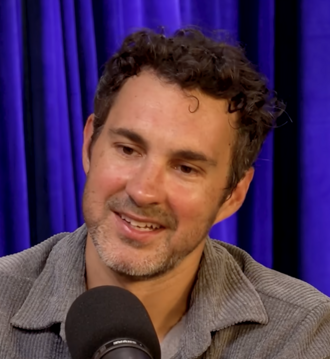
Mark Normand
Stand-up comedian with multiple Netflix specials
Where to hear and read about Mark Normand1 episode or test

Mark Normand is a New York stand-up comic with multiple Netflix specials who opened for Jerry Seinfeld. The thing most worth learning from him is that funny is a craft: keep the setup plain, work hardest on the twist, and test every word in front of a real crowd.
It's really not finding anything. It's really just getting comfortable and letting you be you
How to Write Something Ridiculously Funny (Mark Normand Interview)
Mark Normand: the story and the lessons
1Mark Normand's path from open mics to Netflix
Normand went from a beginner who barely told jokes to a Netflix headliner. He moved to New York in 2006 and barely knew how to tell jokes. He now has multiple Netflix specials and has opened for Jerry Seinfeld.
He had worked as a janitor and moved furniture, and he grew up watching Seinfeld on NBC.
Normand needed about ten years to find his comic voice. Advice to look for the common thread across ten of his jokes did not work. It clicked when he went in on a heckler and thought 'this is me'.
Now other comics pitch him ideas and tell him they are 'too you'.
Seinfeld treated him as a peer, which showed him the life he wanted. Normand tried to stay out of the way, but Seinfeld pulled him onto the green room couch to talk. After four Beacon shows came pizza and wine and comedy talk.
Normand then walked about 50 blocks from Midtown to the West Village to take it all in.
Normand's week is built around stage time, with writing squeezed in. He records two podcasts and runs showcase shows Monday to Wednesday, about three sets a night. Weekends he flies out to headline, and he is booked every weekend through January.
He gets home at 1 a.m. and is up at 7 with the baby.
2How Mark Normand writes a joke
Normand paces his office with a pen as a microphone. Staring at a blank page does not work for him. He talks the bit out loud, writes down whatever sounds funny, then arranges the pieces into a structure.
"I hold the pen like the microphone as I'm writing."
He writes by hand, starting with rough scraps. On paper he can scratch out and write low or high, while a screen is too restrictive and the cursor and Enter key get in the way. He jots bullet points on anything, then moves them into a bigger notebook.
His rule is not to get too fancy: just get the ideas out of you and onto something.
He brainstorms one topic word on a big pad, then shapes a joke. For 'funeral' he listed observations: people dress up for a sad day, and big turnouts may just be people wanting to see the body. Then he turned them into joke form and tried it on stage.
After about three weeks it got only okay laughs, so he dropped it because he wanted a booming laugh.
Normand refuses to skip writing by saying he will figure it out on stage. Colin Quinn says comics avoid writing because it proves they are not geniuses, and Normand agrees a blank page asks you to prove you are funny. Neal Brennan told him the comics doing best write the most.
He thinks 'I write on stage' just means a comic is too lazy to write.
He keeps the setup plain and spends his effort on the twist. The setup should be simple, short and set the table. The punchline has to make sense and still surprise, and the writer cannot see it coming either, so it takes trial and error.
He says audiences get angry when a comic has no twist, because the twist is the whole job.
He plants plain facts in the setup so the twist fits. In his WNBA joke he sets up that his wife likes lesbian porn and he likes interracial porn. Nobody sees the ending coming, yet the WNBA is the perfect combination of the two.
As audiences get savvier, he says, you must think what they are thinking and get several steps past it.
He writes about the observation that keeps coming back. Many of his jokes swirled in his head for ten years. If you keep thinking about something, it probably has something to it.
He notes Seinfeld's check bit really happened to Seinfeld, who wrote it down later.
3How Normand tests and tightens a joke on stage
Normand treats every word as load bearing. He memorizes the final version because changing one word can kill the laugh. The night before the interview he did four sets just to test whether 'the' or a pause worked better.
"A joke is so flimsy. Like, if you change one word, it doesn't get a laugh." Critics say he could be looser, but he keeps what works.
Only a live crowd shows whether a joke works. He wrote the WNBA joke in a Baltimore hotel room on the day of a show and tried it that night. It now works every time, which he calls bulletproof, though nine out of ten new jokes do not work.
Guitar can be learned alone in a garage, but comedy cannot.
He uses proven jokes as the bar for new ones. He does thousands of repetitions on a joke before a special. If a new joke gets nowhere near the old killers, he knows it is not ready.
He keeps finished jokes as an A-list and about five new ideas in testing, because a Netflix hour needs fresh material.
When a joke is dead, he flips the front and the end. 'PayPal sounds like a Jewish dating app' is weak. 'I was on a Jewish dating app the other day. PayPal.' gets a big laugh.
He says you may already have the pieces, just in the wrong order.
He wants a laugh every ten seconds and fears silence. Long drawn-out stories make a comic pay in bombing while learning to do them. He prefers fast laughs.
He quotes Einstein: 'I'm not smarter than anybody. I just stay with problems longer.'
4Mark Normand on tags, chunks and digging deeper
Normand adds a tag to ride the momentum of a punchline. After the WNBA laugh he adds that after the game he paid her horribly, which plays on the league's low pay. It turns one big laugh into two.
He calls it a little mint after dinner, and finds tags by asking what else is funny about the subject.
He builds chunks by hitting one topic from every angle. A chunk is many jokes under one subject and shows real work. He is building one on casinos from observations like a man smoking on a respirator and free drinks while adding numbers.
He points to Jim Jefferies' roughly 15 minute gun bit, which argues both sides with laughs, then ties them together. A chunk needs one-liners, misdirects and callbacks.
His misdirects work because the audience supplies the stereotype. 'I met a Jewish girl on that dating app, PayPal or something.' The real app is JDate, and everyone gets it, which makes the room complicit.
He pulls it out when bombing to win back goodwill, and Seinfeld told him he loves the joke.
He digs into ordinary subjects until the observations keep surprising. He praises Nate Bargatze's George Washington sketch, which spends five minutes on the metric system and why America says soccer. It is all structure, it is clean, and it went viral.
'Why do we call it soccer?' is not a joke until it digs in. 'The more you go in, the funnier it gets.'
Normand sees clean comedy as harder, because the idea has no crutch. Dirty shock lines are an easy parachute for a quick chuckle. A clean joke only works if the idea has merit.
5What Normand learned from Seinfeld, Rock and Burr about delivery and voice
Normand makes the idea clear to the audience at once. The reason comics use stereotypes is that everyone already knows them. If the audience has to stop and work out the idea, the laugh is gone.
"You have to click into the audience's head immediately."
Seinfeld told him to move and not show he is doing comedy. Normand thought standing still and reciting jokes was the cool New York look and feared moving would make him look like Dane Cook. Seinfeld said a crowd staring at one man needs something to watch, so act out the argument with an imagined person.
Seinfeld also disliked 'I told that joke last week', because it announces these are jokes. Normand's summary: the unnatural art of making it look natural.
Normand packages an idea so the crowd can absorb it. He once complained to Seinfeld that he had to explain so much to crowds. Seinfeld said that is the job.
"That's literally the craft of what comedy is, is figuring out an idea and packaging it to where people can absorb it."
He gets the crowd to laugh first, so they are complicit. He calls Louis CK the king of this. In 'Of course, but maybe', early laughs at peanut allergies mean the crowd is in it with him by the slavery ending.
Normand has heard the bit 20 to 30 times because it is so well built. Raising those topics before the joke is finished would make a comic look like a psychopath.
He aims for ideas so accessible they look easy. As an open mic comic he overheard Demetri Martin call a Dave Chappelle Mona Lisa joke a little lowbrow, and Chris Rock answered that is why it is good.
Normand says the best compliment for any art is 'I should have thought of that', and compares it to Jaylen Brunson's easy-looking threes.
Normand says voice comes from getting comfortable, not from seeking approval. He agrees with Bill Burr that he did not start killing until he stopped caring whether the crowd liked him. That frees a comic to let a story run with no laughs.
Joey Diaz is his model: with zero inhibitions, the room watches him like a baby in the middle of a room.

How to Write Something Ridiculously Funny (Mark Normand Interview)
Mark Normand explains how a comic builds a tight joke: keep the setup simple, work hard on the twist, and test every word in front of a real audience. The habit worth hearing is his routine of pacing with a pen as a microphone, then rewriting the same joke across thousands of sets.
Normand went from a beginner who barely told jokes to a Netflix headliner. He moved to New York in 2006 and barely knew how to tell jokes. He now has multiple Netflix specials and has opened for Jerry Seinfeld.
He had worked as a janitor and moved furniture, and he grew up watching Seinfeld on NBC.
Normand needed about ten years to find his comic voice. Advice to look for the common thread across ten of his jokes did not work. It clicked when he went in on a heckler and thought 'this is me'.
Now other comics pitch him ideas and tell him they are 'too you'.
Seinfeld treated him as a peer, which showed him the life he wanted. Normand tried to stay out of the way, but Seinfeld pulled him onto the green room couch to talk. After four Beacon shows came pizza and wine and comedy talk.
Normand then walked about 50 blocks from Midtown to the West Village to take it all in.
Normand's week is built around stage time, with writing squeezed in. He records two podcasts and runs showcase shows Monday to Wednesday, about three sets a night. Weekends he flies out to headline, and he is booked every weekend through January.
He gets home at 1 a.m. and is up at 7 with the baby.
Normand paces his office with a pen as a microphone. Staring at a blank page does not work for him. He talks the bit out loud, writes down whatever sounds funny, then arranges the pieces into a structure.
"I hold the pen like the microphone as I'm writing."
He writes by hand, starting with rough scraps. On paper he can scratch out and write low or high, while a screen is too restrictive and the cursor and Enter key get in the way. He jots bullet points on anything, then moves them into a bigger notebook.
His rule is not to get too fancy: just get the ideas out of you and onto something.
He brainstorms one topic word on a big pad, then shapes a joke. For 'funeral' he listed observations: people dress up for a sad day, and big turnouts may just be people wanting to see the body. Then he turned them into joke form and tried it on stage.
After about three weeks it got only okay laughs, so he dropped it because he wanted a booming laugh.
Normand refuses to skip writing by saying he will figure it out on stage. Colin Quinn says comics avoid writing because it proves they are not geniuses, and Normand agrees a blank page asks you to prove you are funny. Neal Brennan told him the comics doing best write the most.
He thinks 'I write on stage' just means a comic is too lazy to write.
He keeps the setup plain and spends his effort on the twist. The setup should be simple, short and set the table. The punchline has to make sense and still surprise, and the writer cannot see it coming either, so it takes trial and error.
He says audiences get angry when a comic has no twist, because the twist is the whole job.
He plants plain facts in the setup so the twist fits. In his WNBA joke he sets up that his wife likes lesbian porn and he likes interracial porn. Nobody sees the ending coming, yet the WNBA is the perfect combination of the two.
As audiences get savvier, he says, you must think what they are thinking and get several steps past it.
He writes about the observation that keeps coming back. Many of his jokes swirled in his head for ten years. If you keep thinking about something, it probably has something to it.
He notes Seinfeld's check bit really happened to Seinfeld, who wrote it down later.
Normand treats every word as load bearing. He memorizes the final version because changing one word can kill the laugh. The night before the interview he did four sets just to test whether 'the' or a pause worked better.
"A joke is so flimsy. Like, if you change one word, it doesn't get a laugh." Critics say he could be looser, but he keeps what works.
Only a live crowd shows whether a joke works. He wrote the WNBA joke in a Baltimore hotel room on the day of a show and tried it that night. It now works every time, which he calls bulletproof, though nine out of ten new jokes do not work.
Guitar can be learned alone in a garage, but comedy cannot.
He uses proven jokes as the bar for new ones. He does thousands of repetitions on a joke before a special. If a new joke gets nowhere near the old killers, he knows it is not ready.
He keeps finished jokes as an A-list and about five new ideas in testing, because a Netflix hour needs fresh material.
When a joke is dead, he flips the front and the end. 'PayPal sounds like a Jewish dating app' is weak. 'I was on a Jewish dating app the other day. PayPal.' gets a big laugh.
He says you may already have the pieces, just in the wrong order.
He wants a laugh every ten seconds and fears silence. Long drawn-out stories make a comic pay in bombing while learning to do them. He prefers fast laughs.
He quotes Einstein: 'I'm not smarter than anybody. I just stay with problems longer.'
Normand adds a tag to ride the momentum of a punchline. After the WNBA laugh he adds that after the game he paid her horribly, which plays on the league's low pay. It turns one big laugh into two.
He calls it a little mint after dinner, and finds tags by asking what else is funny about the subject.
He builds chunks by hitting one topic from every angle. A chunk is many jokes under one subject and shows real work. He is building one on casinos from observations like a man smoking on a respirator and free drinks while adding numbers.
He points to Jim Jefferies' roughly 15 minute gun bit, which argues both sides with laughs, then ties them together. A chunk needs one-liners, misdirects and callbacks.
His misdirects work because the audience supplies the stereotype. 'I met a Jewish girl on that dating app, PayPal or something.' The real app is JDate, and everyone gets it, which makes the room complicit.
He pulls it out when bombing to win back goodwill, and Seinfeld told him he loves the joke.
He digs into ordinary subjects until the observations keep surprising. He praises Nate Bargatze's George Washington sketch, which spends five minutes on the metric system and why America says soccer. It is all structure, it is clean, and it went viral.
'Why do we call it soccer?' is not a joke until it digs in. 'The more you go in, the funnier it gets.'
Normand sees clean comedy as harder, because the idea has no crutch. Dirty shock lines are an easy parachute for a quick chuckle. A clean joke only works if the idea has merit.
Normand makes the idea clear to the audience at once. The reason comics use stereotypes is that everyone already knows them. If the audience has to stop and work out the idea, the laugh is gone.
"You have to click into the audience's head immediately."
Seinfeld told him to move and not show he is doing comedy. Normand thought standing still and reciting jokes was the cool New York look and feared moving would make him look like Dane Cook. Seinfeld said a crowd staring at one man needs something to watch, so act out the argument with an imagined person.
Seinfeld also disliked 'I told that joke last week', because it announces these are jokes. Normand's summary: the unnatural art of making it look natural.
Normand packages an idea so the crowd can absorb it. He once complained to Seinfeld that he had to explain so much to crowds. Seinfeld said that is the job.
"That's literally the craft of what comedy is, is figuring out an idea and packaging it to where people can absorb it."
He gets the crowd to laugh first, so they are complicit. He calls Louis CK the king of this. In 'Of course, but maybe', early laughs at peanut allergies mean the crowd is in it with him by the slavery ending.
Normand has heard the bit 20 to 30 times because it is so well built. Raising those topics before the joke is finished would make a comic look like a psychopath.
He aims for ideas so accessible they look easy. As an open mic comic he overheard Demetri Martin call a Dave Chappelle Mona Lisa joke a little lowbrow, and Chris Rock answered that is why it is good.
Normand says the best compliment for any art is 'I should have thought of that', and compares it to Jaylen Brunson's easy-looking threes.
Normand says voice comes from getting comfortable, not from seeking approval. He agrees with Bill Burr that he did not start killing until he stopped caring whether the crowd liked him. That frees a comic to let a story run with no laughs.
Joey Diaz is his model: with zero inhibitions, the room watches him like a baby in the middle of a room.