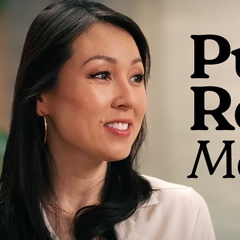
Lulu Cheng Meservey
Communications executive and startup PR strategist
Where to hear and read about Lulu Cheng Meservey2 episodes and tests

 How I WriteMeet Silicon Valley’s #1 PR Expert — Lulu Cheng Meservey
 How I WriteLearn Marketing in 80 Minutes — Lulu Cheng Meservey
Lulu Cheng Meservey is a communications executive who has run comms at Substack, Anduril and Activision Blizzard and advises founders on speaking directly to the public. The lesson most worth taking is to say what your audience already feels, in a plain human voice, and to tie all the attention you win to a business goal.
If you're fighting a story with a statistic, you're always losing.
Meet Silicon Valley’s #1 PR Expert — Lulu Cheng Meservey
Lulu Cheng Meservey: the story and the lessons
1Who Lulu Cheng Meservey is and where her thinking comes from
Meservey has run communications at Substack, Anduril and Activision Blizzard. She was Substack's VP of communications and has also done comms at Anduril and Activision Blizzard.
When she was starting Rostra, Brian Armstrong told her to reuse the existing phrase go direct. It became the shorthand for her whole approach.
She treats communication as psychology and insurgency, not polish. She studied counterinsurgency in grad school and briefly worked in a behavioral psychology lab.
She argues startups follow the same laws as any underdog movement. Christianity began as an underdog movement from a tiny place and went global.
Her language background makes her ask how a message could be misread. She learned English partly in Norway, where TV is dubbed, not subtitled. She asks how a non-native reader could misread each word.
A black car is fancy in English but suggests a hearse in Asia. In a college interview she said below the belt instead of under the belt, and it landed badly. Her DC risk work trained the same habit.
She reads far outside communications and borrows military doctrine. She reads historical fiction, classics and the Marine Commandant's reading list, which is sorted by rank.
Marine war-fighting doctrine shaped how she runs her team. One lesson is that leaders who encourage risk must not punish failure.
2Why Meservey tells founders to go direct
Meservey says opinion is decentralized, so founders must speak for themselves. A meme from an anonymous account can now spread faster than a CNN story. Publicists and journalists no longer control company narratives.
A founder who never speaks directly gives people no reason to trust them or want to work there. Without the founder, everything about the company is flatter.
Going direct covers far more than tweeting. It means the founder speaks to the audience without middlemen. It does not mean doing everything alone forever or boycotting the press.
Every channel needs some of the founder in it: blog posts that carry the founder's ideas, events the founder hosts, and the founder's own relationships with regulators. Only the founder can talk about the vision in the first person.
She wants real ideas under a founder's name, not generic text. She warns against posts a few people cobbled together and ran through ChatGPT, which could have gone out if the founder did not exist.
Readers can tell. The founder has to have input, and the ideas have to be theirs.
She prefers imperfect writing with conviction to textbook correct writing. Audiences now reward the person who sounds the same on camera as at the bar. Broadcast training aimed at perfect delivery is the wrong target.
Corporate speak is so careful and diluted that it does not break through. Faked authenticity shows when done badly, so the best course is to be yourself.
She thinks Elon Musk's missteps are a price worth paying. His platform gives him leverage against hostile voices and lets him fact-check them himself.
Set against the few mistakes it took to build that, she says anyone would take that deal. People bring up Musk against going direct all the time.
A loud founder is credible only while the company keeps shipping. Musk tweets about 100 times an hour, yet nobody thinks his companies are neglected. A bad ship-to-yap ratio is a red flag.
The failure case is a founder who ships blogs and tweets while people ask where the product is. She points to Palmer Luckey as someone who posts a lot and does what he says, and to Anduril's Brian Schimpf, who just ships.
3How Meservey builds a message that spreads
Meservey gets the message right before choosing medium or messenger. Polishing a tweet, podcast pitch or video around a weak message wastes the effort. She compares finding the message to finding product-market fit, with the message as the product.
Peter Thiel hosts dinners to work through his messaging the way comedians develop jokes. A message can come down to a few exact words.
She says to name what everyone in your field thinks but nobody says. A good message gives a name and a shape to something people already feel. Founder mode spread fast because it told founders their feeling was legitimate.
It does not have to be controversial or new. Go direct worked the same way. Founder mode went from cool to cringe in under 36 hours, so timing matters.
She fits new ideas to what the audience already cares about. She calls these cultural erogenous zones. You cannot change them, so you shape the message to fit or build a bridge.
Kamala Harris tied school reading levels to defense by noting the army requires a 10th grade reading level. Interest in The Last of Us sent viewers back to the games. Bold ideas are welcome, but they need a receptor to attach to.
She treats the message as medicine and the hook as candy coating. People are not waiting to hear your message, and an abrupt jump to my thing usually gets a no. For her writing-and-AI pitch, the hook is that everyone is already asking how to use AI.
The coating is the way in, not a trick to hide the message. She chooses where to show up too: Stripe went after developers on Hacker News.
She says you can claim ground without new ideas. Read who is talking, what they feel, how strongly and where it is heading. Then claim it by timing the market or by iterating constantly.
Watch who is not commenting, because usual supporters going silent is the worst sign. A flop is lower risk than it feels, because by definition nobody saw it.
She matches each message to the messenger with authority to say it. The founder delivers the vision. Market size fits investors, and product quality fits users. A janitor praising the CEO beats the CEO praising himself.
Paid voices carry almost no weight. She ignores Matthew McConaughey in a Lincoln ad but is sold when he cheers on the Texas sidelines because he loves it.
Meservey says writing from personal experience gives you a monopoly. Few people have your exact experience, reaction and voice. The audience is smaller, but everyone interested in that thing has to come to you.
A shared opinion has millions of rivals. She cites Thiel's line that competition is for losers.
4How Meservey uses story and framing
Meservey answers an accusation with a story, never a statistic. Accusations arrive as stories and defenses as statistics. Free trade has the data, but its critics have the laid-off corn farmer.
"If you're fighting a story with a statistic, you're always losing."
She builds stakes on the arc of ideal, fall, fix and return. She calls the Christian arc the story people resonate with most, as if they have receptors shaped like it.
Frame a company's stakes this way and readers have a slot ready for it. She defines storytelling as creating stakes so people hope for an outcome.
She frames every ask as an offer, because framing changes the answer. In the ultimatum game, I'm giving you 60 lands differently from I'm keeping 40, even though both are true.
Asking for ten minutes of someone's attention is an offer too, and the framing shapes how they see you.
She says whoever sets the frame first holds the power. In a treaty negotiation, the side holding the pen for the first draft is in a very strong position.
Responding to an accusation means accepting the criteria the accuser set. The fight is over who gets to draft the frame.
5Meservey's rules for turning attention into results
She ties every piece of writing to a business goal. Decide what the writing must produce, such as hires, sales, funding or regulator buy-in. Attention alone is a sugar high and a slot machine.
Recruiting is her default goal because the war for talent decides a company's success. Anduril's don't work at Anduril campaign took months, with a video, a website and a recruiting funnel behind it.
She starts a messaging plan from a blank doc and four headings. The headings are the business objective, who must take what action, what they must believe, and distribution.
She warns that nobody cares about the founder's passion or the technology, only what it does for them. Crypto firms bragging about the blockchain and AI products bragging about being built on AI are her examples.
She cuts a message to one point to raise its pressure. A nail punctures a board where two flat hands cannot. If you want to reach five people, target those five and make one point, not ten.
Most people remember only Stay hungry. Stay foolish. from Steve Jobs's Stanford speech.
She repeats a few fixed words and varies the stories around them. One phrase heard a hundred times builds pressure, while a hundred phrasings fade into white noise.
Bezos repeats focus on the customer and day one in the same words every time, then adds layers of meaning in letters and speeches. She warns that repeating whole paragraphs sounds scripted.
She wants announcements that tell readers why it matters to them. Her outline is the news, what the company does, the problem, the solution, why this team, then a call to action.
She calls many announcements narcissistic: I've always wanted to do this, and no reason given why the reader should care.
She shares work as an FYI and never asks people to amplify. A request leaves three outcomes: guilt and resentment, icky compliance, or genuine willingness. Only the third is worth having.
She gets asked to amplify something ten times a day and can spot the forced reply. "favors are not a renewable resource"
She asks what you could say if your company did not exist. Name a pain the audience has, a struggle you can put into words, and a hope you share. Link back to the company later.
Apple's think different era made people feel understood, but ads that push features Apple wants used lost goodwill. She also tests whether you could speak without asking for money in the next sentence.
She says to take a stand but draw the line around your own people. Backing a political party starts a civil war among employees. Opposition from people you don't need costs almost nothing.
Palantir and Anduril say the West has superior values, and critics' anger convinces their own people the stand is real. A company with no stance sells a fungible commodity.
6How Meservey thinks about growing an audience
She tells newsletter writers to choose a niche and keep true believers. Appealing a little to a ton of people does not work for email, because you are asking for inbox space and time.
A small list that cares will forward your emails, while a large list that never opens them is worse than none. At Substack she saw some writers actively cull non-readers.
She puts the quality of readers above the size of the count. At an early meetup, David thought these aren't my people, and saw he had been valuing a number over the people behind it.
Consistency, a clear proposition and one unique element are the basics she saw work at Substack. Ryan Broderick's Garbage Day covers a crowded beat, and his style still builds a fandom.
She says ideas spread free when promoting them rewards identity. Bitcoin has no comms department, yet evangelists spread it because it is who they are. Fans rise in rank within a fandom by loving the band more.
Lead with the benefit, not the technology. Announcing a web three company feeds the trope that blockchain has no use case, like announcing a blog runs on WordPress.
As an underdog, win the influencers first and build your own channels. In counterinsurgency, village leaders, tribal elders and religious leaders are the centers of gravity. Win them and they spread the idea outward.
Build your own distribution instead of relying on powers you threaten. As Substack grew, publications ran attacks on it, which is part of why she joined.
7Meservey's writing and editing habits
Meservey reads every draft aloud to catch corporate speak. Any phrase you would never say to a person will refuse to come out of your mouth. Try saying the line to someone in your family.
"you can feel the cringe like surge through your body." It also trains her ear for the cadence of sentences.
She writes for a clever five-year-old and cuts jargon. A child cannot be assumed to share your background or side, so you fill in the blanks with short words and simple sentences.
This counters the illusion of transparency, where you assume the reader knows what you know. She saves a long word for the one she wants noticed.
She aims to be understood, not to sound like a stylist. She admits she gets wordy, and that imitating Hunter S. Thompson or Matt Taibbi comes out labored.
Her rule is a quote she keeps: unless you're a genius, just aim for being intelligible.
She drafts wordy emails in a tweet box to force brevity. She sometimes drafts in Twitter with no plan to tweet, then pastes the tight version into the email or document.
She refuses to pay for a longer limit, because 280 characters punishes bloviating. David Perell does the same.
She jots ideas half asleep at night and judges them by day. She writes on her phone in airplane mode before sleep, with three kids and a busy day job, so night is her only quiet time.
Half of it is gibberish, which helps her think outside the box. Next day she filters out what no longer makes sense, like the Greeks debating drunk, then sober.
She moves favorite sentences to a scrap heap and waits days. Falling in love with one sentence tempts her to rebuild the whole essay around it, so she parks it at the bottom of the document.
After a few days it looks merely okay, and she sees gaps the reader could not follow. The scrap may live again in another piece.
She uses blunt editors and friends who know her outside work. Her husband, who writes policy papers, makes her argue from A to B to C and cuts her throat clearing. She thinks the stalling is stage fright.
She also reads drafts to a spouse, parent or child to get out of writer brain, and has been embarrassed by how little a draft sounded like her.
She feels the emotion first, then writes from a calm state. Dumping raw emotion gives you a rant. She bottles the feeling, steps back, and mixes it into something fit for public reading.
Her piece on why communicators should take more risks began as a messy emotional rant, reordered over several days.
She keeps the wrongness in writing that carries emotion and conviction. Running founders' manifestos through AI often made the writing better but the emotion and conviction weaker.
Emotion makes people write ungrammatical, rule-breaking lines, and that is often the point. She would not run James Joyce or E.E. Cummings through ChatGPT.
8How Meservey handles crises and apologies
Meservey writes crisis statements well before the crisis. Audience and priorities are known beforehand, so the main pillars are in place. On the day, filling in the details is like mad libs.
Only some facts are unknown until the day of a crisis or announcement.
She settles approval rights in advance so trusted people can ship fast. For high-stakes items she names the three people to consult, and she keeps the approval loop as small as possible.
She compares it to a soldier who knows when to fire without calling back to wake the general. A shared doctrine on goals and audiences removes the need for micromanaging.
She aims each piece at one dominant emotion, three at most. People are simple animals. The win is a dominant feeling, a dominant message and a dominant urge to act.
"three is the absolute maximum."
She says a crisis apology should be first person and active. She rewrote CrowdStrike's outage statement with the CEO saying I'm devastated, I am sorry and this is my responsibility.
The original said the company was actively working with customers impacted by a defect, which reads as dodging. Hours later CrowdStrike posted a much better version that did apologize.
She says to show you are at least as bothered as the injured party. If you seem less bothered, the upset person has to drag you down to their level before they can talk.
In her coat shop story, the boss is outraged about the hole and the customer calms down and says it's not that bad. Overshoot into sackcloth and ashes and the customer starts comforting you.
She answers repeated cheap shots once, calmly, with tit for two tats. She says she has second strike capability. She answers only egregious or recurring attacks, since she lacks time to answer every one.
Tit for tat is emotion, a punch answered before you think. The goal is to change the incentives of people who are cruel or dishonest.
Meet Silicon Valley’s #1 PR Expert — Lulu Cheng Meservey
Lulu Cheng Meservey explains how to write with a human voice under pressure, framing a message so it fits what readers already care about, and why a story beats a statistic. Her most usable habits are reading drafts aloud, parking precious sentences in a scrap heap, and drafting in a tweet box to force brevity.
Meservey has run communications at Substack, Anduril and Activision Blizzard. She was Substack's VP of communications and has also done comms at Anduril and Activision Blizzard.
When she was starting Rostra, Brian Armstrong told her to reuse the existing phrase go direct. It became the shorthand for her whole approach.
She treats communication as psychology and insurgency, not polish. She studied counterinsurgency in grad school and briefly worked in a behavioral psychology lab.
She argues startups follow the same laws as any underdog movement. Christianity began as an underdog movement from a tiny place and went global.
Her language background makes her ask how a message could be misread. She learned English partly in Norway, where TV is dubbed, not subtitled. She asks how a non-native reader could misread each word.
A black car is fancy in English but suggests a hearse in Asia. In a college interview she said below the belt instead of under the belt, and it landed badly. Her DC risk work trained the same habit.
She reads far outside communications and borrows military doctrine. She reads historical fiction, classics and the Marine Commandant's reading list, which is sorted by rank.
Marine war-fighting doctrine shaped how she runs her team. One lesson is that leaders who encourage risk must not punish failure.
She fits new ideas to what the audience already cares about. She calls these cultural erogenous zones. You cannot change them, so you shape the message to fit or build a bridge.
Kamala Harris tied school reading levels to defense by noting the army requires a 10th grade reading level. Interest in The Last of Us sent viewers back to the games. Bold ideas are welcome, but they need a receptor to attach to.
Meservey answers an accusation with a story, never a statistic. Accusations arrive as stories and defenses as statistics. Free trade has the data, but its critics have the laid-off corn farmer.
"If you're fighting a story with a statistic, you're always losing."
She builds stakes on the arc of ideal, fall, fix and return. She calls the Christian arc the story people resonate with most, as if they have receptors shaped like it.
Frame a company's stakes this way and readers have a slot ready for it. She defines storytelling as creating stakes so people hope for an outcome.
She frames every ask as an offer, because framing changes the answer. In the ultimatum game, I'm giving you 60 lands differently from I'm keeping 40, even though both are true.
Asking for ten minutes of someone's attention is an offer too, and the framing shapes how they see you.
She says whoever sets the frame first holds the power. In a treaty negotiation, the side holding the pen for the first draft is in a very strong position.
Responding to an accusation means accepting the criteria the accuser set. The fight is over who gets to draft the frame.
She starts a messaging plan from a blank doc and four headings. The headings are the business objective, who must take what action, what they must believe, and distribution.
She warns that nobody cares about the founder's passion or the technology, only what it does for them. Crypto firms bragging about the blockchain and AI products bragging about being built on AI are her examples.
She repeats a few fixed words and varies the stories around them. One phrase heard a hundred times builds pressure, while a hundred phrasings fade into white noise.
Bezos repeats focus on the customer and day one in the same words every time, then adds layers of meaning in letters and speeches. She warns that repeating whole paragraphs sounds scripted.
She tells newsletter writers to choose a niche and keep true believers. Appealing a little to a ton of people does not work for email, because you are asking for inbox space and time.
A small list that cares will forward your emails, while a large list that never opens them is worse than none. At Substack she saw some writers actively cull non-readers.
She puts the quality of readers above the size of the count. At an early meetup, David thought these aren't my people, and saw he had been valuing a number over the people behind it.
Consistency, a clear proposition and one unique element are the basics she saw work at Substack. Ryan Broderick's Garbage Day covers a crowded beat, and his style still builds a fandom.
She says ideas spread free when promoting them rewards identity. Bitcoin has no comms department, yet evangelists spread it because it is who they are. Fans rise in rank within a fandom by loving the band more.
Lead with the benefit, not the technology. Announcing a web three company feeds the trope that blockchain has no use case, like announcing a blog runs on WordPress.
As an underdog, win the influencers first and build your own channels. In counterinsurgency, village leaders, tribal elders and religious leaders are the centers of gravity. Win them and they spread the idea outward.
Build your own distribution instead of relying on powers you threaten. As Substack grew, publications ran attacks on it, which is part of why she joined.
Meservey reads every draft aloud to catch corporate speak. Any phrase you would never say to a person will refuse to come out of your mouth. Try saying the line to someone in your family.
"you can feel the cringe like surge through your body." It also trains her ear for the cadence of sentences.
She writes for a clever five-year-old and cuts jargon. A child cannot be assumed to share your background or side, so you fill in the blanks with short words and simple sentences.
This counters the illusion of transparency, where you assume the reader knows what you know. She saves a long word for the one she wants noticed.
She aims to be understood, not to sound like a stylist. She admits she gets wordy, and that imitating Hunter S. Thompson or Matt Taibbi comes out labored.
Her rule is a quote she keeps: unless you're a genius, just aim for being intelligible.
She drafts wordy emails in a tweet box to force brevity. She sometimes drafts in Twitter with no plan to tweet, then pastes the tight version into the email or document.
She refuses to pay for a longer limit, because 280 characters punishes bloviating. David Perell does the same.
She jots ideas half asleep at night and judges them by day. She writes on her phone in airplane mode before sleep, with three kids and a busy day job, so night is her only quiet time.
Half of it is gibberish, which helps her think outside the box. Next day she filters out what no longer makes sense, like the Greeks debating drunk, then sober.
She moves favorite sentences to a scrap heap and waits days. Falling in love with one sentence tempts her to rebuild the whole essay around it, so she parks it at the bottom of the document.
After a few days it looks merely okay, and she sees gaps the reader could not follow. The scrap may live again in another piece.
She uses blunt editors and friends who know her outside work. Her husband, who writes policy papers, makes her argue from A to B to C and cuts her throat clearing. She thinks the stalling is stage fright.
She also reads drafts to a spouse, parent or child to get out of writer brain, and has been embarrassed by how little a draft sounded like her.
She feels the emotion first, then writes from a calm state. Dumping raw emotion gives you a rant. She bottles the feeling, steps back, and mixes it into something fit for public reading.
Her piece on why communicators should take more risks began as a messy emotional rant, reordered over several days.
Meservey writes crisis statements well before the crisis. Audience and priorities are known beforehand, so the main pillars are in place. On the day, filling in the details is like mad libs.
Only some facts are unknown until the day of a crisis or announcement.
She settles approval rights in advance so trusted people can ship fast. For high-stakes items she names the three people to consult, and she keeps the approval loop as small as possible.
She compares it to a soldier who knows when to fire without calling back to wake the general. A shared doctrine on goals and audiences removes the need for micromanaging.
She aims each piece at one dominant emotion, three at most. People are simple animals. The win is a dominant feeling, a dominant message and a dominant urge to act.
"three is the absolute maximum."
She answers repeated cheap shots once, calmly, with tit for two tats. She says she has second strike capability. She answers only egregious or recurring attacks, since she lacks time to answer every one.
Tit for tat is emotion, a punch answered before you think. The goal is to change the incentives of people who are cruel or dishonest.
Learn Marketing in 80 Minutes — Lulu Cheng Meservey
Lulu Cheng Meservey explains how to write messages that spread: write in a real voice, give people words for what they already feel, and match message to messenger. The habit worth hearing is her test of asking what you could say if your company did not exist, and writing that first.
Meservey has run communications at Substack, Anduril and Activision Blizzard. She was Substack's VP of communications and has also done comms at Anduril and Activision Blizzard.
When she was starting Rostra, Brian Armstrong told her to reuse the existing phrase go direct. It became the shorthand for her whole approach.
Meservey says opinion is decentralized, so founders must speak for themselves. A meme from an anonymous account can now spread faster than a CNN story. Publicists and journalists no longer control company narratives.
A founder who never speaks directly gives people no reason to trust them or want to work there. Without the founder, everything about the company is flatter.
Going direct covers far more than tweeting. It means the founder speaks to the audience without middlemen. It does not mean doing everything alone forever or boycotting the press.
Every channel needs some of the founder in it: blog posts that carry the founder's ideas, events the founder hosts, and the founder's own relationships with regulators. Only the founder can talk about the vision in the first person.
She wants real ideas under a founder's name, not generic text. She warns against posts a few people cobbled together and ran through ChatGPT, which could have gone out if the founder did not exist.
Readers can tell. The founder has to have input, and the ideas have to be theirs.
She prefers imperfect writing with conviction to textbook correct writing. Audiences now reward the person who sounds the same on camera as at the bar. Broadcast training aimed at perfect delivery is the wrong target.
Corporate speak is so careful and diluted that it does not break through. Faked authenticity shows when done badly, so the best course is to be yourself.
She thinks Elon Musk's missteps are a price worth paying. His platform gives him leverage against hostile voices and lets him fact-check them himself.
Set against the few mistakes it took to build that, she says anyone would take that deal. People bring up Musk against going direct all the time.
A loud founder is credible only while the company keeps shipping. Musk tweets about 100 times an hour, yet nobody thinks his companies are neglected. A bad ship-to-yap ratio is a red flag.
The failure case is a founder who ships blogs and tweets while people ask where the product is. She points to Palmer Luckey as someone who posts a lot and does what he says, and to Anduril's Brian Schimpf, who just ships.
Meservey gets the message right before choosing medium or messenger. Polishing a tweet, podcast pitch or video around a weak message wastes the effort. She compares finding the message to finding product-market fit, with the message as the product.
Peter Thiel hosts dinners to work through his messaging the way comedians develop jokes. A message can come down to a few exact words.
She says to name what everyone in your field thinks but nobody says. A good message gives a name and a shape to something people already feel. Founder mode spread fast because it told founders their feeling was legitimate.
It does not have to be controversial or new. Go direct worked the same way. Founder mode went from cool to cringe in under 36 hours, so timing matters.
She fits new ideas to what the audience already cares about. She calls these cultural erogenous zones. You cannot change them, so you shape the message to fit or build a bridge.
Kamala Harris tied school reading levels to defense by noting the army requires a 10th grade reading level. Interest in The Last of Us sent viewers back to the games. Bold ideas are welcome, but they need a receptor to attach to.
She treats the message as medicine and the hook as candy coating. People are not waiting to hear your message, and an abrupt jump to my thing usually gets a no. For her writing-and-AI pitch, the hook is that everyone is already asking how to use AI.
The coating is the way in, not a trick to hide the message. She chooses where to show up too: Stripe went after developers on Hacker News.
She says you can claim ground without new ideas. Read who is talking, what they feel, how strongly and where it is heading. Then claim it by timing the market or by iterating constantly.
Watch who is not commenting, because usual supporters going silent is the worst sign. A flop is lower risk than it feels, because by definition nobody saw it.
She matches each message to the messenger with authority to say it. The founder delivers the vision. Market size fits investors, and product quality fits users. A janitor praising the CEO beats the CEO praising himself.
Paid voices carry almost no weight. She ignores Matthew McConaughey in a Lincoln ad but is sold when he cheers on the Texas sidelines because he loves it.
Meservey says writing from personal experience gives you a monopoly. Few people have your exact experience, reaction and voice. The audience is smaller, but everyone interested in that thing has to come to you.
A shared opinion has millions of rivals. She cites Thiel's line that competition is for losers.
She ties every piece of writing to a business goal. Decide what the writing must produce, such as hires, sales, funding or regulator buy-in. Attention alone is a sugar high and a slot machine.
Recruiting is her default goal because the war for talent decides a company's success. Anduril's don't work at Anduril campaign took months, with a video, a website and a recruiting funnel behind it.
She cuts a message to one point to raise its pressure. A nail punctures a board where two flat hands cannot. If you want to reach five people, target those five and make one point, not ten.
Most people remember only Stay hungry. Stay foolish. from Steve Jobs's Stanford speech.
She repeats a few fixed words and varies the stories around them. One phrase heard a hundred times builds pressure, while a hundred phrasings fade into white noise.
Bezos repeats focus on the customer and day one in the same words every time, then adds layers of meaning in letters and speeches. She warns that repeating whole paragraphs sounds scripted.
She wants announcements that tell readers why it matters to them. Her outline is the news, what the company does, the problem, the solution, why this team, then a call to action.
She calls many announcements narcissistic: I've always wanted to do this, and no reason given why the reader should care.
She shares work as an FYI and never asks people to amplify. A request leaves three outcomes: guilt and resentment, icky compliance, or genuine willingness. Only the third is worth having.
She gets asked to amplify something ten times a day and can spot the forced reply. "favors are not a renewable resource"
She asks what you could say if your company did not exist. Name a pain the audience has, a struggle you can put into words, and a hope you share. Link back to the company later.
Apple's think different era made people feel understood, but ads that push features Apple wants used lost goodwill. She also tests whether you could speak without asking for money in the next sentence.
She says to take a stand but draw the line around your own people. Backing a political party starts a civil war among employees. Opposition from people you don't need costs almost nothing.
Palantir and Anduril say the West has superior values, and critics' anger convinces their own people the stand is real. A company with no stance sells a fungible commodity.
She keeps the wrongness in writing that carries emotion and conviction. Running founders' manifestos through AI often made the writing better but the emotion and conviction weaker.
Emotion makes people write ungrammatical, rule-breaking lines, and that is often the point. She would not run James Joyce or E.E. Cummings through ChatGPT.
She says a crisis apology should be first person and active. She rewrote CrowdStrike's outage statement with the CEO saying I'm devastated, I am sorry and this is my responsibility.
The original said the company was actively working with customers impacted by a defect, which reads as dodging. Hours later CrowdStrike posted a much better version that did apologize.
She says to show you are at least as bothered as the injured party. If you seem less bothered, the upset person has to drag you down to their level before they can talk.
In her coat shop story, the boss is outraged about the hole and the customer calms down and says it's not that bad. Overshoot into sackcloth and ashes and the customer starts comforting you.