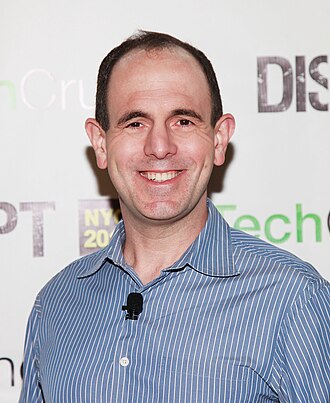
Keith Rabois
Managing Director at Khosla Ventures, former PayPal executive and Square COO
Where to hear and read about Keith Rabois1 episode or test

Keith Rabois is a Managing Director at Khosla Ventures who was an executive at PayPal and LinkedIn and COO of Square. The lesson most worth taking from him is that output is capped by the number of 'barrels' (people who can own an outcome end to end), so find them early and keep pushing harder when things go well.
the ratio of barrels to ammunition is what dictates the number of important initiatives that can be pursued simultaneously.
Hard truths about building in the AI era | Keith Rabois (Khosla Ventures)
Keith Rabois: the story and the lessons
1Keith Rabois's path from litigator to operator to investor
Rabois held senior roles at PayPal, LinkedIn and Square before venture. He was Executive Vice President of Business Development and Policy at PayPal, VP of Corporate Development at LinkedIn and COO at Square. He co-founded two companies and is now Managing Director at Khosla Ventures.
His early investments include Stripe, Palantir, Airbnb, YouTube, DoorDash and Ramp.
He started as a litigator and says law mostly misleads founders. He spent his first four and a half years as a law clerk and litigator. Law exams are issue spotting, so lawyers learn to list everything that can go wrong, and hourly billing teaches them to measure productivity in hours.
The training still helps him: he can run the legal risk check in his own head, as he did on YouTube, and many of his best investments are in heavily regulated financial services.
A promotion blocker at PayPal taught him to hire from inside. COO David Sacks told him he would not advance until he showed leverage, where 1 + 1 has to equal three or more. His outside hires were about 50/50, so he recruited under-used people already in the building and was promoted quickly.
He knew them from lunches, dinners and runs around the campus. His skill worked on familiar people but failed in a 20 to 45 minute interview, so he spent years building a method for judging strangers.
He left Google after two weeks to join Square in 2010. Square's investors said only two or three people in the world combined financial services knowledge with an entrepreneurial streak. The move meant skipping the venture career he had planned for another three years.
He has run his work from an iPad, phone or watch since September 2010, after seeing Jack Dorsey run Square from an iPad.
2Rabois on barrels: why output is capped by who can own outcomes
Hire barrels before you hire more ammunition. A barrel takes an idea from inception to success, motivating people, gathering resources and measuring progress. PayPal had about 254 people in Mountain View and roughly 12 to 17 barrels; Lotus had two.
Extra hires stacked behind the same initiatives only raise coordination cost. The ratio of barrels to ammunition sets how many important initiatives can run at once.
Funded companies hire fast and wonder why little more ships. After a Series A or B raise, CEOs burn more and get frustrated that output barely rises. Rabois says the cause is the small number of people who can independently drive an initiative.
Ammunition still matters in the right proportion. Some projects need a designer, engineers, a PM and an analyst, while others let one barrel succeed with almost none.
He finds barrels by handing over an outcome and watching. Give someone a narrow outcome and see whether they deliver it or come back early with the issues, what they tried and root causes. Then widen the scope and difficulty.
A second-day intern, Taylor Francis, solved the cold 9 p.m. smoothie delivery for Square engineers that Rabois's office team and EAs had failed at. Rabois had expected nothing and thought: I found a barrel.
3How Rabois hires and attracts talent
He builds companies on undiscovered talent, not what everyone wants. Startups have about a tenth of their rivals' salary cap, so they cannot compete for people every recruiter targets. Peter Thiel taught him this in his first week at PayPal, and Rabois has followed it for 25 years.
He asks what Meta, Google, Block or Coinbase would miss about a candidate, and why. Younger people have fewer data points and get misjudged by homogeneous screens, which he calls alpha. Skewing young is a side effect, not the goal.
He pitches talent on their skill being the company's missing piece. If marketing is the real constraint, he tells a world-class marketer that this one ability can solve it. The pitch makes them bet on themselves, not just on the company.
Mission and vision remain indispensable, because proven people get several offers.
He keeps checking references until he hits a negative one. David Sze of Greylock taught him to keep referencing a founder until someone says something negative. DoorDash's Tony does 20 references on every senior hire.
He probes two arcs: what makes this person most successful, and the root cause if it fails. References fit poorly for fresh college graduates.
He asks the reference question the role actually needs. Many VCs passed on Fair after asking whether Max Rhodes was a good employee and getting a mixed answer. Asked whether he could be a world-class entrepreneur, the answer was yes.
"Same person, wrong question, wrong result."
He asks senior candidates what they would do differently as CEO. The question shows how much of the business model they absorbed and whether they understand tradeoffs. He follows with why they could not persuade the real CEO to do it.
It is not meant to make them bash their employer.
He asks the hiring team 30 days after each hire if they would repeat it. Rabois cites research that this answer is about as accurate as one given a year or two later. He wants the whole hiring team asked, not only the manager.
It gives a tight feedback loop. He says tactics only move you 10 to 20 degrees within the bell curve, so hiring is a muscle built by reviewing what you missed.
He prefers growing leaders inside over hiring senior outsiders. Ramp and Trade Republic mostly skip senior hires and promote from within. One CEO uses chief of staff as a talent factory, and his CMO was his last chief of staff.
Rabois asks whether a role is value creation or value preservation. Experience helps with preservation and probably not with creation.
4How Rabois pushes teams, gives feedback and treats failure
He pushes hardest when the company is winning. Mike Moritz named relentless force as the trait of the best CEOs. Rabois says success resets every year, like a Super Bowl win, and only companies with network effects can coast.
He applies it to himself: after about 13 good years in venture, he still must find a new undiscovered founder every day. He supports struggling founders, who already know the problems, and criticizes thriving ones.
He criticizes problems in front of the team. Private feedback optimizes the atomic unit, not the system. Public criticism shows everyone the problem is being handled and lets others raise a hand to help.
He learned it from a founder he works with and says almost no one practices it. He rejects psychological safety as mostly negatively correlated with success, though the best coaches likely mix public and private feedback.
He skips failure retros on bold bets at winning companies. He told a board not to run retros on failures so people keep raising their hands for hard problems. The exception is a miss caused by something that could have been factored in.
A 30 to 40% hit rate in early-stage investing is golden. His own miss was Slide, sold to Google for about $187 million, far below its ambition.
His motto is no days off, and he tracks it. The phrase comes from Bill Belichick's chant at a Patriots Super Bowl parade and stands for no excuses. Rabois has missed 7 workout days in 7 years and none last year.
He trains more than once a day, including through illness, travel and weddings, and also insists on eight hours of sleep.
5How Rabois evaluates startups and why he distrusts customer feedback
He bars colleagues from talking to consumer customers. For consumer, SMB and micro-merchant products he calls customer feedback an unmitigated disaster, because choices are subconscious and people give false reasons. Airbnb would have gotten a no from 9 of 10 random people.
Customer development works for enterprise, where a few known decision makers buy on utility, such as 30 must-win accounts. "I hate talking to customers. I refuse to allow colleagues of mine to talk to customers."
He tests business mechanics instead of asking if people want it. DoorDash started from a stat that 93% of US restaurants don't deliver. Feedback then helps on feasibility: would restaurants display a placard, and how many deliveries per hour break even.
Brian Chesky's Airbnb pitch counted about 30 Craigslist posts asking to rent a bedroom in the Bay Area, each from someone who had the idea unprompted.
At seed he wants half his VC friends to laugh at the deal. He calls ugly babies the place where alpha is. His parents laughed at nearly all his tech jobs, though his mom liked Stripe and lobbied him to invest.
His one seed and Series A question is whether the founder has a non-zero chance of changing an industry or the world. His test is whether this could be the next Brian Chesky.
He judges early startups by speed between board meetings. Ramp was close to shipping cards in about 3 months against a norm of 9 to 12, and Rabois preempted the Series A with a term sheet in September 2019 after leading the seed around May.
Two board meetings in, Roelof Botha said Square's pace was one he hadn't seen since PayPal. Each problem raised at one meeting had a shipped fix by the next. "That speed really does compound."
He asks AI founders where accumulating advantages will come from. First he asks whether foundation labs leave room, since a startup must last 8 to 20 years. Then he asks whether the business gets better and easier over time.
Network effects are only one kind. At seed the founder only needs to explain conceptually where advantages could build and when they would start measuring them.
6Rabois on building products and careers in the AI era
He wants fast noticing of new capabilities instead of year-long roadmaps. Things impossible in November can be easy by March. Someone should notice what became possible this week and ship customer value next week, which makes the PM as intermediary make less sense.
Peter Fenton convinced him of this. Shopify has banned static PowerPoint and Keynote product presentations for over two years, so every one must be a working demo.
He sees every product role becoming a CEO role. The scarce skill is business acumen: deciding what to build and why. Alfred Lin compares it to a famous chef who sets value proposition, brand, pricing and location rather than cooking every dish.
Ramp's director of engineering manages about 20 people and ships as much code as he did as an individual contributor, using AI as a second team. Rabois expects a premium on engineers with commercial instincts.
At the best companies he sees, the CMO uses the most AI tokens. CMOs build analytics and real campaigns themselves and send insights straight to the CEO, without layers of deputies. He saw this at Opendoor and at another company where he sits on the board.
He says intellectual curiosity protects a career in the AI shift better than working longer hours.
He says the edge in design and marketing is storytelling. In pitches he checks first how a product will cut through the clutter. Customers in a test are not a proxy for real life, where they are commuting, working or raising kids.
As a litigator he spent a week or more finding a brief's first three sentences, and then could write 30 pages in two days. He expects human-made content to carry a premium.

Hard truths about building in the AI era | Keith Rabois (Khosla Ventures)
Keith Rabois explains how to build a world-class team by hiring barrels (people who can drive an initiative from start to finish), finding undiscovered talent, and pushing harder when things go well. He also argues that PMs as intermediaries are fading, customer feedback misleads consumer products, and the best startups show unusual speed.
Rabois held senior roles at PayPal, LinkedIn and Square before venture. He was Executive Vice President of Business Development and Policy at PayPal, VP of Corporate Development at LinkedIn and COO at Square. He co-founded two companies and is now Managing Director at Khosla Ventures.
His early investments include Stripe, Palantir, Airbnb, YouTube, DoorDash and Ramp.
He started as a litigator and says law mostly misleads founders. He spent his first four and a half years as a law clerk and litigator. Law exams are issue spotting, so lawyers learn to list everything that can go wrong, and hourly billing teaches them to measure productivity in hours.
The training still helps him: he can run the legal risk check in his own head, as he did on YouTube, and many of his best investments are in heavily regulated financial services.
A promotion blocker at PayPal taught him to hire from inside. COO David Sacks told him he would not advance until he showed leverage, where 1 + 1 has to equal three or more. His outside hires were about 50/50, so he recruited under-used people already in the building and was promoted quickly.
He knew them from lunches, dinners and runs around the campus. His skill worked on familiar people but failed in a 20 to 45 minute interview, so he spent years building a method for judging strangers.
He left Google after two weeks to join Square in 2010. Square's investors said only two or three people in the world combined financial services knowledge with an entrepreneurial streak. The move meant skipping the venture career he had planned for another three years.
He has run his work from an iPad, phone or watch since September 2010, after seeing Jack Dorsey run Square from an iPad.
Hire barrels before you hire more ammunition. A barrel takes an idea from inception to success, motivating people, gathering resources and measuring progress. PayPal had about 254 people in Mountain View and roughly 12 to 17 barrels; Lotus had two.
Extra hires stacked behind the same initiatives only raise coordination cost. The ratio of barrels to ammunition sets how many important initiatives can run at once.
Funded companies hire fast and wonder why little more ships. After a Series A or B raise, CEOs burn more and get frustrated that output barely rises. Rabois says the cause is the small number of people who can independently drive an initiative.
Ammunition still matters in the right proportion. Some projects need a designer, engineers, a PM and an analyst, while others let one barrel succeed with almost none.
He finds barrels by handing over an outcome and watching. Give someone a narrow outcome and see whether they deliver it or come back early with the issues, what they tried and root causes. Then widen the scope and difficulty.
A second-day intern, Taylor Francis, solved the cold 9 p.m. smoothie delivery for Square engineers that Rabois's office team and EAs had failed at. Rabois had expected nothing and thought: I found a barrel.
He builds companies on undiscovered talent, not what everyone wants. Startups have about a tenth of their rivals' salary cap, so they cannot compete for people every recruiter targets. Peter Thiel taught him this in his first week at PayPal, and Rabois has followed it for 25 years.
He asks what Meta, Google, Block or Coinbase would miss about a candidate, and why. Younger people have fewer data points and get misjudged by homogeneous screens, which he calls alpha. Skewing young is a side effect, not the goal.
He pitches talent on their skill being the company's missing piece. If marketing is the real constraint, he tells a world-class marketer that this one ability can solve it. The pitch makes them bet on themselves, not just on the company.
Mission and vision remain indispensable, because proven people get several offers.
He keeps checking references until he hits a negative one. David Sze of Greylock taught him to keep referencing a founder until someone says something negative. DoorDash's Tony does 20 references on every senior hire.
He probes two arcs: what makes this person most successful, and the root cause if it fails. References fit poorly for fresh college graduates.
He asks the reference question the role actually needs. Many VCs passed on Fair after asking whether Max Rhodes was a good employee and getting a mixed answer. Asked whether he could be a world-class entrepreneur, the answer was yes.
"Same person, wrong question, wrong result."
He asks senior candidates what they would do differently as CEO. The question shows how much of the business model they absorbed and whether they understand tradeoffs. He follows with why they could not persuade the real CEO to do it.
It is not meant to make them bash their employer.
He asks the hiring team 30 days after each hire if they would repeat it. Rabois cites research that this answer is about as accurate as one given a year or two later. He wants the whole hiring team asked, not only the manager.
It gives a tight feedback loop. He says tactics only move you 10 to 20 degrees within the bell curve, so hiring is a muscle built by reviewing what you missed.
He prefers growing leaders inside over hiring senior outsiders. Ramp and Trade Republic mostly skip senior hires and promote from within. One CEO uses chief of staff as a talent factory, and his CMO was his last chief of staff.
Rabois asks whether a role is value creation or value preservation. Experience helps with preservation and probably not with creation.
He pushes hardest when the company is winning. Mike Moritz named relentless force as the trait of the best CEOs. Rabois says success resets every year, like a Super Bowl win, and only companies with network effects can coast.
He applies it to himself: after about 13 good years in venture, he still must find a new undiscovered founder every day. He supports struggling founders, who already know the problems, and criticizes thriving ones.
He criticizes problems in front of the team. Private feedback optimizes the atomic unit, not the system. Public criticism shows everyone the problem is being handled and lets others raise a hand to help.
He learned it from a founder he works with and says almost no one practices it. He rejects psychological safety as mostly negatively correlated with success, though the best coaches likely mix public and private feedback.
He skips failure retros on bold bets at winning companies. He told a board not to run retros on failures so people keep raising their hands for hard problems. The exception is a miss caused by something that could have been factored in.
A 30 to 40% hit rate in early-stage investing is golden. His own miss was Slide, sold to Google for about $187 million, far below its ambition.
His motto is no days off, and he tracks it. The phrase comes from Bill Belichick's chant at a Patriots Super Bowl parade and stands for no excuses. Rabois has missed 7 workout days in 7 years and none last year.
He trains more than once a day, including through illness, travel and weddings, and also insists on eight hours of sleep.
He bars colleagues from talking to consumer customers. For consumer, SMB and micro-merchant products he calls customer feedback an unmitigated disaster, because choices are subconscious and people give false reasons. Airbnb would have gotten a no from 9 of 10 random people.
Customer development works for enterprise, where a few known decision makers buy on utility, such as 30 must-win accounts. "I hate talking to customers. I refuse to allow colleagues of mine to talk to customers."
He tests business mechanics instead of asking if people want it. DoorDash started from a stat that 93% of US restaurants don't deliver. Feedback then helps on feasibility: would restaurants display a placard, and how many deliveries per hour break even.
Brian Chesky's Airbnb pitch counted about 30 Craigslist posts asking to rent a bedroom in the Bay Area, each from someone who had the idea unprompted.
At seed he wants half his VC friends to laugh at the deal. He calls ugly babies the place where alpha is. His parents laughed at nearly all his tech jobs, though his mom liked Stripe and lobbied him to invest.
His one seed and Series A question is whether the founder has a non-zero chance of changing an industry or the world. His test is whether this could be the next Brian Chesky.
He judges early startups by speed between board meetings. Ramp was close to shipping cards in about 3 months against a norm of 9 to 12, and Rabois preempted the Series A with a term sheet in September 2019 after leading the seed around May.
Two board meetings in, Roelof Botha said Square's pace was one he hadn't seen since PayPal. Each problem raised at one meeting had a shipped fix by the next. "That speed really does compound."
He asks AI founders where accumulating advantages will come from. First he asks whether foundation labs leave room, since a startup must last 8 to 20 years. Then he asks whether the business gets better and easier over time.
Network effects are only one kind. At seed the founder only needs to explain conceptually where advantages could build and when they would start measuring them.
He wants fast noticing of new capabilities instead of year-long roadmaps. Things impossible in November can be easy by March. Someone should notice what became possible this week and ship customer value next week, which makes the PM as intermediary make less sense.
Peter Fenton convinced him of this. Shopify has banned static PowerPoint and Keynote product presentations for over two years, so every one must be a working demo.
He sees every product role becoming a CEO role. The scarce skill is business acumen: deciding what to build and why. Alfred Lin compares it to a famous chef who sets value proposition, brand, pricing and location rather than cooking every dish.
Ramp's director of engineering manages about 20 people and ships as much code as he did as an individual contributor, using AI as a second team. Rabois expects a premium on engineers with commercial instincts.
At the best companies he sees, the CMO uses the most AI tokens. CMOs build analytics and real campaigns themselves and send insights straight to the CEO, without layers of deputies. He saw this at Opendoor and at another company where he sits on the board.
He says intellectual curiosity protects a career in the AI shift better than working longer hours.
He says the edge in design and marketing is storytelling. In pitches he checks first how a product will cut through the clutter. Customers in a test are not a proxy for real life, where they are commuting, working or raising kids.
As a litigator he spent a week or more finding a brief's first three sentences, and then could write 30 pages in two days. He expects human-made content to carry a premium.