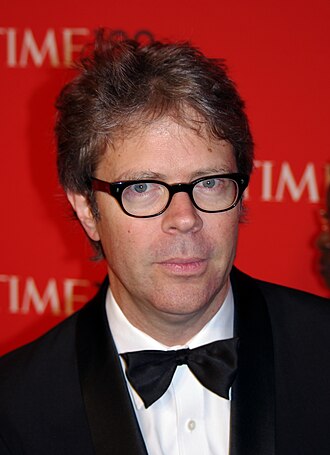
Jonathan Franzen
Novelist and author of The Corrections and Crossroads
Where to hear and read about Jonathan Franzen1 episode or test

Jonathan Franzen is a novelist, author of The Corrections and Crossroads, who builds serious fiction on comedy, honesty about his own shame, and sentences worked until the reader just has a good time. The technique most worth taking is his daily routine of rewriting yesterday's pages until nearly publishable, then adding one new page on that solid base.
There's no technical solution to shame levels in a writer.
Why Serious Writers Need to Be Funny (Jonathan Franzen Interview)
Jonathan Franzen: the story and the lessons
1Who Jonathan Franzen is and what he writes for
Franzen now writes novels for pleasure and to give pleasure. He once wanted to change the world, then to ease existential loneliness. He now holds that fun is a full justification for fiction.
He still calls the novel the best art form for joining one consciousness to another. His mother called him a professional liar, writing down things that never happened seven days a week.
Being the late child of much older family taught him to read people. As the youngest of much older parents and brothers, he learned early to read what passed between people. He never carries a notebook.
After an evening out he asks his wife Kathy, also a writer, whether someone avoided a topic. She usually noticed too. Writing is partly working out what might have been going on with that person.
He saw the internet's hype coming because he distrusted consumer capitalism. Franzen distrusted consumer capitalism and the corporations that profit from it, and fiction was one of the first fields to feel threatened by the digital world. He calls the promises of an end to war and flourishing democracy patently idiotically wrong.
Karl Kraus, the Viennese satirist who attacked media, money and technology, gave him the frame. Franzen became a German major by accident, thinking he needed German to be a scientist.
His objection to big tech is dishonesty, not profit. All he has ever wanted is for people to be more honest. He likes eBay and Wikipedia and calls the internet great for plane tickets and overnight delivery.
He thinks plain talk that the internet was for making money might have kept power from concentrating in a few companies. Al Gore was more honest, pitching the net as good for the economy and for moving goods.
Franzen thinks a stable life has produced more good writing than a wrecked one. Hemingway needed to be out in the world, but Faulkner stayed home and became by far the better writer. He is not a fan of Burroughs, Bukowski or Kerouac, who deliberately destroyed their lives.
If someone needs to blow up their life, he won't argue. It can work.
2How Franzen builds a character
He starts a main character with one sentence stating a funny problem. He looks for a single sentence that names a problem for the character and makes him smile. The problem can be trivial, because a small problem that matters hugely to the character is funny in itself.
Once the character wants something badly, obstacles follow and put him into scenes with others. He sets this against the thriller premise of stolen nuclear launch codes, which he calls a different kind of novel. "The smaller the problem, the funnier it is."
He makes characters want different things so every scene has drama. His example is one character who wants the other to get on a plane while the other has no intention of going. That conflict of wants is what he means by drama.
He skips backstory and looks for each character's story essence. He does not start from a character's history, looks or schooling. He goes for the essence as it works in the story and fills in the rest while writing.
Minor characters are easy because their dramatic function defines them. Nearly all his effort goes to the principals.
Franzen checks his distance by asking whether he can laugh at the protagonist. If the author is laughing at the character by page three, the reader can relax and knows they won't be asked to sign on to someone's victimhood. He distrusts tremblingly earnest writing because it suggests the author has not found the right distance.
He points out that most great novelists and playwrights are funny at least some of the time.
He refuses the pure victim hero. If the author and the character both think a good person was wronged by bad people, he says you are in trouble on page one. That appeals only to readers who feel victimized the same way.
He writes from the premise that no one is all good and no one is all bad, and says it takes life experience and self-examination to get past knowing who is right.
He writes characters so unlike himself that he can pour himself in. A woman character makes this easier, since he is securely male in his own imagination and cannot confuse her with himself. A male character who superficially resembles him makes it harder.
The process keeps digging up parts of himself that he has to come to terms with.
When pages go bad around shameful material, Franzen investigates the shame. Pages that were going well lose their humor, and the reflex is to pile on ugliness and depravity. The fix is to ask why you are ashamed, which can lead to an idea that makes the shameful thing ridiculous.
In The Corrections he floundered through six months of self-analysis before finding such an idea. "There's no technical solution to shame levels in a writer."
3Franzen's rules for writing for the reader
Franzen keeps his loyalty to the reader, not to his own pain. He separates fiction from trauma dumping, which centers the self and carries a flavor of complaint and injustice. He wants a three-way bond of writer, reader and characters, with his loyalty to the reader above the characters.
He praises a Halle Butler novel with about eight people each sure their situation is uniquely terrible, so the reader is never dumped on. In his words, one person complaining is a tragedy and eight of them is a comedy.
When a draft stalls, he asks if it is funny and fun enough. He names two diagnoses: he does not see the humor, or it is not fun enough. He defines fun broadly, including the pleasure of rare words and unfamiliar sentence shapes.
One favorite move is the adjective after the noun, as in capabilities different from his brothers.
He uses one or two sharp details and cuts the rest. A 500 page novel might spend under a page on weather, about 20 sentences in all, and readers still feel well informed. He might write down 50 things about a minor character and keep the two that work.
Readers fill in the whole from small bits, so two sentences can establish a minor character.
He asks of every sentence whether he needs it. Beginners write what they picture, such as crossing the room and turning the doorknob. He tells them to ask, do I need this, then whether it can use fewer words.
He says he can tell in one page whether a stranger's manuscript is any good.
He allows at most one cliche per book. He reads galleys until the second cliche and then stops. A cliche means the writer was inattentive and did not spend 20 minutes finding a better phrasing.
Cliches include borrowed feelings, ideas, situations and unearned sentiment, not just worn phrases. He says he has hit a third cliche within three pages in books by award-winning literary writers.
He gets the reader into a vivid dream fast and never breaks it. The writer has to establish trustworthiness early, with no games and no technical flaws. Experimental fiction that breaks the fourth wall pulls the reader out of the experience.
His measure of success is a reader begging for five more pages at bedtime.
He makes descriptive writing earn its place with facts or people. He finds writing that only describes the beauty of nature almost always tedious. It needs interesting facts or interesting people.
He shows it with the plain California towhee, whose mated pairs call tick to each other all day and sing duets before breeding. He calls gaudy color, like the scarlet macaw's, a six-year-old's idea of beauty.
4How Franzen plots and keeps his daily routine
Franzen knows where a book is going but never outlines how to get there. He thinks a fully planned book reads like one. The work becomes making an unlikely sequence of events seem inevitable.
He rejects the idea that characters take over: he pushes them around. If a planned action bores him or stops being believable, he finds another path.
He pushes every scene further, expecting most attempts to fail. He cites Flannery O'Connor, that the writer does whatever he can get away with and nobody ever got away with much. Four tries in five fail, and the fifth is worth it.
When a paragraph is messed up, he bears down on it and often finds a better option.
He drives ordinary middle-class problems to extremes with obsessive characters. Mentally unwell or obsessive characters reach more extreme states and a more brittle, vivid prose. The problem stays ordinary, like being attracted to someone you shouldn't be, and he refuses a quick resolution.
Crossroads has a character literally going crazy in an ordinary suburb.
He puts characters in the situation they have organized their lives to avoid. He writes about families because even people living through screens can't avoid real-time interaction with relatives. The stakes are high and every reader knows family.
He rewrites yesterday's pages until polished, then adds one new page. He gets up around 6:30, spends an hour avoiding everything, then about four hours rewriting 200 words from the day before. In the last twenty minutes he writes a new page.
A finished page works like an iron bridge: the next one grows from its girders. He once wrote five to eight pages a day and is now lucky to get one. One sentence can take six months.
He hunts for the tone of the book above all else. Tone is the tone of the book and of each character: straight and earnest, or with a spin that invites a laugh. Once he has it, he has it.
Interviewer David Perell compared it to a freestyle rapper who fumbles until one hook lets them take off, and Franzen agreed it is above all tone.
He works in a dark, silent room with earplugs. He wears earplugs for writing and for sleep, and likes walking into the office while it is still almost dark.
While quitting cigarettes he blindfolded himself, though he says that was talked about more than done.

Why Serious Writers Need to Be Funny (Jonathan Franzen Interview)
Franzen explains that rich characters come from a comic problem, a clear distance from them, and honest work on your own shame, with every sentence worked until the reader just has a good time. The technique worth hearing is his daily routine of rewriting yesterday's pages until they are nearly publishable, then adding one new page on top of that solid base.
Franzen now writes novels for pleasure and to give pleasure. He once wanted to change the world, then to ease existential loneliness. He now holds that fun is a full justification for fiction.
He still calls the novel the best art form for joining one consciousness to another. His mother called him a professional liar, writing down things that never happened seven days a week.
Being the late child of much older family taught him to read people. As the youngest of much older parents and brothers, he learned early to read what passed between people. He never carries a notebook.
After an evening out he asks his wife Kathy, also a writer, whether someone avoided a topic. She usually noticed too. Writing is partly working out what might have been going on with that person.
He saw the internet's hype coming because he distrusted consumer capitalism. Franzen distrusted consumer capitalism and the corporations that profit from it, and fiction was one of the first fields to feel threatened by the digital world. He calls the promises of an end to war and flourishing democracy patently idiotically wrong.
Karl Kraus, the Viennese satirist who attacked media, money and technology, gave him the frame. Franzen became a German major by accident, thinking he needed German to be a scientist.
His objection to big tech is dishonesty, not profit. All he has ever wanted is for people to be more honest. He likes eBay and Wikipedia and calls the internet great for plane tickets and overnight delivery.
He thinks plain talk that the internet was for making money might have kept power from concentrating in a few companies. Al Gore was more honest, pitching the net as good for the economy and for moving goods.
Franzen thinks a stable life has produced more good writing than a wrecked one. Hemingway needed to be out in the world, but Faulkner stayed home and became by far the better writer. He is not a fan of Burroughs, Bukowski or Kerouac, who deliberately destroyed their lives.
If someone needs to blow up their life, he won't argue. It can work.
He starts a main character with one sentence stating a funny problem. He looks for a single sentence that names a problem for the character and makes him smile. The problem can be trivial, because a small problem that matters hugely to the character is funny in itself.
Once the character wants something badly, obstacles follow and put him into scenes with others. He sets this against the thriller premise of stolen nuclear launch codes, which he calls a different kind of novel. "The smaller the problem, the funnier it is."
He makes characters want different things so every scene has drama. His example is one character who wants the other to get on a plane while the other has no intention of going. That conflict of wants is what he means by drama.
He skips backstory and looks for each character's story essence. He does not start from a character's history, looks or schooling. He goes for the essence as it works in the story and fills in the rest while writing.
Minor characters are easy because their dramatic function defines them. Nearly all his effort goes to the principals.
Franzen checks his distance by asking whether he can laugh at the protagonist. If the author is laughing at the character by page three, the reader can relax and knows they won't be asked to sign on to someone's victimhood. He distrusts tremblingly earnest writing because it suggests the author has not found the right distance.
He points out that most great novelists and playwrights are funny at least some of the time.
He refuses the pure victim hero. If the author and the character both think a good person was wronged by bad people, he says you are in trouble on page one. That appeals only to readers who feel victimized the same way.
He writes from the premise that no one is all good and no one is all bad, and says it takes life experience and self-examination to get past knowing who is right.
He writes characters so unlike himself that he can pour himself in. A woman character makes this easier, since he is securely male in his own imagination and cannot confuse her with himself. A male character who superficially resembles him makes it harder.
The process keeps digging up parts of himself that he has to come to terms with.
When pages go bad around shameful material, Franzen investigates the shame. Pages that were going well lose their humor, and the reflex is to pile on ugliness and depravity. The fix is to ask why you are ashamed, which can lead to an idea that makes the shameful thing ridiculous.
In The Corrections he floundered through six months of self-analysis before finding such an idea. "There's no technical solution to shame levels in a writer."
Franzen keeps his loyalty to the reader, not to his own pain. He separates fiction from trauma dumping, which centers the self and carries a flavor of complaint and injustice. He wants a three-way bond of writer, reader and characters, with his loyalty to the reader above the characters.
He praises a Halle Butler novel with about eight people each sure their situation is uniquely terrible, so the reader is never dumped on. In his words, one person complaining is a tragedy and eight of them is a comedy.
When a draft stalls, he asks if it is funny and fun enough. He names two diagnoses: he does not see the humor, or it is not fun enough. He defines fun broadly, including the pleasure of rare words and unfamiliar sentence shapes.
One favorite move is the adjective after the noun, as in capabilities different from his brothers.
He uses one or two sharp details and cuts the rest. A 500 page novel might spend under a page on weather, about 20 sentences in all, and readers still feel well informed. He might write down 50 things about a minor character and keep the two that work.
Readers fill in the whole from small bits, so two sentences can establish a minor character.
He asks of every sentence whether he needs it. Beginners write what they picture, such as crossing the room and turning the doorknob. He tells them to ask, do I need this, then whether it can use fewer words.
He says he can tell in one page whether a stranger's manuscript is any good.
He allows at most one cliche per book. He reads galleys until the second cliche and then stops. A cliche means the writer was inattentive and did not spend 20 minutes finding a better phrasing.
Cliches include borrowed feelings, ideas, situations and unearned sentiment, not just worn phrases. He says he has hit a third cliche within three pages in books by award-winning literary writers.
He gets the reader into a vivid dream fast and never breaks it. The writer has to establish trustworthiness early, with no games and no technical flaws. Experimental fiction that breaks the fourth wall pulls the reader out of the experience.
His measure of success is a reader begging for five more pages at bedtime.
He makes descriptive writing earn its place with facts or people. He finds writing that only describes the beauty of nature almost always tedious. It needs interesting facts or interesting people.
He shows it with the plain California towhee, whose mated pairs call tick to each other all day and sing duets before breeding. He calls gaudy color, like the scarlet macaw's, a six-year-old's idea of beauty.
Franzen knows where a book is going but never outlines how to get there. He thinks a fully planned book reads like one. The work becomes making an unlikely sequence of events seem inevitable.
He rejects the idea that characters take over: he pushes them around. If a planned action bores him or stops being believable, he finds another path.
He pushes every scene further, expecting most attempts to fail. He cites Flannery O'Connor, that the writer does whatever he can get away with and nobody ever got away with much. Four tries in five fail, and the fifth is worth it.
When a paragraph is messed up, he bears down on it and often finds a better option.
He drives ordinary middle-class problems to extremes with obsessive characters. Mentally unwell or obsessive characters reach more extreme states and a more brittle, vivid prose. The problem stays ordinary, like being attracted to someone you shouldn't be, and he refuses a quick resolution.
Crossroads has a character literally going crazy in an ordinary suburb.
He puts characters in the situation they have organized their lives to avoid. He writes about families because even people living through screens can't avoid real-time interaction with relatives. The stakes are high and every reader knows family.
He rewrites yesterday's pages until polished, then adds one new page. He gets up around 6:30, spends an hour avoiding everything, then about four hours rewriting 200 words from the day before. In the last twenty minutes he writes a new page.
A finished page works like an iron bridge: the next one grows from its girders. He once wrote five to eight pages a day and is now lucky to get one. One sentence can take six months.
He hunts for the tone of the book above all else. Tone is the tone of the book and of each character: straight and earnest, or with a spin that invites a laugh. Once he has it, he has it.
Interviewer David Perell compared it to a freestyle rapper who fumbles until one hook lets them take off, and Franzen agreed it is above all tone.
He works in a dark, silent room with earplugs. He wears earplugs for writing and for sleep, and likes walking into the office while it is still almost dark.
While quitting cigarettes he blindfolded himself, though he says that was talked about more than done.