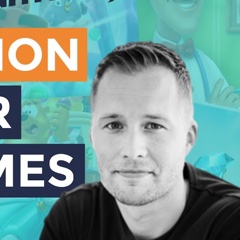
Joel Julkunen
Co-Founder and Head of Analytics, GameRefinery
Where to hear and read about Joel Julkunen1 episode or test

Joel Julkunen is co-founder and head of analytics at GameRefinery, a data provider that tracks which features and mechanics drive mobile game revenue. The most useful lesson from him is to add proven features such as battle passes, guild-based co-op and live events, and to judge genre by region and by how well you execute.
it can be actually implemented in any kind of game so no matter the genre you can have it
Hottest Monetization Trends for Mobile Games
Joel Julkunen: the story and the lessons
1What Joel Julkunen and GameRefinery track
Julkunen's company looks inside games, not just at the charts. GameRefinery supplies feature-level data on what works in mobile games. It follows which features, mechanics and genres are trending, and what the best players in each market do.
The stated aim is to go under the hood of games and make the App Store more transparent. The questions it works on are which trends are hot, how games earn, and which features matter for a sustainable business.
Julkunen says feature priorities change by genre. Synchronous player versus player action matters far more in shooters than in casual puzzle games. Studios in the ideation phase ask him this constantly, and the answer is never one list for all games.
Two groups cut across the whole market: deeper social mechanics and live events.
2Julkunen on why the battle pass spread to every genre
He calls the battle pass the biggest trend because it fits any genre. It sits on the sidelines of core play, so it monetizes without upsetting normal gameplay. It spread from Fortnite to shooters, then to casual match 3 and slots games.
Clash of Clans had one of its best revenue years in 2019, mainly thanks to its battle pass. In China, about one third of the top 100 grossing games use one.
Julkunen splits the pass into a free layer and a premium layer. A free layer engages everyone. A premium layer adds higher-value rewards and exclusive items like skins. Seasons run from two weeks to a month, and usually a month or five weeks.
Match 3 games like Gardenscapes and Fishdom have added the pass, and some slots games use the same mechanic. His summary was that it is "coming hard".
The pass behaves like a subscription without auto-renewal. Players must rebuy it each season. They usually do when they still have exclusive rewards to unlock and felt value for money.
Quote: "more often than not players decide to renew".
Season tasks keep players playing until the renewal decision. Tasks and thresholds make players want to play more. Each unlocked reward shows the next exclusive item they have not reached yet.
When the season ends, the player decides whether to renew the pass.
A cheap premium boost works as a small first purchase. One example is a premium season account at $3.99, locked in for 15 or 30 days. It gives reduced crafting and spell times and better daily chest rewards.
Julkunen describes it as a small jolt of benefit that nudges players into a smaller in-app purchase.
3Julkunen's case for guilds, co-op and live events
Guild systems are the base for other engagement features. In 2019 guild mechanics moved from strategy and RPG games into casual match 3, dice and board games. With guilds in place, co-op modes, team competitions and live events are easier to add.
Quote: "that's a feature that acts as a platform for other engagement features".
Co-op team events are now standard in match 3. Players team up with random players or guild members and compete against other teams. Almost all top match 3 games now have co-op events or competitions.
The core play stays the same, matching gems or candies, but it is done as a team.
Julkunen says live events keep growing in importance. A good live ops team rotates events so players always have something new to do. Events refresh content for players who have already seen the core game.
Social features and live events are the two things he names as important in all mobile genres.
He suggests testing new modes as events before making them permanent. A studio can launch a mode or mechanic as a live event first. If players engage and spend more, it can become a permanent part of the game.
4Where Julkunen sees room for new mobile games by market
The US can sustain many titles in several genres. Match 3, slots, turn-based RPGs and 4X strategy have enough demand on the top grossing charts to support several hits and even smaller titles. Competition is fierce.
Judged by the numbers, 4X strategy, turn-based RPGs and slots have the most room for many players.
Genre demand differs sharply by region. China is led by RPGs, action RPGs and MMORPGs, and Japan by turn-based RPGs. Western markets split the biggest share across many genres.
Action RPGs do extremely well in China but struggle in the US.
He watches for releases that could open the West to new genres. MOBAs, card battlers and action RPGs lag in the West. Marvel Super War, League of Legends: Wild Rift and Legends of Runeterra were the upcoming tests, and Marvel Super War looked promising in GameRefinery's analysis.
Legends of Runeterra, a card battler, was in closed beta at the time.
Julkunen puts execution ahead of genre choice. Success needs strong features, well implemented, and good care of players and user acquisition. Even an endless runner can earn enough for its maker.

Hottest Monetization Trends for Mobile Games
Mobile game monetization trends from a game data provider: seasonal battle passes, social and co-op mechanics, and live events work across genres. It also covers which genres have room for new titles in the US, China and Japan.
Julkunen's company looks inside games, not just at the charts. GameRefinery supplies feature-level data on what works in mobile games. It follows which features, mechanics and genres are trending, and what the best players in each market do.
The stated aim is to go under the hood of games and make the App Store more transparent. The questions it works on are which trends are hot, how games earn, and which features matter for a sustainable business.
Julkunen says feature priorities change by genre. Synchronous player versus player action matters far more in shooters than in casual puzzle games. Studios in the ideation phase ask him this constantly, and the answer is never one list for all games.
Two groups cut across the whole market: deeper social mechanics and live events.
He calls the battle pass the biggest trend because it fits any genre. It sits on the sidelines of core play, so it monetizes without upsetting normal gameplay. It spread from Fortnite to shooters, then to casual match 3 and slots games.
Clash of Clans had one of its best revenue years in 2019, mainly thanks to its battle pass. In China, about one third of the top 100 grossing games use one.
Julkunen splits the pass into a free layer and a premium layer. A free layer engages everyone. A premium layer adds higher-value rewards and exclusive items like skins. Seasons run from two weeks to a month, and usually a month or five weeks.
Match 3 games like Gardenscapes and Fishdom have added the pass, and some slots games use the same mechanic. His summary was that it is "coming hard".
The pass behaves like a subscription without auto-renewal. Players must rebuy it each season. They usually do when they still have exclusive rewards to unlock and felt value for money.
Quote: "more often than not players decide to renew".
Season tasks keep players playing until the renewal decision. Tasks and thresholds make players want to play more. Each unlocked reward shows the next exclusive item they have not reached yet.
When the season ends, the player decides whether to renew the pass.
A cheap premium boost works as a small first purchase. One example is a premium season account at $3.99, locked in for 15 or 30 days. It gives reduced crafting and spell times and better daily chest rewards.
Julkunen describes it as a small jolt of benefit that nudges players into a smaller in-app purchase.
Guild systems are the base for other engagement features. In 2019 guild mechanics moved from strategy and RPG games into casual match 3, dice and board games. With guilds in place, co-op modes, team competitions and live events are easier to add.
Quote: "that's a feature that acts as a platform for other engagement features".
Co-op team events are now standard in match 3. Players team up with random players or guild members and compete against other teams. Almost all top match 3 games now have co-op events or competitions.
The core play stays the same, matching gems or candies, but it is done as a team.
Julkunen says live events keep growing in importance. A good live ops team rotates events so players always have something new to do. Events refresh content for players who have already seen the core game.
Social features and live events are the two things he names as important in all mobile genres.
He suggests testing new modes as events before making them permanent. A studio can launch a mode or mechanic as a live event first. If players engage and spend more, it can become a permanent part of the game.
The US can sustain many titles in several genres. Match 3, slots, turn-based RPGs and 4X strategy have enough demand on the top grossing charts to support several hits and even smaller titles. Competition is fierce.
Judged by the numbers, 4X strategy, turn-based RPGs and slots have the most room for many players.
Genre demand differs sharply by region. China is led by RPGs, action RPGs and MMORPGs, and Japan by turn-based RPGs. Western markets split the biggest share across many genres.
Action RPGs do extremely well in China but struggle in the US.
He watches for releases that could open the West to new genres. MOBAs, card battlers and action RPGs lag in the West. Marvel Super War, League of Legends: Wild Rift and Legends of Runeterra were the upcoming tests, and Marvel Super War looked promising in GameRefinery's analysis.
Legends of Runeterra, a card battler, was in closed beta at the time.
Julkunen puts execution ahead of genre choice. Success needs strong features, well implemented, and good care of players and user acquisition. Even an endless runner can earn enough for its maker.