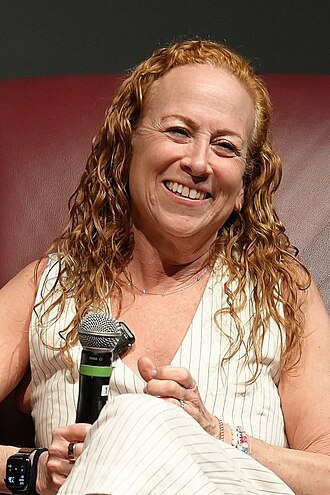
Jodi Picoult
Novelist, author of 30 novels with more than 50 million copies sold
Where to hear and read about Jodi Picoult1 episode or test

Jodi Picoult is a novelist with 30 books and more than 50 million copies sold, known for turning a worry into a "what if" and building the book from there. The habit most worth copying is her fixed work-day routine, built from years of writing in 15-minute gaps, paired with doing her research up front and editing her own drafts hard.
I'm not going to tell you what to think, but I am going to ask you to listen to it
The Writing Habits Behind 50 Million Books Sold (Jodi Picoult Interview)
Jodi Picoult: the story and the lessons
1Jodi Picoult's path from Princeton to 30 novels
A tough Princeton teacher broke her habit of coasting. Picoult was a straight-A student for whom everything came easily. Her teacher Mary Morris had classmates cut up her short story with scissors and glue, and they agreed it really began on page three.
Asked why she humbled the class, Morris said, "Because you needed it and because you can take it." After repeated edits the story sold to Seventeen, and a second story sold later. She had two stories published before she graduated.
Her first novel was a thousand pages with five narrators. Songs of the Humpback Whale ran about a thousand pages and used five narrative voices that mimicked whale songs. She wrote it at 21, closer in age to the 15-year-old daughter than the 35-year-old mother in the story.
When Simon & Schuster offered to reissue it, she kept the story and characters but cut description. What once took a page and a half now takes her five words.
She became a mother and a published novelist almost together. Her first son was born in 1991 and her first novel came out in 1992. There was no paternity leave then, so she was the only caretaker at home, with no nanny.
She wrote a book a year for years. She now publishes one every two years, because "I'm old."
She moved from literary houses to a commercial one to reach more readers. Picoult was published by Faber and Faber, then Viking, then the commercial house Putnam. She chose Putnam to reach more readers and says she wrote the same book either way.
She calls the literary versus commercial line a marketing label. In her view there is bad literary fiction and good commercial fiction, and readers just want a good story.
Reading Gone with the Wind at 13 showed her words could build a world. A burned Atlanta on the page made her think "I could do that." She had never met a working writer, so becoming one had not occurred to her.
Years later, researching Small Great Things, she saw the book's flaws on race and privilege, which she had missed as a child reading for the language and the romance.
2How Picoult writes a novel around real life
Picoult learned to write in 15-minute bursts with a newborn. With a colicky baby and no paternity leave, she wrote until the baby woke up. Later she used her laptop in the car at nursery school pickup, and wrote at swim and diving practice.
"I started learning how to write in 15-minute bursts." Any time not given to the kids went to writing.
She treats writing as a normal work day with a hard stop. When all three kids were in school for 8 hours, she began writing Monday to Friday through the school day and stopping around 4:30 or 5:00 to make dinner.
She writes weekends only near the end of a book, "when there's a monkey on your back." The routine has stayed the same since the kids grew up.
She finishes every draft before deciding what it is worth. Her three rules are to read a lot, write every day, and never quit in the middle of a book. Nearly every beginner hits the middle, decides the pages are the worst ever written, and gives up.
She calls this a psychological hurdle, not a talent problem. If you never finish anything, you never believe you can. Her advice: "write to the end of whatever it is that you're writing, and then you can decide whether you want to fix it or if you want to scrap it."
3How Picoult finds an idea and researches it
Every Picoult book starts as a what if about a worry. She asks what she would do in a situation, then what if one parameter changed. Her what ifs follow her life stage: fears for her kids while they were small, then abortion rights, racism and gender discrimination.
Hollow Bones began with a Post Secret postcard from 2012 reading that everyone who knew the sender before 9/11 thinks they are dead. She called dibs and could not stop asking what would make someone use a tragedy that size to disappear. She lets the idea percolate before writing.
She does 80 to 85 percent of her research before line one. She researches until she is an expert on everything her characters know. By the first sentence she has an outline, knows her characters, and knows where the research fits.
Research that doesn't fit what she is trying to do tells her the book will be hard. That is why she rarely gets stuck mid-book.
She travels to extremes to interview the right person. For The Tenth Circle she reached a Yup'ik village by dog sled plane and snow machine at 43 below zero. The house had no plumbing or electricity, and she brought oranges and left with dried salmon.
Getting there took a chain of introductions through a professor friend. The interview became scenes in the novel.
Picoult cold-emails experts, and they often say yes fast. For Second Glance she wrote to the three founders of the Atlantic Paranormal Society. All three replied within 20 minutes and invited her to Rhode Island for a real ghost hunt.
She found 25 pennies dated 1969 to 1973 in a haunted house, and later research found two people had died there, in 1969 and 1973. She still has the pennies. The hunters told her to stay a doubter until she saw something herself.
She records interviews, marks them with cue words, and uses no assistants. She records with permission, then transcribes. In her notebook she jots only a word or phrase per thought, so she knows which chapter each exchange belongs in.
She skips research assistants because "I carry my office between my ears," so no one else can judge what will be useful.
She steals conversations and fantasies from her own life. She admits she is a terrible friend because friends recognize their own words in her characters. A fantasy of throwing her husband's shirts out the car window on the way to Mexico became Harvesting the Heart.
A friend with a baby said she thought about it too, which told Picoult other mothers would recognize the story. Her husband would not let her take his shirts to the cleaners for a long time afterward.
4How Picoult lets characters lead the draft
Picoult hears her characters instead of inventing them. She moves from an issue to one or two characters, then the characters take over. She jokes that writing is "successful schizophrenia" because she gets paid to hear voices.
While writing Harvesting the Heart, a character woke her yelling "I don't like what you're writing for me." She wrote five pages longhand that night, put them in a bookshelf, and used them when she reached that point in the book.
She gives each narrator a distinct sentence pattern. Any sentence should reveal which character is speaking. She varies how florid or plain each pattern is, with some characters in simple subject-verb-object lines and others in longer ones.
She imagines putting on someone's wellies and stepping into a stream, so each pair pinches in a different place. A Spark of Light has eight narrators.
She goes spare where emotion peaks. Her junior thesis on Isak Dinesen found Out of Africa sparse and abrupt where Dinesen's fairy tales are dense. The things that matter most are the things she says least about.
Picoult asks herself where language breaks down. A five-page goodbye between a jailed mother and her son in Perfect Match took about three days because she was crying so hard, while a courtroom examination can run 50 pages in a day.
She reads her work aloud and listens to audiobooks while swimming. Reading aloud catches repeated words in the same sentence and pacing problems. She hears her dialogue rather than composing it.
She thinks independently published authors especially need this check.
She builds on metaphor and character, never on theme. She calls theme a fourth-grade question and thinks about metaphor, character, plot and setting instead.
In Hollow Bones a mother tells her child that the hollow bones that make birds fragile also let them fly. That image became the title and central metaphor.
5Why Picoult edits herself hard and keeps raising the bar
She is her own toughest editor, even after 30 novels. She says being your own best editor is the tool you reach for most, and that you have to be willing to dismantle your own writing.
She believes many bestselling authors rewrite the same book and rest on their laurels. She tells readers to say so if she becomes that writer, and she will stop that day.
She defends every disputed passage to her editor or cuts it. She turns in a finished manuscript and gets a 15-page editorial letter from Jennifer Hershey. The editor says what isn't working and why, and Picoult finds the fix.
She keeps the final word because the work is her intellectual property. "If I can't defend something to my editor it shouldn't be in there." She says some times she held firm she was right.
Picoult gives every book one deliberate writing challenge. The challenge may be the topic, the research or, most often, the structure.
A Spark of Light runs in reverse from a shooting at an abortion clinic, so the biggest reveal is the earliest moment in time. It has eight narrators all moving backward.
She avoids her own genre while drafting and uses envy as fuel. She steers clear of writers who sound like her so she doesn't echo them, and reads something very different, such as a romance.
Life of Pi and The Invisible Life of Addie LaRue are the two books she wishes she had written. "I love feeling that jealousy when I read an amazing book."
6Why Picoult writes about hard issues and what she aims for
Picoult writes the issue that gnaws at her, not what fans want. She says she doesn't think about fans while writing. She wants to pick at a gnarly issue "with a stick," and trusts that answering a question for herself makes a good book.
Topics she names include racism, abortion rights and the nature of good and evil.
She gives the opposing view a real voice. She gave a white supremacist a narrator's voice in Small Great Things. For Sing You Home she interviewed Focus on the Family even though her own son had just come out.
Her interviewee said violence against gay people had never happened. Picoult asked if she knew Matthew Shepard, and she answered "Who?" Picoult left to splash water on her face, then swapped her mom hat for her interviewer hat to finish and write the character.
She aims for empathy and conversation, not a message. Most people form opinions young from parents, pastor and friends, and then coast. She doesn't tell readers what to think, so they may keep their view but understand it better.
Readers who would never open an FBI report on school shooters read 19 Minutes as a story and learn something. Her favorite reaction is a reader who can't wait to talk to someone about the book.
7Picoult on getting books to readers
Picoult treats publicity as part of the writing job. She says no one can write in an ivory tower and expect books to find the masses. Her tour covers about 30 cities, one a day, with events of up to 1,200 people.
Tickets sold fast despite a weak economy. While writing she doesn't think about the market, and her team handles how each book is pitched.
She goes where readers now discover books. Podcasts and video are now where people find books. She keeps a TikTok account for BookTok, because word of mouth is the one thing a publisher can't buy.
Many readers aged 25 to 35 now say they read her because of what she said on TikTok.
She speaks out against book bans because she can afford to. 19 Minutes was the most banned book in America in 2024, and she is the fourth most banned author. Bans are up 1,100% since 2020, and PEN America counts 23,000 titles targeted.
Many banned YA authors earn their living from school libraries. Her readers are mostly adults, so speaking out does not threaten her income.
8Picoult's work beyond the novel
Picoult wrote Wonder Woman and learned comics on the job. A DC Comics editor offered her a few issues as only the second woman to write the hero. She first said no, then her kids insisted.
She had to learn what a bleed page is and work with an editor and a penciler. Her five-story arc centered on Diana and her mother Hippolyta, who wants her daughter to be something Diana no longer wants to be.
She writes musicals and co-writes books to keep the craft fresh. She has written musicals for about 10 years and says it reinvigorated her love of writing. She has also co-written with her daughter and with Jenny Boylan on Mad Honey.
She compares the novelist to a taxidermist building a three-dimensional thing, and the librettist to a paleontologist laying out the skeleton.
She turned a Shakespeare authorship theory into her favorite novel. Picoult believes Emilia Bassano wrote some of the plays, because her life explains what Shakespeare's cannot. The theory became By Any Other Name, her personal favorite of all her books.
Bassano came from a family of Italian musicians who served Henry VIII and Elizabeth, and was raised with a classical and legal education. Picoult notes Shakespeare died without owning a single book.

The Writing Habits Behind 50 Million Books Sold (Jodi Picoult Interview)
Jodi Picoult explains how she builds a novel from a single "what if", does most of her research before writing a word, and then lets her characters lead. The habit worth hearing is her fixed school-day writing hours, built from years of writing in 15-minute gaps around her kids, plus her insistence on becoming her own harshest editor.
A tough Princeton teacher broke her habit of coasting. Picoult was a straight-A student for whom everything came easily. Her teacher Mary Morris had classmates cut up her short story with scissors and glue, and they agreed it really began on page three.
Asked why she humbled the class, Morris said, "Because you needed it and because you can take it." After repeated edits the story sold to Seventeen, and a second story sold later. She had two stories published before she graduated.
Her first novel was a thousand pages with five narrators. Songs of the Humpback Whale ran about a thousand pages and used five narrative voices that mimicked whale songs. She wrote it at 21, closer in age to the 15-year-old daughter than the 35-year-old mother in the story.
When Simon & Schuster offered to reissue it, she kept the story and characters but cut description. What once took a page and a half now takes her five words.
She became a mother and a published novelist almost together. Her first son was born in 1991 and her first novel came out in 1992. There was no paternity leave then, so she was the only caretaker at home, with no nanny.
She wrote a book a year for years. She now publishes one every two years, because "I'm old."
She moved from literary houses to a commercial one to reach more readers. Picoult was published by Faber and Faber, then Viking, then the commercial house Putnam. She chose Putnam to reach more readers and says she wrote the same book either way.
She calls the literary versus commercial line a marketing label. In her view there is bad literary fiction and good commercial fiction, and readers just want a good story.
Reading Gone with the Wind at 13 showed her words could build a world. A burned Atlanta on the page made her think "I could do that." She had never met a working writer, so becoming one had not occurred to her.
Years later, researching Small Great Things, she saw the book's flaws on race and privilege, which she had missed as a child reading for the language and the romance.
Picoult learned to write in 15-minute bursts with a newborn. With a colicky baby and no paternity leave, she wrote until the baby woke up. Later she used her laptop in the car at nursery school pickup, and wrote at swim and diving practice.
"I started learning how to write in 15-minute bursts." Any time not given to the kids went to writing.
She treats writing as a normal work day with a hard stop. When all three kids were in school for 8 hours, she began writing Monday to Friday through the school day and stopping around 4:30 or 5:00 to make dinner.
She writes weekends only near the end of a book, "when there's a monkey on your back." The routine has stayed the same since the kids grew up.
She finishes every draft before deciding what it is worth. Her three rules are to read a lot, write every day, and never quit in the middle of a book. Nearly every beginner hits the middle, decides the pages are the worst ever written, and gives up.
She calls this a psychological hurdle, not a talent problem. If you never finish anything, you never believe you can. Her advice: "write to the end of whatever it is that you're writing, and then you can decide whether you want to fix it or if you want to scrap it."
Every Picoult book starts as a what if about a worry. She asks what she would do in a situation, then what if one parameter changed. Her what ifs follow her life stage: fears for her kids while they were small, then abortion rights, racism and gender discrimination.
Hollow Bones began with a Post Secret postcard from 2012 reading that everyone who knew the sender before 9/11 thinks they are dead. She called dibs and could not stop asking what would make someone use a tragedy that size to disappear. She lets the idea percolate before writing.
She does 80 to 85 percent of her research before line one. She researches until she is an expert on everything her characters know. By the first sentence she has an outline, knows her characters, and knows where the research fits.
Research that doesn't fit what she is trying to do tells her the book will be hard. That is why she rarely gets stuck mid-book.
She travels to extremes to interview the right person. For The Tenth Circle she reached a Yup'ik village by dog sled plane and snow machine at 43 below zero. The house had no plumbing or electricity, and she brought oranges and left with dried salmon.
Getting there took a chain of introductions through a professor friend. The interview became scenes in the novel.
Picoult cold-emails experts, and they often say yes fast. For Second Glance she wrote to the three founders of the Atlantic Paranormal Society. All three replied within 20 minutes and invited her to Rhode Island for a real ghost hunt.
She found 25 pennies dated 1969 to 1973 in a haunted house, and later research found two people had died there, in 1969 and 1973. She still has the pennies. The hunters told her to stay a doubter until she saw something herself.
She records interviews, marks them with cue words, and uses no assistants. She records with permission, then transcribes. In her notebook she jots only a word or phrase per thought, so she knows which chapter each exchange belongs in.
She skips research assistants because "I carry my office between my ears," so no one else can judge what will be useful.
She steals conversations and fantasies from her own life. She admits she is a terrible friend because friends recognize their own words in her characters. A fantasy of throwing her husband's shirts out the car window on the way to Mexico became Harvesting the Heart.
A friend with a baby said she thought about it too, which told Picoult other mothers would recognize the story. Her husband would not let her take his shirts to the cleaners for a long time afterward.
Picoult hears her characters instead of inventing them. She moves from an issue to one or two characters, then the characters take over. She jokes that writing is "successful schizophrenia" because she gets paid to hear voices.
While writing Harvesting the Heart, a character woke her yelling "I don't like what you're writing for me." She wrote five pages longhand that night, put them in a bookshelf, and used them when she reached that point in the book.
She gives each narrator a distinct sentence pattern. Any sentence should reveal which character is speaking. She varies how florid or plain each pattern is, with some characters in simple subject-verb-object lines and others in longer ones.
She imagines putting on someone's wellies and stepping into a stream, so each pair pinches in a different place. A Spark of Light has eight narrators.
She goes spare where emotion peaks. Her junior thesis on Isak Dinesen found Out of Africa sparse and abrupt where Dinesen's fairy tales are dense. The things that matter most are the things she says least about.
Picoult asks herself where language breaks down. A five-page goodbye between a jailed mother and her son in Perfect Match took about three days because she was crying so hard, while a courtroom examination can run 50 pages in a day.
She reads her work aloud and listens to audiobooks while swimming. Reading aloud catches repeated words in the same sentence and pacing problems. She hears her dialogue rather than composing it.
She thinks independently published authors especially need this check.
She builds on metaphor and character, never on theme. She calls theme a fourth-grade question and thinks about metaphor, character, plot and setting instead.
In Hollow Bones a mother tells her child that the hollow bones that make birds fragile also let them fly. That image became the title and central metaphor.
She is her own toughest editor, even after 30 novels. She says being your own best editor is the tool you reach for most, and that you have to be willing to dismantle your own writing.
She believes many bestselling authors rewrite the same book and rest on their laurels. She tells readers to say so if she becomes that writer, and she will stop that day.
She defends every disputed passage to her editor or cuts it. She turns in a finished manuscript and gets a 15-page editorial letter from Jennifer Hershey. The editor says what isn't working and why, and Picoult finds the fix.
She keeps the final word because the work is her intellectual property. "If I can't defend something to my editor it shouldn't be in there." She says some times she held firm she was right.
Picoult gives every book one deliberate writing challenge. The challenge may be the topic, the research or, most often, the structure.
A Spark of Light runs in reverse from a shooting at an abortion clinic, so the biggest reveal is the earliest moment in time. It has eight narrators all moving backward.
She avoids her own genre while drafting and uses envy as fuel. She steers clear of writers who sound like her so she doesn't echo them, and reads something very different, such as a romance.
Life of Pi and The Invisible Life of Addie LaRue are the two books she wishes she had written. "I love feeling that jealousy when I read an amazing book."
Picoult writes the issue that gnaws at her, not what fans want. She says she doesn't think about fans while writing. She wants to pick at a gnarly issue "with a stick," and trusts that answering a question for herself makes a good book.
Topics she names include racism, abortion rights and the nature of good and evil.
She gives the opposing view a real voice. She gave a white supremacist a narrator's voice in Small Great Things. For Sing You Home she interviewed Focus on the Family even though her own son had just come out.
Her interviewee said violence against gay people had never happened. Picoult asked if she knew Matthew Shepard, and she answered "Who?" Picoult left to splash water on her face, then swapped her mom hat for her interviewer hat to finish and write the character.
She aims for empathy and conversation, not a message. Most people form opinions young from parents, pastor and friends, and then coast. She doesn't tell readers what to think, so they may keep their view but understand it better.
Readers who would never open an FBI report on school shooters read 19 Minutes as a story and learn something. Her favorite reaction is a reader who can't wait to talk to someone about the book.
Picoult treats publicity as part of the writing job. She says no one can write in an ivory tower and expect books to find the masses. Her tour covers about 30 cities, one a day, with events of up to 1,200 people.
Tickets sold fast despite a weak economy. While writing she doesn't think about the market, and her team handles how each book is pitched.
She goes where readers now discover books. Podcasts and video are now where people find books. She keeps a TikTok account for BookTok, because word of mouth is the one thing a publisher can't buy.
Many readers aged 25 to 35 now say they read her because of what she said on TikTok.
She speaks out against book bans because she can afford to. 19 Minutes was the most banned book in America in 2024, and she is the fourth most banned author. Bans are up 1,100% since 2020, and PEN America counts 23,000 titles targeted.
Many banned YA authors earn their living from school libraries. Her readers are mostly adults, so speaking out does not threaten her income.
Picoult wrote Wonder Woman and learned comics on the job. A DC Comics editor offered her a few issues as only the second woman to write the hero. She first said no, then her kids insisted.
She had to learn what a bleed page is and work with an editor and a penciler. Her five-story arc centered on Diana and her mother Hippolyta, who wants her daughter to be something Diana no longer wants to be.
She writes musicals and co-writes books to keep the craft fresh. She has written musicals for about 10 years and says it reinvigorated her love of writing. She has also co-written with her daughter and with Jenny Boylan on Mad Honey.
She compares the novelist to a taxidermist building a three-dimensional thing, and the librettist to a paleontologist laying out the skeleton.
She turned a Shakespeare authorship theory into her favorite novel. Picoult believes Emilia Bassano wrote some of the plays, because her life explains what Shakespeare's cannot. The theory became By Any Other Name, her personal favorite of all her books.
Bassano came from a family of Italian musicians who served Henry VIII and Elizabeth, and was raised with a classical and legal education. Picoult notes Shakespeare died without owning a single book.