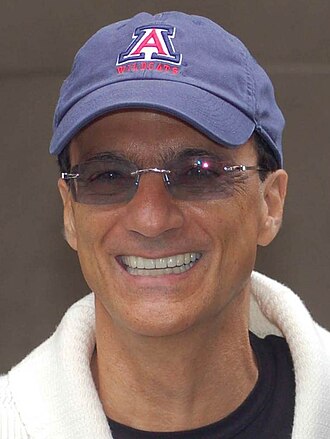
Jimmy Iovine
Co-founder of Interscope Records and Beats by Dre
Where to hear and read about Jimmy Iovine1 episode or test

Jimmy Iovine is a Brooklyn longshoreman's son who engineered records for John Lennon and Bruce Springsteen, co-founded Interscope Records, and with Dr. Dre built Beats, which Apple bought for $3 billion. The most useful lesson from him is to move laterally before your industry collapses under you, owning the customer and the whole chain rather than drilling the same hole.
I'm not going to be the guy to sell the last CD.
Jimmy Iovine: Building Interscope Records & Beats by Dre
Jimmy Iovine: the story and the lessons
1Jimmy Iovine's path from Red Hook to Lennon's studio
Iovine grew up in Red Hook, Brooklyn, son of a longshoreman. His father hauled 100-pound coffee bags in ship hulls that hit 120 degrees and was proud but humble. In a neighborhood where toughness and sports were the currency, Iovine was the kid in right field and had to build another toolkit.
Seeing the Beatles on Ed Sullivan at about 11 showed him a way to matter. His father also taught him that wherever he went, the place was better for him being there.
He learned by cleaning studios and watching the best up close. He cleaned and set up a studio and learned by repetition and observation. Ellie Greenwich took him to sessions, where he saw what a real engineer looked like.
Nothing came naturally to him until he sat at a mixing console and the balance did.
At 20 he was in the studio with John Lennon. He did three albums with Lennon and got his own apartment. From 20 to 25 he also worked on two Springsteen albums, one with Patti Smith and one with Tom Petty.
He calls those four artists his college years and five years beside Lennon and Springsteen "intense, intense therapy." He says he was an Etch A Sketch then, empty, so he absorbed everything.
A first trip to California at 20 widened what he thought possible. He had never flown or stayed in a hotel before Lennon put him in the Beverly Hills Hotel. He called his mother to ask why they didn't live in California.
He moved there in 1979 during Tom Petty's Damn the Torpedoes, and Petty put him in a house.
2How Iovine served great artists
Jon Landau told Iovine the work was not about him. Three weeks into chasing one drum sound on Born to Run, Iovine let pride take over when a helper was brought in. Landau told him, "This is not about you."
He says it still stops him in his tracks. In his day 80% of a record was the artist, so his plan since Lennon was to keep working with people of real talent.
Iovine treats humility as something you can practice. He says feigned humility, practiced long enough, becomes real, and that giving yourself up for an album is the test.
He cites Henry Ford's view that money comes naturally as a result of service.
One honest line from Iovine fixed Springsteen's double album. After two years on The River, Springsteen played it for him in silence with the vocal buried. Iovine asked, "When are you going to sing it?" and the team remixed the whole album.
He knew Springsteen's habit of burying the vocal from engineering his earlier record, and saw he had one line to get through. He says brutal honesty only works with an enormous amount of respect.
He connects dots others miss across songs and products. He heard the chorus of Because the Night, took it from Springsteen and gave it to Patti Smith. Later he saw the iPod and knew Beats had to be as cool.
He told Bono that With or Without You was not apartment music: "You're getting a house." He says he says a good line even if it sounds crass, as his father did.
3Starting Interscope and betting on Dr. Dre
Iovine started Interscope after watching David Geffen sell his label. Geffen sold his company for $500 million and went home at six while Iovine was still on drum sounds at 3 a.m. Geffen told him, "Do you know how many stupid people there are that have record companies?"
Ted Field backed it and Doug Morris at Atlantic offered half the money. In 1990 he did not know how to run a company and says he learned business "for defense."
Interscope survived because Iovine had no plan B. Fourteen labels launched in 1989 and 1990 with $50 million of funding, and only Interscope survived.
He traces the "it has to be" attitude to a childhood where the sidewalk was caving in behind him.
He signed Dre and Snoop because he saw the Rolling Stones in them. He heard Dre give the 808 bass a clarity New York producers could not control. He didn't need to understand hip-hop at first: "It scares you, but the music brings you in."
He credits Rick Rubin with seeing it before he did, and says he learned everything about hip-hop from Dre.
Iovine cleared three lawsuits to get to Dre's music. A RICO suit tied to Sony and Eazy-E, a prisoner claiming he funded the first album, and a distributor of Eazy-E's label all stood in the way. He settled them.
He compares it to a T. rex sitting on something great that most people walk away from: "If I see something new and great and unusual, I can't stop."
When radio refused G Thang, he bought it as an ad. He made a 60-second spot of the song and bought it in the top 50 markets, and pushed MTV to play it next to Guns N' Roses, telling them never to play an Interscope record again if it failed.
Listeners called stations asking for the song in the ad. The records reached kids of senators and congressmen, which led to the Time Warner fallout over lyrics. His rule, from Berry Gordy's Motown: "If it sticks, you win."
4Why Iovine left the record business to build Beats
Iovine refused to be the one selling the last CD. After Napster he saw CDs were finished. In 2003 he asked Vivendi for $100 million to build businesses with Interscope's artists, and they said they wanted to sell CDs.
His contract was up and he had been paid hundreds of millions for his company, so he was ready to walk rather than keep doing only what the label did.
He saw that labels never owned a customer. Record stores, radio and MTV each held the listener relationship in turn, while Instagram, TikTok and streaming services own theirs. "The music industry is allergic to a customer."
That frustration pushed him toward building his own products to reach listeners directly.
Iovine wanted to own the whole chain from artist to listener. Make the music, own the artists, distribute it, and build the device people hear it on. He hated "drilling the same hole."
"Most companies don't move laterally out of fear." He can't fully explain the instinct and just calls it lateral, sharpened by hustle and street sense.
He went to tech to learn the other side, and bonded with Steve Jobs. He helped Jobs get the iTunes licenses and calls him the only tech leader with soul, because he understood the why of artists.
Jobs wouldn't do headphones with him and warned at a Greek restaurant that distribution and inventory would kill him.
5How Iovine and Dr. Dre built and marketed Beats
A ten-minute talk with Dre turned sneakers into speakers. When Dre said he wanted to sell sneakers, Iovine answered "speakers" and dropped his other projects. A week later he had 30 headphone prototypes.
His edge, he says, is an instinct to find what works and drop everything else.
He positioned Beats against an ugly, uncool category. Headphones looked like medical equipment and makers could not market. Bose sold sleep, so Beats chose the opposite: "We want to wake you up."
Iovine put Beats in every Interscope music video. He paid more into the videos so artists, label and Beats all gained, and the product became a symbol of the music.
It worked because the industry was desperate. His reasoning: "My artists are causing the culture."
For Iovine, marketing is empathy. Know your product and audience and the product is the marketing. He points to Bob Dylan and Steve Jobs.
He doesn't think of himself as a marketer, just as someone with a feel for the people he wants to reach.
Beats sold to Apple as number one in 50 countries. Apple bought it for $3 billion in 2014, when it led Sennheiser in Germany and Sony in Japan.
He bought the streaming service MOG around 2011, renamed it Beats Music and brought in Trent Reznor; it became Apple Music, which finished number two.
The Beats experience led him and Dre to found a school. Tech companies struggled with design, so they put up $70 million for a school teaching across tech, arts, design and entrepreneurship.
Built with USC, it has grown into five or six high schools. He says his debt to Black culture is enormous.
6Iovine on streaming, AI and where music goes next
Seeing a shift early is only 10% of the game. He described all-you-can-eat streaming in 2004, but MySpace shows being early can still lose. "The game is getting it right."
Spotify had three million subscribers when Beats sold to Apple.
He says streaming copied download terms and shortchanges artists. Deals copied the iTunes 70/30 split, and family plans send most money to the biggest streamers.
Streaming gives artists no way to talk to fans, unlike TikTok and Instagram, so he calls it "minutes away from being obsolete."
Labels should build AI enterprise value, not license catalogs. Licensing to every company feeds a dragon that will eat them, and 3% of the next AI Spotify is the wrong deal.
Universal has invested in his project Complex, which combines media, live events and e-commerce. He expects AI to lift average music while the greats stay safe.
7What obsession cost Jimmy Iovine, and how he found peace
Iovine turns fear into a tailwind. He says great people have a "bend in the pipe," often from childhood. At 20 with Lennon he flipped fear into energy to learn.
"How do I take this fear and make it a tailwind instead of a headwind?"
He felt no peace from 20 to 65, even after Beats sold. He woke up seeing only flaws in the product, the business and the sound. Minutes after the Apple sale he was thinking about catching Spotify.
He says Jobs would have worked on Apple no matter what, but for Iovine "work was always work."
He left Apple at 65 because he couldn't be obsessed without the wheel. Apple did not want the music tail wagging the dog, and he comes from a world of breaking things. He retired in 2018.
"Obsession doesn't make for a great partner at home."
Therapy worked only once he took it seriously. In his 30s and 40s he grabbed the phone as soon as sessions ended. Real change came later with twice-weekly therapy, after his divorce.
He keeps an infield of four or five trusted friends and wishes he had learned this at 52, not 72.
He takes work seriously and himself lightly, like his father. His father joked even while dying. Iovine made A Very Special Christmas in his memory, raising over $100 million for Special Olympics.
Now married to Liberty, he says his marriage matters more than his work, though he admits, "I'm not that cured."

Jimmy Iovine: Building Interscope Records & Beats by Dre
Jimmy Iovine went from engineering for John Lennon and Bruce Springsteen to building Interscope, then moved sideways into headphones and streaming because he saw the record business was being invaded. The decision to leave a lucrative post rather than sell the last CD led to Beats, which Apple bought for $3 billion.
Iovine grew up in Red Hook, Brooklyn, son of a longshoreman. His father hauled 100-pound coffee bags in ship hulls that hit 120 degrees and was proud but humble. In a neighborhood where toughness and sports were the currency, Iovine was the kid in right field and had to build another toolkit.
Seeing the Beatles on Ed Sullivan at about 11 showed him a way to matter. His father also taught him that wherever he went, the place was better for him being there.
He learned by cleaning studios and watching the best up close. He cleaned and set up a studio and learned by repetition and observation. Ellie Greenwich took him to sessions, where he saw what a real engineer looked like.
Nothing came naturally to him until he sat at a mixing console and the balance did.
At 20 he was in the studio with John Lennon. He did three albums with Lennon and got his own apartment. From 20 to 25 he also worked on two Springsteen albums, one with Patti Smith and one with Tom Petty.
He calls those four artists his college years and five years beside Lennon and Springsteen "intense, intense therapy." He says he was an Etch A Sketch then, empty, so he absorbed everything.
A first trip to California at 20 widened what he thought possible. He had never flown or stayed in a hotel before Lennon put him in the Beverly Hills Hotel. He called his mother to ask why they didn't live in California.
He moved there in 1979 during Tom Petty's Damn the Torpedoes, and Petty put him in a house.
Jon Landau told Iovine the work was not about him. Three weeks into chasing one drum sound on Born to Run, Iovine let pride take over when a helper was brought in. Landau told him, "This is not about you."
He says it still stops him in his tracks. In his day 80% of a record was the artist, so his plan since Lennon was to keep working with people of real talent.
Iovine treats humility as something you can practice. He says feigned humility, practiced long enough, becomes real, and that giving yourself up for an album is the test.
He cites Henry Ford's view that money comes naturally as a result of service.
One honest line from Iovine fixed Springsteen's double album. After two years on The River, Springsteen played it for him in silence with the vocal buried. Iovine asked, "When are you going to sing it?" and the team remixed the whole album.
He knew Springsteen's habit of burying the vocal from engineering his earlier record, and saw he had one line to get through. He says brutal honesty only works with an enormous amount of respect.
He connects dots others miss across songs and products. He heard the chorus of Because the Night, took it from Springsteen and gave it to Patti Smith. Later he saw the iPod and knew Beats had to be as cool.
He told Bono that With or Without You was not apartment music: "You're getting a house." He says he says a good line even if it sounds crass, as his father did.
Iovine started Interscope after watching David Geffen sell his label. Geffen sold his company for $500 million and went home at six while Iovine was still on drum sounds at 3 a.m. Geffen told him, "Do you know how many stupid people there are that have record companies?"
Ted Field backed it and Doug Morris at Atlantic offered half the money. In 1990 he did not know how to run a company and says he learned business "for defense."
Interscope survived because Iovine had no plan B. Fourteen labels launched in 1989 and 1990 with $50 million of funding, and only Interscope survived.
He traces the "it has to be" attitude to a childhood where the sidewalk was caving in behind him.
He signed Dre and Snoop because he saw the Rolling Stones in them. He heard Dre give the 808 bass a clarity New York producers could not control. He didn't need to understand hip-hop at first: "It scares you, but the music brings you in."
He credits Rick Rubin with seeing it before he did, and says he learned everything about hip-hop from Dre.
Iovine cleared three lawsuits to get to Dre's music. A RICO suit tied to Sony and Eazy-E, a prisoner claiming he funded the first album, and a distributor of Eazy-E's label all stood in the way. He settled them.
He compares it to a T. rex sitting on something great that most people walk away from: "If I see something new and great and unusual, I can't stop."
When radio refused G Thang, he bought it as an ad. He made a 60-second spot of the song and bought it in the top 50 markets, and pushed MTV to play it next to Guns N' Roses, telling them never to play an Interscope record again if it failed.
Listeners called stations asking for the song in the ad. The records reached kids of senators and congressmen, which led to the Time Warner fallout over lyrics. His rule, from Berry Gordy's Motown: "If it sticks, you win."
Iovine refused to be the one selling the last CD. After Napster he saw CDs were finished. In 2003 he asked Vivendi for $100 million to build businesses with Interscope's artists, and they said they wanted to sell CDs.
His contract was up and he had been paid hundreds of millions for his company, so he was ready to walk rather than keep doing only what the label did.
He saw that labels never owned a customer. Record stores, radio and MTV each held the listener relationship in turn, while Instagram, TikTok and streaming services own theirs. "The music industry is allergic to a customer."
That frustration pushed him toward building his own products to reach listeners directly.
Iovine wanted to own the whole chain from artist to listener. Make the music, own the artists, distribute it, and build the device people hear it on. He hated "drilling the same hole."
"Most companies don't move laterally out of fear." He can't fully explain the instinct and just calls it lateral, sharpened by hustle and street sense.
He went to tech to learn the other side, and bonded with Steve Jobs. He helped Jobs get the iTunes licenses and calls him the only tech leader with soul, because he understood the why of artists.
Jobs wouldn't do headphones with him and warned at a Greek restaurant that distribution and inventory would kill him.
A ten-minute talk with Dre turned sneakers into speakers. When Dre said he wanted to sell sneakers, Iovine answered "speakers" and dropped his other projects. A week later he had 30 headphone prototypes.
His edge, he says, is an instinct to find what works and drop everything else.
He positioned Beats against an ugly, uncool category. Headphones looked like medical equipment and makers could not market. Bose sold sleep, so Beats chose the opposite: "We want to wake you up."
Iovine put Beats in every Interscope music video. He paid more into the videos so artists, label and Beats all gained, and the product became a symbol of the music.
It worked because the industry was desperate. His reasoning: "My artists are causing the culture."
For Iovine, marketing is empathy. Know your product and audience and the product is the marketing. He points to Bob Dylan and Steve Jobs.
He doesn't think of himself as a marketer, just as someone with a feel for the people he wants to reach.
Beats sold to Apple as number one in 50 countries. Apple bought it for $3 billion in 2014, when it led Sennheiser in Germany and Sony in Japan.
He bought the streaming service MOG around 2011, renamed it Beats Music and brought in Trent Reznor; it became Apple Music, which finished number two.
The Beats experience led him and Dre to found a school. Tech companies struggled with design, so they put up $70 million for a school teaching across tech, arts, design and entrepreneurship.
Built with USC, it has grown into five or six high schools. He says his debt to Black culture is enormous.
Seeing a shift early is only 10% of the game. He described all-you-can-eat streaming in 2004, but MySpace shows being early can still lose. "The game is getting it right."
Spotify had three million subscribers when Beats sold to Apple.
He says streaming copied download terms and shortchanges artists. Deals copied the iTunes 70/30 split, and family plans send most money to the biggest streamers.
Streaming gives artists no way to talk to fans, unlike TikTok and Instagram, so he calls it "minutes away from being obsolete."
Labels should build AI enterprise value, not license catalogs. Licensing to every company feeds a dragon that will eat them, and 3% of the next AI Spotify is the wrong deal.
Universal has invested in his project Complex, which combines media, live events and e-commerce. He expects AI to lift average music while the greats stay safe.
Iovine turns fear into a tailwind. He says great people have a "bend in the pipe," often from childhood. At 20 with Lennon he flipped fear into energy to learn.
"How do I take this fear and make it a tailwind instead of a headwind?"
He felt no peace from 20 to 65, even after Beats sold. He woke up seeing only flaws in the product, the business and the sound. Minutes after the Apple sale he was thinking about catching Spotify.
He says Jobs would have worked on Apple no matter what, but for Iovine "work was always work."
He left Apple at 65 because he couldn't be obsessed without the wheel. Apple did not want the music tail wagging the dog, and he comes from a world of breaking things. He retired in 2018.
"Obsession doesn't make for a great partner at home."
Therapy worked only once he took it seriously. In his 30s and 40s he grabbed the phone as soon as sessions ended. Real change came later with twice-weekly therapy, after his divorce.
He keeps an infield of four or five trusted friends and wishes he had learned this at 52, not 72.
He takes work seriously and himself lightly, like his father. His father joked even while dying. Iovine made A Very Special Christmas in his memory, raising over $100 million for Special Olympics.
Now married to Liberty, he says his marriage matters more than his work, though he admits, "I'm not that cured."