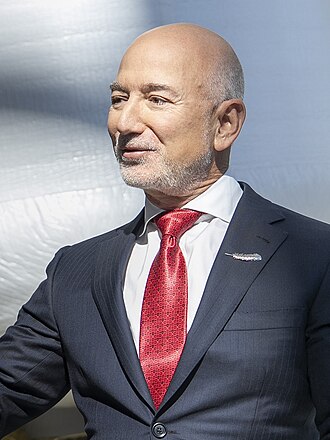
Jeff Bezos
Founder of Amazon
Where to hear and read about Jeff Bezos1 book · 4 episodes and tests
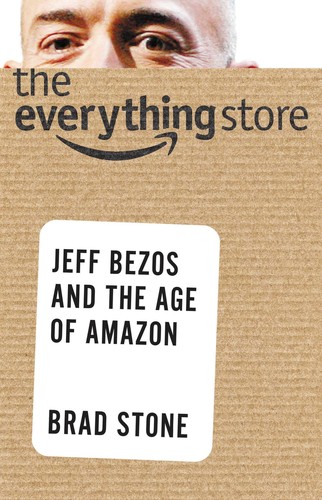 Book · notes comingThe Everything Store

 FoundersLessons from Jeff Bezos's Shareholder Letters
 FoundersWorking with Jeff Bezos

 AcquiredAmazon Web Services
 AcquiredAmazon.com
Jeff Bezos founded Amazon in a Seattle garage in 1995 and grew it from an online bookstore into a retailer, a third-party marketplace and the AWS cloud business by reinvesting cash into advantages rivals could not copy. The thing most worth learning from him is to pick a few principles, above all customer obsession and long-term thinking, repeat them for decades, and let judgment about the long run beat short-term math.
The world wants you to be typical in a thousand ways. It pulls at you. Don't let it happen.
Lessons from Jeff Bezos's Shareholder Letters
Jeff Bezos: the story and the lessons
1Jeff Bezos's path from a Texas ranch to D. E. Shaw
Bezos grew up among scientists and a self-made immigrant father. He was born January 12, 1964, in Albuquerque to a 16-year-old mother and an 18-year-old father. His grandfather Lawrence Preston Gise ran Sandia National Laboratories, and his adoptive father Mike left Cuba with nothing and rose to senior Exxon executive.
Gise, one of the original members of DARPA, introduced Jeff to science fiction and space. The family moved to Houston, where Jeff grew up around the Apollo program and a teacher said there was probably no limit to what he could do.
Summers on a remote ranch taught him to fix things himself. From age four he spent every summer on his grandparents' 24,000-acre ranch in West Texas, 100 miles from the nearest store.
They built their own tools, rebuilt broken farm equipment and once operated on a bird dog's tail. Blue Origin now launches from the same part of West Texas.
Network and trading jobs shaped his sense of what technology could do. After Princeton in 1986 he worked two years at Fel, a startup building high-speed trading networks, then Bankers Trust, then joined D. E. Shaw in 1990 and became its fourth senior vice president in his mid to late 20s.
David Shaw had him developing internet businesses in weekly brainstorms, including an online broker and the free email service Juno. He met MacKenzie Tuttle there, who later kept Amazon's books.
The first everything store was a middleman with no inventory. The original plan had manufacturers drop-ship straight to customers, with the site matching buyers and factories and taking a cut.
It aimed to bypass Walmart, Kmart and Sears, and looked nothing like the company Amazon became.
Bezos quit a likely succession using a regret test. After reading that web traffic grew 2300x from January 1993 to January 1994, he imagined himself at 80 and asked which path he would regret least. His parents told him to stay at D. E. Shaw, where he was a likely heir.
The hosts argue he would never have shown the needed drive as an employee inside someone else's firm. "Which path am I going to regret the least."
2Why Bezos started Amazon with books in a Seattle garage
Bezos used the internet only for what was impossible offline. In his first interview he said that if you can do something the old way you should, and a new medium is for things you could not do any other way.
Rival online bookstores just posted the inventory they had on hand on static pages, and nobody offered the full catalog.
Books won because the long tail needed an infinite shelf. About 3 million titles were in print while a big superstore stocked around 80,000, and two distributors, Ingram and Baker & Taylor, held most of the inventory.
Music was lighter to ship but meant negotiating with six labels and had a smaller long tail. Paperbacks are commodities, so the experience is the same wherever they are bought.
Seattle was picked by formula, not personal ties. A 1992 Supreme Court ruling meant retailers need not collect sales tax where they had no physical presence, which ruled out California and New York. Seattle was near Ingram in Oregon and had Microsoft's programmers.
Bezos later treated the tax gap as a price edge. He first wanted the name Cadabra, which a lawyer heard as "cadaver", and friends found Relentless sinister, so he chose Amazon from the A's.
Amazon started on $200,000 of family money and a slow raise. Jeff and MacKenzie put in $95,000, Shel Kaphan $5,000 and Jeff's parents $100,000, with a rented Bellevue garage as the office. The first outside round took about 60 meetings and 22 investors to raise $1 million for 20% of the company.
Bezos took a bookselling course in Portland to earn trust with the distributors.
Demand arrived at launch, before any marketing. The first order came on April 3, 1995, the public launch was July 16, and within four weeks Amazon had shipped to all 50 states and 45 countries. Revenue reached about $500,000 in the first six months.
When Yahoo's founders offered a homepage feature two weeks in, Kaphan feared the load and Bezos said yes anyway. Distributors had a 10-book minimum, so Amazon padded orders with nine out-of-stock titles to get one rare book.
3How Bezos built Amazon.com's fulfillment moat
Bezos chose fast growth and an early IPO to build the brand. Kleiner Perkins invested $8 million at a $60 million post-money valuation, and CFO Joy Covey co-designed the reinvest-everything plan behind the "get big fast" motto. The May 15, 1997 IPO raised $54 million at a $438 million market cap.
Barnes & Noble sued three days before pricing and Forrester wrote "amazon.toast". A few weeks later Amazon reported $28 million of revenue in one quarter, more than all of 1996, and the stock took off.
Bezos saw online retail as a scale business with a hard middle. He wrote that online selling has high fixed costs and relatively low variable costs, so a medium-sized e-commerce company struggles.
That is why growth came ahead of short-term profit. He also projected 60 times as much bandwidth per customer in five years at constant cost.
Shipping unique orders was a problem store chains never had. Walmart and Barnes & Noble shipped bulk to stores, while Amazon had to box a unique mix for each customer, starting with packing tables in a SoDo warehouse.
Barnes & Noble's distribution served its stores, and the Riggios would not put their best people on an effort that cannibalized them.
Bezos spent a year recruiting Walmart's logistics chief. He and Joy Covey courted Rick Dalzell, who backed out once after Lee Scott warned him off, then joined with roughly a dozen Walmart executives. Amazon went from one warehouse to six sites in 1998.
Walmart sued over trade secrets and settled with no damages. Bezos carried a marked-up copy of Sam Walton's Made in America, and Amazon now runs 185 fulfillment centers and 96 planes.
He refused to trade warehouses for eBay's cleaner margins. In 1998 Meg Whitman toured Amazon's fulfillment center, heard a roughly $600 million price floated, and concluded warehouses were not cool. Bezos reasoned the best place to buy online needed reliable stock and shipping, so Amazon had to own fulfillment.
eBay reached a $25 billion market cap in 1999, but Amazon passed it in 2007.
Scale turns customer experience into a fixed cost. Bezos explained that a feature like warning you already bought an item costs the same for 1 million or 70 million customers.
A larger base therefore funds a better experience than a smaller rival can afford.
4How Bezos got Amazon through the dot-com crash
Bezos watched internal metrics, not the stock price. His 2000 letter opened with one word, "Ouch", as shares fell more than 80%, yet he wrote that Amazon was stronger than at any time in its past.
He later said every metric was improving and he just had to hold on.
Failed category bets taught him that only scale wins. Amazon lost significant money on Living.com and Pets.com, which both shut down in 2000, and it owned about 40% of Cosmo.
He dropped the land-rush metaphor, admitting Amazon had underestimated how much time it had to enter categories itself.
A board-imposed COO was rejected by the culture. In 1999 the board had Bezos bring in Joe Galli of Black & Decker as COO, with Bill Campbell as coach. Galli commuted from the East Coast and had a secretary print and read his email.
Executives rejected him "like a bad organ transplant" and Bezos took the wheel back. Galli's lasting contribution was helping recruit Jeff Wilke.
He switched from getting big to getting the house in order. Amazon laid off 1,300 people in 2001, publicly promised profit by Q4 2001, and ran websites for Toys R Us, Borders and Target for cash. Q4 2001 revenue was $1.1 billion with $5 million of net income, and the stock jumped 25% in a day.
The hosts argue 2000 to 2007, while rivals went under, was the best time to build moats.
A failed eBay clone led straight to Marketplace. Amazon Auctions launched in March 1999 as a faster copy of eBay but flopped, because eBay's buyer and seller network was already in full swing and Auctions sat on a separate tab. In fall 2000 Bezos put third-party sellers on Amazon's own product pages instead.
He called a weekend meeting at his house after eBay pitched to run Amazon's third-party business, and launched in Q4 despite the usual code freeze. Marketplace was 15% of orders at launch and is now over 50% of what sells on amazon.com.
5Jeff Bezos's rules: long term, customers and low prices
Bezos picked a few principles in 1997 and repeated them for 23 years. He attached the first letter, "It's All About the Long Term", to every shareholder letter after it.
Partners named in that letter, such as AOL, Excite and Netscape, no longer exist. His vision stayed fixed: build Earth's most customer-centric company.
He held that customer and shareholder interests align over time. Lower costs fund lower prices, lower prices drive growth, and growth spreads fixed costs to allow more cuts. "Please expect us to repeat this loop."
A basket of 100 bestselling books cost 23% less on Amazon, before counting a six-hour trip to two stores.
A meeting with Jim Sinegal made low prices a principle. Costco held about a 14% markup even when it could charge more. The Monday after, Bezos told his S team Amazon's pricing was incoherent, and Amazon cut prices on books, music and videos by 20 to 30%.
"There are two kinds of retailers... We are going to be the second, full stop."
Bezos let judgment overrule the elasticity math. Amazon's own data said price cuts never paid back in short-term volume, but he judged they would build far more free cash flow over five to ten years.
He cited a paper warning that excess focus on operating decisions can make firms pursue the wrong course more efficiently.
He allowed negative reviews even though they cost sales. Vendors asked whether Amazon understood that you make money when you sell things. Bezos answered that better purchase decisions pay off in the long term.
He had changed his own mind about purchases after reading lukewarm reviews, and accepted being misunderstood.
He ran Amazon on cash flow and float, not reported profit. The 1997 letter chose future cash flows over tidy GAAP accounts. Customers pay immediately and suppliers are paid later, so growth funds itself.
Amazon raised only about $10 million in venture and $55 million at IPO, plus roughly $2 billion of convertible debt.
Prime came from Costco's fee insight and a demand for fast and free. Sinegal taught him a fee makes customers more loyal. In October 2004 Bezos emailed that slow growth was a house on fire, and Prime was live by February 2005.
Asked whether customers want slow and free or fast and expensive, he said fast and free, though fulfillment was not ready. Prime now brings in over $20 billion a year.
He shamelessly copied good ideas from rivals. Bezos sits in the retail lineage of Sol Price, Sam Walton and Jim Sinegal, where you shop competitors and steal their best ideas.
He borrowed principles rather than products, wanting the Kindle to refresh on its own like his BlackBerry.
6How Bezos invented the Kindle, Prime Video and Echo instead of copying
Bezos answered Steve Jobs with a who decision, not a copycat. In 2003 Jobs demoed iTunes for Windows and predicted Amazon would be the last place to buy CDs. Bezos named a single-threaded leader, Steve, reporting directly to him to work only on digital.
Roughly 77% of revenue came from physical media, so digital managed inside that business would never be a priority. He warned "you don't want to become Kodak."
He saw selection could not be a moat in digital goods. Any company could aggregate files into one catalog, so Bezos told his digital leader to leave the middle of the value chain and build the app and the device.
Music executives urged an iTunes rival, but Bezos wanted a truly unique value proposition and would not fight Apple at its own game.
Bezos built Kindle hardware in-house to acquire the skill. Amazon had never built hardware, so he hired missionary hardware engineers rather than shrink the vision. When costs ballooned by mid-2005, he asked the CFO "how much money do we have."
Retailers who outsourced their websites could only pick from a vendor's menu. The Kindle launched in November 2007 at $399, held 200 books and sold out in under six hours.
He made teams write the press release before building. Pitches with market sizes and margins frustrated him, so he required a one-page press release and about five pages of FAQ for a product that did not exist yet.
In 2004 he wrote his own narrative for a countertop device taking orders like "Puck please order a gallon of milk", which anticipates the Echo.
Bezos made video free for Prime members, borrowing from Netflix. A standalone video subscription was failing, and Netflix had started streaming as a bonus to its DVD plan.
He argued a rival might copy Prime shopping or a Netflix-like service but was unlikely to do both. Bidding wars for studio content later pushed Amazon to make its own shows.
Echo came from a product no customer asked for. In 2013 few would have wanted an always-on cylinder in the kitchen, yet Amazon has sold about 500 million Echo and Alexa devices.
The failed Fire Phone fed directly into what Amazon learned building Echo and Alexa.
7How AWS grew out of Bezos's API mandate
Bezos forced every team to talk only through service interfaces. By 2002 Amazon's 1995 monolithic codebase had nearly stalled the company. Bezos and Jassy mandated that teams expose data only through APIs designed to be externalizable, with no back doors.
Steve Yegge's account of the memo ends: "anyone who doesn't do this will be fired."
He cut communication where Microsoft added coordination. Microsoft attached program managers to developers, while Bezos asked teams not to need to talk at all and to trade like independent startups.
He told teams "we need to eliminate communication not encourage it", since independent teams run more experiments in parallel.
AWS was a deliberate bet, not leftover servers. Werner Vogels called the excess capacity story a myth and said AWS would have used up any spare capacity within two months of launch.
Vogels says AWS was always meant to grow as big as retail.
Tim O'Reilly's pitch led Bezos to open Amazon to developers. In 2002 Bezos embraced O'Reilly's web 2.0 idea and created a team to open the product catalog, with the goal to "let them surprise us."
Its 2002 developer conference drew eight attendees.
Flickr's founder showed Bezos undifferentiated heavy lifting. Stewart Butterfield said about half his day went to scaling databases and servers rather than what made Flickr unique.
The AWS press release said a student in a dorm room should get the same infrastructure as any Amazon engineer.
Bezos approved Jassy's request for 57 people. Jassy's 2003 six-pager proposed storage, compute, databases and content delivery so any large web service could be rebuilt. S3 shipped in March 2006 and EC2 in August 2006.
EC2 was built separately in Cape Town by Chris Pinkham, who said "I spent most of my time trying to hide from Bezos."
A credit card replaced the enterprise sales cycle. James Hamilton's first S3 project cost $3.08 for the month, with no RFP or approval needed, and startups like Dropbox, Airbnb and Uber built on it.
Netflix moved to AWS in 2009 and Reed Hastings endorsed it at the first re:Invent in 2012.
Amazon priced at margins incumbents would never accept. Oracle and IBM earned about 80% gross margins on licenses, while AWS targeted 20 to 40%. AWS still cut prices 51 times by 2015 without competitive pressure.
Operating margin went from 19% in 2015 to about 30%, with about 39% market share against Azure's 21%.
Bezos called AWS market size unconstrained. He wrote that in his 2014 letter, when AWS ran at about $6 billion.
In 2016 AWS earned over half of Amazon's operating profit, and it later passed $62 billion in revenue.
8How Jeff Bezos leads, hires and decides
Early on, Bezos was the culture. He wrote job descriptions, interviewed, packed boxes and read every customer email. His rule was "it has to be perfect", since one bad experience undoes hundreds of good ones.
His first job ad demanded building complex systems in about a third of the time competent people think possible.
Bezos screened every hire with three questions. Will you admire this person, will they raise the group's average effectiveness, and along what dimensions might they be a superstar.
He called a high hiring bar the single most important element of Amazon's success.
He told leaders to inspect work like Howard Hughes. Citing The Aviator's flush rivets, he told a senior leader to send work back if it fell short.
He taught that wrong beliefs about scope kill standards. A handstand coach says mastery takes six months, not two weeks, and a great six-page memo takes a week or more.
"Unrealistic beliefs on scope, often hidden and undiscussed, kill high standards."
Bezos banned PowerPoint for six-page narratives. After reading Edward Tufte's essay in early 2004, he required memos read in about 20 minutes of silence at the start of meetings.
He assumes each sentence is wrong until proven otherwise and is usually among the last to finish.
He gave each project one full-time leader. A single-threaded leader works on one project alone, making ownership and accountability simple.
Great leaders then became the scarce input.
Bezos decides fast on reversible choices. Most decisions are two-way doors made with about 70% of the information. He approved an Amazon Studios show he doubted by writing "I disagree and commit."
"If you wait for 90%, you're being too slow."
He warned that process becomes a proxy for results. A junior leader defends a bad outcome with "we followed the process", while an experienced one improves it.
"The process is not the thing."
Bezos worked customer service himself and added an andon cord. Corporate staff spend a few days as service agents every two years, Bezos included. After an agent predicted a damaged lawn chair complaint, he borrowed Toyota's andon cord for customer service.
On weekend mornings he walked the online store, and every issue he found had to be evaluated and reported back.
9Bezos on bold bets, failure and staying day one
Bezos takes long-tail bets because business payoffs have no cap. A 10% chance at a 100 times payoff is worth taking every time, since in business one swing can score a thousand runs.
Outsized returns come from betting against conventional wisdom, which is usually right.
He insisted failures must grow with the company. Later letters admit multibillion-dollar failures and expect $10 billion ones.
"If the size of your failures isn't growing, you're not going to be inventing at a size that can actually move the needle."
Amazon found its path by brute force through failures. Auctions, zShops, the Fire Phone and pets.com stakes all failed, and only amazon.com had instant product-market fit.
Bezos enters a business only when it can be differentiated. He passed on physical stores for lack of a differentiated idea. FBA and AWS passed his test.
His dreamy business is loved by customers, can grow very large, earns strong returns and endures. "When you find one of these, get married."
He treats patience with small seeds as an edge. Many Amazonians had watched $10 million seeds become billion-dollar businesses.
Bezos favors self-service platforms and wandering. Self-service removes gatekeepers so improbable ideas get tried.
His last letter told Amazon to fight the pull toward typical. He described day two as stasis, irrelevance, decline and death, and said staying distinctive takes continuous energy.
Lessons from Jeff Bezos's Shareholder Letters
Bezos's shareholder letters show a founder who picked a few principles in 1997 (long term, customer obsession, invention, high standards) and repeated them for 23 years while building an enduring company. The decision that makes it worth hearing is how he let judgment beat the math, cutting prices after a meeting with Costco's Jim Sinegal and betting on unrequested products like AWS and Echo.
Bezos saw online retail as a scale business with a hard middle. He wrote that online selling has high fixed costs and relatively low variable costs, so a medium-sized e-commerce company struggles.
That is why growth came ahead of short-term profit. He also projected 60 times as much bandwidth per customer in five years at constant cost.
Bezos watched internal metrics, not the stock price. His 2000 letter opened with one word, "Ouch", as shares fell more than 80%, yet he wrote that Amazon was stronger than at any time in its past.
He later said every metric was improving and he just had to hold on.
Failed category bets taught him that only scale wins. Amazon lost significant money on Living.com and Pets.com, which both shut down in 2000, and it owned about 40% of Cosmo.
He dropped the land-rush metaphor, admitting Amazon had underestimated how much time it had to enter categories itself.
Bezos picked a few principles in 1997 and repeated them for 23 years. He attached the first letter, "It's All About the Long Term", to every shareholder letter after it.
Partners named in that letter, such as AOL, Excite and Netscape, no longer exist. His vision stayed fixed: build Earth's most customer-centric company.
He held that customer and shareholder interests align over time. Lower costs fund lower prices, lower prices drive growth, and growth spreads fixed costs to allow more cuts. "Please expect us to repeat this loop."
A basket of 100 bestselling books cost 23% less on Amazon, before counting a six-hour trip to two stores.
A meeting with Jim Sinegal made low prices a principle. Costco held about a 14% markup even when it could charge more. The Monday after, Bezos told his S team Amazon's pricing was incoherent, and Amazon cut prices on books, music and videos by 20 to 30%.
"There are two kinds of retailers... We are going to be the second, full stop."
Bezos let judgment overrule the elasticity math. Amazon's own data said price cuts never paid back in short-term volume, but he judged they would build far more free cash flow over five to ten years.
He cited a paper warning that excess focus on operating decisions can make firms pursue the wrong course more efficiently.
He allowed negative reviews even though they cost sales. Vendors asked whether Amazon understood that you make money when you sell things. Bezos answered that better purchase decisions pay off in the long term.
He had changed his own mind about purchases after reading lukewarm reviews, and accepted being misunderstood.
Bezos built Kindle hardware in-house to acquire the skill. Amazon had never built hardware, so he hired missionary hardware engineers rather than shrink the vision. When costs ballooned by mid-2005, he asked the CFO "how much money do we have."
Retailers who outsourced their websites could only pick from a vendor's menu. The Kindle launched in November 2007 at $399, held 200 books and sold out in under six hours.
Echo came from a product no customer asked for. In 2013 few would have wanted an always-on cylinder in the kitchen, yet Amazon has sold about 500 million Echo and Alexa devices.
The failed Fire Phone fed directly into what Amazon learned building Echo and Alexa.
Bezos screened every hire with three questions. Will you admire this person, will they raise the group's average effectiveness, and along what dimensions might they be a superstar.
He called a high hiring bar the single most important element of Amazon's success.
He taught that wrong beliefs about scope kill standards. A handstand coach says mastery takes six months, not two weeks, and a great six-page memo takes a week or more.
"Unrealistic beliefs on scope, often hidden and undiscussed, kill high standards."
Bezos decides fast on reversible choices. Most decisions are two-way doors made with about 70% of the information. He approved an Amazon Studios show he doubted by writing "I disagree and commit."
"If you wait for 90%, you're being too slow."
He warned that process becomes a proxy for results. A junior leader defends a bad outcome with "we followed the process", while an experienced one improves it.
"The process is not the thing."
Bezos takes long-tail bets because business payoffs have no cap. A 10% chance at a 100 times payoff is worth taking every time, since in business one swing can score a thousand runs.
Outsized returns come from betting against conventional wisdom, which is usually right.
He insisted failures must grow with the company. Later letters admit multibillion-dollar failures and expect $10 billion ones.
"If the size of your failures isn't growing, you're not going to be inventing at a size that can actually move the needle."
Bezos enters a business only when it can be differentiated. He passed on physical stores for lack of a differentiated idea. FBA and AWS passed his test.
His dreamy business is loved by customers, can grow very large, earns strong returns and endures. "When you find one of these, get married."
He treats patience with small seeds as an edge. Many Amazonians had watched $10 million seeds become billion-dollar businesses.
Bezos favors self-service platforms and wandering. Self-service removes gatekeepers so improbable ideas get tried.
His last letter told Amazon to fight the pull toward typical. He described day two as stasis, irrelevance, decline and death, and said staying distinctive takes continuous energy.
Working with Jeff Bezos
Seen through two executives who worked beside Bezos for 27 years combined, Amazon was built on a few repeated principles: work backwards from the customer, invent instead of copy, and remove the coordination that slows builders down. The decision that makes it worth hearing is how Bezos answered Steve Jobs's 2003 warning by building the Kindle and Prime rather than a copycat music service.
Prime came from Costco's fee insight and a demand for fast and free. Sinegal taught him a fee makes customers more loyal. In October 2004 Bezos emailed that slow growth was a house on fire, and Prime was live by February 2005.
Asked whether customers want slow and free or fast and expensive, he said fast and free, though fulfillment was not ready. Prime now brings in over $20 billion a year.
He shamelessly copied good ideas from rivals. Bezos sits in the retail lineage of Sol Price, Sam Walton and Jim Sinegal, where you shop competitors and steal their best ideas.
He borrowed principles rather than products, wanting the Kindle to refresh on its own like his BlackBerry.
Bezos answered Steve Jobs with a who decision, not a copycat. In 2003 Jobs demoed iTunes for Windows and predicted Amazon would be the last place to buy CDs. Bezos named a single-threaded leader, Steve, reporting directly to him to work only on digital.
Roughly 77% of revenue came from physical media, so digital managed inside that business would never be a priority. He warned "you don't want to become Kodak."
He saw selection could not be a moat in digital goods. Any company could aggregate files into one catalog, so Bezos told his digital leader to leave the middle of the value chain and build the app and the device.
Music executives urged an iTunes rival, but Bezos wanted a truly unique value proposition and would not fight Apple at its own game.
Bezos built Kindle hardware in-house to acquire the skill. Amazon had never built hardware, so he hired missionary hardware engineers rather than shrink the vision. When costs ballooned by mid-2005, he asked the CFO "how much money do we have."
Retailers who outsourced their websites could only pick from a vendor's menu. The Kindle launched in November 2007 at $399, held 200 books and sold out in under six hours.
He made teams write the press release before building. Pitches with market sizes and margins frustrated him, so he required a one-page press release and about five pages of FAQ for a product that did not exist yet.
In 2004 he wrote his own narrative for a countertop device taking orders like "Puck please order a gallon of milk", which anticipates the Echo.
Bezos made video free for Prime members, borrowing from Netflix. A standalone video subscription was failing, and Netflix had started streaming as a bonus to its DVD plan.
He argued a rival might copy Prime shopping or a Netflix-like service but was unlikely to do both. Bidding wars for studio content later pushed Amazon to make its own shows.
He cut communication where Microsoft added coordination. Microsoft attached program managers to developers, while Bezos asked teams not to need to talk at all and to trade like independent startups.
He told teams "we need to eliminate communication not encourage it", since independent teams run more experiments in parallel.
Flickr's founder showed Bezos undifferentiated heavy lifting. Stewart Butterfield said about half his day went to scaling databases and servers rather than what made Flickr unique.
The AWS press release said a student in a dorm room should get the same infrastructure as any Amazon engineer.
Early on, Bezos was the culture. He wrote job descriptions, interviewed, packed boxes and read every customer email. His rule was "it has to be perfect", since one bad experience undoes hundreds of good ones.
His first job ad demanded building complex systems in about a third of the time competent people think possible.
He told leaders to inspect work like Howard Hughes. Citing The Aviator's flush rivets, he told a senior leader to send work back if it fell short.
Bezos banned PowerPoint for six-page narratives. After reading Edward Tufte's essay in early 2004, he required memos read in about 20 minutes of silence at the start of meetings.
He assumes each sentence is wrong until proven otherwise and is usually among the last to finish.
He gave each project one full-time leader. A single-threaded leader works on one project alone, making ownership and accountability simple.
Great leaders then became the scarce input.
Bezos decides fast on reversible choices. Most decisions are two-way doors made with about 70% of the information. He approved an Amazon Studios show he doubted by writing "I disagree and commit."
"If you wait for 90%, you're being too slow."
Bezos worked customer service himself and added an andon cord. Corporate staff spend a few days as service agents every two years, Bezos included. After an agent predicted a damaged lawn chair complaint, he borrowed Toyota's andon cord for customer service.
On weekend mornings he walked the online store, and every issue he found had to be evaluated and reported back.
He insisted failures must grow with the company. Later letters admit multibillion-dollar failures and expect $10 billion ones.
"If the size of your failures isn't growing, you're not going to be inventing at a size that can actually move the needle."
Amazon Web Services
AWS was not built from spare servers. It grew out of an internal fix for a gridlocked codebase, which Amazon then turned into a pay-as-you-go infrastructure business that now earns as much operating income as the whole retail operation. The decision that makes it worth hearing is to launch with basic building blocks, win startups first, and sell at margins the incumbents would never accept.
Bezos forced every team to talk only through service interfaces. By 2002 Amazon's 1995 monolithic codebase had nearly stalled the company. Bezos and Jassy mandated that teams expose data only through APIs designed to be externalizable, with no back doors.
Steve Yegge's account of the memo ends: "anyone who doesn't do this will be fired."
He cut communication where Microsoft added coordination. Microsoft attached program managers to developers, while Bezos asked teams not to need to talk at all and to trade like independent startups.
He told teams "we need to eliminate communication not encourage it", since independent teams run more experiments in parallel.
AWS was a deliberate bet, not leftover servers. Werner Vogels called the excess capacity story a myth and said AWS would have used up any spare capacity within two months of launch.
Vogels says AWS was always meant to grow as big as retail.
Tim O'Reilly's pitch led Bezos to open Amazon to developers. In 2002 Bezos embraced O'Reilly's web 2.0 idea and created a team to open the product catalog, with the goal to "let them surprise us."
Its 2002 developer conference drew eight attendees.
Bezos approved Jassy's request for 57 people. Jassy's 2003 six-pager proposed storage, compute, databases and content delivery so any large web service could be rebuilt. S3 shipped in March 2006 and EC2 in August 2006.
EC2 was built separately in Cape Town by Chris Pinkham, who said "I spent most of my time trying to hide from Bezos."
A credit card replaced the enterprise sales cycle. James Hamilton's first S3 project cost $3.08 for the month, with no RFP or approval needed, and startups like Dropbox, Airbnb and Uber built on it.
Netflix moved to AWS in 2009 and Reed Hastings endorsed it at the first re:Invent in 2012.
Amazon priced at margins incumbents would never accept. Oracle and IBM earned about 80% gross margins on licenses, while AWS targeted 20 to 40%. AWS still cut prices 51 times by 2015 without competitive pressure.
Operating margin went from 19% in 2015 to about 30%, with about 39% market share against Azure's 21%.
Bezos called AWS market size unconstrained. He wrote that in his 2014 letter, when AWS ran at about $6 billion.
In 2016 AWS earned over half of Amazon's operating profit, and it later passed $62 billion in revenue.
Bezos takes long-tail bets because business payoffs have no cap. A 10% chance at a 100 times payoff is worth taking every time, since in business one swing can score a thousand runs.
Outsized returns come from betting against conventional wisdom, which is usually right.
Amazon.com
Amazon.com shows how a founder can turn a book website into the dominant retailer by building logistics no rival could copy, reinvesting float instead of showing profit, and learning fast from dozens of failed bets. The decision to open its own product pages to third-party sellers, made while the company was near death in 2000, is the turn that makes the story worth hearing.
Bezos grew up among scientists and a self-made immigrant father. He was born January 12, 1964, in Albuquerque to a 16-year-old mother and an 18-year-old father. His grandfather Lawrence Preston Gise ran Sandia National Laboratories, and his adoptive father Mike left Cuba with nothing and rose to senior Exxon executive.
Gise, one of the original members of DARPA, introduced Jeff to science fiction and space. The family moved to Houston, where Jeff grew up around the Apollo program and a teacher said there was probably no limit to what he could do.
Summers on a remote ranch taught him to fix things himself. From age four he spent every summer on his grandparents' 24,000-acre ranch in West Texas, 100 miles from the nearest store.
They built their own tools, rebuilt broken farm equipment and once operated on a bird dog's tail. Blue Origin now launches from the same part of West Texas.
Network and trading jobs shaped his sense of what technology could do. After Princeton in 1986 he worked two years at Fel, a startup building high-speed trading networks, then Bankers Trust, then joined D. E. Shaw in 1990 and became its fourth senior vice president in his mid to late 20s.
David Shaw had him developing internet businesses in weekly brainstorms, including an online broker and the free email service Juno. He met MacKenzie Tuttle there, who later kept Amazon's books.
The first everything store was a middleman with no inventory. The original plan had manufacturers drop-ship straight to customers, with the site matching buyers and factories and taking a cut.
It aimed to bypass Walmart, Kmart and Sears, and looked nothing like the company Amazon became.
Bezos quit a likely succession using a regret test. After reading that web traffic grew 2300x from January 1993 to January 1994, he imagined himself at 80 and asked which path he would regret least. His parents told him to stay at D. E. Shaw, where he was a likely heir.
The hosts argue he would never have shown the needed drive as an employee inside someone else's firm. "Which path am I going to regret the least."
Bezos used the internet only for what was impossible offline. In his first interview he said that if you can do something the old way you should, and a new medium is for things you could not do any other way.
Rival online bookstores just posted the inventory they had on hand on static pages, and nobody offered the full catalog.
Books won because the long tail needed an infinite shelf. About 3 million titles were in print while a big superstore stocked around 80,000, and two distributors, Ingram and Baker & Taylor, held most of the inventory.
Music was lighter to ship but meant negotiating with six labels and had a smaller long tail. Paperbacks are commodities, so the experience is the same wherever they are bought.
Seattle was picked by formula, not personal ties. A 1992 Supreme Court ruling meant retailers need not collect sales tax where they had no physical presence, which ruled out California and New York. Seattle was near Ingram in Oregon and had Microsoft's programmers.
Bezos later treated the tax gap as a price edge. He first wanted the name Cadabra, which a lawyer heard as "cadaver", and friends found Relentless sinister, so he chose Amazon from the A's.
Amazon started on $200,000 of family money and a slow raise. Jeff and MacKenzie put in $95,000, Shel Kaphan $5,000 and Jeff's parents $100,000, with a rented Bellevue garage as the office. The first outside round took about 60 meetings and 22 investors to raise $1 million for 20% of the company.
Bezos took a bookselling course in Portland to earn trust with the distributors.
Demand arrived at launch, before any marketing. The first order came on April 3, 1995, the public launch was July 16, and within four weeks Amazon had shipped to all 50 states and 45 countries. Revenue reached about $500,000 in the first six months.
When Yahoo's founders offered a homepage feature two weeks in, Kaphan feared the load and Bezos said yes anyway. Distributors had a 10-book minimum, so Amazon padded orders with nine out-of-stock titles to get one rare book.
Bezos chose fast growth and an early IPO to build the brand. Kleiner Perkins invested $8 million at a $60 million post-money valuation, and CFO Joy Covey co-designed the reinvest-everything plan behind the "get big fast" motto. The May 15, 1997 IPO raised $54 million at a $438 million market cap.
Barnes & Noble sued three days before pricing and Forrester wrote "amazon.toast". A few weeks later Amazon reported $28 million of revenue in one quarter, more than all of 1996, and the stock took off.
Shipping unique orders was a problem store chains never had. Walmart and Barnes & Noble shipped bulk to stores, while Amazon had to box a unique mix for each customer, starting with packing tables in a SoDo warehouse.
Barnes & Noble's distribution served its stores, and the Riggios would not put their best people on an effort that cannibalized them.
Bezos spent a year recruiting Walmart's logistics chief. He and Joy Covey courted Rick Dalzell, who backed out once after Lee Scott warned him off, then joined with roughly a dozen Walmart executives. Amazon went from one warehouse to six sites in 1998.
Walmart sued over trade secrets and settled with no damages. Bezos carried a marked-up copy of Sam Walton's Made in America, and Amazon now runs 185 fulfillment centers and 96 planes.
He refused to trade warehouses for eBay's cleaner margins. In 1998 Meg Whitman toured Amazon's fulfillment center, heard a roughly $600 million price floated, and concluded warehouses were not cool. Bezos reasoned the best place to buy online needed reliable stock and shipping, so Amazon had to own fulfillment.
eBay reached a $25 billion market cap in 1999, but Amazon passed it in 2007.
Scale turns customer experience into a fixed cost. Bezos explained that a feature like warning you already bought an item costs the same for 1 million or 70 million customers.
A larger base therefore funds a better experience than a smaller rival can afford.
Failed category bets taught him that only scale wins. Amazon lost significant money on Living.com and Pets.com, which both shut down in 2000, and it owned about 40% of Cosmo.
He dropped the land-rush metaphor, admitting Amazon had underestimated how much time it had to enter categories itself.
A board-imposed COO was rejected by the culture. In 1999 the board had Bezos bring in Joe Galli of Black & Decker as COO, with Bill Campbell as coach. Galli commuted from the East Coast and had a secretary print and read his email.
Executives rejected him "like a bad organ transplant" and Bezos took the wheel back. Galli's lasting contribution was helping recruit Jeff Wilke.
He switched from getting big to getting the house in order. Amazon laid off 1,300 people in 2001, publicly promised profit by Q4 2001, and ran websites for Toys R Us, Borders and Target for cash. Q4 2001 revenue was $1.1 billion with $5 million of net income, and the stock jumped 25% in a day.
The hosts argue 2000 to 2007, while rivals went under, was the best time to build moats.
A failed eBay clone led straight to Marketplace. Amazon Auctions launched in March 1999 as a faster copy of eBay but flopped, because eBay's buyer and seller network was already in full swing and Auctions sat on a separate tab. In fall 2000 Bezos put third-party sellers on Amazon's own product pages instead.
He called a weekend meeting at his house after eBay pitched to run Amazon's third-party business, and launched in Q4 despite the usual code freeze. Marketplace was 15% of orders at launch and is now over 50% of what sells on amazon.com.
He held that customer and shareholder interests align over time. Lower costs fund lower prices, lower prices drive growth, and growth spreads fixed costs to allow more cuts. "Please expect us to repeat this loop."
A basket of 100 bestselling books cost 23% less on Amazon, before counting a six-hour trip to two stores.
He ran Amazon on cash flow and float, not reported profit. The 1997 letter chose future cash flows over tidy GAAP accounts. Customers pay immediately and suppliers are paid later, so growth funds itself.
Amazon raised only about $10 million in venture and $55 million at IPO, plus roughly $2 billion of convertible debt.
Prime came from Costco's fee insight and a demand for fast and free. Sinegal taught him a fee makes customers more loyal. In October 2004 Bezos emailed that slow growth was a house on fire, and Prime was live by February 2005.
Asked whether customers want slow and free or fast and expensive, he said fast and free, though fulfillment was not ready. Prime now brings in over $20 billion a year.
He shamelessly copied good ideas from rivals. Bezos sits in the retail lineage of Sol Price, Sam Walton and Jim Sinegal, where you shop competitors and steal their best ideas.
He borrowed principles rather than products, wanting the Kindle to refresh on its own like his BlackBerry.
Amazon found its path by brute force through failures. Auctions, zShops, the Fire Phone and pets.com stakes all failed, and only amazon.com had instant product-market fit.