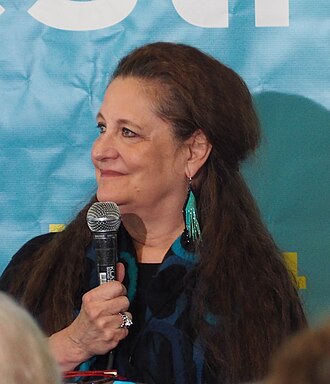
Jayne Anne Phillips
Pulitzer Prize-winning novelist and English professor
Where to hear and read about Jayne Anne Phillips1 episode or test

Jayne Anne Phillips is a Pulitzer Prize-winning novelist (Night Watch) and longtime English professor who teaches writing by teaching people to read as writers. The most useful thing to learn from her is to stay inside the material and follow the sentences, rereading your own pages until the next line becomes clear.
unless you write it down it will be lost
Meet Pulitzer Prize-Winning English Professor — Jayne Anne Phillips
Jayne Anne Phillips: the story and the lessons
1How Jayne Anne Phillips came to write Night Watch
Phillips carried the idea for Night Watch for about 10 years. The novel opens with Connie, a 12-year-old who has been her family's only adult while her mother is mute from trauma. It is set around an asylum 20 minutes from Phillips's hometown, a ruin when she knew it.
A friend recalled her describing a mother and daughter going to an asylum 10 or 15 years earlier, though she has no memory of saying it. Research meant going back to the asylum as it was during and after the Civil War.
She faced the American Civil War after writing about Vietnam and Korea. Having written about the civil wars of Vietnam and Korea, she felt she had to face the American one, whose shadow still lies over us.
She says she is not a historical novelist, because each story simply belongs to its time.
Night Watch took about eight years and was finished after she retired. She retired from her teaching job in January 2020 and finished the book then. She wrote in spurts of weeks or months, with long gaps.
The book became her refuge in the pandemic, as the asylum is for Eliza and Connie: chaos outside, something else inside. She sees all her earlier books as preparation for it.
Her childhood supplied material she kept using as a writer. Hair salons in her childhood were places where women talked as if no one could hear, and she watched as a child outlaw. Church gave her red carpet, pews, huge organ pipes and stained glass.
She describes the salon as looking through a keyhole into the adult world, with heat in the air, running water and suds. A small town also gave her a hidden layer of secrets that adults knew back generations.
2How Phillips writes from inside the material
Phillips follows the sentences instead of thinking about the book. While writing, she says nothing is going through her head. One line inspires the next and she follows it deeper, so readers feel inside the work rather than reading about something.
A reader once told her it doesn't feel like reading about something but like being inside it. Her aim is to reach the same absorption a mechanic, painter or cook feels when they lose track of time.
She does not plan her books and writes in spurts. She writes for weeks or months when she has space, then stops for months. For Night Watch she wrote a 10 to 20 page opening buckboard scene and had no idea what came next.
The voices were simply there. She says: "I don't plan the book out."
She absorbs period sources by reading widely, not by taking notes. For Night Watch she read letters from generals, infantry and women north and south, watched films and studied many books of photographs. One source was a four-volume set with a volume per year of the war.
She wasn't hunting for facts, only letting the speech patterns sink in. She also put archive photographs and documents inside the book.
When the draft stalls, she falls back into the research. During stretches of Night Watch when she didn't know where it was going, she stopped writing and read more. She has shelves of photographs, diaries, letters and scholarly books about the region.
The research keeps her inside the world while the next scene gathers.
When stuck, she rereads her pages, going back further each time. She finishes the day's work and rereads that page the next day. If she still doesn't know where to go, she goes back 10 pages, and if that fails she rereads from the beginning to where she is.
Being inside the material again is how she finds what comes next. She used this on Night Watch.
She edits with her ears and reads aloud for the flat note. Language is music to her, so a false line sounds like a flat note on a piano when read aloud. The work itself shows where to move.
She adds that this only works once there is something solid on the page.
She composes line to line like a poet and drafts by hand. She doesn't write poetry but uses a poet's process, weighing internal rhyme, the sounds of words, syllables and how the line sits on the page. She writes in a notebook in a fast print, since she never learned cursive.
Her Machine Dreams image of milkweed stalks thick as wrists packs a landscape into a few words.
She makes the world real with clear sensory and physical detail. She says making the work real was a lot about sensory detail and very clear physical description.
Details like the heat and suds of the salon let a child's keyhole view of the adult world feel true.
3What Phillips teaches about reading and craft
Phillips teaches writing by teaching students to read as writers. She says talent cannot be taught, but committed writers can encourage, inspire, mentor and instruct a new generation. Few people now read literature for meaning, so a writer is like a member of a medieval guild.
English departments built MFA programs to survive, which brought in many people who wanted to write.
She reads a few chosen allies three times and maps them. First read for pleasure, then again to see how it works, then plot each chapter on paper. She did this with Leonard Gardner's Fat City and carried The Sound and the Fury everywhere while writing Lark and Termite.
Fat City was cut down from 800 pages to what she calls a diamond. Allies are chosen for their whole body of work, living or dead.
She learned compression through one-page fictions. Her book Sweethearts collects 24 one-page fictions. The story spirals out from the center, the last line should leave white space around it, and the title should change meaning by the end.
"Wedding Picture" describes a photograph of her parents, with her mother's ankles curving as if the bones were water.
She has students describe a photograph, including the years after it. Students brought a parents' wedding picture or any photograph they knew deeply and wrote about it, carrying the 20 or 40 years of history beyond the image. The class made a book of the pieces.
One student brought a picture of the orphanage where he grew up.
Her one rule for students is to write with compassion. She told students never to hate their characters and to tell the truth, however it might hurt people who think you are writing about them.
She adds that once you write about someone, it's not that someone, because you invent a new reality. For her first novel she thought of her parents, hoping to reach their deeper reality.
She says not to think about your audience while writing. Editors may point to what is selling, but thinking about readers cuts you off from the book you are actually trying to write.
4Why Phillips writes and how she keeps going
Phillips sees art as saving what would otherwise be lost. She says a first novel often saves a vanished world, and a book must be written to the end or all of it is lost. The Machine Dreams fields come from the house her father built as foreman of a work crew.
Machine Dreams opens with "It's strange what you don't forget," a line that grows from this idea. She calls each person a kind of historical genius, because each one's experience is completely separate.
She writes children as outlaws with a beginner's mind. Following James Agee's A Death in the Family and Faulkner, she writes from a child's view because children see nothing in context. She uses a 12-year-old narrator in Night Watch.
At 9 or 10 she read a scene in Rabbit Run, found in her father's cupboard, and the lilac bushes outside looked different afterward.
She is doggedly persistent and has never thrown away a book. She has discarded perhaps one story. She feels an unfinished work is there and she just isn't seeing it yet, so the job is to get inside until she can.
She kept going through years of teaching with limited writing time, and says others may dislike that in her.
She sends everything to one trusted reader she met by chance. Her longtime reader is a former editor she met in a childbirth class, and she sends her everything. Some editors also stayed with her through two or three books.
She says you don't cultivate such people, you run into them, and MFA programs can give you two or three readers for life.
She treats writing as a statement of faith that life has meaning. She says it is not religious faith, nor faith that everything will turn out well. Without writers, forgotten people become anonymous, like a field of moving tall grass.
She tells students writing is practice for death because it is an act of transformation, turning wanting into making.

Meet Pulitzer Prize-Winning English Professor — Jayne Anne Phillips
Phillips teaches that good fiction comes from getting inside the material and following the sentences rather than thinking about it from outside. Her most useful habit is rereading her own pages, from the last page back to page one, until the next line becomes clear.
Phillips carried the idea for Night Watch for about 10 years. The novel opens with Connie, a 12-year-old who has been her family's only adult while her mother is mute from trauma. It is set around an asylum 20 minutes from Phillips's hometown, a ruin when she knew it.
A friend recalled her describing a mother and daughter going to an asylum 10 or 15 years earlier, though she has no memory of saying it. Research meant going back to the asylum as it was during and after the Civil War.
She faced the American Civil War after writing about Vietnam and Korea. Having written about the civil wars of Vietnam and Korea, she felt she had to face the American one, whose shadow still lies over us.
She says she is not a historical novelist, because each story simply belongs to its time.
Night Watch took about eight years and was finished after she retired. She retired from her teaching job in January 2020 and finished the book then. She wrote in spurts of weeks or months, with long gaps.
The book became her refuge in the pandemic, as the asylum is for Eliza and Connie: chaos outside, something else inside. She sees all her earlier books as preparation for it.
Her childhood supplied material she kept using as a writer. Hair salons in her childhood were places where women talked as if no one could hear, and she watched as a child outlaw. Church gave her red carpet, pews, huge organ pipes and stained glass.
She describes the salon as looking through a keyhole into the adult world, with heat in the air, running water and suds. A small town also gave her a hidden layer of secrets that adults knew back generations.
Phillips follows the sentences instead of thinking about the book. While writing, she says nothing is going through her head. One line inspires the next and she follows it deeper, so readers feel inside the work rather than reading about something.
A reader once told her it doesn't feel like reading about something but like being inside it. Her aim is to reach the same absorption a mechanic, painter or cook feels when they lose track of time.
She does not plan her books and writes in spurts. She writes for weeks or months when she has space, then stops for months. For Night Watch she wrote a 10 to 20 page opening buckboard scene and had no idea what came next.
The voices were simply there. She says: "I don't plan the book out."
She absorbs period sources by reading widely, not by taking notes. For Night Watch she read letters from generals, infantry and women north and south, watched films and studied many books of photographs. One source was a four-volume set with a volume per year of the war.
She wasn't hunting for facts, only letting the speech patterns sink in. She also put archive photographs and documents inside the book.
When the draft stalls, she falls back into the research. During stretches of Night Watch when she didn't know where it was going, she stopped writing and read more. She has shelves of photographs, diaries, letters and scholarly books about the region.
The research keeps her inside the world while the next scene gathers.
When stuck, she rereads her pages, going back further each time. She finishes the day's work and rereads that page the next day. If she still doesn't know where to go, she goes back 10 pages, and if that fails she rereads from the beginning to where she is.
Being inside the material again is how she finds what comes next. She used this on Night Watch.
She edits with her ears and reads aloud for the flat note. Language is music to her, so a false line sounds like a flat note on a piano when read aloud. The work itself shows where to move.
She adds that this only works once there is something solid on the page.
She composes line to line like a poet and drafts by hand. She doesn't write poetry but uses a poet's process, weighing internal rhyme, the sounds of words, syllables and how the line sits on the page. She writes in a notebook in a fast print, since she never learned cursive.
Her Machine Dreams image of milkweed stalks thick as wrists packs a landscape into a few words.
She makes the world real with clear sensory and physical detail. She says making the work real was a lot about sensory detail and very clear physical description.
Details like the heat and suds of the salon let a child's keyhole view of the adult world feel true.
Phillips teaches writing by teaching students to read as writers. She says talent cannot be taught, but committed writers can encourage, inspire, mentor and instruct a new generation. Few people now read literature for meaning, so a writer is like a member of a medieval guild.
English departments built MFA programs to survive, which brought in many people who wanted to write.
She reads a few chosen allies three times and maps them. First read for pleasure, then again to see how it works, then plot each chapter on paper. She did this with Leonard Gardner's Fat City and carried The Sound and the Fury everywhere while writing Lark and Termite.
Fat City was cut down from 800 pages to what she calls a diamond. Allies are chosen for their whole body of work, living or dead.
She learned compression through one-page fictions. Her book Sweethearts collects 24 one-page fictions. The story spirals out from the center, the last line should leave white space around it, and the title should change meaning by the end.
"Wedding Picture" describes a photograph of her parents, with her mother's ankles curving as if the bones were water.
She has students describe a photograph, including the years after it. Students brought a parents' wedding picture or any photograph they knew deeply and wrote about it, carrying the 20 or 40 years of history beyond the image. The class made a book of the pieces.
One student brought a picture of the orphanage where he grew up.
Her one rule for students is to write with compassion. She told students never to hate their characters and to tell the truth, however it might hurt people who think you are writing about them.
She adds that once you write about someone, it's not that someone, because you invent a new reality. For her first novel she thought of her parents, hoping to reach their deeper reality.
She says not to think about your audience while writing. Editors may point to what is selling, but thinking about readers cuts you off from the book you are actually trying to write.
Phillips sees art as saving what would otherwise be lost. She says a first novel often saves a vanished world, and a book must be written to the end or all of it is lost. The Machine Dreams fields come from the house her father built as foreman of a work crew.
Machine Dreams opens with "It's strange what you don't forget," a line that grows from this idea. She calls each person a kind of historical genius, because each one's experience is completely separate.
She writes children as outlaws with a beginner's mind. Following James Agee's A Death in the Family and Faulkner, she writes from a child's view because children see nothing in context. She uses a 12-year-old narrator in Night Watch.
At 9 or 10 she read a scene in Rabbit Run, found in her father's cupboard, and the lilac bushes outside looked different afterward.
She is doggedly persistent and has never thrown away a book. She has discarded perhaps one story. She feels an unfinished work is there and she just isn't seeing it yet, so the job is to get inside until she can.
She kept going through years of teaching with limited writing time, and says others may dislike that in her.
She sends everything to one trusted reader she met by chance. Her longtime reader is a former editor she met in a childbirth class, and she sends her everything. Some editors also stayed with her through two or three books.
She says you don't cultivate such people, you run into them, and MFA programs can give you two or three readers for life.
She treats writing as a statement of faith that life has meaning. She says it is not religious faith, nor faith that everything will turn out well. Without writers, forgotten people become anonymous, like a field of moving tall grass.
She tells students writing is practice for death because it is an act of transformation, turning wanting into making.