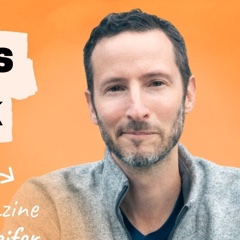
Jason Feifer
Editor in chief of Entrepreneur magazine, former editor at Fast Company
Where to hear and read about Jason Feifer1 episode or test

Jason Feifer is editor in chief of Entrepreneur magazine and a former Fast Company editor, so he explains press from the receiving end of 30 to 50 pitches in the time of one podcast recording. The lesson most worth taking is to pitch a specific writer the story their readers need, not the story you want told, and to treat the result as a bonus rather than a growth plan.
I hate success stories. I love problem solving stories.
How to get press for your product | Jason Feifer (editor in chief of Entrepreneur magazine)
Jason Feifer: the story and the lessons
1Who Jason Feifer is and what his inbox looks like
Feifer views press from inside the newsroom, across several magazines. He is editor in chief at Entrepreneur and was an editor at Fast Company. He is also an author, podcast host, keynote speaker and startup advisor.
His stated goal is to help founders set realistic expectations for press, not only win a story.
Most of what reaches him is automated noise. He gets 30 to 50 pitches in the time of one podcast recording, mostly press releases sent to him and countless others. Founders write only 20 to 25% of the direct messages he receives.
He even gets pitches for his newsletter, which features no one, because he landed on a spreadsheet. He says much of PR is a numbers game, not targeted storytelling.
Feifer treats a mismatched pitch as the usual mistake, not bad timing. A DC hot dog truck owner approached him wanting Entrepreneur coverage, but 99.5% of its readers could never buy a hot dog.
He pointed him to local outlets such as the Washingtonian's food section, because the goal was more sales in one city.
2Feifer's three-step process for getting press
Feifer says to decide what press is for before pitching anyone. He compares it to fundraising: only do it when you know the purpose, such as awareness for a new product, credibility before a raise, or positioning a founder as an authority.
Emails saying "I've worked really hard, I deserve this" are heartfelt but not a business reason. Many founders pitch so early that a story would give them nothing. "You shouldn't go out and try to get press if you don't know what the press is for."
Writers work for their readers, so Feifer wants stories that serve them. He describes asking "how do I get a feature" as ordering from a hamburger stand. Writers say yes only when you fit what their audience needs.
He compares blind media pitching to pitching an investor you never researched.
He reads five stories to find an outlet's unwritten mission. Under Bob Safian, Fast Company ran stories on where business is going. Entrepreneur, in his words, is "a magazine about thinking" and wants counterintuitive decisions that solved a business problem.
A razor maker with the best razors solved a product problem, so that is not the story. The hinged butter dish suits Bon Appétit. The butter dish founder got into Entrepreneur by pitching her airport gate market research, which saved her $10,000. Cut your story into pieces and match each to a different outlet.
Pick outlets by who reads them, not by the word entrepreneur. A peanut butter brand selling to millennial moms should aim at Cosmopolitan. A consumer startup may find Entrepreneur, Inc and Fast Company wrong, since their readers are in a creating mindset, not a buying one.
His starting tip: look at where your competitors have been featured. Searching Cosmo for snacks showed seasonal roundups, so the realistic goal was a place in a roundup, not a thousand word feature.
Pitch the writer who covers your topic, never the editor in chief. The editor in chief is easy to find but mostly refines ideas his editors develop. Search the site for your category, click bylines, and write to the person whose past work fits.
"Nothing gets covered until a single individual at a publication takes interest in you enough that they go to somebody else."
Freelancers are hungrier and get far fewer pitches. His wife, Jen Miller, freelances for the New York Times, Washington Post and Guardian, and is paid only when an editor takes her pitch. A relevant pitch is read nearly 100% of the time.
A staff bio says staff, otherwise it says writer or contributor. Google the name for a portfolio site with an email. "Freelancers got to eat."
Feifer wants a short email that is clearly written for him. He sees 40 new emails and reads only the subject line and preview text. Keep the pitch to three paragraphs at most, reference real work of the writer's, and never fake being a fan.
Email is the safest channel. Phone calls to personal cell phones annoy writers, and he finds social DMs annoying. Customize each pitch the way you would customize for ten investors with different theses.
He likes it when people engage casually before they pitch. Meg O'Hara followed him on Instagram and DMed him several times before her pitch. He knows it is calculated and likes it anyway, because it signals good faith.
"Before you ever pitch, just get me to recognize your name."
3Pitches that worked on Feifer
Meg O'Hara copied the show's own problem and solution format. Her September 2020 pitch described a Canadian landscape painter whose ski resort commissions ended in Covid. She sold skiers art of their favorite runs for their homes. Feifer replied "I like it" and it became a podcast episode.
She listed problems and solutions in bullets, the exact format of his Problem Solvers show. He keeps inbox folders called Bad PR Pitches and Good PR Pitches.
He wants problem solving stories and kills ones that hide the problem. Feifer can talk to someone and then kill the story. Some founders pitch a challenge, then act as if there was no problem.
Readers gain nothing from hearing someone else succeeded. They want to see how someone beat a challenge they share.
A rejected cat toy maker turned his pitch into a feature. Fred Ruckel makes the Ripple Rug cat toy. Feifer sent his usual "not a fit" reply, and Ruckel answered by offering to explain an Amazon to eBay arbitrage scam that hurt small sellers like him. It became a 3,000 to 4,000 word story with Ruckel as the main character.
Sellers list the item on eBay at $40 against $30 on Amazon, then buy from Amazon and ship to the buyer. The buyer sees an Amazon box and the lower price and returns it, and Ruckel takes the hit. Feifer contacted the platforms and the makers of the arbitrage software before writing. "Sometimes you are not the story, but you can be part of the story."
4How Feifer says to make yourself part of the news
Barbara Corcoran created a market report that reporters cited as authority. As a New Jersey realtor trying to stand out, she turned her own Manhattan deal records into the Corcoran Report and mailed it to The New York Times and the New York Post.
No one else measured the market's health, so her number was treated as authoritative.
Surveys and usage data give hard-to-cover companies a story. Zapier sends Feifer a yearly top 10 of fastest-growing business apps built from its usage data. A remote work consultancy pays a survey firm to rank the top states and companies for remote work.
Reporters can't write about a random B2B firm, but they will write about the survey. Feifer says he occasionally bites on these pitches.
Pitching a trend you belong to can win prominent billing. Jen Miller wrote about startups that help people prepare for death. The company that pitched her the trend got prominent billing.
She was never going to write about any single one of those startups alone.
For niche B2B companies, he suggests offering expertise instead of a feature. When news breaks, people email Feifer with what they would say about it. A quote or a bylined article is enough to claim "as featured in".
"Why don't I just try to position myself as an expert?" A company with striking technology has a much higher hit rate, and a realistic PR firm saves heartache.
5What press is worth and how Feifer says to handle it
Feifer says press is too unpredictable to be a growth plan. Some entrepreneurs told him one story beat all their paid marketing for the month, while others saw no effect, or only one partner reaching out. A story may reach only 5,000 to 10,000 readers.
"If you think that press by itself is going to solve your problems, you're wrong because it might, but it's way too unpredictable."
Coverage can work as a credential even without traffic. A Variety article about his Money News Network podcast produced nothing directly, yet he links it in every advertiser and partner email.
Put "as seen in" on your site or promote the story with paid ads aimed at people you want to impress. "Sometimes what you're looking for is a prize to walk around with."
He tells founders to hire PR people who push back. Good PR sells relationships and honest judgment. Feifer says he has told PR industry conferences that most PR people are bad at their jobs, and the room nods.
A guarantee of coverage is a reason to leave, since writers do what they want. Pick agencies that specialize in your field. "You should like when a PR person pushes back on you."
He sees paid press releases as a warning sign. Agencies charge to write and distribute a release on the wire, then report it landed on Yahoo Finance or MarketWatch. Yahoo Finance posts every distributed release, so almost nobody sees it.
"Don't confuse posting press releases even on very big websites with actual success."
Feifer offers exclusives only when they are stated openly. A founder gave Entrepreneur a three-hour window before speaking to anyone else. A company Mark Cuban invested in released news widely but gave one outlet the only interview.
He would rather walk away than do a funny dance. "Don't do it in a way that the people in media feel like you're playing them."
Trying to control a reporter backfires, so be human instead. A controlling source looks like one with something to hide, and the reporter may take a shot at them. Feifer says to go in knowing it could blow up, as the price of reaching their audience.
He dislikes interviewing people who stick to talking points, and says a pitch should be an email from one human to another. "The more you try to control it, the more the reporter is going to be annoyed at you."
6Feifer's own working principles
Feifer grows through opportunity set B, the things nobody asks of him. Set A is what your boss or customers expect, and it only qualifies you for what you already do. Set B includes a hobby, a new team or a podcast.
Nobody told him to speak, do podcasts or write a book as editor in chief. He did all three and now sees himself as an entrepreneur who helps entrepreneurs.
He gets honest interview answers by offering the guest a theory. About ten minutes in, he connects two things the guest said and asks whether one explains the other. It shows he is listening and makes the guest think aloud.
For people interviewed endlessly, like Jimmy Fallon and The Rock, he asks what they haven't been asked.
He holds that anything you build has to be maintainable. Author Katherine Morgan Schafler asked him, "What's the point of building something if you can't maintain it?"
Michelle Pfeiffer told him a film's work comes before release while a company's work starts at launch, and that adapting at her fragrance company Henry Rose took a solid year before it became fun.

How to get press for your product | Jason Feifer (editor in chief of Entrepreneur magazine)
Press works when you pitch what a publication's audience needs, not what you want said, and the episode lays out a three-step process of prep, picking the right writer, and a short customized pitch. It matters because a single story has driven more downloads and sales in a month than a founder's paid marketing, though results swing widely.
Feifer views press from inside the newsroom, across several magazines. He is editor in chief at Entrepreneur and was an editor at Fast Company. He is also an author, podcast host, keynote speaker and startup advisor.
His stated goal is to help founders set realistic expectations for press, not only win a story.
Most of what reaches him is automated noise. He gets 30 to 50 pitches in the time of one podcast recording, mostly press releases sent to him and countless others. Founders write only 20 to 25% of the direct messages he receives.
He even gets pitches for his newsletter, which features no one, because he landed on a spreadsheet. He says much of PR is a numbers game, not targeted storytelling.
Feifer treats a mismatched pitch as the usual mistake, not bad timing. A DC hot dog truck owner approached him wanting Entrepreneur coverage, but 99.5% of its readers could never buy a hot dog.
He pointed him to local outlets such as the Washingtonian's food section, because the goal was more sales in one city.
Feifer says to decide what press is for before pitching anyone. He compares it to fundraising: only do it when you know the purpose, such as awareness for a new product, credibility before a raise, or positioning a founder as an authority.
Emails saying "I've worked really hard, I deserve this" are heartfelt but not a business reason. Many founders pitch so early that a story would give them nothing. "You shouldn't go out and try to get press if you don't know what the press is for."
Writers work for their readers, so Feifer wants stories that serve them. He describes asking "how do I get a feature" as ordering from a hamburger stand. Writers say yes only when you fit what their audience needs.
He compares blind media pitching to pitching an investor you never researched.
He reads five stories to find an outlet's unwritten mission. Under Bob Safian, Fast Company ran stories on where business is going. Entrepreneur, in his words, is "a magazine about thinking" and wants counterintuitive decisions that solved a business problem.
A razor maker with the best razors solved a product problem, so that is not the story. The hinged butter dish suits Bon Appétit. The butter dish founder got into Entrepreneur by pitching her airport gate market research, which saved her $10,000. Cut your story into pieces and match each to a different outlet.
Pick outlets by who reads them, not by the word entrepreneur. A peanut butter brand selling to millennial moms should aim at Cosmopolitan. A consumer startup may find Entrepreneur, Inc and Fast Company wrong, since their readers are in a creating mindset, not a buying one.
His starting tip: look at where your competitors have been featured. Searching Cosmo for snacks showed seasonal roundups, so the realistic goal was a place in a roundup, not a thousand word feature.
Pitch the writer who covers your topic, never the editor in chief. The editor in chief is easy to find but mostly refines ideas his editors develop. Search the site for your category, click bylines, and write to the person whose past work fits.
"Nothing gets covered until a single individual at a publication takes interest in you enough that they go to somebody else."
Freelancers are hungrier and get far fewer pitches. His wife, Jen Miller, freelances for the New York Times, Washington Post and Guardian, and is paid only when an editor takes her pitch. A relevant pitch is read nearly 100% of the time.
A staff bio says staff, otherwise it says writer or contributor. Google the name for a portfolio site with an email. "Freelancers got to eat."
Feifer wants a short email that is clearly written for him. He sees 40 new emails and reads only the subject line and preview text. Keep the pitch to three paragraphs at most, reference real work of the writer's, and never fake being a fan.
Email is the safest channel. Phone calls to personal cell phones annoy writers, and he finds social DMs annoying. Customize each pitch the way you would customize for ten investors with different theses.
He likes it when people engage casually before they pitch. Meg O'Hara followed him on Instagram and DMed him several times before her pitch. He knows it is calculated and likes it anyway, because it signals good faith.
"Before you ever pitch, just get me to recognize your name."
Meg O'Hara copied the show's own problem and solution format. Her September 2020 pitch described a Canadian landscape painter whose ski resort commissions ended in Covid. She sold skiers art of their favorite runs for their homes. Feifer replied "I like it" and it became a podcast episode.
She listed problems and solutions in bullets, the exact format of his Problem Solvers show. He keeps inbox folders called Bad PR Pitches and Good PR Pitches.
He wants problem solving stories and kills ones that hide the problem. Feifer can talk to someone and then kill the story. Some founders pitch a challenge, then act as if there was no problem.
Readers gain nothing from hearing someone else succeeded. They want to see how someone beat a challenge they share.
A rejected cat toy maker turned his pitch into a feature. Fred Ruckel makes the Ripple Rug cat toy. Feifer sent his usual "not a fit" reply, and Ruckel answered by offering to explain an Amazon to eBay arbitrage scam that hurt small sellers like him. It became a 3,000 to 4,000 word story with Ruckel as the main character.
Sellers list the item on eBay at $40 against $30 on Amazon, then buy from Amazon and ship to the buyer. The buyer sees an Amazon box and the lower price and returns it, and Ruckel takes the hit. Feifer contacted the platforms and the makers of the arbitrage software before writing. "Sometimes you are not the story, but you can be part of the story."
Barbara Corcoran created a market report that reporters cited as authority. As a New Jersey realtor trying to stand out, she turned her own Manhattan deal records into the Corcoran Report and mailed it to The New York Times and the New York Post.
No one else measured the market's health, so her number was treated as authoritative.
Surveys and usage data give hard-to-cover companies a story. Zapier sends Feifer a yearly top 10 of fastest-growing business apps built from its usage data. A remote work consultancy pays a survey firm to rank the top states and companies for remote work.
Reporters can't write about a random B2B firm, but they will write about the survey. Feifer says he occasionally bites on these pitches.
Pitching a trend you belong to can win prominent billing. Jen Miller wrote about startups that help people prepare for death. The company that pitched her the trend got prominent billing.
She was never going to write about any single one of those startups alone.
For niche B2B companies, he suggests offering expertise instead of a feature. When news breaks, people email Feifer with what they would say about it. A quote or a bylined article is enough to claim "as featured in".
"Why don't I just try to position myself as an expert?" A company with striking technology has a much higher hit rate, and a realistic PR firm saves heartache.
Feifer says press is too unpredictable to be a growth plan. Some entrepreneurs told him one story beat all their paid marketing for the month, while others saw no effect, or only one partner reaching out. A story may reach only 5,000 to 10,000 readers.
"If you think that press by itself is going to solve your problems, you're wrong because it might, but it's way too unpredictable."
Coverage can work as a credential even without traffic. A Variety article about his Money News Network podcast produced nothing directly, yet he links it in every advertiser and partner email.
Put "as seen in" on your site or promote the story with paid ads aimed at people you want to impress. "Sometimes what you're looking for is a prize to walk around with."
He tells founders to hire PR people who push back. Good PR sells relationships and honest judgment. Feifer says he has told PR industry conferences that most PR people are bad at their jobs, and the room nods.
A guarantee of coverage is a reason to leave, since writers do what they want. Pick agencies that specialize in your field. "You should like when a PR person pushes back on you."
He sees paid press releases as a warning sign. Agencies charge to write and distribute a release on the wire, then report it landed on Yahoo Finance or MarketWatch. Yahoo Finance posts every distributed release, so almost nobody sees it.
"Don't confuse posting press releases even on very big websites with actual success."
Feifer offers exclusives only when they are stated openly. A founder gave Entrepreneur a three-hour window before speaking to anyone else. A company Mark Cuban invested in released news widely but gave one outlet the only interview.
He would rather walk away than do a funny dance. "Don't do it in a way that the people in media feel like you're playing them."
Trying to control a reporter backfires, so be human instead. A controlling source looks like one with something to hide, and the reporter may take a shot at them. Feifer says to go in knowing it could blow up, as the price of reaching their audience.
He dislikes interviewing people who stick to talking points, and says a pitch should be an email from one human to another. "The more you try to control it, the more the reporter is going to be annoyed at you."
Feifer grows through opportunity set B, the things nobody asks of him. Set A is what your boss or customers expect, and it only qualifies you for what you already do. Set B includes a hobby, a new team or a podcast.
Nobody told him to speak, do podcasts or write a book as editor in chief. He did all three and now sees himself as an entrepreneur who helps entrepreneurs.
He gets honest interview answers by offering the guest a theory. About ten minutes in, he connects two things the guest said and asks whether one explains the other. It shows he is listening and makes the guest think aloud.
For people interviewed endlessly, like Jimmy Fallon and The Rock, he asks what they haven't been asked.
He holds that anything you build has to be maintainable. Author Katherine Morgan Schafler asked him, "What's the point of building something if you can't maintain it?"
Michelle Pfeiffer told him a film's work comes before release while a company's work starts at launch, and that adapting at her fragrance company Henry Rose took a solid year before it became fun.