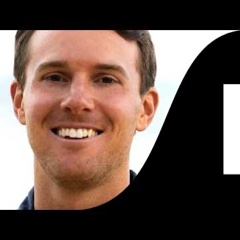
Jack McDermott
Head of mobile growth at ElevenLabs (ElevenReader and the ElevenLabs app)
Where to hear and read about Jack McDermott2 episodes and tests

 SubversiveHow ElevenLabs is Building Consumer Apps on its $11B Voice AI Platform

 Sub ClubHow ElevenLabs Ships So Fast With Small Teams
Jack McDermott is head of mobile growth at ElevenLabs, where he runs growth for the ElevenReader and ElevenLabs apps after an edtech career that ended at Chegg. The lesson most worth learning from him is to start with how a consumer thinks about paying and work backwards, which led ElevenReader to one simple paid plan.
you have to start with what what a consumer is going to want to subscribe to and work backwards
How ElevenLabs is Building Consumer Apps on its $11B Voice AI Platform
Jack McDermott: the story and the lessons
1How Jack McDermott got from stutter apps to ElevenLabs
McDermott got into tech by building tools for his own stutter. In college, around 2011 and 2012, he built and launched his own iOS apps. He sold them as $29 one-time purchases, before in-app purchases and subscriptions existed.
He liked building something personal and then serving thousands of other people with it.
He spent his early career in edtech growth. He was the first hire at Panorama Education and stayed about five years. After business school he joined Thinkful, a coding boot camp that Chegg acquired, and led its growth across B2C and B2B-to-C partnerships including Guild.
The bet was to scale the boot camp on Chegg's reach, in the era of income sharing agreements.
He watched AI undercut Chegg's core product from the inside. ChatGPT gave students instant free answers, and Chegg Study brought in roughly 70 to 80% of revenue directly from students. Google's AI mode answering on top of search added to the pressure.
He respected Chegg for having already made one platform shift, from physical textbooks to digital SaaS. His summary: "The wave of disruption doesn't care how well prepared or unprepared you are."
He chose a smaller, riskier company on the disruptor side. When he joined ElevenLabs, it was unclear whether AI voice and audio could stand alone as a big, lasting company.
2Why ElevenLabs builds consumer apps on its own models
CEO Mati Staniszewski wants a product layer, not only an API. McDermott asked about first-party apps soon after joining and got a clear answer: a generational company builds on its own research. The goal is a product layer and a brand that both B2B and B2C users know.
McDermott expects more model labs to follow, citing Claude Cowork adapted from Claude Code and ChatGPT Health built on acquired startups.
App teams are among the heaviest users of the company's API. Product teams get early model access and an effectively unlimited budget to test with. Their data on adoption and latency flows back to the model teams.
McDermott likens consumer work to playing on hard mode, with the lab as a big tailwind.
Owning the models lowers Reader's cost and widens its reach. Fine-tuned control over the models lets the app serve more languages and geographies at lower cost. Gains in one voice use carry over to others.
Lifelike voices built for a doctor's office receptionist or a Duolingo or Masterclass tutor can improve the tone of a bedtime story.
The main cost of a lab building apps is focus. It is hard to do many things well as a horizontal company serving consumer apps and the biggest enterprises at once.
He says it takes deliberate focus and the right culture.
A confusing search landing led to a separate creator app. ElevenReader launched before the ElevenLabs app existed, so people searching for ElevenLabs text to speech landed in an audio story app. Building the ElevenLabs app captured that demand.
It also clarified what a text-to-speech consumer wants compared with a creator. The check to run is whether search intent is landing on the wrong product.
The two apps share foundations but keep separate brands. They share a design system, technology and developers, and paywall tests run in both apps, which multiplies the surface area for learning.
Splitting the apps also let each one test its own pricing and packaging in terms its users already understand.
3Launching ElevenReader and finding its fit
The first signal was manuscripts pasted into a demo box. The founders saw users pasting hundreds of thousands of characters, often their own manuscripts, into a 200-character text-to-speech demo box. Under 5% of ebooks get recorded as audiobooks.
The lesson is to watch what users push your demo to do and build the app around it.
Early adopters wanted audio for stories no one had recorded. Reader launched in 2024 by working backward from what powerful speech models would look like as a consumer experience. Typical content was fan fiction, web novels and other long-form stories.
McDermott: "we found really good early product market fit when it comes to the use case of kind of underserved long-form audio." No user, revenue or retention figures are given.
Reader launched on word of mouth, then added a team and paid. Early growth came from Reddit and Discord. The team grew from four developers and one designer into a fuller team covering organic, partner and some paid growth.
Paid was treated as an amplifier of brand and organic work, not the foundation.
He led with UGC and influencers to reach reader communities. To reach romance, fiction and fan fiction listeners, Reader ran campaigns on BookTok and Bookstagram, where demand and conversation already existed.
The UGC-first style is less typical of an AI lab, and McDermott calls it key in the early stages.
Reader's aha is bringing your own book and picking a voice. Users upload an ebook, EPUB or PDF and choose the voice to hear it in. The consumer app has over 600 voices, and no single voice has more than 10 to 12% of use.
The team found this by reading Reddit, Discord and X mentions, where users share screenshots of surprising voices reading their content.
4How McDermott uses voices and partnerships to grow Reader
Iconic voices give listeners a reason to choose Reader. Michael Caine, Maya Angelou and Judy Garland are on the platform through exclusive partnerships with fair pay to estates and teams.
McDermott's reasoning: "voice is really a a personal and an intimate experience."
He signed a Polish Harry Potter voice for a market with roots. Piotr Fronczewski, the Polish voice of the Harry Potter audiobooks, shot to the top of the charts with Polish users. Poland is a large user base because both co-founders and much of the team are Polish.
Partnerships are both opportunistic and cultivated: the team looks for where the need is greatest.
He used a controversial first to earn attention. Melania Trump's ebook is available in her voice in English, Spanish, Portuguese and Hindi, a first for audiobooks.
McDermott calls it controversial but says that, personal feelings aside, it was "probably a first of its kind partnership in the audiobook space." ElevenLabs builds around launch moments with media and hype.
5McDermott's rules for consumer pricing
He collapsed Reader's paid tiers into one unlimited plan. Reader began with a free tier, a $5 to $10 mid tier and a heavy-listener tier. Testing and interviews showed consumers judge price as free or paid, and cheap or expensive, against Spotify and Netflix.
Reader now has one free plan and one paid plan with unlimited listening, up to 24 hours a day. Heavy listeners play 10 to 12 hours a day, which is why the top tier existed.
He matches the pricing model to what each audience understands. The creator app has about five tiers starting at $5 a month, because creators already treat credits as a currency. Reader users, like a parent playing fan fiction at night, do not want to think about tokens.
Both products run on the same costly compute. His rule is to start from what a consumer wants to subscribe to and work backwards.
Reader's free plan keeps the same voices as the paid plan. Hundreds of thousands of people use the free plan. Paid access is built around unlimited consumption time rather than voice quality.
In his words: "we don't downgrade your voice experience."
He keeps mobile plans few because app stores make plans hard. Web offers six or more plans from $5 up to a couple thousand dollars. Mobile keeps one core subscription plus a pay-as-you-go option rolling out.
Downgrades, discounts and expirations are hard to keep in sync across Google, Apple and Stripe, and a small screen rewards a clear offer.
The team sells hours of listening instead of credits. ElevenReader dropped a pricing tier and aligned cost to hours of listening. The mobile app offers one price, against upwards of five plans on web.
The team calls this the biggest win of the year for ElevenReader, though no conversion or revenue figures are given.
6How ElevenLabs' mobile team ships and launches
The company runs as small teams that ship the same day. Teams stay at six to eight people on one product or opportunity, and a good test is expected to ship that day. The mobile team is about 12 people.
McDermott calls them speedboats. The tradeoff is less coordination between teams as the company moves from one product to many.
Each launch starts as a written story, refined for one to two weeks. Teams write the core value promise, turn it into a Twitter thread, then a video. If a feature makes a poor thread, the team needs a very good reason to build it.
The reasoning: "If you don't start with a very clear storyline yourself, then you're not going to be able to rely on anybody else."
Earned-media launches and steady paid growth run in parallel. Teams launch roughly monthly while paid runs on Meta, TikTok, Apple Search Ads and Google. Launch brand work lets paid creative tests accept a higher CAC while payback is worked out.
The belief that earned media lowers paid costs is admitted to be unmeasured.
He keeps testing trial and onboarding against conventional wisdom. Optimizing the path from onboarding to the trial offer has delivered compounding wins. Benchmarks like a one-week reverse trial did not always hold for ElevenReader.
He says: "I've been surprised by as many things that I've had to unlearn... as those that that have been confirmed."
7What went wrong on McDermott's team and what they changed
The mobile team over-optimized onboarding without a base case. The team's biggest fail was endless onboarding tweaks without testing a plain sign-up that drops straight into the product. Simple onboarding with fewer screens to the aha won out.
The suggested test is to strip onboarding out for 10% of users for 5 days and size the opportunity.
A Burt Reynolds voice degraded in long sessions and went viral. After half an hour or more of playback, the voice turned demonic. Models can also inject inferred sounds at spaces or periods that users never see in the text.
Clips spread in the community, and the team has worked to fix it since. The lesson is to test long sessions, not only short samples.
How ElevenLabs is Building Consumer Apps on its $11B Voice AI Platform
Jack McDermott explains how ElevenLabs builds consumer apps on top of its voice AI models, from launching ElevenReader through grassroots communities to collapsing pricing into one simple paid plan. The result is a consumer audio app that reached strong traction in niche long-form audio and a pricing model built around how consumers actually think about paying.
McDermott got into tech by building tools for his own stutter. In college, around 2011 and 2012, he built and launched his own iOS apps. He sold them as $29 one-time purchases, before in-app purchases and subscriptions existed.
He liked building something personal and then serving thousands of other people with it.
He spent his early career in edtech growth. He was the first hire at Panorama Education and stayed about five years. After business school he joined Thinkful, a coding boot camp that Chegg acquired, and led its growth across B2C and B2B-to-C partnerships including Guild.
The bet was to scale the boot camp on Chegg's reach, in the era of income sharing agreements.
He watched AI undercut Chegg's core product from the inside. ChatGPT gave students instant free answers, and Chegg Study brought in roughly 70 to 80% of revenue directly from students. Google's AI mode answering on top of search added to the pressure.
He respected Chegg for having already made one platform shift, from physical textbooks to digital SaaS. His summary: "The wave of disruption doesn't care how well prepared or unprepared you are."
He chose a smaller, riskier company on the disruptor side. When he joined ElevenLabs, it was unclear whether AI voice and audio could stand alone as a big, lasting company.
CEO Mati Staniszewski wants a product layer, not only an API. McDermott asked about first-party apps soon after joining and got a clear answer: a generational company builds on its own research. The goal is a product layer and a brand that both B2B and B2C users know.
McDermott expects more model labs to follow, citing Claude Cowork adapted from Claude Code and ChatGPT Health built on acquired startups.
App teams are among the heaviest users of the company's API. Product teams get early model access and an effectively unlimited budget to test with. Their data on adoption and latency flows back to the model teams.
McDermott likens consumer work to playing on hard mode, with the lab as a big tailwind.
Owning the models lowers Reader's cost and widens its reach. Fine-tuned control over the models lets the app serve more languages and geographies at lower cost. Gains in one voice use carry over to others.
Lifelike voices built for a doctor's office receptionist or a Duolingo or Masterclass tutor can improve the tone of a bedtime story.
The main cost of a lab building apps is focus. It is hard to do many things well as a horizontal company serving consumer apps and the biggest enterprises at once.
He says it takes deliberate focus and the right culture.
A confusing search landing led to a separate creator app. ElevenReader launched before the ElevenLabs app existed, so people searching for ElevenLabs text to speech landed in an audio story app. Building the ElevenLabs app captured that demand.
It also clarified what a text-to-speech consumer wants compared with a creator. The check to run is whether search intent is landing on the wrong product.
The first signal was manuscripts pasted into a demo box. The founders saw users pasting hundreds of thousands of characters, often their own manuscripts, into a 200-character text-to-speech demo box. Under 5% of ebooks get recorded as audiobooks.
The lesson is to watch what users push your demo to do and build the app around it.
Early adopters wanted audio for stories no one had recorded. Reader launched in 2024 by working backward from what powerful speech models would look like as a consumer experience. Typical content was fan fiction, web novels and other long-form stories.
McDermott: "we found really good early product market fit when it comes to the use case of kind of underserved long-form audio." No user, revenue or retention figures are given.
Reader launched on word of mouth, then added a team and paid. Early growth came from Reddit and Discord. The team grew from four developers and one designer into a fuller team covering organic, partner and some paid growth.
Paid was treated as an amplifier of brand and organic work, not the foundation.
He led with UGC and influencers to reach reader communities. To reach romance, fiction and fan fiction listeners, Reader ran campaigns on BookTok and Bookstagram, where demand and conversation already existed.
The UGC-first style is less typical of an AI lab, and McDermott calls it key in the early stages.
Iconic voices give listeners a reason to choose Reader. Michael Caine, Maya Angelou and Judy Garland are on the platform through exclusive partnerships with fair pay to estates and teams.
McDermott's reasoning: "voice is really a a personal and an intimate experience."
He signed a Polish Harry Potter voice for a market with roots. Piotr Fronczewski, the Polish voice of the Harry Potter audiobooks, shot to the top of the charts with Polish users. Poland is a large user base because both co-founders and much of the team are Polish.
Partnerships are both opportunistic and cultivated: the team looks for where the need is greatest.
He used a controversial first to earn attention. Melania Trump's ebook is available in her voice in English, Spanish, Portuguese and Hindi, a first for audiobooks.
McDermott calls it controversial but says that, personal feelings aside, it was "probably a first of its kind partnership in the audiobook space." ElevenLabs builds around launch moments with media and hype.
He collapsed Reader's paid tiers into one unlimited plan. Reader began with a free tier, a $5 to $10 mid tier and a heavy-listener tier. Testing and interviews showed consumers judge price as free or paid, and cheap or expensive, against Spotify and Netflix.
Reader now has one free plan and one paid plan with unlimited listening, up to 24 hours a day. Heavy listeners play 10 to 12 hours a day, which is why the top tier existed.
He matches the pricing model to what each audience understands. The creator app has about five tiers starting at $5 a month, because creators already treat credits as a currency. Reader users, like a parent playing fan fiction at night, do not want to think about tokens.
Both products run on the same costly compute. His rule is to start from what a consumer wants to subscribe to and work backwards.
Reader's free plan keeps the same voices as the paid plan. Hundreds of thousands of people use the free plan. Paid access is built around unlimited consumption time rather than voice quality.
In his words: "we don't downgrade your voice experience."
He keeps mobile plans few because app stores make plans hard. Web offers six or more plans from $5 up to a couple thousand dollars. Mobile keeps one core subscription plus a pay-as-you-go option rolling out.
Downgrades, discounts and expirations are hard to keep in sync across Google, Apple and Stripe, and a small screen rewards a clear offer.
The company runs as small teams that ship the same day. Teams stay at six to eight people on one product or opportunity, and a good test is expected to ship that day. The mobile team is about 12 people.
McDermott calls them speedboats. The tradeoff is less coordination between teams as the company moves from one product to many.
He keeps testing trial and onboarding against conventional wisdom. Optimizing the path from onboarding to the trial offer has delivered compounding wins. Benchmarks like a one-week reverse trial did not always hold for ElevenReader.
He says: "I've been surprised by as many things that I've had to unlearn... as those that that have been confirmed."
A Burt Reynolds voice degraded in long sessions and went viral. After half an hour or more of playback, the voice turned demonic. Models can also inject inferred sounds at spaces or periods that users never see in the text.
Clips spread in the community, and the team has worked to fix it since. The lesson is to test long sessions, not only short samples.
How ElevenLabs Ships So Fast With Small Teams
ElevenLabs runs small autonomous pods, prices consumer apps in terms users understand, and treats earned-media launches as a compounding asset that also makes paid cheaper. The mobile leads share what worked, such as dropping a pricing tier for hours of listening, and what failed, such as over-optimizing onboarding instead of testing a stripped-back base case.
The two apps share foundations but keep separate brands. They share a design system, technology and developers, and paywall tests run in both apps, which multiplies the surface area for learning.
Splitting the apps also let each one test its own pricing and packaging in terms its users already understand.
Reader's aha is bringing your own book and picking a voice. Users upload an ebook, EPUB or PDF and choose the voice to hear it in. The consumer app has over 600 voices, and no single voice has more than 10 to 12% of use.
The team found this by reading Reddit, Discord and X mentions, where users share screenshots of surprising voices reading their content.
The team sells hours of listening instead of credits. ElevenReader dropped a pricing tier and aligned cost to hours of listening. The mobile app offers one price, against upwards of five plans on web.
The team calls this the biggest win of the year for ElevenReader, though no conversion or revenue figures are given.
The company runs as small teams that ship the same day. Teams stay at six to eight people on one product or opportunity, and a good test is expected to ship that day. The mobile team is about 12 people.
McDermott calls them speedboats. The tradeoff is less coordination between teams as the company moves from one product to many.
Each launch starts as a written story, refined for one to two weeks. Teams write the core value promise, turn it into a Twitter thread, then a video. If a feature makes a poor thread, the team needs a very good reason to build it.
The reasoning: "If you don't start with a very clear storyline yourself, then you're not going to be able to rely on anybody else."
Earned-media launches and steady paid growth run in parallel. Teams launch roughly monthly while paid runs on Meta, TikTok, Apple Search Ads and Google. Launch brand work lets paid creative tests accept a higher CAC while payback is worked out.
The belief that earned media lowers paid costs is admitted to be unmeasured.
The mobile team over-optimized onboarding without a base case. The team's biggest fail was endless onboarding tweaks without testing a plain sign-up that drops straight into the product. Simple onboarding with fewer screens to the aha won out.
The suggested test is to strip onboarding out for 10% of users for 5 days and size the opportunity.