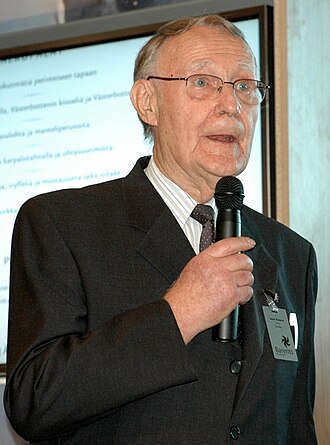
Ingvar Kamprad
Founder of IKEA
Where to hear and read about Ingvar Kamprad2 episodes and tests


Ingvar Kamprad was a dyslexic farm boy from Småland who founded IKEA at 17 and built it, without outside capital, into the world's largest furniture retailer, working on it until he died at 91. The lesson most worth taking from him is to design every product, process and cost backward from a low price for the many, and to treat each crisis as the push toward a better way of doing things.
Expensive solutions to any kind of problem are usually the work of mediocrity.
The Founder of IKEA: Ingvar Kamprad
Ingvar Kamprad: the story and the lessons
1Ingvar Kamprad's roots in poverty and early trading
Kamprad grew up in a harsh, poor region where thrift was survival. Småland is a cold, rocky farming province, and its idea of making do with an absolute minimum of resources shaped his frugality. His home area, Agunnaryd, had 220 people.
His German grandparents bought the Elmtaryd farm unseen in 1896, and his grandfather died by suicide in 1897, leaving his grandmother Franziska to make the farm work. The family rule that came out of it was simple: don't be poor.
His mother's death and his father's weak business fed his drive. His mother started a guest house because his father's business was struggling, and she died of cancer at 53, when he was 27. He later funded a cancer research foundation in her name.
At 72 he said thinking of her death still made him weep. He grew up wanting to help his father and stayed driven and never satisfied to the end.
Kamprad was trading for a markup by age five. He bought matchboxes in bulk, 100 for 88 öre, and sold them door to door for a few öre each, then moved on to seeds, Christmas cards and fish.
He later wrote that selling things became something of an obsession for him. His grandmother was his first and most faithful customer, which gave him the courage to sell to neighbors.
He founded IKEA at 17 out of a fixation on distribution. The name joins Ingvar Kamprad, Elmtaryd and Agunnaryd. He could not see why goods bought cheaply cost so much in shops.
He worked as an agent, finding suppliers in trade publications and having them ship straight to customers, which kept the business almost free of capital. A catalog copied from the Sears model let him sell nationwide.
2How Kamprad found furniture and sided with the many
Kamprad copied rivals into furniture and the test sold immediately. In 1948, seeing competing mail order firms sell furniture, he tested a few pieces, including an armless chair he named Ruth. A sofa and a chandelier followed, and within months he dropped other goods.
Because he struggled with order numbers, every product got a name instead, a system IKEA still uses. He hired his first employee in 1948.
He chose to compete on price, attacking middlemen directly. His first national ad in 1949 ran weekly in a farmers' paper with a circulation of 285,000 and offered goods at the dealer's own buying price.
Of convenience, price and selection, he picked price. Even at low margins a piece of furniture earned far more than a ballpoint pen.
Kamprad made serving the many IKEA's unchangeable purpose. His 1976 Testament of a Furniture Dealer says IKEA exists to create a better everyday life for the many, because good design had been reserved for an affluent minority.
He told staff the principle could never be compromised. "We have decided once and for all to side with the many."
A rising market carried IKEA through many errors. About three quarters of Swedish farms closed between the mid-1950s and mid-1960s, and 1 million new apartments were built in the 20 years after the war.
Young people moving into apartments had no inherited furniture. On a trip to Milan Kamprad saw workers living with dark farmhouse pieces and shifted IKEA toward light designs adapted to machine production.
3How Kamprad turned a mail order firm into a destination store
Kamprad opened a showroom to escape a quality-destroying price war. In the early 1950s mail order rivals undercut each other on identical goods, quality fell and customers could not check it from a photo. He bought a closing building in Älmhult and used the catalog to pull people to a permanent exhibition.
He called it a decision between letting IKEA die or finding a new way to keep customers' trust and still make money. IKEA was the first mail order firm to add a physical show.
Over a thousand people queued on opening day in a tiny town. Within a couple of years about half of catalog subscribers had made the trip to Älmhult. Sales passed 1 million kronor in the first year and 3 million the next.
Experts doubted a tiny town could support it, but people travel far when they think they will save money. Railways gave IKEA customers discount tickets.
Visitor needs created the IKEA restaurant, capped at a 10% margin. Hot food and self-service arrived in 1958 to draw people, not profit. By 2017 IKEA restaurants served about 700 million people, and 30% of visitors come just to eat.
"It's tough to do business on an empty stomach." The $1 hot dog mirrors Costco, which Kamprad admired as the greatest retailer.
The 1965 Stockholm store set the modern format. It was almost 500,000 square feet on the city's edge with parking, and drew 18,000 customers on day one. It doubled company revenue in its first year.
It added cash and carry and a children's ball pit. After a 1970 fire it reopened with full self-service checkout.
4How a dealers' boycott gave IKEA its own design and flat pack
Rival dealers tried to shut IKEA out at every turn. The furniture dealers' association banned IKEA from trade fairs, then from advertising prices, then pressured suppliers to stop selling to it and lobbied to limit its catalog.
Kamprad sent other companies he owned or loyal suppliers in his place and eventually ran his own fairs. The association likened IKEA to a seven-headed monster that regrew each head.
Paying suppliers in 10 days kept enough of them loyal. IKEA paid within 10 days when other dealers took 3 or 4 months, and loyal suppliers delivered in unmarked vans or at night.
He called the principle nursing the supplier. He also asked suppliers to make altered IKEA-only designs on separate lines, so IKEA got products no rival offered.
Being cut off forced IKEA to design its own furniture. Gillis Lundgren, hired as a draftsman for catalog photos, became the first designer. The story goes that he removed a table's legs to store it, sparking flat packing.
Kamprad cried himself to sleep during the boycott but later called it the best thing that happened to him and made a golden rule of it: "Regard every problem as a possibility." The legs story may be apocryphal, and others already sold knockdown furniture.
Flat packing compounded into a cost advantage across the system. The first flat-packed table, Max, came in the mid-1950s, and by the end of the decade self-assembly covered the range. It cut freight and transit damage and let customers take furniture home the same day.
Designs became suited to machine production, so factories saved too. Customers who build furniture value it more, later called the IKEA effect.
Kamprad went to communist Poland to lock up capacity others avoided. He went in 1961 after reading that Poland's foreign minister was visiting Stockholm. By the end of the 1960s Poland made 50% of IKEA's furniture, including the Billy bookcase.
IKEA invested in the factories for the long run. Sales rose from 6 million kronor in 1955 to 40 million in 1961.
5Ingvar Kamprad's rules on cost and price
Kamprad held that a product without a price tag is always wrong. He made every co-worker responsible for cost and argued any designer can make a $5,000 desk but only the most skilled can make a good $100 one.
He mentioned cost awareness roughly 100 times in his book and called it IKEA's anthem. Brochures even state what they cost to produce.
He designed products backward from a breathtaking price. Each range needed items at least 50% below competitors. The Lack table, made from board-on-frame using over 90% waste wood, sells for $9.99 and about 20 million sell a year.
He formalized this as the hot dog product policy, 10 and later 20 impossible-price items. "We don't lose on the deal nor do we make much profit but at least we make a little."
Quality is matched to need, and unseen parts stay unfinished. A tabletop gets a hard surface, a bookcase shelf does not, and cabinet backs are left thin on purpose because spending there would only raise the price.
Frugality runs through the culture: no first class flights, few assistants, and Kamprad once toured a store with a flashlight to avoid paying for lights.
Kamprad called wasting resources, including time, a mortal sin. He listed unneeded papers, proving you were right and delaying decisions as time wasters, and asked staff to divide life into 10-minute units.
He noticed waste before he owned a business, judging shoe shop staff climbing ladders for shoes a waste of time and money.
6How Kamprad funded IKEA and made it permanent
Kamprad funded IKEA only from its own cash flow. His only real loan was a small bank loan as a boy to import 500 fountain pens, repaid quickly. Every later expansion came from profits.
His iron laws required a cash reserve, owning all property and self-financing all expansion. "Profit gives us resources."
Staying private let IKEA choose its own pace. He split resources half to improving what exists and half to the future, and IKEA went through a roughly 20-year stretch of flat but profitable growth.
A public company could not have afforded that stretch. He compared going public to wetting your pants: warm and comfortable for a few minutes.
Kamprad structured IKEA so it could never be sold or split. Facing Swedish inheritance taxes above 60% and a 2.5% wealth tax, he moved to Denmark in 1973 and Switzerland in 1978, and spent almost a decade with lawyers building a foundation structure.
IKEA is split into Ingka, which runs most stores, and Inter IKEA, which owns the brand and charges a 3% royalty, each held by foundations. His three sons sit on boards but cannot control either company.
Spare cash goes into inventory and fast supplier payment. IKEA stocks up when a manufacturer has spare capacity and pays on net 30 while the industry pays net 60 or 90. It has about 1,600 suppliers in 55 countries, averaging 11-year relationships.
Being out of stock is the biggest complaint about IKEA, so timeless products like Billy are worth holding.
The result is scale no rival matches, built without outside capital. IKEA holds only about 5% of a fragmented market yet is the only globally scaled furniture company, with roughly $47 billion revenue in 2024.
Its moat is scale economies, not brand, since the IKEA brand means paying less. Spare cash goes into cheaper design and production, so prices keep falling.
7How Kamprad led and kept the IKEA culture alive
Kamprad repeated the same sermon every year for 43 years. He gave executives and newcomers essentially the same talk on the Testament, with jokes, stories and tears, and the document reached over 100,000 employees.
He compared himself to Billy Graham and called his style hugging management. "Repetition is persuasive."
He made surprise dawn visits to hear unfiltered news. He would appear at stores as early as 5:30 am to talk with delivery staff, asking what annoyed them and whether they got morning coffee.
Kamprad treated mistakes as the privilege of the active. He said fear of mistakes is the root of bureaucracy and that mediocre people spend their time proving they were not wrong. Employees said he preferred mistakes to idleness.
He called exaggerated planning the most common cause of corporate death. The captain decides after consulting the team, with no time for arguments afterward.
He wanted every store to be a small laboratory. Kamprad hoped IKEA would never have two identical stores, so it kept finding new paths. An owner-run Seattle store became the top US performer.
He saw experience as a brake when people use it as an excuse not to try anything new. IKEA still folded the Seattle store back into Ingka for consistency.
Kamprad preached concentration over doing everything everywhere. He told staff IKEA could never satisfy all tastes and had to focus its resources for maximum impact, even neglecting otherwise important things.
"The General who divides his resources will be defeated."
He insisted IKEA must always feel at the beginning. He stepped down as president at 60 in 1986 in title only and made product decisions until his last weeks at 91.
After one of his last board meetings he told the board he was jealous they got to keep running IKEA. "Happiness is not reaching your goal, happiness is being on the way."
8Ingvar Kamprad's mistakes and what they cost
Kamprad admitted repeating his failures rather than learning from them. A 1960s TV factory stake cost 25 to 30% of IKEA's assets, and a sawmill moved to Russia lost an estimated $12 to 15 million to mafia and bureaucracy.
Ventures in Romania and Thailand added to losses in the hundreds of millions. "Fiascos have continued throughout my life."
IKEA stumbled abroad by ignoring local markets. It left Japan in 1986 after 12 years because its furniture was too big, self-assembly felt foreign and delivery was thin. In the US it assumed one uniform market, and Americans wanted softer sofas.
IKEA returned to Japan in 2006 with changes, but the failure made it more cautious about expanding.
Resisting e-commerce stalled growth and later squeezed margins. Revenue was flat from 2007 to 2010. As e-commerce grew to 26% of revenue, Ingka's operating margin fell from about 8% to 3 to 5%.
Delivery undoes the trade in which customers pick, carry and assemble for a lower price. The catalog, which once let IKEA steer demand, ended in 2021.
His youthful fascist ties became a lasting stain. Influenced by his pro-German grandmother, he recruited and raised funds for a Swedish fascist movement, and in 1994 called it the most stupid mistake of his life.
Later disclosures showed he stayed friends with the party leader after the war and, near his death, called him a great man, which weakens the apology. IKEA's first employee was a Jewish refugee from Austria.
The obsession that built IKEA cost him time with his sons. At 72, with a reported net worth near $50 billion, he said what he missed most was never taking time with his three sons when they were young.
"Childhood does not allow itself to be reconquered." Those close to him said he stayed anxious about IKEA's survival and could never be satisfied.

The Founder of IKEA: Ingvar Kamprad
Ingvar Kamprad built the world's largest furniture retailer from a tiny Swedish village by fixating on low prices for the many, self-financing every expansion and turning each crisis into a new advantage. His decision to open a showroom in 1952 and his flat-packed furniture, both forced by competitors and necessity, became the foundation of IKEA's model.
Kamprad grew up in a harsh, poor region where thrift was survival. Småland is a cold, rocky farming province, and its idea of making do with an absolute minimum of resources shaped his frugality. His home area, Agunnaryd, had 220 people.
His German grandparents bought the Elmtaryd farm unseen in 1896, and his grandfather died by suicide in 1897, leaving his grandmother Franziska to make the farm work. The family rule that came out of it was simple: don't be poor.
His mother's death and his father's weak business fed his drive. His mother started a guest house because his father's business was struggling, and she died of cancer at 53, when he was 27. He later funded a cancer research foundation in her name.
At 72 he said thinking of her death still made him weep. He grew up wanting to help his father and stayed driven and never satisfied to the end.
Kamprad was trading for a markup by age five. He bought matchboxes in bulk, 100 for 88 öre, and sold them door to door for a few öre each, then moved on to seeds, Christmas cards and fish.
He later wrote that selling things became something of an obsession for him. His grandmother was his first and most faithful customer, which gave him the courage to sell to neighbors.
He founded IKEA at 17 out of a fixation on distribution. The name joins Ingvar Kamprad, Elmtaryd and Agunnaryd. He could not see why goods bought cheaply cost so much in shops.
He worked as an agent, finding suppliers in trade publications and having them ship straight to customers, which kept the business almost free of capital. A catalog copied from the Sears model let him sell nationwide.
Kamprad copied rivals into furniture and the test sold immediately. In 1948, seeing competing mail order firms sell furniture, he tested a few pieces, including an armless chair he named Ruth. A sofa and a chandelier followed, and within months he dropped other goods.
Because he struggled with order numbers, every product got a name instead, a system IKEA still uses. He hired his first employee in 1948.
Kamprad made serving the many IKEA's unchangeable purpose. His 1976 Testament of a Furniture Dealer says IKEA exists to create a better everyday life for the many, because good design had been reserved for an affluent minority.
He told staff the principle could never be compromised. "We have decided once and for all to side with the many."
A rising market carried IKEA through many errors. About three quarters of Swedish farms closed between the mid-1950s and mid-1960s, and 1 million new apartments were built in the 20 years after the war.
Young people moving into apartments had no inherited furniture. On a trip to Milan Kamprad saw workers living with dark farmhouse pieces and shifted IKEA toward light designs adapted to machine production.
Kamprad opened a showroom to escape a quality-destroying price war. In the early 1950s mail order rivals undercut each other on identical goods, quality fell and customers could not check it from a photo. He bought a closing building in Älmhult and used the catalog to pull people to a permanent exhibition.
He called it a decision between letting IKEA die or finding a new way to keep customers' trust and still make money. IKEA was the first mail order firm to add a physical show.
Over a thousand people queued on opening day in a tiny town. Within a couple of years about half of catalog subscribers had made the trip to Älmhult. Sales passed 1 million kronor in the first year and 3 million the next.
Experts doubted a tiny town could support it, but people travel far when they think they will save money. Railways gave IKEA customers discount tickets.
Visitor needs created the IKEA restaurant, capped at a 10% margin. Hot food and self-service arrived in 1958 to draw people, not profit. By 2017 IKEA restaurants served about 700 million people, and 30% of visitors come just to eat.
"It's tough to do business on an empty stomach." The $1 hot dog mirrors Costco, which Kamprad admired as the greatest retailer.
Rival dealers tried to shut IKEA out at every turn. The furniture dealers' association banned IKEA from trade fairs, then from advertising prices, then pressured suppliers to stop selling to it and lobbied to limit its catalog.
Kamprad sent other companies he owned or loyal suppliers in his place and eventually ran his own fairs. The association likened IKEA to a seven-headed monster that regrew each head.
Paying suppliers in 10 days kept enough of them loyal. IKEA paid within 10 days when other dealers took 3 or 4 months, and loyal suppliers delivered in unmarked vans or at night.
He called the principle nursing the supplier. He also asked suppliers to make altered IKEA-only designs on separate lines, so IKEA got products no rival offered.
Being cut off forced IKEA to design its own furniture. Gillis Lundgren, hired as a draftsman for catalog photos, became the first designer. The story goes that he removed a table's legs to store it, sparking flat packing.
Kamprad cried himself to sleep during the boycott but later called it the best thing that happened to him and made a golden rule of it: "Regard every problem as a possibility." The legs story may be apocryphal, and others already sold knockdown furniture.
Flat packing compounded into a cost advantage across the system. The first flat-packed table, Max, came in the mid-1950s, and by the end of the decade self-assembly covered the range. It cut freight and transit damage and let customers take furniture home the same day.
Designs became suited to machine production, so factories saved too. Customers who build furniture value it more, later called the IKEA effect.
Kamprad held that a product without a price tag is always wrong. He made every co-worker responsible for cost and argued any designer can make a $5,000 desk but only the most skilled can make a good $100 one.
He mentioned cost awareness roughly 100 times in his book and called it IKEA's anthem. Brochures even state what they cost to produce.
Kamprad called wasting resources, including time, a mortal sin. He listed unneeded papers, proving you were right and delaying decisions as time wasters, and asked staff to divide life into 10-minute units.
He noticed waste before he owned a business, judging shoe shop staff climbing ladders for shoes a waste of time and money.
Kamprad funded IKEA only from its own cash flow. His only real loan was a small bank loan as a boy to import 500 fountain pens, repaid quickly. Every later expansion came from profits.
His iron laws required a cash reserve, owning all property and self-financing all expansion. "Profit gives us resources."
Staying private let IKEA choose its own pace. He split resources half to improving what exists and half to the future, and IKEA went through a roughly 20-year stretch of flat but profitable growth.
A public company could not have afforded that stretch. He compared going public to wetting your pants: warm and comfortable for a few minutes.
Kamprad structured IKEA so it could never be sold or split. Facing Swedish inheritance taxes above 60% and a 2.5% wealth tax, he moved to Denmark in 1973 and Switzerland in 1978, and spent almost a decade with lawyers building a foundation structure.
IKEA is split into Ingka, which runs most stores, and Inter IKEA, which owns the brand and charges a 3% royalty, each held by foundations. His three sons sit on boards but cannot control either company.
Kamprad repeated the same sermon every year for 43 years. He gave executives and newcomers essentially the same talk on the Testament, with jokes, stories and tears, and the document reached over 100,000 employees.
He compared himself to Billy Graham and called his style hugging management. "Repetition is persuasive."
He made surprise dawn visits to hear unfiltered news. He would appear at stores as early as 5:30 am to talk with delivery staff, asking what annoyed them and whether they got morning coffee.
Kamprad treated mistakes as the privilege of the active. He said fear of mistakes is the root of bureaucracy and that mediocre people spend their time proving they were not wrong. Employees said he preferred mistakes to idleness.
He called exaggerated planning the most common cause of corporate death. The captain decides after consulting the team, with no time for arguments afterward.
He wanted every store to be a small laboratory. Kamprad hoped IKEA would never have two identical stores, so it kept finding new paths. An owner-run Seattle store became the top US performer.
He saw experience as a brake when people use it as an excuse not to try anything new. IKEA still folded the Seattle store back into Ingka for consistency.
Kamprad preached concentration over doing everything everywhere. He told staff IKEA could never satisfy all tastes and had to focus its resources for maximum impact, even neglecting otherwise important things.
"The General who divides his resources will be defeated."
He insisted IKEA must always feel at the beginning. He stepped down as president at 60 in 1986 in title only and made product decisions until his last weeks at 91.
After one of his last board meetings he told the board he was jealous they got to keep running IKEA. "Happiness is not reaching your goal, happiness is being on the way."
Kamprad admitted repeating his failures rather than learning from them. A 1960s TV factory stake cost 25 to 30% of IKEA's assets, and a sawmill moved to Russia lost an estimated $12 to 15 million to mafia and bureaucracy.
Ventures in Romania and Thailand added to losses in the hundreds of millions. "Fiascos have continued throughout my life."
His youthful fascist ties became a lasting stain. Influenced by his pro-German grandmother, he recruited and raised funds for a Swedish fascist movement, and in 1994 called it the most stupid mistake of his life.
Later disclosures showed he stayed friends with the party leader after the war and, near his death, called him a great man, which weakens the apology. IKEA's first employee was a Jewish refugee from Austria.
The obsession that built IKEA cost him time with his sons. At 72, with a reported net worth near $50 billion, he said what he missed most was never taking time with his three sons when they were young.
"Childhood does not allow itself to be reconquered." Those close to him said he stayed anxious about IKEA's survival and could never be satisfied.

IKEA
Ingvar Kamprad built the world's largest furniture retailer by reinvesting only its own cash flow, designing everything backward from a breathtakingly low price for the many, and putting the company beyond the reach of shareholders and heirs. The result is a roughly $50B revenue business with no direct global competitor and only about 5% market share in a fragmented market.
Kamprad grew up in a harsh, poor region where thrift was survival. Småland is a cold, rocky farming province, and its idea of making do with an absolute minimum of resources shaped his frugality. His home area, Agunnaryd, had 220 people.
His German grandparents bought the Elmtaryd farm unseen in 1896, and his grandfather died by suicide in 1897, leaving his grandmother Franziska to make the farm work. The family rule that came out of it was simple: don't be poor.
Kamprad was trading for a markup by age five. He bought matchboxes in bulk, 100 for 88 öre, and sold them door to door for a few öre each, then moved on to seeds, Christmas cards and fish.
He later wrote that selling things became something of an obsession for him. His grandmother was his first and most faithful customer, which gave him the courage to sell to neighbors.
He founded IKEA at 17 out of a fixation on distribution. The name joins Ingvar Kamprad, Elmtaryd and Agunnaryd. He could not see why goods bought cheaply cost so much in shops.
He worked as an agent, finding suppliers in trade publications and having them ship straight to customers, which kept the business almost free of capital. A catalog copied from the Sears model let him sell nationwide.
Kamprad copied rivals into furniture and the test sold immediately. In 1948, seeing competing mail order firms sell furniture, he tested a few pieces, including an armless chair he named Ruth. A sofa and a chandelier followed, and within months he dropped other goods.
Because he struggled with order numbers, every product got a name instead, a system IKEA still uses. He hired his first employee in 1948.
He chose to compete on price, attacking middlemen directly. His first national ad in 1949 ran weekly in a farmers' paper with a circulation of 285,000 and offered goods at the dealer's own buying price.
Of convenience, price and selection, he picked price. Even at low margins a piece of furniture earned far more than a ballpoint pen.
Kamprad made serving the many IKEA's unchangeable purpose. His 1976 Testament of a Furniture Dealer says IKEA exists to create a better everyday life for the many, because good design had been reserved for an affluent minority.
He told staff the principle could never be compromised. "We have decided once and for all to side with the many."
A rising market carried IKEA through many errors. About three quarters of Swedish farms closed between the mid-1950s and mid-1960s, and 1 million new apartments were built in the 20 years after the war.
Young people moving into apartments had no inherited furniture. On a trip to Milan Kamprad saw workers living with dark farmhouse pieces and shifted IKEA toward light designs adapted to machine production.
Kamprad opened a showroom to escape a quality-destroying price war. In the early 1950s mail order rivals undercut each other on identical goods, quality fell and customers could not check it from a photo. He bought a closing building in Älmhult and used the catalog to pull people to a permanent exhibition.
He called it a decision between letting IKEA die or finding a new way to keep customers' trust and still make money. IKEA was the first mail order firm to add a physical show.
Over a thousand people queued on opening day in a tiny town. Within a couple of years about half of catalog subscribers had made the trip to Älmhult. Sales passed 1 million kronor in the first year and 3 million the next.
Experts doubted a tiny town could support it, but people travel far when they think they will save money. Railways gave IKEA customers discount tickets.
Visitor needs created the IKEA restaurant, capped at a 10% margin. Hot food and self-service arrived in 1958 to draw people, not profit. By 2017 IKEA restaurants served about 700 million people, and 30% of visitors come just to eat.
"It's tough to do business on an empty stomach." The $1 hot dog mirrors Costco, which Kamprad admired as the greatest retailer.
The 1965 Stockholm store set the modern format. It was almost 500,000 square feet on the city's edge with parking, and drew 18,000 customers on day one. It doubled company revenue in its first year.
It added cash and carry and a children's ball pit. After a 1970 fire it reopened with full self-service checkout.
Rival dealers tried to shut IKEA out at every turn. The furniture dealers' association banned IKEA from trade fairs, then from advertising prices, then pressured suppliers to stop selling to it and lobbied to limit its catalog.
Kamprad sent other companies he owned or loyal suppliers in his place and eventually ran his own fairs. The association likened IKEA to a seven-headed monster that regrew each head.
Paying suppliers in 10 days kept enough of them loyal. IKEA paid within 10 days when other dealers took 3 or 4 months, and loyal suppliers delivered in unmarked vans or at night.
He called the principle nursing the supplier. He also asked suppliers to make altered IKEA-only designs on separate lines, so IKEA got products no rival offered.
Being cut off forced IKEA to design its own furniture. Gillis Lundgren, hired as a draftsman for catalog photos, became the first designer. The story goes that he removed a table's legs to store it, sparking flat packing.
Kamprad cried himself to sleep during the boycott but later called it the best thing that happened to him and made a golden rule of it: "Regard every problem as a possibility." The legs story may be apocryphal, and others already sold knockdown furniture.
Flat packing compounded into a cost advantage across the system. The first flat-packed table, Max, came in the mid-1950s, and by the end of the decade self-assembly covered the range. It cut freight and transit damage and let customers take furniture home the same day.
Designs became suited to machine production, so factories saved too. Customers who build furniture value it more, later called the IKEA effect.
Kamprad went to communist Poland to lock up capacity others avoided. He went in 1961 after reading that Poland's foreign minister was visiting Stockholm. By the end of the 1960s Poland made 50% of IKEA's furniture, including the Billy bookcase.
IKEA invested in the factories for the long run. Sales rose from 6 million kronor in 1955 to 40 million in 1961.
He designed products backward from a breathtaking price. Each range needed items at least 50% below competitors. The Lack table, made from board-on-frame using over 90% waste wood, sells for $9.99 and about 20 million sell a year.
He formalized this as the hot dog product policy, 10 and later 20 impossible-price items. "We don't lose on the deal nor do we make much profit but at least we make a little."
Quality is matched to need, and unseen parts stay unfinished. A tabletop gets a hard surface, a bookcase shelf does not, and cabinet backs are left thin on purpose because spending there would only raise the price.
Frugality runs through the culture: no first class flights, few assistants, and Kamprad once toured a store with a flashlight to avoid paying for lights.
Kamprad called wasting resources, including time, a mortal sin. He listed unneeded papers, proving you were right and delaying decisions as time wasters, and asked staff to divide life into 10-minute units.
He noticed waste before he owned a business, judging shoe shop staff climbing ladders for shoes a waste of time and money.
Kamprad funded IKEA only from its own cash flow. His only real loan was a small bank loan as a boy to import 500 fountain pens, repaid quickly. Every later expansion came from profits.
His iron laws required a cash reserve, owning all property and self-financing all expansion. "Profit gives us resources."
Staying private let IKEA choose its own pace. He split resources half to improving what exists and half to the future, and IKEA went through a roughly 20-year stretch of flat but profitable growth.
A public company could not have afforded that stretch. He compared going public to wetting your pants: warm and comfortable for a few minutes.
Kamprad structured IKEA so it could never be sold or split. Facing Swedish inheritance taxes above 60% and a 2.5% wealth tax, he moved to Denmark in 1973 and Switzerland in 1978, and spent almost a decade with lawyers building a foundation structure.
IKEA is split into Ingka, which runs most stores, and Inter IKEA, which owns the brand and charges a 3% royalty, each held by foundations. His three sons sit on boards but cannot control either company.
Spare cash goes into inventory and fast supplier payment. IKEA stocks up when a manufacturer has spare capacity and pays on net 30 while the industry pays net 60 or 90. It has about 1,600 suppliers in 55 countries, averaging 11-year relationships.
Being out of stock is the biggest complaint about IKEA, so timeless products like Billy are worth holding.
The result is scale no rival matches, built without outside capital. IKEA holds only about 5% of a fragmented market yet is the only globally scaled furniture company, with roughly $47 billion revenue in 2024.
Its moat is scale economies, not brand, since the IKEA brand means paying less. Spare cash goes into cheaper design and production, so prices keep falling.
He wanted every store to be a small laboratory. Kamprad hoped IKEA would never have two identical stores, so it kept finding new paths. An owner-run Seattle store became the top US performer.
He saw experience as a brake when people use it as an excuse not to try anything new. IKEA still folded the Seattle store back into Ingka for consistency.
He insisted IKEA must always feel at the beginning. He stepped down as president at 60 in 1986 in title only and made product decisions until his last weeks at 91.
After one of his last board meetings he told the board he was jealous they got to keep running IKEA. "Happiness is not reaching your goal, happiness is being on the way."
IKEA stumbled abroad by ignoring local markets. It left Japan in 1986 after 12 years because its furniture was too big, self-assembly felt foreign and delivery was thin. In the US it assumed one uniform market, and Americans wanted softer sofas.
IKEA returned to Japan in 2006 with changes, but the failure made it more cautious about expanding.
Resisting e-commerce stalled growth and later squeezed margins. Revenue was flat from 2007 to 2010. As e-commerce grew to 26% of revenue, Ingka's operating margin fell from about 8% to 3 to 5%.
Delivery undoes the trade in which customers pick, carry and assemble for a lower price. The catalog, which once let IKEA steer demand, ended in 2021.
His youthful fascist ties became a lasting stain. Influenced by his pro-German grandmother, he recruited and raised funds for a Swedish fascist movement, and in 1994 called it the most stupid mistake of his life.
Later disclosures showed he stayed friends with the party leader after the war and, near his death, called him a great man, which weakens the apology. IKEA's first employee was a Jewish refugee from Austria.