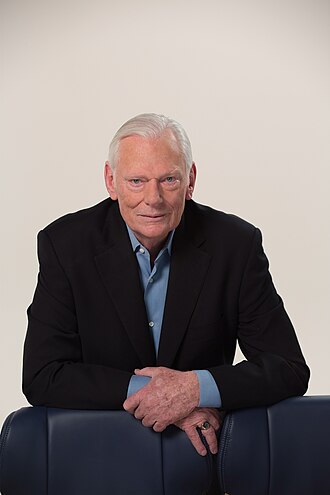
Herb Kelleher
Co-founder and longtime CEO of Southwest Airlines
Where to hear and read about Herb Kelleher1 episode or test

Herb Kelleher co-founded Southwest Airlines, fought four and a half years of lawsuits to get it flying, and ran it as the low-cost, narrow-niche carrier that stayed profitable 47 straight years while the next best airline managed five. The lesson most worth taking from him is to chase profit and survival rather than size, and to win by being cheaper, more disciplined and faster than much bigger rivals.
We do have a plan. It's called doing things.
Herb Kelleher: Founder of Southwest Airlines
Herb Kelleher: the story and the lessons
1Herb Kelleher's path from a soup factory to an airline
Kelleher lost his brother and father as a boy and learned to welcome hardship. His brother died in World War II when Kelleher was 10, and his father died the next year. His widowed mother showed no self-pity and called hard times opportunities to excel.
They talked at the kitchen table most nights, sometimes until 2:00 a.m. Asked years later how he handled stress, he said "I don't handle it, I like it."
Six years doing every job in a soup factory was his best education. After lettering in three sports, he worked at the factory where his father had worked, doing every job there.
He later called it the best education he ever had, and brought the same hands-on habit to Southwest.
He was a lawyer with four kids when he chose to start an airline. After a law degree, a Supreme Court clerkship and a law practice, Kelleher chose at 35 to start an airline. He worked 100-hour weeks at first, still practicing law to pay the bills.
Southwest began as a copy of a proven California model, sketched on a napkin. Roland King and his banker John Parker conceived a Texas intrastate airline modeled on California's successful one, and Kelleher was King's attorney. King drew the Dallas, Houston, San Antonio "Golden Triangle" on a cocktail napkin, still framed at headquarters.
The fast-growing Texas cities were far enough apart to make bus or car travel inconvenient. Kelleher saw a huge untapped market, since most American adults had never flown because of the cost.
2How Kelleher fought a legal war to get Southwest in the air
Three incumbents sued the moment Texas approved Southwest. The Texas Aeronautics Commission approved the application filed November 27, 1967. Braniff, Trans Texas and Continental sued, won a restraining order and argued the markets had no room for another carrier.
Kelleher fought for free because blocking a new entrant meant the free market was failing. He also said "I like to win."
Kelleher offered to pay court costs himself when the money ran out. Rivals won in two courts, and legal fees ate the $543,000 raised from investors. With some directors ready to close, Kelleher deferred his fees, paid court costs from his own pocket and won at the Texas Supreme Court.
His words to the board: "Gentlemen let's do one more round with them."
He kept beating fresh injunctions right up to the first flight. Two days before the first flight, rivals won a second restraining order from a different regulator. Kelleher worked all night in the law library, found a precedent, and the Texas Supreme Court again sided with Southwest.
He told CEO Lamar Muse to fly even if a sheriff tried to enforce the injunction: roll right over it and leave tire tracks on the uniform if needed. The first flight was June 18, 1971.
Rivals' arrogance made him more determined. Rivals put 12 or 15 lawyers on a case while Southwest had only Kelleher. They also pushed Southwest's bankers out of its underwriting syndicate, got vendors to boycott it, tried to bar it from Houston's fuel hydrants and got it blackballed from the airline credit card system.
He called it "an affront to my idealism." Braniff and Texas International were later indicted for conspiring to put Southwest out of business and pleaded no contest.
3How Southwest grew the market with low fares and trial and error
Kelleher saw driving, not other airlines, as the real competitor. When Braniff charged $62 from Dallas to San Antonio, Southwest charged $15. Asked by a shareholder to raise it $2 or $3, Kelleher said it would still sit far below $62 and the point was to pull drivers onto planes.
"We're not competing with other airlines we're competing with ground transportation."
Cheap fares into the Rio Grande Valley created a bigger market than existed. The majors assumed people either could afford to fly or could not. After Southwest undercut every rival into the Rio Grande Valley, yearly passengers rose from 123,000 to 325,000 in under 11 months.
The growth was larger than the whole prior market. Southwest started out unsure how big the leisure segment was, because high fares had kept those travelers out.
Off-peak pricing came from filling a plane that had to fly anyway. Five months in, a plane had to fly empty from Houston to Dallas for weekend maintenance, so Southwest sold seats at a third of the normal fare. Within two weeks it was turning people away.
That revealed a price-sensitive leisure traveler beside the time-sensitive business traveler, leading to $26 weekday fares and $13 evening and weekend fares. Every airline later copied it; Kelleher credited "good oldfashioned trial and error."
He answered Braniff's price match with honesty and free whiskey. When Braniff copied the $13 fare, Southwest ran ads saying Braniff was trying to put it out of business, and let travelers pay $13 or pay $26 and take a free bottle of Scotch, whiskey or vodka. 76% chose the $26, mostly business travelers on expense accounts.
For a few months Southwest was the largest liquor distributor in Texas. Two years later Braniff ended the Dallas to Houston Hobby service it had meant to use to kill Southwest.
Kelleher would not fire people for expensive experiments. He kept people whose mistakes cost the company $400,000 or $500,000, because being comfortable with error is part of trial and error.
4Kelleher's discipline: profit over size, one niche, one plane
Kelleher chose profit over market share and mocked anyone chasing share. He said 4% of the market with profits beats 90% with losses, and joked he would punch anyone who mentioned market share. Rivals raised costs 25% to gain 5% of share while losing money and firing staff.
Southwest was willing to skip revenue that would disproportionately raise its costs. It stayed profitable 47 straight years; the next best airline managed five.
Every idea was held up against Southwest's reason for existing. Southwest refused jumbo jets, international routes and head-to-head fights with majors. If an idea did not fit the vision, Kelleher's answer was "don't bother me."
He did not care about flying to Paris or owning a 747, only about profit and secure jobs. The majors, meanwhile, barely noticed a small regional carrier.
Flying only the Boeing 737 cut staff per plane far below rivals. Southwest needed 84 employees per aircraft against 115 to 160 for the rest of the industry.
Pilots, crews, mechanics and provisioners all knew one plane, so people and aircraft were interchangeable, the parts inventory and records shrank, and buying one model gave more leverage with Boeing.
He kept the marketing flamboyant and the finances conservative. Southwest paid for 80% of its planes out of earnings and owned more of its fleet outright than any other airline, so debt never threatened it in bad years.
Kelleher had seen most airlines hand back good-year profits in the next downturn. He quoted de Gaulle: all that matters is to survive, the rest is just words.
Southwest fixed problems cheaply instead of copying rivals. New customers kept throwing away the cash register receipts Southwest used as tickets. Rather than buy a $2 million multi-layered ticket system like every other airline, it printed "this is a ticket" in bold red letters on the receipt.
Kelleher's view echoed Buffett's warning that peer behavior will be mindlessly imitated.
5Why Herb Kelleher ran on speed instead of a strategic plan
Kelleher thought a fixed plan made a company slower than events. When US Air pulled out of six California cities without warning, a plan would have meant three months of debate with officers and the board over six more planes. Southwest bought them, took the gates and dominated California.
"Reality is chaotic, planning is ordered and logical," he said, and the two don't square. Chided by an analyst, he said the plan was called doing things.
Southwest closed a $20 million gate deal within hours of Midway's collapse. The team landed in Chicago at midnight and heard Midway Airlines had closed. They were negotiating by 9:00 a.m., signed a $20 million gate deal by 2:30 p.m. and held a press conference with the mayor at 3:00 p.m.
Asked for a sign of commitment, the reply was "go to the airport, you'll see it right now," where crews were already hanging Southwest signs over Midway's.
He turned a nine month ad schedule into next Wednesday. New marketing vice president Don Valentine, from Dr Pepper, planned scripts by March, approval in April, casting in June and shooting in September. Kelleher told him the commercial was due next Wednesday.
Being much smaller than rivals, Southwest had to be faster, and Valentine adapted.
Instead of one plan, Southwest rehearsed many what-ifs. In sessions called future scenario generation, people asked questions like what if Chicago builds a new airport or Southwest opens cities in New England, and how many planes it would need.
The output was a set of multiple plans, so little caught Southwest off guard.
6How Kelleher led Southwest's people
Kelleher saw devotion as the one asset rivals could not buy. He described Southwest as a crusade and its employees as converted missionaries, not hires, and insisted service was the one thing it do better than anyone.
"They can buy all the physical things that we have, the things that you can't buy are dedication, devotion, loyalty." He also said "we are a service company, we just happen to fly airplanes."
The CEO loaded bags on the busiest day of the year. On Thanksgiving Eve, Kelleher worked the tarmac loading and unloading baggage in any weather.
One passenger saw only a tall man in a yellow poncho until he turned around and showed himself to be the founder and CEO.
He rallied staff against United with a letter called Commencement of Hostilities. United, seven times Southwest's size with over a billion dollars in cash, was coming with 25 new planes and 100 more in reserve. Kelleher reminded employees they had beaten Braniff, Trans Texas and Continental with only three planes.
He chose vivid language over dull CEO memos and quoted Churchill: "success must be earned over and over again or it disappears."
His advice to other CEOs was to spend time with their own people. Asked after more than 20 years of profits what other chief executives should do, he said to spend more time with your people and less with other CEOs.
He credited survival to a conservative balance sheet, low costs, legendary service and people with "the hearts of lions, the strength of elephants and the determination of water buffalos." The motto was Only the Strong Survive.
7How Kelleher used history and reading to question the industry
Kelleher read the airline industry's history as a cautionary tale. Reading history, he said, kept him from making the same mistakes, inside and outside his industry, which helped Southwest avoid the debt and market share traps that bankrupted rivals.
He asked whether each accepted practice made sense; some did, many did not. From the start he told staff never to try to be like other airlines.
He read widely and spent heavily on books. Kelleher sometimes spent $400 or $500 in one visit to his favorite bookstore. He read physics to talk with his son, a physics student, and read a 300-page history of Richmond before speaking there.
At dinner in Richmond he pointed out the historic sites he had read about.
He named complacency, not rivals, the number one threat. Kelleher warned that if you go to sleep on a win you'll wake up with a loss.
He told staff to keep challenging industry habits, since decades of conventional wisdom had led airlines into massive losses.

Herb Kelleher: Founder of Southwest Airlines
Herb Kelleher built Southwest into the most successful airline in history by keeping costs lowest, staying in a narrow niche, and moving faster than bigger rivals instead of following a strategic plan. The decision that makes it worth hearing is his choice to chase profit rather than market share, which kept Southwest profitable for 47 straight years while the next best airline managed five.
Kelleher lost his brother and father as a boy and learned to welcome hardship. His brother died in World War II when Kelleher was 10, and his father died the next year. His widowed mother showed no self-pity and called hard times opportunities to excel.
They talked at the kitchen table most nights, sometimes until 2:00 a.m. Asked years later how he handled stress, he said "I don't handle it, I like it."
Six years doing every job in a soup factory was his best education. After lettering in three sports, he worked at the factory where his father had worked, doing every job there.
He later called it the best education he ever had, and brought the same hands-on habit to Southwest.
He was a lawyer with four kids when he chose to start an airline. After a law degree, a Supreme Court clerkship and a law practice, Kelleher chose at 35 to start an airline. He worked 100-hour weeks at first, still practicing law to pay the bills.
Southwest began as a copy of a proven California model, sketched on a napkin. Roland King and his banker John Parker conceived a Texas intrastate airline modeled on California's successful one, and Kelleher was King's attorney. King drew the Dallas, Houston, San Antonio "Golden Triangle" on a cocktail napkin, still framed at headquarters.
The fast-growing Texas cities were far enough apart to make bus or car travel inconvenient. Kelleher saw a huge untapped market, since most American adults had never flown because of the cost.
Three incumbents sued the moment Texas approved Southwest. The Texas Aeronautics Commission approved the application filed November 27, 1967. Braniff, Trans Texas and Continental sued, won a restraining order and argued the markets had no room for another carrier.
Kelleher fought for free because blocking a new entrant meant the free market was failing. He also said "I like to win."
Kelleher offered to pay court costs himself when the money ran out. Rivals won in two courts, and legal fees ate the $543,000 raised from investors. With some directors ready to close, Kelleher deferred his fees, paid court costs from his own pocket and won at the Texas Supreme Court.
His words to the board: "Gentlemen let's do one more round with them."
He kept beating fresh injunctions right up to the first flight. Two days before the first flight, rivals won a second restraining order from a different regulator. Kelleher worked all night in the law library, found a precedent, and the Texas Supreme Court again sided with Southwest.
He told CEO Lamar Muse to fly even if a sheriff tried to enforce the injunction: roll right over it and leave tire tracks on the uniform if needed. The first flight was June 18, 1971.
Rivals' arrogance made him more determined. Rivals put 12 or 15 lawyers on a case while Southwest had only Kelleher. They also pushed Southwest's bankers out of its underwriting syndicate, got vendors to boycott it, tried to bar it from Houston's fuel hydrants and got it blackballed from the airline credit card system.
He called it "an affront to my idealism." Braniff and Texas International were later indicted for conspiring to put Southwest out of business and pleaded no contest.
Kelleher saw driving, not other airlines, as the real competitor. When Braniff charged $62 from Dallas to San Antonio, Southwest charged $15. Asked by a shareholder to raise it $2 or $3, Kelleher said it would still sit far below $62 and the point was to pull drivers onto planes.
"We're not competing with other airlines we're competing with ground transportation."
Cheap fares into the Rio Grande Valley created a bigger market than existed. The majors assumed people either could afford to fly or could not. After Southwest undercut every rival into the Rio Grande Valley, yearly passengers rose from 123,000 to 325,000 in under 11 months.
The growth was larger than the whole prior market. Southwest started out unsure how big the leisure segment was, because high fares had kept those travelers out.
Off-peak pricing came from filling a plane that had to fly anyway. Five months in, a plane had to fly empty from Houston to Dallas for weekend maintenance, so Southwest sold seats at a third of the normal fare. Within two weeks it was turning people away.
That revealed a price-sensitive leisure traveler beside the time-sensitive business traveler, leading to $26 weekday fares and $13 evening and weekend fares. Every airline later copied it; Kelleher credited "good oldfashioned trial and error."
He answered Braniff's price match with honesty and free whiskey. When Braniff copied the $13 fare, Southwest ran ads saying Braniff was trying to put it out of business, and let travelers pay $13 or pay $26 and take a free bottle of Scotch, whiskey or vodka. 76% chose the $26, mostly business travelers on expense accounts.
For a few months Southwest was the largest liquor distributor in Texas. Two years later Braniff ended the Dallas to Houston Hobby service it had meant to use to kill Southwest.
Kelleher would not fire people for expensive experiments. He kept people whose mistakes cost the company $400,000 or $500,000, because being comfortable with error is part of trial and error.
Kelleher chose profit over market share and mocked anyone chasing share. He said 4% of the market with profits beats 90% with losses, and joked he would punch anyone who mentioned market share. Rivals raised costs 25% to gain 5% of share while losing money and firing staff.
Southwest was willing to skip revenue that would disproportionately raise its costs. It stayed profitable 47 straight years; the next best airline managed five.
Every idea was held up against Southwest's reason for existing. Southwest refused jumbo jets, international routes and head-to-head fights with majors. If an idea did not fit the vision, Kelleher's answer was "don't bother me."
He did not care about flying to Paris or owning a 747, only about profit and secure jobs. The majors, meanwhile, barely noticed a small regional carrier.
Flying only the Boeing 737 cut staff per plane far below rivals. Southwest needed 84 employees per aircraft against 115 to 160 for the rest of the industry.
Pilots, crews, mechanics and provisioners all knew one plane, so people and aircraft were interchangeable, the parts inventory and records shrank, and buying one model gave more leverage with Boeing.
He kept the marketing flamboyant and the finances conservative. Southwest paid for 80% of its planes out of earnings and owned more of its fleet outright than any other airline, so debt never threatened it in bad years.
Kelleher had seen most airlines hand back good-year profits in the next downturn. He quoted de Gaulle: all that matters is to survive, the rest is just words.
Southwest fixed problems cheaply instead of copying rivals. New customers kept throwing away the cash register receipts Southwest used as tickets. Rather than buy a $2 million multi-layered ticket system like every other airline, it printed "this is a ticket" in bold red letters on the receipt.
Kelleher's view echoed Buffett's warning that peer behavior will be mindlessly imitated.
Kelleher thought a fixed plan made a company slower than events. When US Air pulled out of six California cities without warning, a plan would have meant three months of debate with officers and the board over six more planes. Southwest bought them, took the gates and dominated California.
"Reality is chaotic, planning is ordered and logical," he said, and the two don't square. Chided by an analyst, he said the plan was called doing things.
Southwest closed a $20 million gate deal within hours of Midway's collapse. The team landed in Chicago at midnight and heard Midway Airlines had closed. They were negotiating by 9:00 a.m., signed a $20 million gate deal by 2:30 p.m. and held a press conference with the mayor at 3:00 p.m.
Asked for a sign of commitment, the reply was "go to the airport, you'll see it right now," where crews were already hanging Southwest signs over Midway's.
He turned a nine month ad schedule into next Wednesday. New marketing vice president Don Valentine, from Dr Pepper, planned scripts by March, approval in April, casting in June and shooting in September. Kelleher told him the commercial was due next Wednesday.
Being much smaller than rivals, Southwest had to be faster, and Valentine adapted.
Instead of one plan, Southwest rehearsed many what-ifs. In sessions called future scenario generation, people asked questions like what if Chicago builds a new airport or Southwest opens cities in New England, and how many planes it would need.
The output was a set of multiple plans, so little caught Southwest off guard.
Kelleher saw devotion as the one asset rivals could not buy. He described Southwest as a crusade and its employees as converted missionaries, not hires, and insisted service was the one thing it do better than anyone.
"They can buy all the physical things that we have, the things that you can't buy are dedication, devotion, loyalty." He also said "we are a service company, we just happen to fly airplanes."
The CEO loaded bags on the busiest day of the year. On Thanksgiving Eve, Kelleher worked the tarmac loading and unloading baggage in any weather.
One passenger saw only a tall man in a yellow poncho until he turned around and showed himself to be the founder and CEO.
He rallied staff against United with a letter called Commencement of Hostilities. United, seven times Southwest's size with over a billion dollars in cash, was coming with 25 new planes and 100 more in reserve. Kelleher reminded employees they had beaten Braniff, Trans Texas and Continental with only three planes.
He chose vivid language over dull CEO memos and quoted Churchill: "success must be earned over and over again or it disappears."
His advice to other CEOs was to spend time with their own people. Asked after more than 20 years of profits what other chief executives should do, he said to spend more time with your people and less with other CEOs.
He credited survival to a conservative balance sheet, low costs, legendary service and people with "the hearts of lions, the strength of elephants and the determination of water buffalos." The motto was Only the Strong Survive.
Kelleher read the airline industry's history as a cautionary tale. Reading history, he said, kept him from making the same mistakes, inside and outside his industry, which helped Southwest avoid the debt and market share traps that bankrupted rivals.
He asked whether each accepted practice made sense; some did, many did not. From the start he told staff never to try to be like other airlines.
He read widely and spent heavily on books. Kelleher sometimes spent $400 or $500 in one visit to his favorite bookstore. He read physics to talk with his son, a physics student, and read a 300-page history of Richmond before speaking there.
At dinner in Richmond he pointed out the historic sites he had read about.
He named complacency, not rivals, the number one threat. Kelleher warned that if you go to sleep on a win you'll wake up with a loss.
He told staff to keep challenging industry habits, since decades of conventional wisdom had led airlines into massive losses.