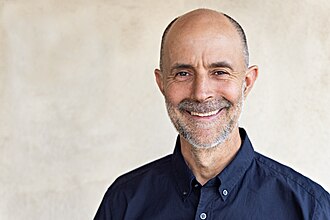
Henry Shukman
Poet, novelist, memoirist and Zen teacher
Where to hear and read about Henry Shukman1 episode or test

Henry Shukman is a poet, novelist, memoirist and Zen teacher, author of the memoir One Blade of Grass. The thing most worth learning from him is to let the deeper voice speak when the controlling mind steps back, then edit carefully so you never cut what is alive.
For me writing, from the earliest times, was about greater intimacy with the world.
Philosopher Teaches His Writing Process — Henry Shukman
Henry Shukman: the story and the lessons
1How Henry Shukman became a writer
A line came to him at a window and woke him up. At 12 or 13, a line arrived as night fell on an Oxford street. He kept writing and ended up alive and awake as he had never been before, trembling.
It was peaceful, powerful, pure energy, not frantic, and it came from a part of him he had no conscious access to. He was already in love with the world but did not know it could speak.
An old wanderer named Speedy showed him another way of being alive. Speedy walked the highways and byways of England and stayed in a valley near Oxford from spring to autumn. Shukman met him at 12 and knew him best in the summers at 13 and 14.
His energy and presence were unlike anyone Shukman knew. The urge to write began with the sense that another way of being alive existed.
Early languages and a Greek PhD built his writing voice. His Oxford schooling began French at 7, Latin at 8 and Greek at 9, then German at 12 and Russian at 14. His PhD in ancient Greek meant reading seven or eight languages.
Reading literature in other languages shapes a voice ready to be unleashed, but you still have to let it speak.
At 18 he stopped logging his days and wrote what the place did to him. Working in Argentina, he and a photographer friend, both 18 or 19, were writing dull daily records. One evening he wrote that there was something ghostly about the place, and the line led into sycamores, eucalyptus and the vast grassland.
He got out of the way and let a much larger energy evoke what he found beautiful. The trip became his first book, his words with his friend's photos.
He wrote for a living for about 20 years. He wrote three travel memoirs, three or four books of fiction and magazine stories, on deadlines he had to meet to get paid. In the early 90s in New York he wrote three or four hours at a time in a favorite diner.
He read Lawrence's Mornings in Mexico at 18 and came to New Mexico at 29 to write Savage Pilgrims.
After a deep silence in practice, he stopped writing and served others. For the first time he felt no need to write. He became a hospice worker, taught meditation in jails and a maximum security prison, then taught Zen.
The writing came back through morning meditation and became his memoir.
2Shukman's idea: the best writing comes from a part you cannot command
Shukman waits for the poem instead of choosing a subject. He never sits down and decides to write a poem about a good subject. He waits for a line to rise from somewhere he does not consciously control, writes it down, then edits.
The poems that turned out as he wanted never came from deliberate machinations. Rain at Night came from simply listening to a long rainfall. Of choosing a subject he says, "It won't work. It never works."
He expects a small fear barrier before his best writing. The mind's job is to control and defend, with a strong negativity bias that guards the door. At his best he has first gone through a little fear barrier, asking whether he is ready to submit to what wants to come.
If he tries to control the writing, it cannot speak freely. What he writes this way is better than he could think up.
Meditation taught him to loosen control, and it does not make you mellow. His first practice was TM, repeating a mantra. For years he tried to force what he thought a good meditation was, which made it kind of hell. In a first draft he wants the controlling mind in the back seat.
He is clear this is not a case for zero editing. Kerouac, a serious Zen sitter, let wild energy through, and Natalie Goldberg described a prim crime writer who murdered people on the page.
He writes to convey an experience, not to record information. Darwin's journals are one kind of writing. Poetic writing conveys what a scene means to the writer and, like Monet's Venice, is less literal but more emotionally real.
A reader who feels that experience gets woken up to their own capacity to feel.
He wants both analysis and mystery, not one without the other. The Greeks held logos, which analyzes, and mythos, which is lasting mystery. Shukman likens logos to a magnifying glass you control, and the other mode to awareness without bounds.
He says the healthy thing probably is to have some kind of balance. Science is great, but not to the exclusion of mystery.
3Shukman's working habits: daily writing and a tough rewrite
He writes five or six days a week. Anyone who wants to be a writer should get into the habit of writing basically daily, he says, though maybe not seven days. When he wrote for a living he did five or six days a week.
You learn to live in the world of writing. Coleridge wrote over 6,000 newspaper articles plus 10 and 20 page letters every day on top of his poems.
He warms up with meaningless pages when nothing arrives. Following Balzac, who covered a couple of pages with gobbledygook each morning, Shukman keeps his pen moving about anything. It gets the engine turning over.
He does not force himself to write about what he thinks he should. Ed Sheeran's image fits: the tap runs dirty first and clean later.
He trusts that clarity comes from the sheer volume already written. Pound reportedly said Hardy's late poems had the clarity of a man who had first written 3 million words. For Shukman the water runs clear because so much has already flowed.
He admits a regular flow of writing sits against his stress on letting go, but he thinks it valuable.
He keeps poems in folders by stage so one dud costs nothing. He keeps a folder of raw poems, semi-worked ones, doubtful ones and nearly finished ones. He reads one straight through and moves on if it fails.
With 500 others to work on, no single failure matters. Poetry is easier to rework than fiction because it is contained and has no plot.
Before rewriting, he returns to the original spirit of the piece. Rewriting from a different vantage risks massacring the good parts unnoticed. It usually takes him much longer than the first writing.
His editor and publisher, the poet Robin Robertson, warned him, "you don't want to cut live flesh." He will tinker with a poem for a year and find it almost unchanged.
A poem is finished when it feels as quick to write as to read. He quotes the Scottish poet Norman MacCaig, who knew a poem was done when it felt as if it took as long to write as to read.
That effect may follow 38 drafts. The aim is writing without right angles, like Lawrence's best work, which feels as if the ink is still wet.
4How Shukman writes about grief and shame
He writes about hard experience only after the first shock has passed. He could not have written Frozen Lake in the first onslaught of grief. He wrote it after his system had recalibrated, when he could go to the depths and still hold the pen.
Wordsworth wrote the Snowdon passage seven or eight years after the climb, and Lawrence evoked Taos vividly from Sicily. Wordsworth called it "emotion recollected in tranquility."
Frozen Lake came unplanned, after someone close to him was gutted by hardship. The poem opens with a Sufi epigraph, The broken ones are my beloved. It ends: For them there is no consolation, nor is any needed.
He could not have sat down to write about what he had been through. He let the thing in him that does the writing speak. The lake image also gave him a way to hold future difficulty.
He writes his life down to live it a second time. Writing lets him digest what he has lived, whether the hardest things or moments of grace. Without rewriting an experience, he says, he does not truly know he has come that way.
Readers who heard Frozen Lake recognized their own shock and grief in very different circumstances.
Writing plainly about his eczema wore down his shame. Severe eczema from infancy into his early 30s left him with deep shame, and he was often in hospital as a child. He wrote about it in One Blade of Grass, in poems and when teaching.
He is probably still wired for shame but feels it less, and no longer minds making a fool of himself.
5Shukman's craft lessons for poems, fiction and memoir
He writes the senses beyond sight, such as how snow changes sound. A blizzard in Santa Fe first brought resistance, and imagining how to describe it turned that into welcome. The sound and scent of snow matter as much as how it looks.
Whatever brings a scene alive for the writer will probably do the same for the reader. In First Snow, the wood crackles and the snow sifts, words the body can feel.
He writes what remembering feels like now, not only the past event. Poetry tracks present moment experience, even when the poem is about a memory. He calls it the form closest to meditation.
Meditation is training in coming back to only now, which is why he is sure it helps the poet.
He gives a fiction character a practical problem and a deeper one. The writer may not see the deeper problem at first but has to arrive at it. Pierre Bezukhov opens War and Peace at a drinking party he does not want to be at.
His deeper need is to live in a way that fulfills his soul, though he does not know what that is.
He treats place as the third main character in fiction. The human story emerges from the place as bedrock, as in Austen, Eliot, Tolstoy and Chekhov.
Homer's story could not be moved to Yorkshire, because the olive trees, vineyards and wine-dark sea are part of it.
He cut his memoir down to one thread, his journey into Zen. One Blade of Grass is not about his whole life but about why the journey into Zen needed to be made and how it happened. He stripped out ancillary material and kept only what served that thread.
He calls it his only hardcore memoir. Plot was the hardest part of his fiction, while memoir needs a trajectory, not a plot.
He wrote the memoir by catching unbidden lines with no attachment to the outcome. Lines came in morning meditation, so he kept a notebook beside him. The pages ran two or three years and reached about 60,000 words before an editor friend, an agent and a publisher followed.
He decided not to block the lines and not to do anything with them, and only years later typed them up. Readers now tell him it inspired their meditative path.

Philosopher Teaches His Writing Process — Henry Shukman
Henry Shukman argues that the best poems and prose come from a deeper part of the writer that speaks only when the controlling mind steps back, and that careful editing then protects what it said. The habits worth hearing are his daily writing practice, a tough rewrite that never cuts live flesh, and his test that a finished poem feels as easy to read as it was to write.
A line came to him at a window and woke him up. At 12 or 13, a line arrived as night fell on an Oxford street. He kept writing and ended up alive and awake as he had never been before, trembling.
It was peaceful, powerful, pure energy, not frantic, and it came from a part of him he had no conscious access to. He was already in love with the world but did not know it could speak.
An old wanderer named Speedy showed him another way of being alive. Speedy walked the highways and byways of England and stayed in a valley near Oxford from spring to autumn. Shukman met him at 12 and knew him best in the summers at 13 and 14.
His energy and presence were unlike anyone Shukman knew. The urge to write began with the sense that another way of being alive existed.
Early languages and a Greek PhD built his writing voice. His Oxford schooling began French at 7, Latin at 8 and Greek at 9, then German at 12 and Russian at 14. His PhD in ancient Greek meant reading seven or eight languages.
Reading literature in other languages shapes a voice ready to be unleashed, but you still have to let it speak.
At 18 he stopped logging his days and wrote what the place did to him. Working in Argentina, he and a photographer friend, both 18 or 19, were writing dull daily records. One evening he wrote that there was something ghostly about the place, and the line led into sycamores, eucalyptus and the vast grassland.
He got out of the way and let a much larger energy evoke what he found beautiful. The trip became his first book, his words with his friend's photos.
He wrote for a living for about 20 years. He wrote three travel memoirs, three or four books of fiction and magazine stories, on deadlines he had to meet to get paid. In the early 90s in New York he wrote three or four hours at a time in a favorite diner.
He read Lawrence's Mornings in Mexico at 18 and came to New Mexico at 29 to write Savage Pilgrims.
After a deep silence in practice, he stopped writing and served others. For the first time he felt no need to write. He became a hospice worker, taught meditation in jails and a maximum security prison, then taught Zen.
The writing came back through morning meditation and became his memoir.
Shukman waits for the poem instead of choosing a subject. He never sits down and decides to write a poem about a good subject. He waits for a line to rise from somewhere he does not consciously control, writes it down, then edits.
The poems that turned out as he wanted never came from deliberate machinations. Rain at Night came from simply listening to a long rainfall. Of choosing a subject he says, "It won't work. It never works."
He expects a small fear barrier before his best writing. The mind's job is to control and defend, with a strong negativity bias that guards the door. At his best he has first gone through a little fear barrier, asking whether he is ready to submit to what wants to come.
If he tries to control the writing, it cannot speak freely. What he writes this way is better than he could think up.
Meditation taught him to loosen control, and it does not make you mellow. His first practice was TM, repeating a mantra. For years he tried to force what he thought a good meditation was, which made it kind of hell. In a first draft he wants the controlling mind in the back seat.
He is clear this is not a case for zero editing. Kerouac, a serious Zen sitter, let wild energy through, and Natalie Goldberg described a prim crime writer who murdered people on the page.
He writes to convey an experience, not to record information. Darwin's journals are one kind of writing. Poetic writing conveys what a scene means to the writer and, like Monet's Venice, is less literal but more emotionally real.
A reader who feels that experience gets woken up to their own capacity to feel.
He wants both analysis and mystery, not one without the other. The Greeks held logos, which analyzes, and mythos, which is lasting mystery. Shukman likens logos to a magnifying glass you control, and the other mode to awareness without bounds.
He says the healthy thing probably is to have some kind of balance. Science is great, but not to the exclusion of mystery.
He writes five or six days a week. Anyone who wants to be a writer should get into the habit of writing basically daily, he says, though maybe not seven days. When he wrote for a living he did five or six days a week.
You learn to live in the world of writing. Coleridge wrote over 6,000 newspaper articles plus 10 and 20 page letters every day on top of his poems.
He warms up with meaningless pages when nothing arrives. Following Balzac, who covered a couple of pages with gobbledygook each morning, Shukman keeps his pen moving about anything. It gets the engine turning over.
He does not force himself to write about what he thinks he should. Ed Sheeran's image fits: the tap runs dirty first and clean later.
He trusts that clarity comes from the sheer volume already written. Pound reportedly said Hardy's late poems had the clarity of a man who had first written 3 million words. For Shukman the water runs clear because so much has already flowed.
He admits a regular flow of writing sits against his stress on letting go, but he thinks it valuable.
He keeps poems in folders by stage so one dud costs nothing. He keeps a folder of raw poems, semi-worked ones, doubtful ones and nearly finished ones. He reads one straight through and moves on if it fails.
With 500 others to work on, no single failure matters. Poetry is easier to rework than fiction because it is contained and has no plot.
Before rewriting, he returns to the original spirit of the piece. Rewriting from a different vantage risks massacring the good parts unnoticed. It usually takes him much longer than the first writing.
His editor and publisher, the poet Robin Robertson, warned him, "you don't want to cut live flesh." He will tinker with a poem for a year and find it almost unchanged.
A poem is finished when it feels as quick to write as to read. He quotes the Scottish poet Norman MacCaig, who knew a poem was done when it felt as if it took as long to write as to read.
That effect may follow 38 drafts. The aim is writing without right angles, like Lawrence's best work, which feels as if the ink is still wet.
He writes about hard experience only after the first shock has passed. He could not have written Frozen Lake in the first onslaught of grief. He wrote it after his system had recalibrated, when he could go to the depths and still hold the pen.
Wordsworth wrote the Snowdon passage seven or eight years after the climb, and Lawrence evoked Taos vividly from Sicily. Wordsworth called it "emotion recollected in tranquility."
Frozen Lake came unplanned, after someone close to him was gutted by hardship. The poem opens with a Sufi epigraph, The broken ones are my beloved. It ends: For them there is no consolation, nor is any needed.
He could not have sat down to write about what he had been through. He let the thing in him that does the writing speak. The lake image also gave him a way to hold future difficulty.
He writes his life down to live it a second time. Writing lets him digest what he has lived, whether the hardest things or moments of grace. Without rewriting an experience, he says, he does not truly know he has come that way.
Readers who heard Frozen Lake recognized their own shock and grief in very different circumstances.
Writing plainly about his eczema wore down his shame. Severe eczema from infancy into his early 30s left him with deep shame, and he was often in hospital as a child. He wrote about it in One Blade of Grass, in poems and when teaching.
He is probably still wired for shame but feels it less, and no longer minds making a fool of himself.
He writes the senses beyond sight, such as how snow changes sound. A blizzard in Santa Fe first brought resistance, and imagining how to describe it turned that into welcome. The sound and scent of snow matter as much as how it looks.
Whatever brings a scene alive for the writer will probably do the same for the reader. In First Snow, the wood crackles and the snow sifts, words the body can feel.
He writes what remembering feels like now, not only the past event. Poetry tracks present moment experience, even when the poem is about a memory. He calls it the form closest to meditation.
Meditation is training in coming back to only now, which is why he is sure it helps the poet.
He gives a fiction character a practical problem and a deeper one. The writer may not see the deeper problem at first but has to arrive at it. Pierre Bezukhov opens War and Peace at a drinking party he does not want to be at.
His deeper need is to live in a way that fulfills his soul, though he does not know what that is.
He treats place as the third main character in fiction. The human story emerges from the place as bedrock, as in Austen, Eliot, Tolstoy and Chekhov.
Homer's story could not be moved to Yorkshire, because the olive trees, vineyards and wine-dark sea are part of it.
He cut his memoir down to one thread, his journey into Zen. One Blade of Grass is not about his whole life but about why the journey into Zen needed to be made and how it happened. He stripped out ancillary material and kept only what served that thread.
He calls it his only hardcore memoir. Plot was the hardest part of his fiction, while memoir needs a trajectory, not a plot.
He wrote the memoir by catching unbidden lines with no attachment to the outcome. Lines came in morning meditation, so he kept a notebook beside him. The pages ran two or three years and reached about 60,000 words before an editor friend, an agent and a publisher followed.
He decided not to block the lines and not to do anything with them, and only years later typed them up. Readers now tell him it inspired their meditative path.