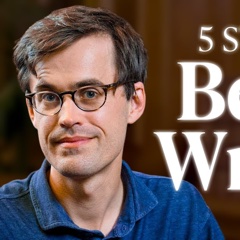
Henrik Karlsson
Essayist and writer of the Substack blog Escaping Flatland
Where to hear and read about Henrik Karlsson1 episode or test

Henrik Karlsson is an essayist who writes the Substack blog Escaping Flatland. The thing most worth learning from him is to let an idea ripen for a year, test it against real cases, and write only when a personal question drives you.
And in that way you're sucking reality in and reality is like much smarter than you are. It's got more nuance.
One of The World's Most Under-Rated Writers — Henrik Karlsson
Henrik Karlsson: the story and the lessons
1How Henrik Karlsson came to write the way he does
Karlsson's writing deepened after a friend's suicide and three weeks in Bolivia. His friend died when he was 15, and that changed how he wrote. In Bolivia he had no one to talk to, and every role he played at home fell away.
A homemade notebook filled up there, and he came back unable to return to how he had been.
He began writing for status and now writes to be changed. A book he only reads does not enter his body, but putting his own words to it does. After about 30 hours on a piece he may see he has been thinking about it entirely the wrong way.
On Less Wrong and Reddit he was expected to have big ideas, and they stayed brittle on the page. His sharp-eyed wife poked holes in them easily.
Writing weirder pieces for fewer people started a flywheel. In December 2021 he had about 50 readers and began getting emails from strangers who had read the same books. Once he stopped simplifying for a mass audience, his writing became too weird for most people.
The few who loved it shared it, and the readers who found him changed him in turn.
Karlsson gave up music and programming to focus on family and writing. Around 25 he set both aside. After 12 years with his wife, he says they are about 10,000 hours into their conversation, and it keeps getting better.
He chose writing over a car at first. Now he has both. He says letting go takes courage because you look odd, and it is easy to sacrifice the wrong thing.
He built a daily life that protects his writing. He works from 7 to 3, six days a week, then spends four or five hours with his kids. He stays offline at least half of each day.
With mold in the main house, the family lives above the stable and he writes in the old woodworking room. When stuck, he lies on the sofa, walks the meadow or fixes a brick wall.
2Karlsson's process for writing an essay
Karlsson lets an exciting idea sit for about a year. Writing straight after getting excited produces an ungrounded draft. He reads, makes notes, revisits them months later and talks the idea through until it turns into an urgent question.
His best pieces all came from topics he had read about for years and discussed often. He knows he is ready when he feels the energy in his body.
He starts from a personal need, never from a topic. He looks for something where clarity would improve his life or help his family, such as how to be a better father or why he feels overwhelmed.
His best pieces feel like a descent into a cave to face a fear. That need gives the essay drive, like a magnetic field pulling the gathered material into shape.
He orders his material by how it will make the reader feel. He lies on the sofa, pictures each cluster with a colour and a feeling, and swaps the order until he feels energy release. An essay is meant to put the reader in a state.
A story placed before an argument can leave the reader ready for Aristotle. He points to Ways of Seeing, where a Van Gogh looks different once you learn it was his last painting before he killed himself.
He turns a web of ideas into one path. He writes about 50 linked notes in Obsidian without knowing the start or end, then picks a path through them. He compares the net of ideas to a spider web and the essay to one walk across it.
Good writing then expands back into a net inside the reader.
Karlsson drafts fast, sometimes by talking the essay out. Once the order feels right, he types quickly to keep the piece one whole. Sometimes he dictates it with his eyes closed, several times, until it snaps into place.
Heavy editing comes afterwards. Pieces written separately and joined later often fail to cohere.
He writes the opening last. Writing an opening first makes him pretentious and tense, and he can spend two or three hours on one that does not survive a reread. In Looking for Alice, a throwaway mid-essay line about Gertrude Stein ('No, I just like Alice') moved to the top and made the piece cohere.
Once the essay exists, the opening is often already somewhere inside it. He says he does not know if this holds for everyone, only that it works for him.
He talks freely and keeps the part that feels like a thing. For his piece on misreading the people you know, he lay on the sofa with his eyes closed and talked about his best friend like a therapy session, with no plan.
At some point one stretch felt like it had a border around it. He cut everything else and kept that part, one of his two favourite pieces of the year.
3How Karlsson tests ideas against reality
Karlsson checks every claim against three or four real cases. The cases come from his life, his friends' lives, diaries or biographies. He checks the sentence against them like a painter checking a still life, and rewrites when they do not match.
Most of that case material never reaches the page. It is the iceberg under the surface.
He interviews himself in the margins of his notes. He writes questions beside his own text: what do you mean, do you have an example, give me three examples. When the examples do not match the claim, he writes about why.
His wife then does the same as editor. She does not cross out words. She says let's throw that out, but that's interesting, and starts a conversation.
He practises looking at real things before describing them. He stares at a plant, writes what he sees, then corrects it again and again. The white flower turns out not to be white, and the leaf count is wrong.
His reminder is Wittgenstein's 'don't think, look'. He also points to Delacroix's diary, which records a shadow as yellow in one place and purple in another.
He rides through confusion until the idea collapses into something simpler. He compares his writing to his wife's way of cleaning: everything comes out, it gets worse, then it all goes back in clean. He starts simple, adds an example that breaks it, gets lost, then finds a simpler formulation.
He used to think a messy middle meant failure. A mentor told him he was halfway there and should trust it.
He stays uncompressed and uses deliberate confusion to learn faster. He observes without labels first, since labels like 'the political right, tariffs' compress too much. Compression comes only after a year or two of looking.
He cites US military accelerated-expertise programs, which give trainees cases with no theory, then a case that breaks their first explanation. That prevents a 'knowledge shield'.
He shelters young ideas from critique. Early ideas can be almost nothing, such as a feeling that is 'pink', and social reaction squashes them. He keeps them in his diary or on long walks until they grow.
He cites Jony Ive saying at Steve Jobs' funeral that young ideas are fragile, and David Lynch lowering image fragments into his subconscious as bait.
He leaves dead ends in the text. He loves writers who say 'wait, I'm wrong here' and turn the car around. Editing those moments out removes the sincerity and the intimacy of tracing a discovery.
Writing this way takes a relaxed state and not fearing looking stupid. Not every false start stays; the aim is to simulate the process of finding out.
4What Karlsson writes, and for whom
Karlsson makes small, puzzled promises in his openings. His piece on the childhoods of exceptional people promised patterns from 40 books and felt strained to write. His piece on unpublished books promised only to think about why he likes them.
That one wandered into education and cognition, so it felt like overdelivering. A big promise turns writing into labour.
He tries to write where he forgets anyone will read. The need to be liked drains energy. He quotes David Foster Wallace that 90% of a writer's effort can go to being liked, which 'results in bad fiction'.
He writes on paper or dictates while walking up and down the road, and still catches himself writing something because it is cute and strikes it out.
He writes the obvious deep truths and builds them into an experience. Truths like 'be kind' or 'be a good father' sound boring, so writers say something smart instead. He constructs a story or poetic sequence so the truth lands in the reader, as the New Testament uses parable and image.
He wants to laugh, cry or be elated while writing, because feeling it deeply seems to carry it across. A post that just said 'be kind' would fail.
He says courage, not technique, limits how well a writer writes. He tells himself he needs better metaphors or openings, but going deeper is usually the answer. The best writers are both porous to reality and firm in their values.
He likes Herzog's joke that film students should walk from Madrid to Kiev, an ordeal that strips away social expectations.
He gets ideas by colliding distant fields and talking to people. He pulls machine learning and mathematics into poetry. After he posts a rough idea, five to seven emails arrive with book tips and Zoom calls.
He adds unhurried time, such as four-hour walks, journaling and 5 to 10 minutes sitting silent with his eyes closed.
He treats a blog post as a search query and uses long titles. Most people read only the title, so he puts the important message in it. A post moves across the social graph to people who care about the same things.
He says the idea that writing is a search query 'blew my life wide open'. He wishes everyone had a few posts out there so their people can find them.
Karlsson uses LLMs for about 1% of his words. He keeps a prompt listing his bad habits and overused words and has the model flag them in each essay. He also asks for ten rephrasings to get out of his own head.
He has seen interesting images and music from AI but no good literature yet.

One of The World's Most Under-Rated Writers — Henrik Karlsson
Henrik Karlsson explains how he writes essays that feel alive: he lets an idea ripen for a year, tests it against reality, and writes only once a real personal question drives him. The technique worth hearing is his five-step process, which ends with writing the opening last and drafting fast once the order of ideas feels right in his body.
Karlsson's writing deepened after a friend's suicide and three weeks in Bolivia. His friend died when he was 15, and that changed how he wrote. In Bolivia he had no one to talk to, and every role he played at home fell away.
A homemade notebook filled up there, and he came back unable to return to how he had been.
He began writing for status and now writes to be changed. A book he only reads does not enter his body, but putting his own words to it does. After about 30 hours on a piece he may see he has been thinking about it entirely the wrong way.
On Less Wrong and Reddit he was expected to have big ideas, and they stayed brittle on the page. His sharp-eyed wife poked holes in them easily.
Writing weirder pieces for fewer people started a flywheel. In December 2021 he had about 50 readers and began getting emails from strangers who had read the same books. Once he stopped simplifying for a mass audience, his writing became too weird for most people.
The few who loved it shared it, and the readers who found him changed him in turn.
Karlsson gave up music and programming to focus on family and writing. Around 25 he set both aside. After 12 years with his wife, he says they are about 10,000 hours into their conversation, and it keeps getting better.
He chose writing over a car at first. Now he has both. He says letting go takes courage because you look odd, and it is easy to sacrifice the wrong thing.
He built a daily life that protects his writing. He works from 7 to 3, six days a week, then spends four or five hours with his kids. He stays offline at least half of each day.
With mold in the main house, the family lives above the stable and he writes in the old woodworking room. When stuck, he lies on the sofa, walks the meadow or fixes a brick wall.
Karlsson lets an exciting idea sit for about a year. Writing straight after getting excited produces an ungrounded draft. He reads, makes notes, revisits them months later and talks the idea through until it turns into an urgent question.
His best pieces all came from topics he had read about for years and discussed often. He knows he is ready when he feels the energy in his body.
He starts from a personal need, never from a topic. He looks for something where clarity would improve his life or help his family, such as how to be a better father or why he feels overwhelmed.
His best pieces feel like a descent into a cave to face a fear. That need gives the essay drive, like a magnetic field pulling the gathered material into shape.
He orders his material by how it will make the reader feel. He lies on the sofa, pictures each cluster with a colour and a feeling, and swaps the order until he feels energy release. An essay is meant to put the reader in a state.
A story placed before an argument can leave the reader ready for Aristotle. He points to Ways of Seeing, where a Van Gogh looks different once you learn it was his last painting before he killed himself.
He turns a web of ideas into one path. He writes about 50 linked notes in Obsidian without knowing the start or end, then picks a path through them. He compares the net of ideas to a spider web and the essay to one walk across it.
Good writing then expands back into a net inside the reader.
Karlsson drafts fast, sometimes by talking the essay out. Once the order feels right, he types quickly to keep the piece one whole. Sometimes he dictates it with his eyes closed, several times, until it snaps into place.
Heavy editing comes afterwards. Pieces written separately and joined later often fail to cohere.
He writes the opening last. Writing an opening first makes him pretentious and tense, and he can spend two or three hours on one that does not survive a reread. In Looking for Alice, a throwaway mid-essay line about Gertrude Stein ('No, I just like Alice') moved to the top and made the piece cohere.
Once the essay exists, the opening is often already somewhere inside it. He says he does not know if this holds for everyone, only that it works for him.
He talks freely and keeps the part that feels like a thing. For his piece on misreading the people you know, he lay on the sofa with his eyes closed and talked about his best friend like a therapy session, with no plan.
At some point one stretch felt like it had a border around it. He cut everything else and kept that part, one of his two favourite pieces of the year.
Karlsson checks every claim against three or four real cases. The cases come from his life, his friends' lives, diaries or biographies. He checks the sentence against them like a painter checking a still life, and rewrites when they do not match.
Most of that case material never reaches the page. It is the iceberg under the surface.
He interviews himself in the margins of his notes. He writes questions beside his own text: what do you mean, do you have an example, give me three examples. When the examples do not match the claim, he writes about why.
His wife then does the same as editor. She does not cross out words. She says let's throw that out, but that's interesting, and starts a conversation.
He practises looking at real things before describing them. He stares at a plant, writes what he sees, then corrects it again and again. The white flower turns out not to be white, and the leaf count is wrong.
His reminder is Wittgenstein's 'don't think, look'. He also points to Delacroix's diary, which records a shadow as yellow in one place and purple in another.
He rides through confusion until the idea collapses into something simpler. He compares his writing to his wife's way of cleaning: everything comes out, it gets worse, then it all goes back in clean. He starts simple, adds an example that breaks it, gets lost, then finds a simpler formulation.
He used to think a messy middle meant failure. A mentor told him he was halfway there and should trust it.
He stays uncompressed and uses deliberate confusion to learn faster. He observes without labels first, since labels like 'the political right, tariffs' compress too much. Compression comes only after a year or two of looking.
He cites US military accelerated-expertise programs, which give trainees cases with no theory, then a case that breaks their first explanation. That prevents a 'knowledge shield'.
He shelters young ideas from critique. Early ideas can be almost nothing, such as a feeling that is 'pink', and social reaction squashes them. He keeps them in his diary or on long walks until they grow.
He cites Jony Ive saying at Steve Jobs' funeral that young ideas are fragile, and David Lynch lowering image fragments into his subconscious as bait.
He leaves dead ends in the text. He loves writers who say 'wait, I'm wrong here' and turn the car around. Editing those moments out removes the sincerity and the intimacy of tracing a discovery.
Writing this way takes a relaxed state and not fearing looking stupid. Not every false start stays; the aim is to simulate the process of finding out.
Karlsson makes small, puzzled promises in his openings. His piece on the childhoods of exceptional people promised patterns from 40 books and felt strained to write. His piece on unpublished books promised only to think about why he likes them.
That one wandered into education and cognition, so it felt like overdelivering. A big promise turns writing into labour.
He tries to write where he forgets anyone will read. The need to be liked drains energy. He quotes David Foster Wallace that 90% of a writer's effort can go to being liked, which 'results in bad fiction'.
He writes on paper or dictates while walking up and down the road, and still catches himself writing something because it is cute and strikes it out.
He writes the obvious deep truths and builds them into an experience. Truths like 'be kind' or 'be a good father' sound boring, so writers say something smart instead. He constructs a story or poetic sequence so the truth lands in the reader, as the New Testament uses parable and image.
He wants to laugh, cry or be elated while writing, because feeling it deeply seems to carry it across. A post that just said 'be kind' would fail.
He says courage, not technique, limits how well a writer writes. He tells himself he needs better metaphors or openings, but going deeper is usually the answer. The best writers are both porous to reality and firm in their values.
He likes Herzog's joke that film students should walk from Madrid to Kiev, an ordeal that strips away social expectations.
He gets ideas by colliding distant fields and talking to people. He pulls machine learning and mathematics into poetry. After he posts a rough idea, five to seven emails arrive with book tips and Zoom calls.
He adds unhurried time, such as four-hour walks, journaling and 5 to 10 minutes sitting silent with his eyes closed.
He treats a blog post as a search query and uses long titles. Most people read only the title, so he puts the important message in it. A post moves across the social graph to people who care about the same things.
He says the idea that writing is a search query 'blew my life wide open'. He wishes everyone had a few posts out there so their people can find them.
Karlsson uses LLMs for about 1% of his words. He keeps a prompt listing his bad habits and overused words and has the model flag them in each essay. He also asks for ten rephrasings to get out of his own head.
He has seen interesting images and music from AI but no good literature yet.