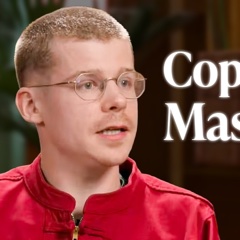
Harry Dry
Copywriter and founder of Marketing Examples
Where to hear and read about Harry Dry1 episode or test

Harry Dry is a copywriter and the founder of Marketing Examples, a newsletter of 100,000+ subscribers that teaches marketing through examples. The most useful thing to learn from him is to run every sentence through three tests (can I visualize it, can I falsify it, can nobody else say it) and then rewrite until nothing can be cut.
You can't write simply. You can only rewrite simply really.
Learn Copywriting in 76 Minutes – Harry Dry
Harry Dry: the story and the lessons
1Who Harry Dry is and why he teaches copywriting
Dry built Marketing Examples as the opposite of theory-heavy marketing. He was fed up with marketing material that was two pages of theory, so he built the counter-position: just examples. He calls copywriting the number one marketing skill.
He says to build things because of a belief, not just for money: "You need to be building things because of something you believe".
His newsletter has over 100,000 subscribers and about half open it. The replies are unusually plentiful for a list that size.
He says every issue is a struggle to get right. He reminds himself that the 100,000 readers are each actually somebody.
Dry argues words decide which of two near-identical products wins. Snickers is the best-selling bar in the world, while the Fuse bar looked and tasted the same and was discontinued in 2006. 17 out of 20 American teenagers choose Apple over Samsung.
His case is that products are nearly identical underneath, so the words decide which one wins the customer's mind.
2Harry Dry's three tests for every sentence
Dry scores each line on visualize, falsify and nobody else can say it. Three no's means probably rubbish, and three yes's means you are onto something. He uses the score both to write and to review copy.
New Balance's "Worn by supermodels in London and dads in Ohio" gets three yes's. A recruiter's "change an entire industry" gets three no's.
He zooms in on abstract words until he reaches a concrete object. He writes the vague word at the top of a page and keeps asking what he actually means. "Regain fitness" became "off the couch", then running, then 5K, which is Couch to 5K.
Given six words, the host remembered Irishman, pitbull and leg of lamb, and forgot "better way" and "seamless transition". You can't drop a better way on your foot.
He writes claims that could be proved wrong. A claim that can be false puts the writer's head on the chopping block, and readers pay attention to that risk.
Galileo was sentenced to house arrest for saying the earth spins around the sun. A harmonious connection with a celestial object would have bothered nobody.
He imagines he can only point, never talk. Instead of calling a friend funny, say he looks like Ryan Gosling or reads on the tube. To sell gold, point at its 50-year chart and at what it did in the last financial crash.
Pointing takes research, which is why it beats adjectives. He took the tip from a deleted Reddit account.
He never writes an ad a competitor could sign. A Volkswagen ad said your car's speedometer has five numbers while its own has six. Only a Volkswagen owner can check that, so only Volkswagen can say it.
The recruitment line fails because any recruiter could use it tomorrow. The rule comes from Jim Durkey and pushes you to look deeper at what you sell.
When in doubt, Dry starts with a fact. Most people say nothing, which he calls wallpaper and word-shaped air. A fact guarantees you say something, and you build the story on top of it.
The East Coast to London flight takes 6 hours, too short to sleep and too long to be easy. He says a fact is raw material you still have to work with, since "350 million Americans" is true but dull.
3How Harry Dry builds an ad from nothing
He names the reader's current attitude and the one he wants. Quoting John Henley, he treats the current attitude as point A and the desired one as point B, like two telephone poles. His job is to string the wire between them.
The wire has three pieces: who you're talking to, something to say, and saying it well.
He decides exactly who is reading and what they are doing. The Yellow Canary cafe in St. Ives had a queue with a sign saying coffee and pastry equals 5 lbs, while the cafe with the huge menu was empty.
Snapchat spent 7 million pounds on a Super Bowl ad without asking who was watching, when the average viewer is 39.
He writes inside the tool where the reader will see the copy. He writes the newsletter directly in ConvertKit and ads in Figma, not in a Google Doc, where a line might spill from one line to three.
He follows Ogilvy's advice to test a billboard among seven other ads and passers-by, not alone.
He seeds an ad with a line down the page of opposites. Luke Sullivan's trick: draw a line down the middle and write two conflicts. Dry's 1% to 2% conversion idea faced spending twice as much on ads.
A Volkswagen winter-prep ad supplied the layout. The ad took about 2 days and 25 rewrites to become "throw money and pray" versus "learn copywriting".
He spitballs bad versions fast to get the dirty water out. When stuck, he writes many options without judging them, like running a muddy tap. After a couple of minutes the ideas start coming out clean.
He kept going down what might have been a blind alley, and it wasn't one. Friends whose taste he respects picked "throw money and pray".
He keeps the claim modest and widens the time frame on small numbers. The ad doesn't say be a millionaire, only that conversions can go from 1% to 2%. In another ad, 4 hours a day over a 30-year career becomes about 22,000 hours of writing against 2 hours of learning.
His first draft said 20,000. He wrote 22,000 so it would sound parallel with "two".
4Harry Dry's editing rules and standards
Dry opens each newsletter with time, place and what's happening. He takes Ann Handley's point that a newsletter is more about the letter than the news, and got the opening idea from J. K. Rowling's Chamber of Secrets.
One issue began "live from London weather update" after he looked out at falling kale. Another opened at 3:47 a.m. with green tea.
He has written no paragraph over two lines since March 2021. Short paragraphs are like monkey bars for people reading on the train. A three-line paragraph suggests he isn't explaining himself well, so he cuts words.
He noticed the habit only when rereading old issues, and calls it idiosyncratic, neither good nor bad.
He cuts any word that isn't working for him. His favorite rule is Kaplan's Law of Words: words that aren't working for you are working against you. He added his own law, that you aren't taking Kaplan's seriously enough.
It applies to ideas too: the narrower the idea, the stronger. Hiut Denim's "We make jeans, that's it" is his model.
He tests a paragraph by pulling one sentence out. A paragraph should be like a burrito you can throw without it coming apart. If it still works without a sentence, that sentence shouldn't be there.
He rewrites paragraphs into versions and shows editors all of them. He copies and rewrites a headline or paragraph until he has four or five versions. Writing badly on purpose frees him to find his own way.
Shown one paragraph, his brother only said like or dislike. Shown three, he picked the best sentence and said where to put it.
He puts conflict in every example and builds stories on a "but". Each example sets two things against each other, because people remember relatively: pickle juice makes orange juice taste sweeter. For stories, he asks what went wrong.
His Loom piece shows how every other screen recorder positions itself, then Loom's angle that remote communication sucks.
He gets structure by splitting one idea into two parts. His line "the first step to 10,000 readers is getting 100 readers" became two parts: things that don't scale, then momentum.
He holds a high bar and rule: if it is not nine out of ten plus, you won't see it. A piece is done when no word can be added or taken away.
5Why Harry Dry thinks AI can't write great copy
Dry says AI has no taste, conviction or experience. He calls it a useful research tool but only as good as your taste. A model arranges strips of words already set in order by somebody else.
Ogilvy's Rolls-Royce electric clock headline came from a writer who drove the car at 60 mph, and it lifted sales by 50%. Bukowski worked as a postman for 20 years before Post Office.
He runs his mornings on silence before writing. Waking up to TikTok slows him down. He sits in silence, or walks in a park with no earphones.
On writing retreats nobody talks until dinner at 5 or 6. "Silence and action. That's what I run on."

Learn Copywriting in 76 Minutes – Harry Dry
Harry Dry teaches copywriting as a few repeatable tests, and shows how a single ad gets built through dozens of rewrites. The most useful habit is running every sentence through three questions: can I visualize it, can I falsify it, can nobody else say it.
Dry built Marketing Examples as the opposite of theory-heavy marketing. He was fed up with marketing material that was two pages of theory, so he built the counter-position: just examples. He calls copywriting the number one marketing skill.
He says to build things because of a belief, not just for money: "You need to be building things because of something you believe".
His newsletter has over 100,000 subscribers and about half open it. The replies are unusually plentiful for a list that size.
He says every issue is a struggle to get right. He reminds himself that the 100,000 readers are each actually somebody.
Dry argues words decide which of two near-identical products wins. Snickers is the best-selling bar in the world, while the Fuse bar looked and tasted the same and was discontinued in 2006. 17 out of 20 American teenagers choose Apple over Samsung.
His case is that products are nearly identical underneath, so the words decide which one wins the customer's mind.
Dry scores each line on visualize, falsify and nobody else can say it. Three no's means probably rubbish, and three yes's means you are onto something. He uses the score both to write and to review copy.
New Balance's "Worn by supermodels in London and dads in Ohio" gets three yes's. A recruiter's "change an entire industry" gets three no's.
He zooms in on abstract words until he reaches a concrete object. He writes the vague word at the top of a page and keeps asking what he actually means. "Regain fitness" became "off the couch", then running, then 5K, which is Couch to 5K.
Given six words, the host remembered Irishman, pitbull and leg of lamb, and forgot "better way" and "seamless transition". You can't drop a better way on your foot.
He writes claims that could be proved wrong. A claim that can be false puts the writer's head on the chopping block, and readers pay attention to that risk.
Galileo was sentenced to house arrest for saying the earth spins around the sun. A harmonious connection with a celestial object would have bothered nobody.
He imagines he can only point, never talk. Instead of calling a friend funny, say he looks like Ryan Gosling or reads on the tube. To sell gold, point at its 50-year chart and at what it did in the last financial crash.
Pointing takes research, which is why it beats adjectives. He took the tip from a deleted Reddit account.
He never writes an ad a competitor could sign. A Volkswagen ad said your car's speedometer has five numbers while its own has six. Only a Volkswagen owner can check that, so only Volkswagen can say it.
The recruitment line fails because any recruiter could use it tomorrow. The rule comes from Jim Durkey and pushes you to look deeper at what you sell.
When in doubt, Dry starts with a fact. Most people say nothing, which he calls wallpaper and word-shaped air. A fact guarantees you say something, and you build the story on top of it.
The East Coast to London flight takes 6 hours, too short to sleep and too long to be easy. He says a fact is raw material you still have to work with, since "350 million Americans" is true but dull.
He names the reader's current attitude and the one he wants. Quoting John Henley, he treats the current attitude as point A and the desired one as point B, like two telephone poles. His job is to string the wire between them.
The wire has three pieces: who you're talking to, something to say, and saying it well.
He decides exactly who is reading and what they are doing. The Yellow Canary cafe in St. Ives had a queue with a sign saying coffee and pastry equals 5 lbs, while the cafe with the huge menu was empty.
Snapchat spent 7 million pounds on a Super Bowl ad without asking who was watching, when the average viewer is 39.
He writes inside the tool where the reader will see the copy. He writes the newsletter directly in ConvertKit and ads in Figma, not in a Google Doc, where a line might spill from one line to three.
He follows Ogilvy's advice to test a billboard among seven other ads and passers-by, not alone.
He seeds an ad with a line down the page of opposites. Luke Sullivan's trick: draw a line down the middle and write two conflicts. Dry's 1% to 2% conversion idea faced spending twice as much on ads.
A Volkswagen winter-prep ad supplied the layout. The ad took about 2 days and 25 rewrites to become "throw money and pray" versus "learn copywriting".
He spitballs bad versions fast to get the dirty water out. When stuck, he writes many options without judging them, like running a muddy tap. After a couple of minutes the ideas start coming out clean.
He kept going down what might have been a blind alley, and it wasn't one. Friends whose taste he respects picked "throw money and pray".
He keeps the claim modest and widens the time frame on small numbers. The ad doesn't say be a millionaire, only that conversions can go from 1% to 2%. In another ad, 4 hours a day over a 30-year career becomes about 22,000 hours of writing against 2 hours of learning.
His first draft said 20,000. He wrote 22,000 so it would sound parallel with "two".
Dry opens each newsletter with time, place and what's happening. He takes Ann Handley's point that a newsletter is more about the letter than the news, and got the opening idea from J. K. Rowling's Chamber of Secrets.
One issue began "live from London weather update" after he looked out at falling kale. Another opened at 3:47 a.m. with green tea.
He has written no paragraph over two lines since March 2021. Short paragraphs are like monkey bars for people reading on the train. A three-line paragraph suggests he isn't explaining himself well, so he cuts words.
He noticed the habit only when rereading old issues, and calls it idiosyncratic, neither good nor bad.
He cuts any word that isn't working for him. His favorite rule is Kaplan's Law of Words: words that aren't working for you are working against you. He added his own law, that you aren't taking Kaplan's seriously enough.
It applies to ideas too: the narrower the idea, the stronger. Hiut Denim's "We make jeans, that's it" is his model.
He tests a paragraph by pulling one sentence out. A paragraph should be like a burrito you can throw without it coming apart. If it still works without a sentence, that sentence shouldn't be there.
He rewrites paragraphs into versions and shows editors all of them. He copies and rewrites a headline or paragraph until he has four or five versions. Writing badly on purpose frees him to find his own way.
Shown one paragraph, his brother only said like or dislike. Shown three, he picked the best sentence and said where to put it.
He puts conflict in every example and builds stories on a "but". Each example sets two things against each other, because people remember relatively: pickle juice makes orange juice taste sweeter. For stories, he asks what went wrong.
His Loom piece shows how every other screen recorder positions itself, then Loom's angle that remote communication sucks.
He gets structure by splitting one idea into two parts. His line "the first step to 10,000 readers is getting 100 readers" became two parts: things that don't scale, then momentum.
He holds a high bar and rule: if it is not nine out of ten plus, you won't see it. A piece is done when no word can be added or taken away.
Dry says AI has no taste, conviction or experience. He calls it a useful research tool but only as good as your taste. A model arranges strips of words already set in order by somebody else.
Ogilvy's Rolls-Royce electric clock headline came from a writer who drove the car at 60 mph, and it lifted sales by 50%. Bukowski worked as a postman for 20 years before Post Office.
He runs his mornings on silence before writing. Waking up to TikTok slows him down. He sits in silence, or walks in a park with no earphones.
On writing retreats nobody talks until dinner at 5 or 6. "Silence and action. That's what I run on."