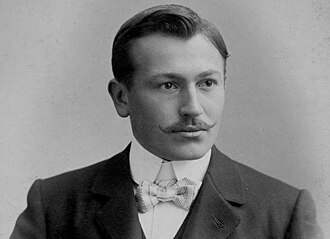
Hans Wilsdorf
Founder and sole shareholder of Rolex
Where to hear and read about Hans Wilsdorf1 episode or test

Hans Wilsdorf founded Rolex in 1905, when nearly every watch was a pocket watch, and spent 60 years in the watch trade building one brand around a product most of the industry thought men would never wear. The lesson is the power of an early, specific belief, backed by solving each obstacle in order, buying the inventions he needed, and advertising one name relentlessly.
I had very early realized the manifold possibilities of the wristwatch, and feeling sure that they would materialize in time, I resolutely went on my way.
The Founder of Rolex: Hans Wilsdorf
Hans Wilsdorf: the story and the lessons
1Hans Wilsdorf's path from orphan to watch trader
Orphaned at 12, Wilsdorf credited forced self-reliance for his success. His uncles sold the family business to pay for boarding school, where he took to mathematics and languages.
Looking back in his mid 60s, he wrote that his uncles "made me become self-reliant very early in life." The story comes first-hand from Rolex Jubilee, a 1946 history printed in only 1,000 copies, whose first volume he wrote himself.
A clerk's job showed him every watch made in Switzerland. At 19 he became English correspondent for Cuno Korten, an exporter shipping about 1 million francs of Swiss watches a year in many languages and countries.
He called it a chance to examine every type of watch produced in Switzerland and abroad. The desk was effectively a course in international marketing, much as Rockefeller's produce clerk job was for him.
In London he saw competence without specialization. His London employer struck him for its commercial skill and its lack of focus, and he left after two years.
He started his own firm at 24 by copying the model he knew. In 1905 Wilsdorf and Davis bought from Swiss makers and sold to retailers on modest capital.
He then worked in watches until his death, a 60 year career.
2Why Wilsdorf bet on the men's wristwatch
Wilsdorf believed in a product men openly refused to wear. Before World War I wristwatches were called bracelet watches and seen as feminine; one man said you were as likely to catch him in a dress as wearing one.
Pocket watches made up well over 99% of the market. Soldiers' trench watches began the men's market during the war.
In 1914, at 33, he predicted the pocket watch would vanish. He said wristwatches would almost completely replace pocket watches, and later said Rolex got several years ahead of makers still clinging to the old form.
Watchmakers had real objections: delicate movements could not survive arm motion, dust and water would ruin the mechanism, and accuracy seemed impossible at that size.
He saw the wrist would sell far more watches than the pocket. Pocket watches were handed from father to son and hidden away, so sales were slow. A visible wristwatch becomes a fashion accessory, takes more damage and gets replaced sooner.
He wrote that it "called for more frequent renewal more exposure to damage than the pocket watch," and saw that people would want to own several. Orders soon ran into the tens of thousands.
Belief, more than passion, was his edge. Only Wilsdorf believed in the wristwatch early enough to act on it, which gave Rolex a lead rivals never closed.
Senra compares it to Ted Turner, who had none of the networks' studios or anchors but believed in cable news about 11 years before they did.
3How Wilsdorf built Rolex into one brand people asked for
He first tried to sell a watch for every pocket. Before 1908 he sold under more than a dozen names, including Unicorn, Rollo, Falcon, Genex, Lonex, Rolexus and Winex, at every price point.
Variants like the Rolex Marconi let buyers think they were getting a Rolex for less, which cannibalized his own sales. Rolex today serves only the luxury end.
In 1908 he committed to a single name to build for decades. He decided that without making his watches known under their own name, "my prospects would be limited."
The value of a watch, he saw, lay with whoever owned the brand, not with the middleman.
Wilsdorf picked Rolex by strict rules for a global name. Five letters or fewer, fit well on a dial, easy to pronounce in every language, a good ring and easy to remember.
He laid out these tests in a 1958 letter. A name easy to say is easy to spread.
He advertised to the public heavily, year after year. From 1908 he spent more than 12,000 pounds a year on advertising, "not for one year alone but for several in succession," unusual for watchmakers then.
Rolex kept the habit and has been the top watch brand in the United States since the 1950s.
Customer demand forced retailers to carry his name. Retailers put their own names on dials; Wilsdorf pushed from one watch in six bearing Rolex to five in six.
Once buyers asked for Rolex by name, retailers came to him with better orders and he gained control over wholesale prices. The fight took a decade or more.
Rolex kept advertising through 2008 while rivals cut back. Omega, Tag Heuer and others pulled marketing; Rolex did not, and credits 2008 to 2010 as its US turning point.
Four Seasons founder Isadore Sharp found ad growth slowed by an average of 27% in each of the last three recessions, and firms that kept spending won the most share in recovery.
4How Wilsdorf solved precision, waterproofing and self-winding in order
He set three goals and never deviated from them. Precise, waterproof, self-winding: the observatory certificate came in 1914, the waterproof Oyster in 1926, then the Perpetual.
About 20 years passed from founding to the first waterproof watch, and about six more to the Perpetual. Each solved problem became an advantage rivals lacked.
Independent certification made his accuracy claims believable. In 1912 he asked Aegler for a watch able to earn an observatory certificate; on July 15, 1914 a Rolex won the first Class A certificate ever given to a wristwatch, at Kew Observatory.
Ads could then claim Rolex was the only wristwatch with Kew certificates. He still remembered the date 50 years later.
Wilsdorf bought inventions instead of inventing them. Two Swiss inventors' waterproof seal patent was published in May 1926; he bought it in July, about 60 days later, and it became the Oyster.
Owning the patent made the technology exclusive to Rolex. The seal kept out dust and impurities, the wristwatch's particular danger.
Waterproofing came first because it unlocked self-winding. Self-winding had defeated famous watchmakers for centuries; Wilsdorf said an automatic movement only runs regularly inside a waterproof case.
In his words: "without the waterproof watch the Perpetual could never have been discovered." Ending hand winding also widened the market by doing more work for the customer.
5How Wilsdorf proved the Oyster in public
He hitched the Oyster to a news event already drawing attention. Mercedes, a secretary who had already swum the English Channel, wore an Oyster around her neck on a new attempt and quit after about 10 hours, but the watch kept perfect time in freezing November water.
On November 27, 1927 he bought the Daily Mail front page to announce the first waterproof watch, still running "as if it had never left dry land." Her failure hardly mattered because the swim was still being covered.
Shop windows and stunts let people see the proof. Retailers displayed Oysters in aquariums with goldfish, and a top British actress posed with her wrist in a fishbowl.
Wilsdorf kept Rolex on the wrists of top achievers. From the 1920s he gave watches to leaders and record breakers like Malcolm Campbell, and Rolex ads later featured Churchill, Eisenhower, Chuck Yeager, Everest and a deep sea dive.
Taglines included "Men who guide the Destinies of the world wear Rolex watches" and "from the top of the world to the bottom of the sea."
6Wilsdorf's partnerships and the trust that outlived him
A handshake with Aegler held for about seven decades. Hermann Aegler's small, affordable 1902 movements made the wristwatch practical; Wilsdorf ordered in 1905 and Aegler made movements only for Rolex with nothing in writing.
Wilsdorf called that order "the first step forward in our climb to success." Rolex bought Aegler in 2004, already selling billions of dollars of watches.
He kept design in London and manufacturing in Switzerland. He traveled to Switzerland several times a year with demands for new designs and sold hundreds of models worldwide at once.
A 1944 trust means Rolex can never be sold or go public. The Hans Wilsdorf Trust still owns and controls Rolex, and its bylaws forbid a sale or listing.
Free of outside shareholders, the company only has to make timeless watches, and more than half a century after his death it still runs on his vision.

The Founder of Rolex: Hans Wilsdorf
Hans Wilsdorf bet on a product that did not exist, the men's wristwatch, and spent decades building a single brand around precision, waterproofing and self-winding. His advertising, patent buying and trust structure turned that early belief into a company that still runs on his vision.
Orphaned at 12, Wilsdorf credited forced self-reliance for his success. His uncles sold the family business to pay for boarding school, where he took to mathematics and languages.
Looking back in his mid 60s, he wrote that his uncles "made me become self-reliant very early in life." The story comes first-hand from Rolex Jubilee, a 1946 history printed in only 1,000 copies, whose first volume he wrote himself.
A clerk's job showed him every watch made in Switzerland. At 19 he became English correspondent for Cuno Korten, an exporter shipping about 1 million francs of Swiss watches a year in many languages and countries.
He called it a chance to examine every type of watch produced in Switzerland and abroad. The desk was effectively a course in international marketing, much as Rockefeller's produce clerk job was for him.
In London he saw competence without specialization. His London employer struck him for its commercial skill and its lack of focus, and he left after two years.
He started his own firm at 24 by copying the model he knew. In 1905 Wilsdorf and Davis bought from Swiss makers and sold to retailers on modest capital.
He then worked in watches until his death, a 60 year career.
Wilsdorf believed in a product men openly refused to wear. Before World War I wristwatches were called bracelet watches and seen as feminine; one man said you were as likely to catch him in a dress as wearing one.
Pocket watches made up well over 99% of the market. Soldiers' trench watches began the men's market during the war.
In 1914, at 33, he predicted the pocket watch would vanish. He said wristwatches would almost completely replace pocket watches, and later said Rolex got several years ahead of makers still clinging to the old form.
Watchmakers had real objections: delicate movements could not survive arm motion, dust and water would ruin the mechanism, and accuracy seemed impossible at that size.
He saw the wrist would sell far more watches than the pocket. Pocket watches were handed from father to son and hidden away, so sales were slow. A visible wristwatch becomes a fashion accessory, takes more damage and gets replaced sooner.
He wrote that it "called for more frequent renewal more exposure to damage than the pocket watch," and saw that people would want to own several. Orders soon ran into the tens of thousands.
Belief, more than passion, was his edge. Only Wilsdorf believed in the wristwatch early enough to act on it, which gave Rolex a lead rivals never closed.
Senra compares it to Ted Turner, who had none of the networks' studios or anchors but believed in cable news about 11 years before they did.
He first tried to sell a watch for every pocket. Before 1908 he sold under more than a dozen names, including Unicorn, Rollo, Falcon, Genex, Lonex, Rolexus and Winex, at every price point.
Variants like the Rolex Marconi let buyers think they were getting a Rolex for less, which cannibalized his own sales. Rolex today serves only the luxury end.
In 1908 he committed to a single name to build for decades. He decided that without making his watches known under their own name, "my prospects would be limited."
The value of a watch, he saw, lay with whoever owned the brand, not with the middleman.
Wilsdorf picked Rolex by strict rules for a global name. Five letters or fewer, fit well on a dial, easy to pronounce in every language, a good ring and easy to remember.
He laid out these tests in a 1958 letter. A name easy to say is easy to spread.
He advertised to the public heavily, year after year. From 1908 he spent more than 12,000 pounds a year on advertising, "not for one year alone but for several in succession," unusual for watchmakers then.
Rolex kept the habit and has been the top watch brand in the United States since the 1950s.
Customer demand forced retailers to carry his name. Retailers put their own names on dials; Wilsdorf pushed from one watch in six bearing Rolex to five in six.
Once buyers asked for Rolex by name, retailers came to him with better orders and he gained control over wholesale prices. The fight took a decade or more.
Rolex kept advertising through 2008 while rivals cut back. Omega, Tag Heuer and others pulled marketing; Rolex did not, and credits 2008 to 2010 as its US turning point.
Four Seasons founder Isadore Sharp found ad growth slowed by an average of 27% in each of the last three recessions, and firms that kept spending won the most share in recovery.
He set three goals and never deviated from them. Precise, waterproof, self-winding: the observatory certificate came in 1914, the waterproof Oyster in 1926, then the Perpetual.
About 20 years passed from founding to the first waterproof watch, and about six more to the Perpetual. Each solved problem became an advantage rivals lacked.
Independent certification made his accuracy claims believable. In 1912 he asked Aegler for a watch able to earn an observatory certificate; on July 15, 1914 a Rolex won the first Class A certificate ever given to a wristwatch, at Kew Observatory.
Ads could then claim Rolex was the only wristwatch with Kew certificates. He still remembered the date 50 years later.
Wilsdorf bought inventions instead of inventing them. Two Swiss inventors' waterproof seal patent was published in May 1926; he bought it in July, about 60 days later, and it became the Oyster.
Owning the patent made the technology exclusive to Rolex. The seal kept out dust and impurities, the wristwatch's particular danger.
Waterproofing came first because it unlocked self-winding. Self-winding had defeated famous watchmakers for centuries; Wilsdorf said an automatic movement only runs regularly inside a waterproof case.
In his words: "without the waterproof watch the Perpetual could never have been discovered." Ending hand winding also widened the market by doing more work for the customer.
He hitched the Oyster to a news event already drawing attention. Mercedes, a secretary who had already swum the English Channel, wore an Oyster around her neck on a new attempt and quit after about 10 hours, but the watch kept perfect time in freezing November water.
On November 27, 1927 he bought the Daily Mail front page to announce the first waterproof watch, still running "as if it had never left dry land." Her failure hardly mattered because the swim was still being covered.
Shop windows and stunts let people see the proof. Retailers displayed Oysters in aquariums with goldfish, and a top British actress posed with her wrist in a fishbowl.
Wilsdorf kept Rolex on the wrists of top achievers. From the 1920s he gave watches to leaders and record breakers like Malcolm Campbell, and Rolex ads later featured Churchill, Eisenhower, Chuck Yeager, Everest and a deep sea dive.
Taglines included "Men who guide the Destinies of the world wear Rolex watches" and "from the top of the world to the bottom of the sea."
A handshake with Aegler held for about seven decades. Hermann Aegler's small, affordable 1902 movements made the wristwatch practical; Wilsdorf ordered in 1905 and Aegler made movements only for Rolex with nothing in writing.
Wilsdorf called that order "the first step forward in our climb to success." Rolex bought Aegler in 2004, already selling billions of dollars of watches.
He kept design in London and manufacturing in Switzerland. He traveled to Switzerland several times a year with demands for new designs and sold hundreds of models worldwide at once.
A 1944 trust means Rolex can never be sold or go public. The Hans Wilsdorf Trust still owns and controls Rolex, and its bylaws forbid a sale or listing.
Free of outside shareholders, the company only has to make timeless watches, and more than half a century after his death it still runs on his vision.