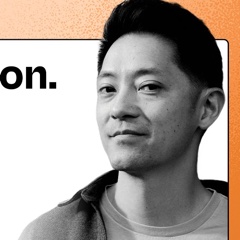
Grant Lee
Co-founder and CEO, Gamma
Where to hear and read about Grant Lee1 episode or test

Grant Lee is co-founder and CEO of Gamma, an AI presentation and website tool that passed $100M ARR in just over two years with about 30 people. The thing most worth learning from him is to build a word of mouth engine before spending on paid growth, and to keep the team small and the hiring bar high.
Your mindset should almost be like you're trying to create a word of mouth machine, right? Like if you can get that part right, everything else becomes significantly easier.
“Dumbest idea I’ve heard” to $100M ARR: Inside the rise of Gamma | Grant Lee (co-founder)
Grant Lee: the story and the lessons
1Grant Lee's road from a brutal pitch to Gamma
Lee pitched Gamma to investors at night from a London corner. Gamma started in 2020 at the peak of the pandemic, so all fundraising ran over Zoom. Lee lived in London and pitched from 8 PM to 2 AM, in a corner between the kitchenette and the laundry room, after his two kids were asleep.
Lee built Gamma out of his own pain making slides. After his last startup was acquired, he went back to consulting and made Google Slides decks for early-stage startups, losing late-night hours on look and feel. He felt the split should be 90% content and 10% design.
Slides had been the default for almost 40 years, so the idea was new building blocks not locked into a fixed 16 by 9 slide.
One investor's insult made growth a founding priority. In his third pitch, an investor called it the worst idea he had ever heard, said incumbents had massive distribution, and hung up before Lee could answer. The team promised itself to treat growth as critical from day one.
Lee says he has no growth background: "if I can learn growth, anybody can learn growth."
AI arrived as perfect timing for an idea that predated it. AI was not part of the original plan. The team built it into the core of building blocks it had already made, because it served the same vision of making content fast and effortless.
Gamma reached $100M ARR with about 30 people and a profit. It serves over 50 million users, carries a valuation above $2 billion, and has been profitable for most of its history without raising much money.
The team is small enough to fit in one restaurant.
2How Gamma found product-market fit
Lee read a Product Hunt sweep as a vanity win. Gamma won Product Hunt product of the day, week and month, yet signups flattened and there was no organic virality. He and his co-founders sat down, were honest with each other, and concluded it would not be enough.
The test he uses: "If this number goes up, does it mean the product is working?"
Lee refused to buy traffic to cover the missing fit. The easy move was more ads and marketing. He judged that brute-forcing fit with paid traffic would hide its absence, and with runway running low, rebuilding everything was a bet-the-company call.
The team rebuilt onboarding so the first 30 seconds felt magical. A team of just over 12 spent three to four months putting AI into the first experience. After the March 2023 relaunch, signups went from a few hundred a day to 2,000, then 5,000, 10,000 and 20,000, with no marketing or ads.
Lee treats new users as selfish, vain and lazy: "What can you give them in that first 30 seconds that earns you the next 30 seconds and then the next 30 seconds?"
Lee asks what is magical in the first 30 seconds to find the core. He treats onboarding and product as one experience, like a whole restaurant visit, where good food is not enough if no one greets you. Users get one idea at a time, because people catch one egg but drop five.
Founders often list five or ten features when only one thing truly differentiates them.
Friends gave Gamma false early signals. The first hundred users came slowly and usage was episodic. Friends tried it as a favor and said it was great, but the data showed nobody coming back.
Regular return visits only began once the AI launch took off, and the first 10,000 users arrived in a short window after it.
A provocative tweet, not Product Hunt, launched the AI version. The launch went out on Twitter with the line that the most valuable skill in business was about to become obsolete. Engagement jumped after Paul Graham commented.
Lee admits timing and algorithms made it partly luck, and says copywriting, storytelling and visuals helped it cut through.
Lee tests product-market fit at two checkpoints: growth, then payment. Organic growth comes first, then willingness to pay. Passing both means fit in at least one pocket of the market, and ideally they are tested together.
Runway was low, so making money was a necessity. Lee notes many AI companies skip this and plan to figure out revenue later.
Users who ran out of credits forced Gamma to set a price. The March 2023 launch was pre-revenue. New users got 400 credits and AI stopped when they ran out, so Intercom filled with people asking how to buy more. April went to a pricing exercise using a form of Van Westendorp and conjoint analysis.
A single plan of roughly $20 a month shipped at the end of May 2023, anchored on what ChatGPT charged. Within a couple of months it hit $1M ARR and profitability.
3Lee's rules on word of mouth and paid growth
Lee builds a word of mouth machine before anything else. If a healthy share of leads does not come through referrals, he goes back and asks why. It applies to consumer, prosumer and B2B products, and it makes every later sales, marketing and ad effort easier.
Over 50% of Gamma's new signups still come through word of mouth, including direct visits and branded search for "gamma".
Lee strips friction from creating and sharing in the first moments. The internal mantra was to make content easy to create and easy to share. Every change in that stretch aimed at removing friction from those two actions.
Presentations are shared by nature, and even spread within one workspace counts, so he says to enable it wherever possible.
Lee keeps paid below half of acquisitions. If paid supplies more than 50%, he says the core growth engine is broken. Gamma's ranking is word of mouth first, influencers second, paid third.
Reaching new audiences keeps getting more expensive, so paid becomes a treadmill that is almost impossible to leave once you are deep in. "If that is happening, your core growth engine is broken."
4How Grant Lee runs influencer marketing
Lee picks many micro-influencers over a few famous names. Big creators handed a script make the post feel like an ad and waste the money. Educators who make slides daily are easy to recruit, and a 10,000-follower account can work if the content feels authentic.
Each influencer-driven user brought about 1.5 more through word of mouth. TikTok pushes new creators, so reach depends on content, not follower count.
Lee onboarded the first influencers himself, like customers. He held a call with each, walked through the product and brainstormed hooks together, giving feedback without scripting the pitch. The aim is for creators to tell the story in their own voice.
Creators who feel the effort come back to post again, while others treat it as a one-off. "Just like you would onboard a customer, you onboard an influencer the same way."
Lee splits an influencer budget across about 40 creators. He suggests $10 to 20K a month for six months, with varied personas and use cases, then doubling down on whichever segment works. Gamma grew from about 20 creators a month to 100, paying a few hundred to low thousands of dollars each.
About 90% of reach came from under 10% of creators. Lee could not predict who would take off, so he played the numbers game.
Gamma open-sourced its brand so creators could post easily. brand.gamma.app publishes voice and tone, art direction and the Midjourney prompts Gamma uses. Creators copy it instead of reinventing each post.
Run relentlessly for many months, the low-friction system gives enough at-bats for posts to pop. "Virality is not an accident."
Lee found LinkedIn converted far better than other platforms. LinkedIn conversion was 4x to 5x higher, though its creators can cost more. Twitter has not mattered much for Gamma.
He says channels follow a power law, so test widely to find your own one or two. "A lot of people are probably still sleeping on LinkedIn frankly."
Lee uses tools and young agencies to find creators at scale. The first outreach was all manual and cold. Later, First Collab (a YC company) ran automated outbound against creator personas, and small social-native agencies such as AKG Media in the UK added more creators.
Creators post transparently as paid promotions.
5Brand and founder-led marketing at Gamma
Lee rebuilt Gamma's placeholder brand at about $10M ARR. Organic virality was already working, but the first brand, made at incorporation in late 2020, had little art direction and almost no voice. With the agency Smith & Diction, Gamma built brand DNA that thousands of creatives could replicate.
It cost far more and took far longer than he expected, but he calls it the right investment. Gamma now tests thousands of creatives each week.
Lee says brand marketing is performance marketing that is harder to attribute. A sign of underinvesting is a short list of ideas to test in paid, so teams redesign from scratch for every ad. A thin brand handicaps paid.
He says brand matters most for consumer and prosumer products, where the experience starts with an ad before signup. In B2B it has fewer touch points.
Lee believes founders should learn marketing by doing it first. He compares it to founder sales, learned before hiring a salesperson. Posting as a creator builds copywriting skill, and clear beats clever.
That experience sets a higher bar with influencers, because you know a good hook. Founders who hand over an ad-like script find it never works.
Lee keeps a running log of lessons and turns the best into posts. He notes what he learned or found unintuitive, then blocks a few hours each week to see which notes add up to a post. If teammates say they did not expect it, he writes it.
Twitter rewards tactical, contrarian posts with metrics, while LinkedIn rewards broader inspirational themes, so copy and paste rarely works.
Lee frames founder marketing as trading value for goodwill. Sales swaps product for money, while founder marketing swaps useful content for follows, engagement and shares. That goodwill later helps amplify product announcements.
He cites Steven Pressfield's Nobody Wants to Read Your Shit on how high the bar for attention is.
6How Gamma tests ideas and chooses models
Gamma tests prototypes on about 20 paid strangers. It recruits likely users with zero skin in the game through Voice Panel or UserTesting, gives them little context and has them think aloud. An idea in the morning can be a full study by afternoon, reviewed by evening or the next day.
Friends lie, but strangers show the pain, such as never reaching the third screen because they can't find an obvious button.
Lee chunks ideas small and lets most of them die early. Gamma tests small starting points, not months-long features. A shipped feature has passed about 10 layers of testing.
Power users in a Slack workspace called the Gambitor program see wireframes and prototypes first, especially for later-stage features like sharing.
Gamma ran two bets in parallel for six months before choosing. It built a virtual office called the Lobby alongside the presentation tool and used both daily. The office could never beat working in person, while presentations kept producing new ideas.
Lee's mindset is strong opinions, weakly held, and experiments need no statistical significance to build conviction.
Gamma matches a different model to each step of the workflow. It runs 20+ models in production across outline, draft, editing and image steps, and keeps retesting as the leaderboard changes. Throwing the most expensive model at every job is never the answer.
Perplexity worked well early for outlines because it combined web search with the outline. Experimentation is in the company's DNA because the founders came from Optimizely.
Lee says build a wrapper only on a problem worth 5 to 10 years. Gamma's north star is to democratize visual storytelling, so people weak at slides don't lose to better presenters. He argues the label matters less than going deep on one workflow.
"Is this a problem I can invest 5 to 10 years into actually solving?"
7How Grant Lee hires and builds a small team
Lee hires painfully slowly and avoids headcount targets. A target such as adding 100 people replaces the goal of adding the best people, and good-enough hires creep in. Revenue per employee and profitability are watched but never steer strategy.
All of Gamma's first 10 employees are still there five years later, which keeps tribal knowledge. "Hire painfully slowly."
Lee chose the first 10 to 12 hires for shared values and ambition. The aim is that later groups of 10 replicate that DNA, an idea he credits to Brian Chesky.
Lee hires spiky generalists and makes every manager a player-coach. Gamma has no pure managers, so leaders stay close to the work and adjust priorities weekly. Specialist agencies fill gaps such as influencer marketing, and product designers were about a quarter of the team.
Gamma's head of marketing ran a drone show in San Francisco end to end, drawing about 4,000 people. Lee admits player-coach may not stay practical in every function.
Lee gives star hires the hardest problems and more scope. Gamma never dropped its hiring bar. Thriving people get tougher work, because star players never ask for less playing time.
Lee wants missionaries, not mercenaries, and works to widen his luck. Candidates can tell whether founders care about the mission. He points to founders who stayed a decade or more, like those at Figma, Canva and Notion.
He says a founder's job is to increase luck surface area, starting with people. Of his two co-founders he says there is a 0% chance Gamma would be where it is without them.
8What shapes Grant Lee's thinking
A saying from his mother pushes Lee to think bigger. She told him the Chinese idiom of the frog at the bottom of the well. He grew up with modest means, and when he thinks too small he zooms out and reminds himself there is more to go after.
Lee recommends Shoe Dog before fit and 7 Powers after. Shoe Dog by Phil Knight suits founders chasing a passion with a team that shares it. 7 Powers by Hamilton Helmer suits founders building durable businesses after fit.
On onboarding he draws on Scott Belsky's idea of the first smile and the first 15 minutes.

“Dumbest idea I’ve heard” to $100M ARR: Inside the rise of Gamma | Grant Lee (co-founder)
Gamma's CEO explains how a small, profitable team found product-market fit by rebuilding the first 30 seconds of onboarding, then grew through word of mouth, micro-influencers and fast prototype testing. The result is over $100M ARR in just over two years with about 30 people and a valuation above $2 billion.
Lee pitched Gamma to investors at night from a London corner. Gamma started in 2020 at the peak of the pandemic, so all fundraising ran over Zoom. Lee lived in London and pitched from 8 PM to 2 AM, in a corner between the kitchenette and the laundry room, after his two kids were asleep.
Lee built Gamma out of his own pain making slides. After his last startup was acquired, he went back to consulting and made Google Slides decks for early-stage startups, losing late-night hours on look and feel. He felt the split should be 90% content and 10% design.
Slides had been the default for almost 40 years, so the idea was new building blocks not locked into a fixed 16 by 9 slide.
One investor's insult made growth a founding priority. In his third pitch, an investor called it the worst idea he had ever heard, said incumbents had massive distribution, and hung up before Lee could answer. The team promised itself to treat growth as critical from day one.
Lee says he has no growth background: "if I can learn growth, anybody can learn growth."
AI arrived as perfect timing for an idea that predated it. AI was not part of the original plan. The team built it into the core of building blocks it had already made, because it served the same vision of making content fast and effortless.
Gamma reached $100M ARR with about 30 people and a profit. It serves over 50 million users, carries a valuation above $2 billion, and has been profitable for most of its history without raising much money.
The team is small enough to fit in one restaurant.
Lee read a Product Hunt sweep as a vanity win. Gamma won Product Hunt product of the day, week and month, yet signups flattened and there was no organic virality. He and his co-founders sat down, were honest with each other, and concluded it would not be enough.
The test he uses: "If this number goes up, does it mean the product is working?"
Lee refused to buy traffic to cover the missing fit. The easy move was more ads and marketing. He judged that brute-forcing fit with paid traffic would hide its absence, and with runway running low, rebuilding everything was a bet-the-company call.
The team rebuilt onboarding so the first 30 seconds felt magical. A team of just over 12 spent three to four months putting AI into the first experience. After the March 2023 relaunch, signups went from a few hundred a day to 2,000, then 5,000, 10,000 and 20,000, with no marketing or ads.
Lee treats new users as selfish, vain and lazy: "What can you give them in that first 30 seconds that earns you the next 30 seconds and then the next 30 seconds?"
Lee asks what is magical in the first 30 seconds to find the core. He treats onboarding and product as one experience, like a whole restaurant visit, where good food is not enough if no one greets you. Users get one idea at a time, because people catch one egg but drop five.
Founders often list five or ten features when only one thing truly differentiates them.
Friends gave Gamma false early signals. The first hundred users came slowly and usage was episodic. Friends tried it as a favor and said it was great, but the data showed nobody coming back.
Regular return visits only began once the AI launch took off, and the first 10,000 users arrived in a short window after it.
A provocative tweet, not Product Hunt, launched the AI version. The launch went out on Twitter with the line that the most valuable skill in business was about to become obsolete. Engagement jumped after Paul Graham commented.
Lee admits timing and algorithms made it partly luck, and says copywriting, storytelling and visuals helped it cut through.
Lee tests product-market fit at two checkpoints: growth, then payment. Organic growth comes first, then willingness to pay. Passing both means fit in at least one pocket of the market, and ideally they are tested together.
Runway was low, so making money was a necessity. Lee notes many AI companies skip this and plan to figure out revenue later.
Users who ran out of credits forced Gamma to set a price. The March 2023 launch was pre-revenue. New users got 400 credits and AI stopped when they ran out, so Intercom filled with people asking how to buy more. April went to a pricing exercise using a form of Van Westendorp and conjoint analysis.
A single plan of roughly $20 a month shipped at the end of May 2023, anchored on what ChatGPT charged. Within a couple of months it hit $1M ARR and profitability.
Lee builds a word of mouth machine before anything else. If a healthy share of leads does not come through referrals, he goes back and asks why. It applies to consumer, prosumer and B2B products, and it makes every later sales, marketing and ad effort easier.
Over 50% of Gamma's new signups still come through word of mouth, including direct visits and branded search for "gamma".
Lee strips friction from creating and sharing in the first moments. The internal mantra was to make content easy to create and easy to share. Every change in that stretch aimed at removing friction from those two actions.
Presentations are shared by nature, and even spread within one workspace counts, so he says to enable it wherever possible.
Lee keeps paid below half of acquisitions. If paid supplies more than 50%, he says the core growth engine is broken. Gamma's ranking is word of mouth first, influencers second, paid third.
Reaching new audiences keeps getting more expensive, so paid becomes a treadmill that is almost impossible to leave once you are deep in. "If that is happening, your core growth engine is broken."
Lee picks many micro-influencers over a few famous names. Big creators handed a script make the post feel like an ad and waste the money. Educators who make slides daily are easy to recruit, and a 10,000-follower account can work if the content feels authentic.
Each influencer-driven user brought about 1.5 more through word of mouth. TikTok pushes new creators, so reach depends on content, not follower count.
Lee onboarded the first influencers himself, like customers. He held a call with each, walked through the product and brainstormed hooks together, giving feedback without scripting the pitch. The aim is for creators to tell the story in their own voice.
Creators who feel the effort come back to post again, while others treat it as a one-off. "Just like you would onboard a customer, you onboard an influencer the same way."
Lee splits an influencer budget across about 40 creators. He suggests $10 to 20K a month for six months, with varied personas and use cases, then doubling down on whichever segment works. Gamma grew from about 20 creators a month to 100, paying a few hundred to low thousands of dollars each.
About 90% of reach came from under 10% of creators. Lee could not predict who would take off, so he played the numbers game.
Gamma open-sourced its brand so creators could post easily. brand.gamma.app publishes voice and tone, art direction and the Midjourney prompts Gamma uses. Creators copy it instead of reinventing each post.
Run relentlessly for many months, the low-friction system gives enough at-bats for posts to pop. "Virality is not an accident."
Lee found LinkedIn converted far better than other platforms. LinkedIn conversion was 4x to 5x higher, though its creators can cost more. Twitter has not mattered much for Gamma.
He says channels follow a power law, so test widely to find your own one or two. "A lot of people are probably still sleeping on LinkedIn frankly."
Lee uses tools and young agencies to find creators at scale. The first outreach was all manual and cold. Later, First Collab (a YC company) ran automated outbound against creator personas, and small social-native agencies such as AKG Media in the UK added more creators.
Creators post transparently as paid promotions.
Lee rebuilt Gamma's placeholder brand at about $10M ARR. Organic virality was already working, but the first brand, made at incorporation in late 2020, had little art direction and almost no voice. With the agency Smith & Diction, Gamma built brand DNA that thousands of creatives could replicate.
It cost far more and took far longer than he expected, but he calls it the right investment. Gamma now tests thousands of creatives each week.
Lee says brand marketing is performance marketing that is harder to attribute. A sign of underinvesting is a short list of ideas to test in paid, so teams redesign from scratch for every ad. A thin brand handicaps paid.
He says brand matters most for consumer and prosumer products, where the experience starts with an ad before signup. In B2B it has fewer touch points.
Lee believes founders should learn marketing by doing it first. He compares it to founder sales, learned before hiring a salesperson. Posting as a creator builds copywriting skill, and clear beats clever.
That experience sets a higher bar with influencers, because you know a good hook. Founders who hand over an ad-like script find it never works.
Lee keeps a running log of lessons and turns the best into posts. He notes what he learned or found unintuitive, then blocks a few hours each week to see which notes add up to a post. If teammates say they did not expect it, he writes it.
Twitter rewards tactical, contrarian posts with metrics, while LinkedIn rewards broader inspirational themes, so copy and paste rarely works.
Lee frames founder marketing as trading value for goodwill. Sales swaps product for money, while founder marketing swaps useful content for follows, engagement and shares. That goodwill later helps amplify product announcements.
He cites Steven Pressfield's Nobody Wants to Read Your Shit on how high the bar for attention is.
Gamma tests prototypes on about 20 paid strangers. It recruits likely users with zero skin in the game through Voice Panel or UserTesting, gives them little context and has them think aloud. An idea in the morning can be a full study by afternoon, reviewed by evening or the next day.
Friends lie, but strangers show the pain, such as never reaching the third screen because they can't find an obvious button.
Lee chunks ideas small and lets most of them die early. Gamma tests small starting points, not months-long features. A shipped feature has passed about 10 layers of testing.
Power users in a Slack workspace called the Gambitor program see wireframes and prototypes first, especially for later-stage features like sharing.
Gamma ran two bets in parallel for six months before choosing. It built a virtual office called the Lobby alongside the presentation tool and used both daily. The office could never beat working in person, while presentations kept producing new ideas.
Lee's mindset is strong opinions, weakly held, and experiments need no statistical significance to build conviction.
Gamma matches a different model to each step of the workflow. It runs 20+ models in production across outline, draft, editing and image steps, and keeps retesting as the leaderboard changes. Throwing the most expensive model at every job is never the answer.
Perplexity worked well early for outlines because it combined web search with the outline. Experimentation is in the company's DNA because the founders came from Optimizely.
Lee says build a wrapper only on a problem worth 5 to 10 years. Gamma's north star is to democratize visual storytelling, so people weak at slides don't lose to better presenters. He argues the label matters less than going deep on one workflow.
"Is this a problem I can invest 5 to 10 years into actually solving?"
Lee hires painfully slowly and avoids headcount targets. A target such as adding 100 people replaces the goal of adding the best people, and good-enough hires creep in. Revenue per employee and profitability are watched but never steer strategy.
All of Gamma's first 10 employees are still there five years later, which keeps tribal knowledge. "Hire painfully slowly."
Lee chose the first 10 to 12 hires for shared values and ambition. The aim is that later groups of 10 replicate that DNA, an idea he credits to Brian Chesky.
Lee hires spiky generalists and makes every manager a player-coach. Gamma has no pure managers, so leaders stay close to the work and adjust priorities weekly. Specialist agencies fill gaps such as influencer marketing, and product designers were about a quarter of the team.
Gamma's head of marketing ran a drone show in San Francisco end to end, drawing about 4,000 people. Lee admits player-coach may not stay practical in every function.
Lee gives star hires the hardest problems and more scope. Gamma never dropped its hiring bar. Thriving people get tougher work, because star players never ask for less playing time.
Lee wants missionaries, not mercenaries, and works to widen his luck. Candidates can tell whether founders care about the mission. He points to founders who stayed a decade or more, like those at Figma, Canva and Notion.
He says a founder's job is to increase luck surface area, starting with people. Of his two co-founders he says there is a 0% chance Gamma would be where it is without them.
A saying from his mother pushes Lee to think bigger. She told him the Chinese idiom of the frog at the bottom of the well. He grew up with modest means, and when he thinks too small he zooms out and reminds himself there is more to go after.
Lee recommends Shoe Dog before fit and 7 Powers after. Shoe Dog by Phil Knight suits founders chasing a passion with a team that shares it. 7 Powers by Hamilton Helmer suits founders building durable businesses after fit.
On onboarding he draws on Scott Belsky's idea of the first smile and the first 15 minutes.
 Gamma
