Gabriel Weinberg
Author of Traction
Where to hear and read about Gabriel Weinberg1 book
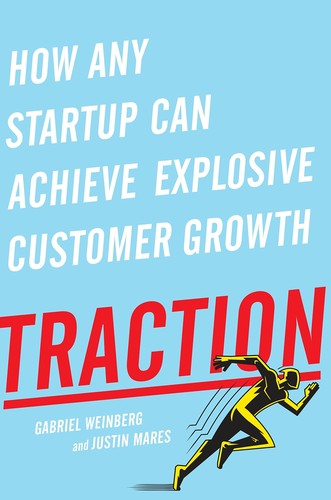
Gabriel Weinberg is the founder of DuckDuckGo and author of Traction (2015), a playbook for getting startups their first and next customers. The lesson most worth taking from him is to spend half your time on distribution from day one and test channels cheaply until one clearly wins.
Almost every failed startup has a product. What failed startups don't have is enough customers.
Traction: How Any Startup Can Achieve Explosive Customer Growth
Gabriel Weinberg: the story and the lessons
1Gabriel Weinberg's path from a solo company to DuckDuckGo
Weinberg built and sold a company with no employees. In 2006 he sold an Internet company he had cofounded for millions of dollars. He wrote the code and ran accounting and support himself.
It grew first through SEO and later through viral marketing, so he learned distribution by doing it.
He launched DuckDuckGo on Hacker News while it was still weak. In fall 2008 he posted it as "What do you think of my new search engine?" It was not good enough for anyone to switch to.
The replies still showed real interest in a Google alternative and pointed him toward search privacy, years before that became a mainstream concern.
Weinberg stuck with privacy long after other search startups quit. DuckDuckGo has made privacy its core difference since 2009. Growth was steady until the 2013 NSA leaks made privacy mainstream, then it exploded.
He has stayed with it for more than seven years, while other search startups quit after two. Being a year or two early can be a head start, but a decade early is not.
Each tenfold jump at DuckDuckGo needed a new channel. It went from roughly one hundred searches a day to more than ten million. Content marketing came first, then social and display ads, then publicity, and lately business development.
Tech news articles worked in phase I but later could not convert enough people to change its search numbers.
His karma widget detour taught him to check a channel's ceiling. He built a widget showing social profiles and follower counts, with a "new search engine" link back to DuckDuckGo. It reached number one for that phrase, then traction leveled off.
The phrase drew about fifty searches a day when he needed about five thousand new visitors a day. He survived the detour only because he could fund himself, and he notes most founders cannot.
2Why Weinberg says to work on traction from day one
Weinberg argues startups die from too few customers, not bad products. Nearly all failed startups had built a product. What they lacked was a big enough customer base.
The usual path is build, launch, then try a few familiar tactics like Facebook ads, local PR and blog posts. By then the money is often gone.
He splits time evenly between building and getting customers. Spending about half your time on traction from the first day makes an imperfect product better faster. Early spend leaks out of an unfinished product, and the leaks show where the holes are.
It slows building in the short run but avoids extra product cycles after launch.
Dropbox and Marketo tested distribution before the product was done. Dropbox tested search ads while building and found each customer cost $230 for a $99 product, so it built a referral program that became its biggest growth driver. Marketo ran SEO and a blog before development and reached market with more than fourteen thousand interested buyers.
Cold customers give more honest feedback than friends. They have no tie to the founders, so they show where the product leaks. They also show which messages land, which niche to start with and what distribution roadblocks lie ahead.
He tells founders to look for bright spots before pivoting. A few deeply engaged customers may hold promise that core metrics hide. Ask whether they are early adopters in a huge market or outliers.
If there are no bright spots at all, it may be time to pivot.
3The Bullseye method for finding a channel
Weinberg built Bullseye to find the one channel that works. It has three rings: brainstorm all nineteen channels, test about three cheaply, then focus all effort on the winner. The framework grew out of talks with over forty founders.
He says Bullseye does for traction what Lean does for product: Lean addresses whether customers want what you build, Bullseye whether you can reach them sustainably.
He wants a written strategy for every channel before ruling any out. A channel is a broad category such as social ads, and a strategy is a specific move such as running ads on reddit. Ideas should come from research on what worked and failed in your space.
Keep every idea in a spreadsheet so losing ideas can return in the next round.
He tells founders to audit their bias against disliked channels. Some channels are out of sight, some disliked, and some skipped as schlep, such as business development and trade shows. All nineteen have given initial traction to both enterprise and consumer startups.
"Just because you hate talking on the phone doesn't mean your customers do." Jason Cohen bets competitors will refuse certain channels and sees that as a reason to try them.
Each test costs at most $1,000 and a month. Tests should answer what a customer costs, how many are available and whether they are the right ones. Mint tested blogs, publicity and search ads, and blogs brought the first forty thousand customers.
Set up tracking before spending, since clicks don't show customers. Scaling a test too early is the common mistake.
Put everything into the winner, even if others somewhat work. In his example, search ads beat trade shows and publicity clearly, so the right move is to spend everything on search ads. Other channels may feed the core one, as publicity earns links for SEO.
Running several separate strategies at once is the mistake.
4Weinberg's Critical Path for choosing what to skip
He sets one numeric goal that would change the company. Examples are one thousand paying customers, one hundred new customers a day, or 10 percent of a market. Hitting it should make the company profitable, easier to fund, or the market leader.
The goal is broken into dated numeric subgoals and put on the product calendar, so traction gets at least half the time.
DuckDuckGo's goals ran in sequence. First came real switching, meaning people used it as their main search engine. Next was 100 million searches a month, near break-even, and then 1 percent of general search.
He warns a 1 percent target is usually weak. It works for DuckDuckGo only because search is a huge market with very few companies.
The Critical Path mostly tells him what not to do. It is the fewest-step route to the goal. His rule: "If it is not on the path, don't do it!"
For 100 million searches a month, DuckDuckGo chose a faster site, a stronger mobile offering and more broadcast TV coverage. It left out the images and auto-suggest that users kept asking for.
He rebuilds the path whenever the goal changes. For the 1 percent goal, images and auto-suggest became required milestones. Mainstream users forgive far less than loyal early ones.
The first milestone list is often wrong, so challenge every item after each milestone.
5Weinberg on winning the first customers where they already look
Small blogs and link-sharing sites are the fastest route to first customers. Mint's prelaunch "I Want Mint" badge ran on 600 blogs and brought fifty thousand signups. Its "Can I send you $500?" emails bought small tracked ads on personal blogs and drew more than ten thousand preregistrations.
The badge traded VIP access for promotion, and the new links lifted Mint.com in search. Weinberg notes these tactics rarely scale but are often how companies get started.
Press climbs from small sites up to big outlets. He advises pitching small sites with real milestones and an angle people will argue about. DonorsChoose.org went from local press to Newsweek to Oprah's favorite things, then Gates Foundation sponsorship.
Weinberg talked with a Time reporter on Twitter long before any pitch, and that reporter later put DuckDuckGo on Time's top fifty sites of 2011.
Stunts and customer delight are uncrowded but unpredictable. Half.com got a town renamed for $70,000 and two hires, drew over 40 million impressions, and sold to eBay for more than $300 million six months later. Grasshopper's chocolate-grasshopper mailing worked while its other promotions flopped.
His advice is to plan for flops and to treat support as a marketing cost.
Events and talks reach customers that online ads miss. Twitter spent $11K on hallway screens at SXSW 2007 and daily tweets rose from twenty thousand to more than sixty thousand. Enservio ran its own summit to reach top insurance executives.
Founders land speaking slots by asking organizers what topics they want and reusing one or two story talks.
6Weinberg's rules for paid channels
He tests search ads before building and judges by cost per acquisition. Even $500 to $5,000 yields baseline conversion rates and cost per customer. Near breakeven in a few weeks signals a possible core channel.
Archives.com broke even within weeks on its first campaign, later spent over $100,000 a month on search, and sold to Ancestry.com for $100 million. A $250 AdWords test gives a rough first read.
Social ads should push content that is already being shared. People visit social sites for entertainment, so send ads to a story or mission, not a sales page. Airbrake put $15 of Twitter ads behind an interview with Stripe's CTO and got tens of thousands of visits.
"Paid is fundamentally only as good as the content you put behind it."
Offline ads get tracked individually, and only winners get scaled. Each ad gets its own URL, promo code or offer. A $7,000 DuckDuckGo billboard in San Francisco drew coverage from Wired and USA Today and users doubled that month.
Jason Cohen's line on predicting winners: "I have zero ability to predict what's going to work."
Affiliate programs shift the risk of bad traffic onto the affiliate. Start on an existing network with a flat payout below what a customer is worth, and recruit your own customers first. Blogger Maneesh Sethi referred more than three thousand people to RescueTime.
7Weinberg's playbook for assets and borrowed audiences
He treats content and free tools as assets that keep paying. Unbounce blogged from the day it started building. It reached 20,000 monthly visitors and over 5,000 emails by launch, though significant results took about six months.
HubSpot's Marketing Grader, built in a few days, has been used by more than 3 million sites and drives a large share of its fifty thousand plus monthly leads.
He measures viral loops by K and starts by copying proven ones. K is invites times conversion, and above 1 means exponential growth. Even below 1, a loop multiplies other channels, and a test near 0.5 is promising.
Even expert teams need one or two engineers for two to three months, and only one to three of every ten tests win.
Partnerships need a large pipeline because most deals fail. Keep fifty to one hundred potential partners and focus on ten to twenty. Delicious's Washington Post deal and a Mozilla promotion more than tripled its users, while a Wikipedia deal failed.
Reach the person who owns the metric your deal moves, through a warm introduction. SureStop sealed one trade show partnership that led to more than twenty thousand sales.
Platform bets pay off if one win covers several failures. Evernote's Android app was featured for six weeks straight and brought hundreds of thousands of customers. Its Nokia, Windows and BlackBerry bets failed.
Alex Pachikov still judges the approach worth it, because one Android-sized win more than covers the failures.
8Why Weinberg expects every channel to decay
He expects every strategy to end with poor response rates. Andrew Chen's Law of Shitty Click-Throughs is Weinberg's frame. Early banner ads drew click-through rates over 75 percent, which plummeted once banners became common.
Zynga dominated Facebook while competition was thin, and a gaming company today basically cannot grow there the same way.
He keeps testing inside the core channel every week. At least one A/B test a week can make a channel two to three times more efficient. Fresh strategies come from new twists, young platforms, or ways the other eighteen channels could feed the core.
He reruns Bullseye when a channel saturates. Rising costs or flattening growth are the signal. Each new round draws on data and the spreadsheet from earlier tests.
If several rounds find nothing, he says the product is probably leaky and needs fixing.
Traction: How Any Startup Can Achieve Explosive Customer Growth
Startups grow by finding the one traction channel that works at their current stage, using a three-step Bullseye process: brainstorm all nineteen channels, test a few cheaply, then focus on the winner. It is worth reading for its concrete playbooks and founder cases for every channel, from SEO and viral loops to trade shows and business development.
Weinberg built and sold a company with no employees. In 2006 he sold an Internet company he had cofounded for millions of dollars. He wrote the code and ran accounting and support himself.
It grew first through SEO and later through viral marketing, so he learned distribution by doing it.
He launched DuckDuckGo on Hacker News while it was still weak. In fall 2008 he posted it as "What do you think of my new search engine?" It was not good enough for anyone to switch to.
The replies still showed real interest in a Google alternative and pointed him toward search privacy, years before that became a mainstream concern.
Weinberg stuck with privacy long after other search startups quit. DuckDuckGo has made privacy its core difference since 2009. Growth was steady until the 2013 NSA leaks made privacy mainstream, then it exploded.
He has stayed with it for more than seven years, while other search startups quit after two. Being a year or two early can be a head start, but a decade early is not.
Each tenfold jump at DuckDuckGo needed a new channel. It went from roughly one hundred searches a day to more than ten million. Content marketing came first, then social and display ads, then publicity, and lately business development.
Tech news articles worked in phase I but later could not convert enough people to change its search numbers.
His karma widget detour taught him to check a channel's ceiling. He built a widget showing social profiles and follower counts, with a "new search engine" link back to DuckDuckGo. It reached number one for that phrase, then traction leveled off.
The phrase drew about fifty searches a day when he needed about five thousand new visitors a day. He survived the detour only because he could fund himself, and he notes most founders cannot.
Weinberg argues startups die from too few customers, not bad products. Nearly all failed startups had built a product. What they lacked was a big enough customer base.
The usual path is build, launch, then try a few familiar tactics like Facebook ads, local PR and blog posts. By then the money is often gone.
He splits time evenly between building and getting customers. Spending about half your time on traction from the first day makes an imperfect product better faster. Early spend leaks out of an unfinished product, and the leaks show where the holes are.
It slows building in the short run but avoids extra product cycles after launch.
Dropbox and Marketo tested distribution before the product was done. Dropbox tested search ads while building and found each customer cost $230 for a $99 product, so it built a referral program that became its biggest growth driver. Marketo ran SEO and a blog before development and reached market with more than fourteen thousand interested buyers.
Cold customers give more honest feedback than friends. They have no tie to the founders, so they show where the product leaks. They also show which messages land, which niche to start with and what distribution roadblocks lie ahead.
He tells founders to look for bright spots before pivoting. A few deeply engaged customers may hold promise that core metrics hide. Ask whether they are early adopters in a huge market or outliers.
If there are no bright spots at all, it may be time to pivot.
Weinberg built Bullseye to find the one channel that works. It has three rings: brainstorm all nineteen channels, test about three cheaply, then focus all effort on the winner. The framework grew out of talks with over forty founders.
He says Bullseye does for traction what Lean does for product: Lean addresses whether customers want what you build, Bullseye whether you can reach them sustainably.
He wants a written strategy for every channel before ruling any out. A channel is a broad category such as social ads, and a strategy is a specific move such as running ads on reddit. Ideas should come from research on what worked and failed in your space.
Keep every idea in a spreadsheet so losing ideas can return in the next round.
He tells founders to audit their bias against disliked channels. Some channels are out of sight, some disliked, and some skipped as schlep, such as business development and trade shows. All nineteen have given initial traction to both enterprise and consumer startups.
"Just because you hate talking on the phone doesn't mean your customers do." Jason Cohen bets competitors will refuse certain channels and sees that as a reason to try them.
Each test costs at most $1,000 and a month. Tests should answer what a customer costs, how many are available and whether they are the right ones. Mint tested blogs, publicity and search ads, and blogs brought the first forty thousand customers.
Set up tracking before spending, since clicks don't show customers. Scaling a test too early is the common mistake.
Put everything into the winner, even if others somewhat work. In his example, search ads beat trade shows and publicity clearly, so the right move is to spend everything on search ads. Other channels may feed the core one, as publicity earns links for SEO.
Running several separate strategies at once is the mistake.
He sets one numeric goal that would change the company. Examples are one thousand paying customers, one hundred new customers a day, or 10 percent of a market. Hitting it should make the company profitable, easier to fund, or the market leader.
The goal is broken into dated numeric subgoals and put on the product calendar, so traction gets at least half the time.
DuckDuckGo's goals ran in sequence. First came real switching, meaning people used it as their main search engine. Next was 100 million searches a month, near break-even, and then 1 percent of general search.
He warns a 1 percent target is usually weak. It works for DuckDuckGo only because search is a huge market with very few companies.
The Critical Path mostly tells him what not to do. It is the fewest-step route to the goal. His rule: "If it is not on the path, don't do it!"
For 100 million searches a month, DuckDuckGo chose a faster site, a stronger mobile offering and more broadcast TV coverage. It left out the images and auto-suggest that users kept asking for.
He rebuilds the path whenever the goal changes. For the 1 percent goal, images and auto-suggest became required milestones. Mainstream users forgive far less than loyal early ones.
The first milestone list is often wrong, so challenge every item after each milestone.
Small blogs and link-sharing sites are the fastest route to first customers. Mint's prelaunch "I Want Mint" badge ran on 600 blogs and brought fifty thousand signups. Its "Can I send you $500?" emails bought small tracked ads on personal blogs and drew more than ten thousand preregistrations.
The badge traded VIP access for promotion, and the new links lifted Mint.com in search. Weinberg notes these tactics rarely scale but are often how companies get started.
Press climbs from small sites up to big outlets. He advises pitching small sites with real milestones and an angle people will argue about. DonorsChoose.org went from local press to Newsweek to Oprah's favorite things, then Gates Foundation sponsorship.
Weinberg talked with a Time reporter on Twitter long before any pitch, and that reporter later put DuckDuckGo on Time's top fifty sites of 2011.
Stunts and customer delight are uncrowded but unpredictable. Half.com got a town renamed for $70,000 and two hires, drew over 40 million impressions, and sold to eBay for more than $300 million six months later. Grasshopper's chocolate-grasshopper mailing worked while its other promotions flopped.
His advice is to plan for flops and to treat support as a marketing cost.
Events and talks reach customers that online ads miss. Twitter spent $11K on hallway screens at SXSW 2007 and daily tweets rose from twenty thousand to more than sixty thousand. Enservio ran its own summit to reach top insurance executives.
Founders land speaking slots by asking organizers what topics they want and reusing one or two story talks.
He tests search ads before building and judges by cost per acquisition. Even $500 to $5,000 yields baseline conversion rates and cost per customer. Near breakeven in a few weeks signals a possible core channel.
Archives.com broke even within weeks on its first campaign, later spent over $100,000 a month on search, and sold to Ancestry.com for $100 million. A $250 AdWords test gives a rough first read.
Social ads should push content that is already being shared. People visit social sites for entertainment, so send ads to a story or mission, not a sales page. Airbrake put $15 of Twitter ads behind an interview with Stripe's CTO and got tens of thousands of visits.
"Paid is fundamentally only as good as the content you put behind it."
Offline ads get tracked individually, and only winners get scaled. Each ad gets its own URL, promo code or offer. A $7,000 DuckDuckGo billboard in San Francisco drew coverage from Wired and USA Today and users doubled that month.
Jason Cohen's line on predicting winners: "I have zero ability to predict what's going to work."
Affiliate programs shift the risk of bad traffic onto the affiliate. Start on an existing network with a flat payout below what a customer is worth, and recruit your own customers first. Blogger Maneesh Sethi referred more than three thousand people to RescueTime.
He treats content and free tools as assets that keep paying. Unbounce blogged from the day it started building. It reached 20,000 monthly visitors and over 5,000 emails by launch, though significant results took about six months.
HubSpot's Marketing Grader, built in a few days, has been used by more than 3 million sites and drives a large share of its fifty thousand plus monthly leads.
He measures viral loops by K and starts by copying proven ones. K is invites times conversion, and above 1 means exponential growth. Even below 1, a loop multiplies other channels, and a test near 0.5 is promising.
Even expert teams need one or two engineers for two to three months, and only one to three of every ten tests win.
Partnerships need a large pipeline because most deals fail. Keep fifty to one hundred potential partners and focus on ten to twenty. Delicious's Washington Post deal and a Mozilla promotion more than tripled its users, while a Wikipedia deal failed.
Reach the person who owns the metric your deal moves, through a warm introduction. SureStop sealed one trade show partnership that led to more than twenty thousand sales.
Platform bets pay off if one win covers several failures. Evernote's Android app was featured for six weeks straight and brought hundreds of thousands of customers. Its Nokia, Windows and BlackBerry bets failed.
Alex Pachikov still judges the approach worth it, because one Android-sized win more than covers the failures.
He expects every strategy to end with poor response rates. Andrew Chen's Law of Shitty Click-Throughs is Weinberg's frame. Early banner ads drew click-through rates over 75 percent, which plummeted once banners became common.
Zynga dominated Facebook while competition was thin, and a gaming company today basically cannot grow there the same way.
He keeps testing inside the core channel every week. At least one A/B test a week can make a channel two to three times more efficient. Fresh strategies come from new twists, young platforms, or ways the other eighteen channels could feed the core.
He reruns Bullseye when a channel saturates. Rising costs or flattening growth are the signal. Each new round draws on data and the spreadsheet from earlier tests.
If several rounds find nothing, he says the product is probably leaky and needs fixing.