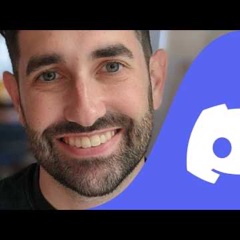
Francesco Polizzi
Former Head of Core Experience at Discord; previously Head of Product at Outschool and Photomath
Where to hear and read about Francesco Polizzi1 episode or test

Francesco Polizzi is a former Head of Core Experience at Discord who earlier led product at Photomath and Outschool, and he ran the redesign that made Discord's mobile apps approachable beyond gamers. The most useful lesson is to redesign when funnel tweaks stall, validate cheaply, and keep paywalls away from the loop that brings in new users.
we've optimized everything that's possible here. we need to change basically where we're optimizing from.
How Discord Completely Redesigned its Mobile Apps
Francesco Polizzi: the story and the lessons
1Francesco Polizzi's path from engineer to Discord product lead
Polizzi left engineering to decide what gets built. He found the question of what to build more interesting than how to build it. An engineer takes tasks and builds them well, and he wanted to debate the task list itself.
He saw the product role at Mozilla, his first tech job, and found himself doing what PMs did. He thinks the gap between the roles is closing and would choose differently today.
At Photomath he saw a product's whole arc as employee 20. He was the second employee in the US. Photomath went from asking for donations to tens of millions in revenue, and over half of US high school students used it.
A Croatian serial founder had added math solving to his B2B document-OCR tech after helping his kids with homework. Chat tools later decimated the homework-help category. Polizzi left before the sale to Google, once he saw it was coming.
He joined Discord's growth team, then moved to lead core experience. He arrived as 2021 pandemic growth brought crowds of newcomers. Among Us, a WhatsApp outage and booming crypto communities all sent people to Discord.
Discord began as chat tools inside a game studio's game. Early engineer Stan pitched CEO Jason on spinning them out as a chat platform, and Polizzi later worked closely with Stan.
A hallway talk with Stan started the mobile redesign. Stan was focused on enshittification, and it resonated with Polizzi. They agreed the product itself needed redesigning, and that talk became the redesign team.
Polizzi warns that projects like this are risky and often lack impact.
2How Polizzi redesigned Discord's mobile apps
He redesigned once funnel optimization hit a wall. Non-gamers kept saying they downloaded Discord after a friend's invite, found it too complicated and deleted it. Small growth tests could not fix that, so the team chose mobile, where most non-gamers joined, as the place to redesign.
"we've optimized everything that's possible here. we need to change basically where we're optimizing from."
He spent two weeks using every rival chat app before planning. Polizzi blocked his calendar for one or two weeks and tested every feature in Skype, Telegram, WhatsApp, Signal, Messenger and iMessage on throwaway accounts. He brain-dumped the gaps into one master list, then grouped them into teams.
It replaced the usual strategy doc. His friends and family "loathed" him for it.
The team removed gamer jargon that stopped newcomers finding friends. The four-digit discriminator let 9,999 people share one name, so non-gamers typed a friend's name without the number and could not find them. Replacing usernames raised the share of accepted friend requests by what he called a pretty crazy amount.
The team kept the word server but made it feel more familiar, and split DMs out of the messaging tab. No figures were given for the friend-request rise.
A one-question survey validated voice messages in days. A PM's hunch that younger users wanted voice messages overrode a rival's failure story. Polizzi asked for the minimum test, and 70 to 80% of surveyed users sent voice messages weekly, with higher use in South America and the Middle East.
The shipped feature lifted overall communication by a single-digit percent. He says the best survey asks how often you already do a thing that exists elsewhere.
He rebuilt buggy video chat and fixed broken paths into payment. Rebuilding Hangouts video chat took many months and raised video minutes between friends. A bug also left the Nitro landing page not loading, or taking about 30 seconds.
At Discord's scale, he says, fixing one thing that leads to a payment flow can be worth millions of dollars. That is anecdotal, with no figures given.
He held that quality and speed are not at odds. The team aimed to incubate the culture Discord wanted to become, and to reach the first thing you can see and feel quickly, because that shows what to do next.
He compares it to how vibe coding speeds iteration. He says surveys get a bad rap because it is easy to design one that tells you nothing.
3Polizzi on Discord's subscriptions and paywall rules
He argues ads fit chat poorly, so Discord sells to heavy users. Display ads need inventory spots, and a chat among two to four people has none. Some people use Discord 8 hours a day, so Nitro sits on a strong power-user curve.
He says ads in the small groups at the meat of Discord feel a little icky, and he doubts display ads could become a really huge business there.
Never paywall the friend-invite loop that brings in users. Discord charges for perks like file upload size and custom emojis, which do not block a new user invited to a server. The principle is the incentive: with the strategy settled, a PM has no reason to cut off a core loop.
A Photomath rival capped scans and hurt its core loop, while Photomath monetized something else and, by his estimate, reached about a 100x outcome. Phil Carter adds that Quizlet kept set creation open, feeding an SEO loop behind more than 70% of its acquisition.
Profile expression became the base for the shop. The redesign made the profile tab show how others see you and made customization easier. Polizzi says Gen Z cares about authenticity and expression, and animated headers and profile effects later grew on that mobile foundation.
"we really leaned into customization and expression"
He sees Quests as ads that give users something they want. Quests are reward ads where brands show relevant game content and users earn orbs to spend on profile customization. They became the main monetization push after he left.
He frames this as an outsider view. He compares them to useful Instagram ads, working like sneak previews of games people may discuss with friends.
4What Polizzi would change and what he is doing next
He never pinned down where new and existing users would clash. The team's rule was to build nothing that alienates existing users, so the new audience had to be a superset of the old. Everyone had to change usernames, which caused a large uproar that still draws online noise.
"we did not properly investigate or pinpoint like what is the tension." He cannot say how many power users were lost.
The team overestimated how lasting pandemic audience growth was. Discord expanded its addressable market during COVID, but gamers remained the core of the business. That pointed toward gaming-linked monetization like Quests.
"gamers really are the bread and butter of this business."
He admits the username change's growth impact is hard to measure. There were no holdout groups because everyone changed at once, and names were first come, first served. His intuition is that motivated users would have found friends anyway.
At Discord's scale, he notes, the fringe can add up to millions of people.
He advises waiting weeks before reacting to backlash. A passionate minority is loudest in the first week or two after a big change. Phil Carter's advice is to wait a few weeks and compare the anecdotes with the metrics, especially for price changes.
Polizzi agrees hindsight is 2020, since the gap with power users is hard to see until you ship.
He says leaders should be candid about taking the reins. New leaders should delegate, but sometimes people need a decision made for them, and that is better for both sides if the leader says so.
Phil Carter adds that leaders should own one-way door decisions and hand two-way doors to juniors, scaling autonomy with tenure and performance.
His stealth startup targets the gap between AI capability and adoption. He believes AI capability will outrun life-changing adoption for a long time. Photomath was about the moment of being stuck, like a tearful student at 10 p.m.
Out-of-the-box models handle trivial cases, he says, but not life's hardest problems, where people are most motivated and most likely to give up.

How Discord Completely Redesigned its Mobile Apps
A former Discord product leader explains how his team redesigned the mobile apps to make a gamer-first chat product approachable for mainstream users, and how it chose to monetize with premium subscriptions instead of ads. It is worth hearing for the fast validation methods, the monetization rules that protect core growth loops, and the honest account of what the redesign underestimated with power users.
Polizzi left engineering to decide what gets built. He found the question of what to build more interesting than how to build it. An engineer takes tasks and builds them well, and he wanted to debate the task list itself.
He saw the product role at Mozilla, his first tech job, and found himself doing what PMs did. He thinks the gap between the roles is closing and would choose differently today.
At Photomath he saw a product's whole arc as employee 20. He was the second employee in the US. Photomath went from asking for donations to tens of millions in revenue, and over half of US high school students used it.
A Croatian serial founder had added math solving to his B2B document-OCR tech after helping his kids with homework. Chat tools later decimated the homework-help category. Polizzi left before the sale to Google, once he saw it was coming.
He joined Discord's growth team, then moved to lead core experience. He arrived as 2021 pandemic growth brought crowds of newcomers. Among Us, a WhatsApp outage and booming crypto communities all sent people to Discord.
Discord began as chat tools inside a game studio's game. Early engineer Stan pitched CEO Jason on spinning them out as a chat platform, and Polizzi later worked closely with Stan.
A hallway talk with Stan started the mobile redesign. Stan was focused on enshittification, and it resonated with Polizzi. They agreed the product itself needed redesigning, and that talk became the redesign team.
Polizzi warns that projects like this are risky and often lack impact.
He redesigned once funnel optimization hit a wall. Non-gamers kept saying they downloaded Discord after a friend's invite, found it too complicated and deleted it. Small growth tests could not fix that, so the team chose mobile, where most non-gamers joined, as the place to redesign.
"we've optimized everything that's possible here. we need to change basically where we're optimizing from."
He spent two weeks using every rival chat app before planning. Polizzi blocked his calendar for one or two weeks and tested every feature in Skype, Telegram, WhatsApp, Signal, Messenger and iMessage on throwaway accounts. He brain-dumped the gaps into one master list, then grouped them into teams.
It replaced the usual strategy doc. His friends and family "loathed" him for it.
The team removed gamer jargon that stopped newcomers finding friends. The four-digit discriminator let 9,999 people share one name, so non-gamers typed a friend's name without the number and could not find them. Replacing usernames raised the share of accepted friend requests by what he called a pretty crazy amount.
The team kept the word server but made it feel more familiar, and split DMs out of the messaging tab. No figures were given for the friend-request rise.
A one-question survey validated voice messages in days. A PM's hunch that younger users wanted voice messages overrode a rival's failure story. Polizzi asked for the minimum test, and 70 to 80% of surveyed users sent voice messages weekly, with higher use in South America and the Middle East.
The shipped feature lifted overall communication by a single-digit percent. He says the best survey asks how often you already do a thing that exists elsewhere.
He rebuilt buggy video chat and fixed broken paths into payment. Rebuilding Hangouts video chat took many months and raised video minutes between friends. A bug also left the Nitro landing page not loading, or taking about 30 seconds.
At Discord's scale, he says, fixing one thing that leads to a payment flow can be worth millions of dollars. That is anecdotal, with no figures given.
He held that quality and speed are not at odds. The team aimed to incubate the culture Discord wanted to become, and to reach the first thing you can see and feel quickly, because that shows what to do next.
He compares it to how vibe coding speeds iteration. He says surveys get a bad rap because it is easy to design one that tells you nothing.
He argues ads fit chat poorly, so Discord sells to heavy users. Display ads need inventory spots, and a chat among two to four people has none. Some people use Discord 8 hours a day, so Nitro sits on a strong power-user curve.
He says ads in the small groups at the meat of Discord feel a little icky, and he doubts display ads could become a really huge business there.
Never paywall the friend-invite loop that brings in users. Discord charges for perks like file upload size and custom emojis, which do not block a new user invited to a server. The principle is the incentive: with the strategy settled, a PM has no reason to cut off a core loop.
A Photomath rival capped scans and hurt its core loop, while Photomath monetized something else and, by his estimate, reached about a 100x outcome. Phil Carter adds that Quizlet kept set creation open, feeding an SEO loop behind more than 70% of its acquisition.
Profile expression became the base for the shop. The redesign made the profile tab show how others see you and made customization easier. Polizzi says Gen Z cares about authenticity and expression, and animated headers and profile effects later grew on that mobile foundation.
"we really leaned into customization and expression"
He sees Quests as ads that give users something they want. Quests are reward ads where brands show relevant game content and users earn orbs to spend on profile customization. They became the main monetization push after he left.
He frames this as an outsider view. He compares them to useful Instagram ads, working like sneak previews of games people may discuss with friends.
He never pinned down where new and existing users would clash. The team's rule was to build nothing that alienates existing users, so the new audience had to be a superset of the old. Everyone had to change usernames, which caused a large uproar that still draws online noise.
"we did not properly investigate or pinpoint like what is the tension." He cannot say how many power users were lost.
The team overestimated how lasting pandemic audience growth was. Discord expanded its addressable market during COVID, but gamers remained the core of the business. That pointed toward gaming-linked monetization like Quests.
"gamers really are the bread and butter of this business."
He admits the username change's growth impact is hard to measure. There were no holdout groups because everyone changed at once, and names were first come, first served. His intuition is that motivated users would have found friends anyway.
At Discord's scale, he notes, the fringe can add up to millions of people.
He advises waiting weeks before reacting to backlash. A passionate minority is loudest in the first week or two after a big change. Phil Carter's advice is to wait a few weeks and compare the anecdotes with the metrics, especially for price changes.
Polizzi agrees hindsight is 2020, since the gap with power users is hard to see until you ship.
He says leaders should be candid about taking the reins. New leaders should delegate, but sometimes people need a decision made for them, and that is better for both sides if the leader says so.
Phil Carter adds that leaders should own one-way door decisions and hand two-way doors to juniors, scaling autonomy with tenure and performance.
His stealth startup targets the gap between AI capability and adoption. He believes AI capability will outrun life-changing adoption for a long time. Photomath was about the moment of being stuck, like a tearful student at 10 p.m.
Out-of-the-box models handle trivial cases, he says, but not life's hardest problems, where people are most motivated and most likely to give up.