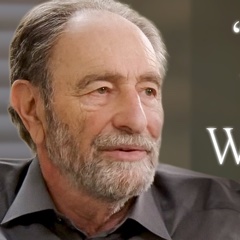
Eric Roth
Screenwriter of Forrest Gump and The Curious Case of Benjamin Button
Where to hear and read about Eric Roth1 episode or test

Eric Roth is the screenwriter who won the Oscar for Forrest Gump and wrote The Curious Case of Benjamin Button, Dune and Killers of the Flower Moon. The habit most worth copying is ending each day on a scene he likes and outlining a few scenes ahead in single words, so he never faces a cold start.
I think in everything I write, I try to give some human quality to it that will make people feel something.
How He Wrote Forrest Gump (And Many Other Movies)
Eric Roth: the story and the lessons
1Eric Roth's path from adaptations to Forrest Gump and Benjamin Button
Roth won the Academy Award for Forrest Gump and has seven nominations. His credits include Dune, Forrest Gump and Benjamin Button, and he has worked with David Fincher, Steven Spielberg and Martin Scorsese.
Over 60 years he has worked with top actors and directors, including Kurosawa.
Roth turned a farcical book character into a life seen from age 50. The book's Gump weighed 400 lb and was played for farce, so Roth took that away. The story became a look back on a life, full of touchstone moments.
His Gump loves three things: his mother, Jenny, and 'God in America.' Tarantino called it the most ironic mainstream movie ever made.
Roth says bad books make good movies. About 60 to 70% of his adaptations turn into original work, and even a weak source gives him something to look back at.
Benjamin Button began as a weak Fitzgerald story written for money. Aging backwards was Fitzgerald's idea, not his.
Roth writes for the pleasure of it and has never had writer's block. He calls himself a frustrated novelist because he puts so much prose in his screenplays. At the Benjamin Button table read, Brad Pitt teased him for his 'prose boner' when the narration was read.
Prose makes his scripts longer than people want, and being concise is harder.
Roth was sent to rewrite a Paul Newman movie at 19. The job was in Louisiana, and Newman greeted him with 'our savior's here.'
2Eric Roth's daily routine for getting words on the page
Roth starts every writing day from page one. He rereads the draft each morning like a slope where dirt has eroded, shoring up what is falling down. He makes tired material fresh, surprising and alive before moving on.
He says he has never had writer's block and still works this way every day.
Roth ends each day on a scene he likes. That way he wakes up starting from something good and does not dread a hard scene cold.
He wants to 'leave the day of writing with a scene I basically lick.'
Roth outlines only five scenes ahead, one word each. He sees the middle of a story as a big blob, so he lists scenes like 'wedding, shootout' and lets the story take hold from there.
He builds tension toward the last act from those few scenes.
Roth always knows his first and last scenes before he starts. The opening has to pull the audience in, and the ending has to leave them moved in a way that ties to the theme.
Only Munich's ending changed, moved outside the World Trade Center once it was gone.
Roth changes the weather or the time of day when a scene is stuck. Stuck on a scene in his Scorsese script, he made it windy and pictured 50 hats swirling. Rain, snow or dusk makes characters act differently and opens the scene up.
Late day suits melancholy, the hour when nobody does anything important. He pictures 5:00 on a Brooklyn street, mothers about to call kids in for dinner.
Roth drafts on an old DOS program and prints often. He prints the pages and his assistant retypes them with his edits. The program overloads at about 40 pages and can make pages vanish.
He calls himself superstitious for not switching to Final Draft, and he also drafts scenes in emails, texts and on scrap paper.
3How Roth builds theme and character
Roth tests every inert scene against the theme of the whole film. When a scene goes dead he asks how it applies to the theme. In Forrest Gump the theme is destiny versus chance, shown by the feather.
Killers of the Flower Moon was always about justice, which he returned to whenever a scene needed direction.
Roth treats a theme as a question he keeps asking. He is currently drawn to vengeance and whether it is a male trait. His Scorsese project asks whether we become what we were raised to be.
A simple theme can feel shallow, but he keeps faith in it because it is what the movie is eventually about.
Roth gives each character a hidden backstory, like a full wallet. He wants to know why a person is neurotic, giddy, quiet or angry, so every voice differs. Michael Cimino gave Mickey Rourke a wallet full of his character's life for The Year of the Dragon.
Rourke never looked inside, but he knew a picture of his supposed daughter was in his back pocket.
Roth researches until he finds details that carry a scene. Darwin Awards books gave Benjamin Button characters like the man hit by lightning seven times. Reading about 1860 Sicily gave him a citrus war won by a family who put a lemon on their gate.
The tugboat scene came from research and a tugboat maker in Massachusetts. His rule: 'God is in the details.'
Roth feeds his own grief and life into characters. He lost both parents while writing Benjamin Button. Daisy became a ballet dancer because his then-wife loved ballet.
Fincher, normally colder, bent over backwards for the emotion, perhaps because of his father's death.
Roth wants villains understood, not liked. He says villains make great movies, and a character who does something surprising beats a predictable one.
He admits he does not understand psychopaths or the Columbine boys, but wants the audience to see what makes a character tick.
Roth keeps fanciful characters from turning cartoonish. He sees his characters as living on the other side of the moon, yet wants them real enough to be worth caring about. Forrest Gump is his Candide, and he wants it to feel real for two and a half hours.
Only true stories like The Insider aim for strict authenticity.
Love and loneliness drive Roth's characters. Critic Elvis Mitchell told him his movies are all about loneliness. Roth agrees, since he doesn't like being alone.
Much of the material comes from his own painful experiences.
4How Roth writes scenes, openings and dialogue
Roth hides what a scene means inside another story. A character should talk about a dream rather than say he is upset with his mother. The dream carries information, a layer of meaning and a surprise at once.
He cites the judge in High Noon telling Gary Cooper a story from Athens. He calls spelling out the plot 'screenwriting 101.'
Roth slips small human moments into heavy scenes. He admires Jack Thorne, who has a driver refuse a stick of gum and get told 'you need it.' That one beat makes the characters likable and human.
Roth makes dialogue carry the scene and push the story. Scenes should raise issues the characters must work out, never kill time with 'shoe leather.' A line like 'Will you marry me?' can open a much bigger story.
In his Sicilian script a man loves his rival's daughter, and each scene grows more fraught until her father says 'you're dead to me.'
Roth built Bubba's shrimp speech by yelling for dishes with his family. At a vacation house in Canada he called out for shrimp dishes and typed whatever his family shouted back until they ran out.
He wants moments that stay in your soul and then start defining the movie.
Roth says nobody can engineer an iconic line. He writes lines hoping they will last, then lets the audience decide. He can't say why 'life is like a box of chocolates' stuck, and it isn't his favorite.
He prefers 'sometimes there just aren't enough rocks,' said as she throws rocks at the house. The best lines come from how characters naturally talk.
Roth opens so the audience feels they have found a home. He wants readers to feel they could live in the world for two hours, even if it is frightening. He dislikes scripts that push the reader away.
He sees no difference between opening a screenplay and opening a book.
Roth writes visual, tonal action lines so the page reads like the film. Benjamin Button begins 'As all things do, it begins in the dark,' with blue eyes opening on a woman at a rattling window. Wind moving clothes or windows gives time and place in two sentences.
Some directors think it is too much, but he feels it gives the reader a richer experience.
Roth sometimes opens at the end to pull the audience into a question. Benjamin Button opens on the final hurricane night, then goes back to explain why she is there. The theme keeps the structure on course.
He says he can't fully explain the choice. It felt right.
Roth builds on problem, complication and resolution. He says every story states the problem, complicates it, then resolves it or not. You can flip the order but not break it.
5What Roth learned about directors and work that lasts
Roth treats working with a director as a marriage of negotiation. The director makes the final call, so he looks for a 'third way' both can accept. Sometimes he is disappointed and sometimes thrilled.
He finds Spielberg quiet and a little lonely, with a gift for childlike storytelling and Rube Goldberg chains of events. He would work again with Villeneuve and Scorsese.
Roth let Al Pacino replace a page and a half of monologue with a look. On the morning of the shoot for The Insider, Pacino said he could do it with one look. They shot it both ways and the film used the look.
Roth concluded he sometimes goes overboard describing things and that actors can make lines their own.
Roth says nobody can know what will last. Star Wars has outlasted Green Book, the Best Picture winner. Forrest Gump persists because parents show it to their 11 year olds.
He is unsure whether Dune will last and passed on Dune 2. On Benjamin Button he says 'we'll see.'
Roth values the work more than the result. He doesn't blame directors or casting for failures, calling that a cheap way out. A screenplay that never gets filmed is meaningless, but he no longer has the same ego about outcomes.
He loves the adventure of creating something new more than rewriting, which only improves what exists.
Roth quotes what moves him, and always credits the source. He gathers inspiration on purpose and names the source so he doesn't plagiarize. He thinks it makes for a richer read, since most readers now skip to the dialogue.

How He Wrote Forrest Gump (And Many Other Movies)
Eric Roth, who won the Oscar for adapting Forrest Gump, explains how he builds scenes and characters around a theme, hides meaning in subtext, and rereads from page one so the work stays alive. The most useful habit is leaving each day on a scene he likes and outlining a few scenes ahead in single words, so he never faces a cold start.
Roth won the Academy Award for Forrest Gump and has seven nominations. His credits include Dune, Forrest Gump and Benjamin Button, and he has worked with David Fincher, Steven Spielberg and Martin Scorsese.
Over 60 years he has worked with top actors and directors, including Kurosawa.
Roth turned a farcical book character into a life seen from age 50. The book's Gump weighed 400 lb and was played for farce, so Roth took that away. The story became a look back on a life, full of touchstone moments.
His Gump loves three things: his mother, Jenny, and 'God in America.' Tarantino called it the most ironic mainstream movie ever made.
Roth says bad books make good movies. About 60 to 70% of his adaptations turn into original work, and even a weak source gives him something to look back at.
Benjamin Button began as a weak Fitzgerald story written for money. Aging backwards was Fitzgerald's idea, not his.
Roth writes for the pleasure of it and has never had writer's block. He calls himself a frustrated novelist because he puts so much prose in his screenplays. At the Benjamin Button table read, Brad Pitt teased him for his 'prose boner' when the narration was read.
Prose makes his scripts longer than people want, and being concise is harder.
Roth was sent to rewrite a Paul Newman movie at 19. The job was in Louisiana, and Newman greeted him with 'our savior's here.'
Roth starts every writing day from page one. He rereads the draft each morning like a slope where dirt has eroded, shoring up what is falling down. He makes tired material fresh, surprising and alive before moving on.
He says he has never had writer's block and still works this way every day.
Roth ends each day on a scene he likes. That way he wakes up starting from something good and does not dread a hard scene cold.
He wants to 'leave the day of writing with a scene I basically lick.'
Roth outlines only five scenes ahead, one word each. He sees the middle of a story as a big blob, so he lists scenes like 'wedding, shootout' and lets the story take hold from there.
He builds tension toward the last act from those few scenes.
Roth always knows his first and last scenes before he starts. The opening has to pull the audience in, and the ending has to leave them moved in a way that ties to the theme.
Only Munich's ending changed, moved outside the World Trade Center once it was gone.
Roth changes the weather or the time of day when a scene is stuck. Stuck on a scene in his Scorsese script, he made it windy and pictured 50 hats swirling. Rain, snow or dusk makes characters act differently and opens the scene up.
Late day suits melancholy, the hour when nobody does anything important. He pictures 5:00 on a Brooklyn street, mothers about to call kids in for dinner.
Roth drafts on an old DOS program and prints often. He prints the pages and his assistant retypes them with his edits. The program overloads at about 40 pages and can make pages vanish.
He calls himself superstitious for not switching to Final Draft, and he also drafts scenes in emails, texts and on scrap paper.
Roth tests every inert scene against the theme of the whole film. When a scene goes dead he asks how it applies to the theme. In Forrest Gump the theme is destiny versus chance, shown by the feather.
Killers of the Flower Moon was always about justice, which he returned to whenever a scene needed direction.
Roth treats a theme as a question he keeps asking. He is currently drawn to vengeance and whether it is a male trait. His Scorsese project asks whether we become what we were raised to be.
A simple theme can feel shallow, but he keeps faith in it because it is what the movie is eventually about.
Roth gives each character a hidden backstory, like a full wallet. He wants to know why a person is neurotic, giddy, quiet or angry, so every voice differs. Michael Cimino gave Mickey Rourke a wallet full of his character's life for The Year of the Dragon.
Rourke never looked inside, but he knew a picture of his supposed daughter was in his back pocket.
Roth researches until he finds details that carry a scene. Darwin Awards books gave Benjamin Button characters like the man hit by lightning seven times. Reading about 1860 Sicily gave him a citrus war won by a family who put a lemon on their gate.
The tugboat scene came from research and a tugboat maker in Massachusetts. His rule: 'God is in the details.'
Roth feeds his own grief and life into characters. He lost both parents while writing Benjamin Button. Daisy became a ballet dancer because his then-wife loved ballet.
Fincher, normally colder, bent over backwards for the emotion, perhaps because of his father's death.
Roth wants villains understood, not liked. He says villains make great movies, and a character who does something surprising beats a predictable one.
He admits he does not understand psychopaths or the Columbine boys, but wants the audience to see what makes a character tick.
Roth keeps fanciful characters from turning cartoonish. He sees his characters as living on the other side of the moon, yet wants them real enough to be worth caring about. Forrest Gump is his Candide, and he wants it to feel real for two and a half hours.
Only true stories like The Insider aim for strict authenticity.
Love and loneliness drive Roth's characters. Critic Elvis Mitchell told him his movies are all about loneliness. Roth agrees, since he doesn't like being alone.
Much of the material comes from his own painful experiences.
Roth hides what a scene means inside another story. A character should talk about a dream rather than say he is upset with his mother. The dream carries information, a layer of meaning and a surprise at once.
He cites the judge in High Noon telling Gary Cooper a story from Athens. He calls spelling out the plot 'screenwriting 101.'
Roth slips small human moments into heavy scenes. He admires Jack Thorne, who has a driver refuse a stick of gum and get told 'you need it.' That one beat makes the characters likable and human.
Roth makes dialogue carry the scene and push the story. Scenes should raise issues the characters must work out, never kill time with 'shoe leather.' A line like 'Will you marry me?' can open a much bigger story.
In his Sicilian script a man loves his rival's daughter, and each scene grows more fraught until her father says 'you're dead to me.'
Roth built Bubba's shrimp speech by yelling for dishes with his family. At a vacation house in Canada he called out for shrimp dishes and typed whatever his family shouted back until they ran out.
He wants moments that stay in your soul and then start defining the movie.
Roth says nobody can engineer an iconic line. He writes lines hoping they will last, then lets the audience decide. He can't say why 'life is like a box of chocolates' stuck, and it isn't his favorite.
He prefers 'sometimes there just aren't enough rocks,' said as she throws rocks at the house. The best lines come from how characters naturally talk.
Roth opens so the audience feels they have found a home. He wants readers to feel they could live in the world for two hours, even if it is frightening. He dislikes scripts that push the reader away.
He sees no difference between opening a screenplay and opening a book.
Roth writes visual, tonal action lines so the page reads like the film. Benjamin Button begins 'As all things do, it begins in the dark,' with blue eyes opening on a woman at a rattling window. Wind moving clothes or windows gives time and place in two sentences.
Some directors think it is too much, but he feels it gives the reader a richer experience.
Roth sometimes opens at the end to pull the audience into a question. Benjamin Button opens on the final hurricane night, then goes back to explain why she is there. The theme keeps the structure on course.
He says he can't fully explain the choice. It felt right.
Roth builds on problem, complication and resolution. He says every story states the problem, complicates it, then resolves it or not. You can flip the order but not break it.
Roth treats working with a director as a marriage of negotiation. The director makes the final call, so he looks for a 'third way' both can accept. Sometimes he is disappointed and sometimes thrilled.
He finds Spielberg quiet and a little lonely, with a gift for childlike storytelling and Rube Goldberg chains of events. He would work again with Villeneuve and Scorsese.
Roth let Al Pacino replace a page and a half of monologue with a look. On the morning of the shoot for The Insider, Pacino said he could do it with one look. They shot it both ways and the film used the look.
Roth concluded he sometimes goes overboard describing things and that actors can make lines their own.
Roth says nobody can know what will last. Star Wars has outlasted Green Book, the Best Picture winner. Forrest Gump persists because parents show it to their 11 year olds.
He is unsure whether Dune will last and passed on Dune 2. On Benjamin Button he says 'we'll see.'
Roth values the work more than the result. He doesn't blame directors or casting for failures, calling that a cheap way out. A screenplay that never gets filmed is meaningless, but he no longer has the same ego about outcomes.
He loves the adventure of creating something new more than rewriting, which only improves what exists.
Roth quotes what moves him, and always credits the source. He gathers inspiration on purpose and names the source so he doesn't plagiarize. He thinks it makes for a richer read, since most readers now skip to the dialogue.