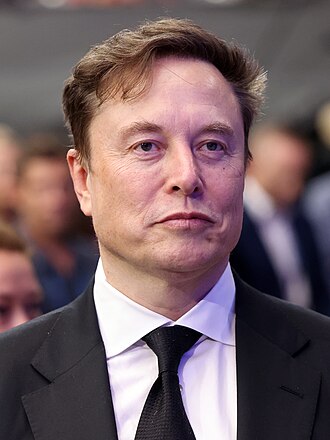
Elon Musk
Founders and leaders of SpaceX
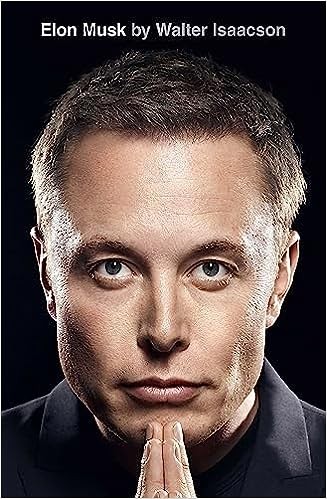
Where to hear and read about Elon Musk1 book · 2 episodes and tests


Elon Musk co-founded Zip2 and PayPal, then built SpaceX and ran Tesla, carrying the same few rules into Boring Company, Neuralink and Twitter. What is most worth learning is how he repeats a short set of principles (question every requirement, delete, build and test fast, stay at the source of the problem) until they become a system and a culture that rivals cannot copy piece by piece.
The best part is no part. The best process is no process.
How SpaceX Works
Elon Musk: the story and the lessons
1Elon Musk's path from Zip2 to rockets
At Zip2, Musk set the habits he kept for three decades. The founders slept in the office and showered at the YMCA. To impress investors they bought a big rack frame and put one small computer in it so it looked like a giant server.
In college he was obsessed with the board game Diplomacy and explained it with "I am wired for war." He was never good at working for others and did not defer to people who might know more.
He treated each win as fuel for a bigger bet. Compaq bought Zip2 for $37 million in cash, and at 27 Musk walked away with $22 million. He said he could buy an island but wanted to build another company.
"I'm going to put almost all of it back into a new game." He said he would be either wealthy or broke, nothing in between, and decades later put cash from Tesla stock into Twitter.
At PayPal he deleted steps and folded engineering into design. He cut account signup to the fewest keystrokes and removed the separate engineering department so designers felt the pain of what was hard to build.
Co-founder Max Levchin said Musk would say crazy things, then surprise you by knowing more about your specialty than you did. Pushed out as CEO, he kept his co-founders as friends.
At 30 he taught himself rocketry from first principles. In 2001 he tried to buy Russian ICBMs to reach Mars, got absurd quotes, and priced a rocket's raw materials instead. He read at the Palo Alto public library and phoned experts to borrow old engine manuals.
His reasoning about the Russians: "It's not like we drive Russian cars, fly Russian planes," so a cost-efficient US launcher should be possible.
He moved to Los Angeles because that was where aerospace talent clustered. He said the odds of a rocket company succeeding were low, and lower if he stayed away from Southern California.
He did not even explain the move to his wife, Justine. The region held aerospace expertise buried under decades of bureaucracy, to which he added Silicon Valley norms like flat hierarchy and engineer ownership.
Impatience sent the first launches to remote Kwajalein. Rather than wait for Vandenberg, SpaceX moved to a Pacific island, where fixing one power box meant sending an intern from Texas to Minneapolis for capacitors.
Musk later admitted the move reduced the probability of success. "That would have required patience. And that's a virtue he lacked."
2How Musk got SpaceX and Tesla through 2008
SpaceX survived three Falcon 1 failures with money for one more try. Three explosions came between 2006 and 2008, and by September 2008 funds covered exactly one more attempt. Flight 4 worked, and a $1.6 billion NASA cargo contract followed six weeks later.
Musk kept going while both companies neared death. He was borrowing money for rent while Tesla was weeks from bankruptcy, and at 37 he had night terrors and woke up vomiting.
After three crashes in a row he said, "I will never give up. And I mean, never." Sequoia's Michael Moritz, who had called Tesla mission impossible, later said he had not appreciated Musk's determination.
Staying friendly with the PayPal leaders who ousted him saved SpaceX. In 2008 Peter Thiel's Founders Fund put $20 million into SpaceX.
He likened the ouster to Caesar's stabbing but chose not to end the friendship. "If I had done that, Founders Fund wouldn't have come through in 2008, and SpaceX would be dead."
A working prototype won Tesla a $50 million lifeline. Tesla fitted a Roadster motor and battery into a Smart car before Daimler's visit. Executives expecting a PowerPoint drove it from 0 to 60 mph in 4 seconds and took a $50 million stake.
"If Daimler had not invested in Tesla at that time, we would have died."
3How Musk attacked the cost of reaching orbit
Musk found materials were about 2% of a rocket's price. For a car, raw materials are 20 to 30% of the price. The rest of a rocket's cost sat in supplier markups, custom designs that could not scale, and hardware thrown away after each flight.
None of that is set by physics. "98 cents of every dollar was going somewhere other than what it was made of."
His idiot index compares a part's cost to its raw materials. Rockets cost at least 50 times their materials. A vendor quoted $120,000 and 18 months for a Falcon 1 actuator, and SpaceX engineers built it for $3,900 (another account puts the in-house cost at $5,000).
Tom Mueller's team built a critical engine valve after a supplier balked. Musk later quizzed managers on it: a $13,000 nozzle jacket held $200 of steel, and not knowing the best and worst parts meant "your resignation will be accepted immediately."
Vertical integration followed from suppliers' prices, not ideology. SpaceX builds about 80% of its hardware in-house, buying only raw materials and commodity parts. A NASA study put Falcon 9 development at roughly $440 million, three to ten times less than with traditional contractors.
Each supplier tier added 15 to 30%, and aerospace suppliers charged about 10 times what auto makers pay. Tesla made its own key components for the same reason, to control quality, cost and supply chain.
SpaceX made one standard rocket and forced customers to adapt. The Falcon User's Guide fixed bolt circles, connectors and fairing environments, and satellites designed to it. Falcon Heavy is three Falcon 9 first stages with a shared upper stage.
"Customers wanted custom solutions, but they wanted low prices even more. Force them to choose, and they will adapt." Building 40 identical Falcon 9s a year created automotive-style learning curves.
Merlin traded a little performance for a large cost cut. The Merlin 1D costs about $1 million against $20 to 25 million for the Russian RD-180, reaching 95% of theoretical efficiency for an 80% cost cut.
One propellant pair runs through all stages. Musk said Atlas V's mix of three rocket types tripled factory and operating costs.
He sourced from outside aerospace and challenged inherited rules. A $1,500 NASA latch became a $30 modified bathroom-stall latch. Cranes quoted at $2 million cost $300,000 once obsolete Air Force safety rules were revised.
A $3 million cooling system was challenged by asking what a house air conditioner costs; Gwynne Shotwell said about $6,000.
Gwynne Shotwell turned engineering savings into market share. She got NASA and the Pentagon to accept a standardized rocket instead of bespoke vehicles, the opposite of what sales teams usually do.
She has worked with Musk for over 20 years. Early on she told him his customer-sales lead was a loser, and the next day he asked her to join.
The cost tactics only work together. First principles found the waste, integration gave control to remove it, and standardization gave the volume to pay for it. Integration at two to four launches a year is a liability.
Lower cost allows lower prices, which win volume, which cuts cost again. "Without all three, the system breaks."
4Why SpaceX builds, breaks and learns
SpaceX uses real hardware, not exhaustive analysis, to find the truth. Where Boeing invests in studies to mature a design before building, SpaceX builds prototypes, because emergent behavior appears only once the pieces are bolted together.
"You can't think your way to perfect solutions for problems you don't fully understand." Starship design changes happened between flights, not over years.
Each vehicle gets its own tolerance for failure. Dragon carries crew and is conservative. On Falcon 9 ascent cannot fail but landings may. On Starship failure is instrumental.
Musk: "Starship does not have anyone on board so we can blow things up." Early flights still exploded only after reaching partial goals like clearing the pad.
Musk wants many cheap prototypes to break, not one polished one. He argues progress depends on how many iterations you get and how fast, and that with few engines you must be conservative.
That drove stainless steel for Starship, cheap and weldable in a tent, over carbon fiber that needs giant autoclaves. "A high production rate solves many ills."
He pushes teams to try fast and delete hard. "If you make this thing fast, you can find out fast and then you can fix it fast." Before a Raptor review he declared a deletion rampage where nothing is sacred.
He rejected a Neuralink device as too complex and demanded one package with no wires or router: "Delete, delete, delete, delete."
SpaceX published its own landing crashes. It posted a how-not-to-land video of drone ship crashes set to music. Those failures led to boosters reused up to 20 times and a Falcon 9 launch every two to three days.
The whole system is the moat, not any one tactic. In 2025 every payload from China, Russia, Europe and all other American launchers was under a fifth of SpaceX's mass to orbit.
Fail-fast without people who tolerate visible failure becomes theater. Cheap, frequent launch also made the 9,000-satellite Starlink feasible, an option incumbents could not see after Armstrong and Cernan told Congress reusability was a dream.
5Musk's five-step algorithm and Tesla's production hell
Musk's algorithm runs in a fixed order, with automation last. Question every requirement, delete parts and steps, simplify, speed up cycle time, then automate. He wrote it down after the Nevada and Fremont production surges.
The most common mistake is optimizing a part or process that should not exist.
Every requirement must carry the name of a real person. "The military asked for it" did not satisfy him. Only the laws of physics are fixed; "All requirements should be treated as recommendations."
Requirements from smart people, including his own, are the most dangerous because nobody questions them. Falcon 9's folding grid fins were deleted once simulation showed fixed fins worked.
If you add back under 10%, you didn't delete enough. At Tesla, plastic caps on battery pins had no owner and were removed; the pins never bent. Fiberglass strips were blamed by engineering on noise and by the noise team on fire risk.
He had the sound recorded with and without the strips, and nobody could hear a difference. All requirements are somewhat wrong and dumb, so make them less so.
He reduced Tesla's survival to one number: 5,000 Model 3s a week. He worked out costs, overhead and cash flow, repeated the target like a mantra, put live output monitors on the floor and moved there himself.
"I look forward to working alongside you, journeying through hell."
He publicly owned the over-automation mistake and ripped robots out. He walked the line with orange spray paint asking "Go or stay?" and a hole was cut in the factory wall to haul equipment out.
"Excessive automation at Tesla was a mistake. To be precise, my mistake. Humans are underrated."
A tent in the parking lot was producing Model 3s within three weeks. Inspired by World War II bomber lines, the tent line helped Tesla reach 5,000 cars a week.
"If conventional thinking makes your mission impossible, then unconventional thinking is necessary."
He repeats the algorithm until executives mouth it with him. "I became a broken record on the algorithm." If a team cannot predict what you'll say, you aren't saying it enough.
He applied it to new companies at once: Boring Company tunneling machines were redesigned to start nose down, the way a gopher digs.
6How Musk runs the work at the source of the problem
He keeps design, engineering and manufacturing in one place. Engineer desks sit at the edge of Tesla's assembly line, so whoever sees the flashing lights fixes the flaw the same day.
"If your hand is on a stove and it gets hot, you pull it right off." He said designing the factory takes far more brain strain than designing the car.
Musk spends about half his time talking directly to engineers. Each management layer loses information until the CEO gets "a summary of a summary with the inconvenient details removed."
Technical depth let him push steel over carbon fiber for Starship against internal opposition.
He walks to the red and makes about 100 decisions a day. Screens showed each Tesla station green or red, and he went straight to the red. He expects at least 20% of his decisions to be wrong.
"But if I don't make decisions, we die."
The single biggest bottleneck always gets the resources. When Starship was limited by Raptor production, Raptor got daily updates, memos and redirected resources until it broke through.
A NASA visitor said a new problem at SpaceX looks like a flash mob in the hallway. "The limiter always gets the hammer."
He priced every lost day against burn rate. Early SpaceX burned about $100,000 a day. He refused a $2,000 part but paid $90,000 for a plane that saved a workday.
He expected $10 million a day in revenue within ten years, so every slow day cost that money.
He sets brutal timelines even though most are missed. He told Tom Mueller to halve an already halved schedule. SpaceX missed most of his schedules and cost targets yet still beat every competitor.
Even an arbitrary deadline forces decisions. When two cracks appeared in an engine skirt the day before launch, he had the section trimmed with shears and it flew the next day.
He asks the people at the source where the limit is, then tests past it. Welders said Starship tank walls could go to 4.8 mm. He asked "What about four?", they tried it, and it worked.
Told a dome could not be built by dawn, he had a rocket barrel sliced into a fitting tool and stayed with four engineers and welders until it was done around 9 a.m.
Bad news should be loud and frequent. "All bad news should be given loudly and often. Good news can be said quietly and once."
At SpaceX a roadblock is a problem statement, and hiding one is what gets you in trouble.
7How Musk hires and manages people
Musk tells managers to judge engineers, not befriend them. "You are not a friend of the engineers. You are the judge." Camaraderie stops people challenging each other's work.
His reasoning is that protecting one person's feelings hurts the many doing their jobs well. He says he criticizes the action, not the person.
He hires for attitude and interviews every engineer himself. A good attitude means a desire to work maniacally hard. "Skills can be taught. Attitude change requires a brain transplant."
He fears veterans "phoning it in rich" and pushed out an 18-year SpaceX engineer, writing that everyone's time comes to retire.
Technical managers must do the hands-on work. Software managers code at least 20% of the time. A solar roof engineer who had never installed one spent the next day on a roof.
Without it, managers are "like a calvary leader who can't ride a horse." Design flaws only show up when you try to build the thing.
He rarely shares power, with Gwynne Shotwell the exception. "I've got to have both hands on the steering wheel. I can't have two of us driving."
Doubters are not invited to the next meeting. He found two people working out of 783 at the Cape's pad 39A, then moved into the hangar and worked around the clock.
At Twitter he replaced comfort with hardcore urgency. He rejected permanent work from home and "psychological safety" and told an engineer planning a fix for Monday to do it now.
Product managers who cannot code are "cavalry generals who don't know how to ride a horse." His rule: if a timeline is long, it's wrong.
The intensity burns through people and relationships. One Sunday night he flew to Seattle and fired the entire top Starlink team, replacing it with SpaceX rocket engineers. He fired three Model S quality chiefs in quick succession.
Grimes wrote a song with the line "He'll always love the game more than he loves me." Running SpaceX and Tesla together made any relationship nearly impossible to keep.
8How Musk chooses missions and thinks
Musk picks the mission first and finds the business later. After PayPal he said he wanted to make humanity multiplanetary, and listeners asked how that was a business.
"Elon starts with a mission and later finds a way to backfill in order to make it work financially." The Mars mission also attracts missionaries and makes prioritization automatic.
He works on what would not happen without him. He says mass-market electric cars were inevitable but a spacefaring civilization is not, so he ranks SpaceX highest.
He also says technology improves only if many people work very hard at it: "The future will not get here fast enough unless we force it."
He frames every project as epoch-making so urgency follows. "This is critical for all human destiny. You can't do it from 9 to 5." When Starship timelines slipped he ordered nightly meetings seven days a week.
He plays strategy games like Polytopia to sharpen his thinking: losing hurts the first 50 times, then you take risks with less emotion.
He explains hard engineering by pointing to something that works. Humans drive with eyes alone, so self-driving cars should need only cameras. A toy car showed him how to cast a whole underbody in one piece.
Five of six casting firms dismissed the idea and the sixth built the world's largest casting machine. He wanted car parts as precise as Lego: "Precision is not expensive. It is mostly about caring."
He thinks through hard problems alone in silence. Unable to sleep, he would sit on the edge of the bed, some nights not moving until dawn. "I've got to shut off the lights."
For Musk, showmanship is salesmanship. He personally ran the Roadster prototype event, choosing the guest list and menu and approving the napkins.
He sees the CEO as the company's best public face, and people said even his crazy talk convinced them because he believed it.

How SpaceX Works
SpaceX shows that a cost-driven strategy, vertical integration, standardization, fast build-and-test iteration and a distinct culture only work together as a self-reinforcing system, which is why rivals cannot copy any single piece. The result is that in 2025 SpaceX launched more mass to orbit than every other provider on Earth combined.
At 30 he taught himself rocketry from first principles. In 2001 he tried to buy Russian ICBMs to reach Mars, got absurd quotes, and priced a rocket's raw materials instead. He read at the Palo Alto public library and phoned experts to borrow old engine manuals.
His reasoning about the Russians: "It's not like we drive Russian cars, fly Russian planes," so a cost-efficient US launcher should be possible.
He moved to Los Angeles because that was where aerospace talent clustered. He said the odds of a rocket company succeeding were low, and lower if he stayed away from Southern California.
He did not even explain the move to his wife, Justine. The region held aerospace expertise buried under decades of bureaucracy, to which he added Silicon Valley norms like flat hierarchy and engineer ownership.
SpaceX survived three Falcon 1 failures with money for one more try. Three explosions came between 2006 and 2008, and by September 2008 funds covered exactly one more attempt. Flight 4 worked, and a $1.6 billion NASA cargo contract followed six weeks later.
Musk kept going while both companies neared death. He was borrowing money for rent while Tesla was weeks from bankruptcy, and at 37 he had night terrors and woke up vomiting.
After three crashes in a row he said, "I will never give up. And I mean, never." Sequoia's Michael Moritz, who had called Tesla mission impossible, later said he had not appreciated Musk's determination.
Musk found materials were about 2% of a rocket's price. For a car, raw materials are 20 to 30% of the price. The rest of a rocket's cost sat in supplier markups, custom designs that could not scale, and hardware thrown away after each flight.
None of that is set by physics. "98 cents of every dollar was going somewhere other than what it was made of."
His idiot index compares a part's cost to its raw materials. Rockets cost at least 50 times their materials. A vendor quoted $120,000 and 18 months for a Falcon 1 actuator, and SpaceX engineers built it for $3,900 (another account puts the in-house cost at $5,000).
Tom Mueller's team built a critical engine valve after a supplier balked. Musk later quizzed managers on it: a $13,000 nozzle jacket held $200 of steel, and not knowing the best and worst parts meant "your resignation will be accepted immediately."
Vertical integration followed from suppliers' prices, not ideology. SpaceX builds about 80% of its hardware in-house, buying only raw materials and commodity parts. A NASA study put Falcon 9 development at roughly $440 million, three to ten times less than with traditional contractors.
Each supplier tier added 15 to 30%, and aerospace suppliers charged about 10 times what auto makers pay. Tesla made its own key components for the same reason, to control quality, cost and supply chain.
SpaceX made one standard rocket and forced customers to adapt. The Falcon User's Guide fixed bolt circles, connectors and fairing environments, and satellites designed to it. Falcon Heavy is three Falcon 9 first stages with a shared upper stage.
"Customers wanted custom solutions, but they wanted low prices even more. Force them to choose, and they will adapt." Building 40 identical Falcon 9s a year created automotive-style learning curves.
Merlin traded a little performance for a large cost cut. The Merlin 1D costs about $1 million against $20 to 25 million for the Russian RD-180, reaching 95% of theoretical efficiency for an 80% cost cut.
One propellant pair runs through all stages. Musk said Atlas V's mix of three rocket types tripled factory and operating costs.
Gwynne Shotwell turned engineering savings into market share. She got NASA and the Pentagon to accept a standardized rocket instead of bespoke vehicles, the opposite of what sales teams usually do.
She has worked with Musk for over 20 years. Early on she told him his customer-sales lead was a loser, and the next day he asked her to join.
The cost tactics only work together. First principles found the waste, integration gave control to remove it, and standardization gave the volume to pay for it. Integration at two to four launches a year is a liability.
Lower cost allows lower prices, which win volume, which cuts cost again. "Without all three, the system breaks."
SpaceX uses real hardware, not exhaustive analysis, to find the truth. Where Boeing invests in studies to mature a design before building, SpaceX builds prototypes, because emergent behavior appears only once the pieces are bolted together.
"You can't think your way to perfect solutions for problems you don't fully understand." Starship design changes happened between flights, not over years.
Each vehicle gets its own tolerance for failure. Dragon carries crew and is conservative. On Falcon 9 ascent cannot fail but landings may. On Starship failure is instrumental.
Musk: "Starship does not have anyone on board so we can blow things up." Early flights still exploded only after reaching partial goals like clearing the pad.
Musk wants many cheap prototypes to break, not one polished one. He argues progress depends on how many iterations you get and how fast, and that with few engines you must be conservative.
That drove stainless steel for Starship, cheap and weldable in a tent, over carbon fiber that needs giant autoclaves. "A high production rate solves many ills."
SpaceX published its own landing crashes. It posted a how-not-to-land video of drone ship crashes set to music. Those failures led to boosters reused up to 20 times and a Falcon 9 launch every two to three days.
The whole system is the moat, not any one tactic. In 2025 every payload from China, Russia, Europe and all other American launchers was under a fifth of SpaceX's mass to orbit.
Fail-fast without people who tolerate visible failure becomes theater. Cheap, frequent launch also made the 9,000-satellite Starlink feasible, an option incumbents could not see after Armstrong and Cernan told Congress reusability was a dream.
Every requirement must carry the name of a real person. "The military asked for it" did not satisfy him. Only the laws of physics are fixed; "All requirements should be treated as recommendations."
Requirements from smart people, including his own, are the most dangerous because nobody questions them. Falcon 9's folding grid fins were deleted once simulation showed fixed fins worked.
Musk spends about half his time talking directly to engineers. Each management layer loses information until the CEO gets "a summary of a summary with the inconvenient details removed."
Technical depth let him push steel over carbon fiber for Starship against internal opposition.
The single biggest bottleneck always gets the resources. When Starship was limited by Raptor production, Raptor got daily updates, memos and redirected resources until it broke through.
A NASA visitor said a new problem at SpaceX looks like a flash mob in the hallway. "The limiter always gets the hammer."
He sets brutal timelines even though most are missed. He told Tom Mueller to halve an already halved schedule. SpaceX missed most of his schedules and cost targets yet still beat every competitor.
Even an arbitrary deadline forces decisions. When two cracks appeared in an engine skirt the day before launch, he had the section trimmed with shears and it flew the next day.
Bad news should be loud and frequent. "All bad news should be given loudly and often. Good news can be said quietly and once."
At SpaceX a roadblock is a problem statement, and hiding one is what gets you in trouble.
Musk picks the mission first and finds the business later. After PayPal he said he wanted to make humanity multiplanetary, and listeners asked how that was a business.
"Elon starts with a mission and later finds a way to backfill in order to make it work financially." The Mars mission also attracts missionaries and makes prioritization automatic.
How Elon Works
Over three decades and several companies, Elon Musk applied the same few principles: start from a mission, delete before you optimize, stay at the problem, and control cost and speed. The result is the five step algorithm he drilled into every team after Tesla's production hell, which shows how a founder can build companies by repeating simple rules until they become culture.
At Zip2, Musk set the habits he kept for three decades. The founders slept in the office and showered at the YMCA. To impress investors they bought a big rack frame and put one small computer in it so it looked like a giant server.
In college he was obsessed with the board game Diplomacy and explained it with "I am wired for war." He was never good at working for others and did not defer to people who might know more.
He treated each win as fuel for a bigger bet. Compaq bought Zip2 for $37 million in cash, and at 27 Musk walked away with $22 million. He said he could buy an island but wanted to build another company.
"I'm going to put almost all of it back into a new game." He said he would be either wealthy or broke, nothing in between, and decades later put cash from Tesla stock into Twitter.
At PayPal he deleted steps and folded engineering into design. He cut account signup to the fewest keystrokes and removed the separate engineering department so designers felt the pain of what was hard to build.
Co-founder Max Levchin said Musk would say crazy things, then surprise you by knowing more about your specialty than you did. Pushed out as CEO, he kept his co-founders as friends.
At 30 he taught himself rocketry from first principles. In 2001 he tried to buy Russian ICBMs to reach Mars, got absurd quotes, and priced a rocket's raw materials instead. He read at the Palo Alto public library and phoned experts to borrow old engine manuals.
His reasoning about the Russians: "It's not like we drive Russian cars, fly Russian planes," so a cost-efficient US launcher should be possible.
He moved to Los Angeles because that was where aerospace talent clustered. He said the odds of a rocket company succeeding were low, and lower if he stayed away from Southern California.
He did not even explain the move to his wife, Justine. The region held aerospace expertise buried under decades of bureaucracy, to which he added Silicon Valley norms like flat hierarchy and engineer ownership.
Impatience sent the first launches to remote Kwajalein. Rather than wait for Vandenberg, SpaceX moved to a Pacific island, where fixing one power box meant sending an intern from Texas to Minneapolis for capacitors.
Musk later admitted the move reduced the probability of success. "That would have required patience. And that's a virtue he lacked."
Musk kept going while both companies neared death. He was borrowing money for rent while Tesla was weeks from bankruptcy, and at 37 he had night terrors and woke up vomiting.
After three crashes in a row he said, "I will never give up. And I mean, never." Sequoia's Michael Moritz, who had called Tesla mission impossible, later said he had not appreciated Musk's determination.
Staying friendly with the PayPal leaders who ousted him saved SpaceX. In 2008 Peter Thiel's Founders Fund put $20 million into SpaceX.
He likened the ouster to Caesar's stabbing but chose not to end the friendship. "If I had done that, Founders Fund wouldn't have come through in 2008, and SpaceX would be dead."
A working prototype won Tesla a $50 million lifeline. Tesla fitted a Roadster motor and battery into a Smart car before Daimler's visit. Executives expecting a PowerPoint drove it from 0 to 60 mph in 4 seconds and took a $50 million stake.
"If Daimler had not invested in Tesla at that time, we would have died."
His idiot index compares a part's cost to its raw materials. Rockets cost at least 50 times their materials. A vendor quoted $120,000 and 18 months for a Falcon 1 actuator, and SpaceX engineers built it for $3,900 (another account puts the in-house cost at $5,000).
Tom Mueller's team built a critical engine valve after a supplier balked. Musk later quizzed managers on it: a $13,000 nozzle jacket held $200 of steel, and not knowing the best and worst parts meant "your resignation will be accepted immediately."
Vertical integration followed from suppliers' prices, not ideology. SpaceX builds about 80% of its hardware in-house, buying only raw materials and commodity parts. A NASA study put Falcon 9 development at roughly $440 million, three to ten times less than with traditional contractors.
Each supplier tier added 15 to 30%, and aerospace suppliers charged about 10 times what auto makers pay. Tesla made its own key components for the same reason, to control quality, cost and supply chain.
He sourced from outside aerospace and challenged inherited rules. A $1,500 NASA latch became a $30 modified bathroom-stall latch. Cranes quoted at $2 million cost $300,000 once obsolete Air Force safety rules were revised.
A $3 million cooling system was challenged by asking what a house air conditioner costs; Gwynne Shotwell said about $6,000.
Gwynne Shotwell turned engineering savings into market share. She got NASA and the Pentagon to accept a standardized rocket instead of bespoke vehicles, the opposite of what sales teams usually do.
She has worked with Musk for over 20 years. Early on she told him his customer-sales lead was a loser, and the next day he asked her to join.
He pushes teams to try fast and delete hard. "If you make this thing fast, you can find out fast and then you can fix it fast." Before a Raptor review he declared a deletion rampage where nothing is sacred.
He rejected a Neuralink device as too complex and demanded one package with no wires or router: "Delete, delete, delete, delete."
Musk's algorithm runs in a fixed order, with automation last. Question every requirement, delete parts and steps, simplify, speed up cycle time, then automate. He wrote it down after the Nevada and Fremont production surges.
The most common mistake is optimizing a part or process that should not exist.
Every requirement must carry the name of a real person. "The military asked for it" did not satisfy him. Only the laws of physics are fixed; "All requirements should be treated as recommendations."
Requirements from smart people, including his own, are the most dangerous because nobody questions them. Falcon 9's folding grid fins were deleted once simulation showed fixed fins worked.
If you add back under 10%, you didn't delete enough. At Tesla, plastic caps on battery pins had no owner and were removed; the pins never bent. Fiberglass strips were blamed by engineering on noise and by the noise team on fire risk.
He had the sound recorded with and without the strips, and nobody could hear a difference. All requirements are somewhat wrong and dumb, so make them less so.
He reduced Tesla's survival to one number: 5,000 Model 3s a week. He worked out costs, overhead and cash flow, repeated the target like a mantra, put live output monitors on the floor and moved there himself.
"I look forward to working alongside you, journeying through hell."
He publicly owned the over-automation mistake and ripped robots out. He walked the line with orange spray paint asking "Go or stay?" and a hole was cut in the factory wall to haul equipment out.
"Excessive automation at Tesla was a mistake. To be precise, my mistake. Humans are underrated."
A tent in the parking lot was producing Model 3s within three weeks. Inspired by World War II bomber lines, the tent line helped Tesla reach 5,000 cars a week.
"If conventional thinking makes your mission impossible, then unconventional thinking is necessary."
He repeats the algorithm until executives mouth it with him. "I became a broken record on the algorithm." If a team cannot predict what you'll say, you aren't saying it enough.
He applied it to new companies at once: Boring Company tunneling machines were redesigned to start nose down, the way a gopher digs.
He keeps design, engineering and manufacturing in one place. Engineer desks sit at the edge of Tesla's assembly line, so whoever sees the flashing lights fixes the flaw the same day.
"If your hand is on a stove and it gets hot, you pull it right off." He said designing the factory takes far more brain strain than designing the car.
He walks to the red and makes about 100 decisions a day. Screens showed each Tesla station green or red, and he went straight to the red. He expects at least 20% of his decisions to be wrong.
"But if I don't make decisions, we die."
He priced every lost day against burn rate. Early SpaceX burned about $100,000 a day. He refused a $2,000 part but paid $90,000 for a plane that saved a workday.
He expected $10 million a day in revenue within ten years, so every slow day cost that money.
He sets brutal timelines even though most are missed. He told Tom Mueller to halve an already halved schedule. SpaceX missed most of his schedules and cost targets yet still beat every competitor.
Even an arbitrary deadline forces decisions. When two cracks appeared in an engine skirt the day before launch, he had the section trimmed with shears and it flew the next day.
He asks the people at the source where the limit is, then tests past it. Welders said Starship tank walls could go to 4.8 mm. He asked "What about four?", they tried it, and it worked.
Told a dome could not be built by dawn, he had a rocket barrel sliced into a fitting tool and stayed with four engineers and welders until it was done around 9 a.m.
Bad news should be loud and frequent. "All bad news should be given loudly and often. Good news can be said quietly and once."
At SpaceX a roadblock is a problem statement, and hiding one is what gets you in trouble.
Musk tells managers to judge engineers, not befriend them. "You are not a friend of the engineers. You are the judge." Camaraderie stops people challenging each other's work.
His reasoning is that protecting one person's feelings hurts the many doing their jobs well. He says he criticizes the action, not the person.
He hires for attitude and interviews every engineer himself. A good attitude means a desire to work maniacally hard. "Skills can be taught. Attitude change requires a brain transplant."
He fears veterans "phoning it in rich" and pushed out an 18-year SpaceX engineer, writing that everyone's time comes to retire.
Technical managers must do the hands-on work. Software managers code at least 20% of the time. A solar roof engineer who had never installed one spent the next day on a roof.
Without it, managers are "like a calvary leader who can't ride a horse." Design flaws only show up when you try to build the thing.
He rarely shares power, with Gwynne Shotwell the exception. "I've got to have both hands on the steering wheel. I can't have two of us driving."
Doubters are not invited to the next meeting. He found two people working out of 783 at the Cape's pad 39A, then moved into the hangar and worked around the clock.
At Twitter he replaced comfort with hardcore urgency. He rejected permanent work from home and "psychological safety" and told an engineer planning a fix for Monday to do it now.
Product managers who cannot code are "cavalry generals who don't know how to ride a horse." His rule: if a timeline is long, it's wrong.
The intensity burns through people and relationships. One Sunday night he flew to Seattle and fired the entire top Starlink team, replacing it with SpaceX rocket engineers. He fired three Model S quality chiefs in quick succession.
Grimes wrote a song with the line "He'll always love the game more than he loves me." Running SpaceX and Tesla together made any relationship nearly impossible to keep.
Musk picks the mission first and finds the business later. After PayPal he said he wanted to make humanity multiplanetary, and listeners asked how that was a business.
"Elon starts with a mission and later finds a way to backfill in order to make it work financially." The Mars mission also attracts missionaries and makes prioritization automatic.
He works on what would not happen without him. He says mass-market electric cars were inevitable but a spacefaring civilization is not, so he ranks SpaceX highest.
He also says technology improves only if many people work very hard at it: "The future will not get here fast enough unless we force it."
He frames every project as epoch-making so urgency follows. "This is critical for all human destiny. You can't do it from 9 to 5." When Starship timelines slipped he ordered nightly meetings seven days a week.
He plays strategy games like Polytopia to sharpen his thinking: losing hurts the first 50 times, then you take risks with less emotion.
He explains hard engineering by pointing to something that works. Humans drive with eyes alone, so self-driving cars should need only cameras. A toy car showed him how to cast a whole underbody in one piece.
Five of six casting firms dismissed the idea and the sixth built the world's largest casting machine. He wanted car parts as precise as Lego: "Precision is not expensive. It is mostly about caring."
He thinks through hard problems alone in silence. Unable to sleep, he would sit on the edge of the bed, some nights not moving until dawn. "I've got to shut off the lights."
For Musk, showmanship is salesmanship. He personally ran the Roadster prototype event, choosing the guest list and menu and approving the napkins.
He sees the CEO as the company's best public face, and people said even his crazy talk convinced them because he believed it.