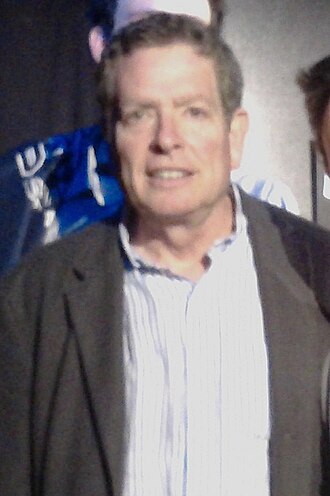
David Zucker
Director and co-writer of Airplane! and The Naked Gun
Where to hear and read about David Zucker1 episode or test

David Zucker is the director and co-writer of Airplane! and The Naked Gun, who writes spoofs by flipping the expectations of serious films. The habit most worth copying is writing with trusted friends, testing against live audiences and cutting anything that earns only a smile.
we wanted everything to be either a setup to a joke or a joke
’Naked Gun’ Creator Teaches Comedy Writing — David Zucker
David Zucker: the story and the lessons
1Where David Zucker's comedy and writing team came from
Zucker's relentless pace came from live theater, not film. The trio began in a 70-seat theater in Madison in 1971, then moved to Los Angeles. The Kentucky Fried Theater shows gave instant audience reactions, and silence on stage was dangerous.
He says the theater worked as an independent lab, apart from the stand-ups at the Comedy Store.
The team were not clowns, so they wrote to play straight. They wrote material that let them play straight and react, instead of mugging for laughs.
That habit became the base of his casting and directing style in the films.
Zucker built a stable of trusted co-writers over decades. He wrote with Jerry Zucker and Jim Abrahams, then from 1988 with Pat Proft and later Mike McManus, who picked up the rules by osmosis.
Proft was found at the Comedy Store, asked to fill in for a couple of weeks, and stayed about 40 years.
Zucker writes in a room where friends laugh in real time. A movie has no audience to test on while writing, so a laugh from Jerry, Jim, Pat or Mike has to do that job.
He loves it when Proft laughs at one of his jokes, and says he cannot get that reaction writing alone.
Paramount made the team list impossible jokes before letting them direct. Before they were allowed to direct Airplane!, the studio first made them list 15 jokes that could not happen.
2How Zucker builds a spoof from serious movies
Zucker takes serious scenes and reverses the audience's expectations. Airplane! spoofs Zero Hour, a serious 1957 film with the same plot, so the structure was already built and only the surprises needed writing.
Naked Gun borrowed from noir, Bond and Clint Eastwood films. His line: "we just take those scenes and reverse the audience's expectations".
Every Zucker script starts from something that already exists. Naked Gun combined several films, including Telefon, the Charles Bronson film about mind control by beeper. The writers took the idea but not the whole plot, so it was legal.
Airplane! also took 'Surely you can't be serious' from Crash Landing, and nobody remembers who suggested using it.
Zucker and his writers watched 20 noir films for Star of Malta. He, Pat Proft and Mike McManus took dialogue, plot and scenes from them, starting from the 1945 film Detour.
Detour is great for two acts and then simply ends, so the writers had to build their own finish.
A surprise only counts if it is funny. Zucker learned from a Dick Van Dyke Show episode that comedy depends on surprise. A serious actor finds a card in a drawer and says bingo, and the surprise is that it is a bingo card.
The same logic produced the 'I take it black like my men' line, which Jim Abrahams typed in unannounced and surprised the other writers.
Zucker gives a script a year and a half of drafts. Star of Malta took about a year and a half. He says "no one hits a hole in one" and arrives on set each day with two or three great pages and no improvising.
The one time he rushed, on An American Carol, rehearsals were bad, so he and co-writer Lewis Friedman rewrote the next day's pages in the trailer over bourbon.
Every line must be a setup or a joke, and speeches get cut. Zucker reads the page visually. Any speech longer than about six lines looks a quarter inch too long, so he cuts words until it fits.
3Zucker's rules for making a joke land
Zucker lets one character be funny and everyone else play it straight. His first rule is no joke on a joke. Peter Graves and Leslie Nielsen worked because they were straight men, and the joke was never acknowledged.
Priscilla Presley worried she could not be funny. He told her to do what she did in Dallas, never had her read for the part, and never needed to direct her.
Zucker never points at a joke and lets the audience find it. In Airplane!, Leslie Nielsen tends a woman whose legs are in stirrups and never mentions it. Acknowledging it would make it half as funny.
He prefers a two-shot to a reaction shot, because cutting to a reaction cuts the laugh by about 50%.
Zucker puts the best gag in the background. In Naked Gun, O.J. tumbling down the steps behind Leslie and Priscilla raises the joke by 50%. He learned the trick from Harold and Maude, where a man sets himself on fire behind a conversation.
The background gag must relate to the scene. An unrelated spear and falling watermelon in Airplane! got no laugh.
Zucker cuts any joke that is clever but gets no laugh. If a preview audience said 'that's funny' instead of laughing, the joke came out. He calls Top Secret the example of the trap, since it has some of his cleverest jokes.
"Merely clever isn't enough. You have to you have to get the laugh."
Zucker asks of every gag whether he can live with it. A joke must end when it is over. Leslie's pink pistachio lips are gone in the next scene, and after crashing through Goulet's skylight he brushes himself off and is fine.
A party costume or a clever license plate fails the test because you are stuck with it. In Airplane!, the cockpit crew's instruments vanish when the film cuts back.
Zucker shoots so any joke can be cut without a jump cut. He shoots enough coverage to cut to a single at any moment, so scenes are not a Jenga tower.
A missed joke makes the audience lose trust, so every joke must land. He promised Leslie Nielsen and Bob Costas never to release anything unfunny.
Zucker keeps the laughs coming with his flywheel theory. It is easier to keep an audience laughing than to restart them. He applies this to stand-ups who wait for the last laugh to die before the next joke.
Older comedies, including the Marx Brothers and Blake Edwards, ran slower. He wanted every beat to be a setup or a joke.
4Why Zucker puts story under the jokes
Zucker says the story matters more than the jokes. Audiences stayed through Airplane! and Naked Gun because they wanted the couple together, not because of the plane or the assassination plot.
"more important than the jokes is the story". Without a good third act, the jokes get tiresome.
Zucker gives the hero an inner problem in the first act. Top Secret gave its hero none. In Airplane! the pilot fears flying from PTSD, and Frank Drebin starts Naked Gun with a girlfriend who left him.
The plot then becomes boy meets girl, loses girl, gets girl. The same ending carried Naked Gun 2½ and 33⅓.
Zucker learned the 'Who cares?' lesson by making mistakes. Without a clear human stake, the audience asks 'Who cares?'. In BASEketball, with Trey Parker and Matt Stone, the friends split in the second act but their problem was never clear at the start.
Top Secret and BASEketball are loved anyway, but he treats both as lessons.
Zucker uses running gags until the third repeat, then stops. The man who keeps wishing the pilots luck gets funnier by the third time, and so does the car that keeps crashing in Naked Gun. Too much repetition gets annoying.
Offscreen crashes are never funny. A character warns 'You might get hurt in here', leaves, and a crash is heard, which earned a smile at best.
Zucker keeps comedies to 80 or 90 minutes. That is room for three acts. Airplane! was previewed at about 100 minutes and cut to about 80.
He thinks that is all a comedy audience can take.
5How Zucker learns from mistakes and protects the work
Zucker previews with real audiences and cuts to what plays. He tested everything from Kentucky Fried Movie onward. When a joke goes too far, a test screening shows it as a huge sucking sound, and then it is cut.
He says nothing is prohibited if it gets a laugh, and the test audience is the judge.
When a film fails, Zucker asks what he did wrong. He and his partners never blamed the studio or others for a flop, and the answer was usually themselves.
He quotes his father: "I never learned a lesson that didn't cost me money." His line on his own flops: he never had any, only cult classics.
Zucker turned his past mistakes into a list of rules. The rules date from 1972 and are used mainly as a list of what not to do, so mistakes are not shot twice. They cover trivia, axe grinding, straw dummies and technical pizzazz.
Jim Abrahams said the discipline made the difference: the room is anarchy, but some things they won't do. Rule 15 is that there are no rules.
Zucker avoids topical jokes and writes to last 50 years. The Marx Brothers' Canadian quadruplets joke worked in 1934 and means nothing now. Airplane!'s Anita Bryant line has the same problem.
In 1980 the goal was only a hit. Now he says "I want to make it to last 50 years".
Zucker won't let a political message overwhelm the comedy. He defines axe grinding as making a point at the expense of the film, and treats Nixon-era sketches and SNL Trump jokes as a mix of straw dummy and axe grinding.
His own An American Carol, which mocks the left, breaks the rule on purpose, and he says you do so at your peril unless the film is funny enough.
Zucker prefers cheap, rough gags to technical pizzazz. He thinks the big effects and crashes in Spies Like Us and The Blues Brothers hurt the pace. Simple gags cost little, like a crooked tie or a car hitting a dock post and throwing a fisherman in.
Scary Movie was made cheaply and stuck to jokes. The Airplane! control tower and police squad office are simple sets.
Zucker answers a risk-averse Hollywood by staying out of the crowd. Paramount rejected his Naked Gun 4 script. He retitled it Counter Intelligence and expects independent financing for it and for Star of Malta.
He avoided Hollywood parties and took no drugs in the 80s. He says he wants to do neither what he has done before nor what everyone else is doing.

’Naked Gun’ Creator Teaches Comedy Writing — David Zucker
David Zucker explains how he writes spoof comedy with a fixed set of rules learned from stage and screen mistakes, built on surprise, a real story and relentless pace. The habit worth hearing is writing in a room with trusted friends, testing against live audiences and cutting anything that gets only a smile.
Zucker's relentless pace came from live theater, not film. The trio began in a 70-seat theater in Madison in 1971, then moved to Los Angeles. The Kentucky Fried Theater shows gave instant audience reactions, and silence on stage was dangerous.
He says the theater worked as an independent lab, apart from the stand-ups at the Comedy Store.
The team were not clowns, so they wrote to play straight. They wrote material that let them play straight and react, instead of mugging for laughs.
That habit became the base of his casting and directing style in the films.
Zucker built a stable of trusted co-writers over decades. He wrote with Jerry Zucker and Jim Abrahams, then from 1988 with Pat Proft and later Mike McManus, who picked up the rules by osmosis.
Proft was found at the Comedy Store, asked to fill in for a couple of weeks, and stayed about 40 years.
Zucker writes in a room where friends laugh in real time. A movie has no audience to test on while writing, so a laugh from Jerry, Jim, Pat or Mike has to do that job.
He loves it when Proft laughs at one of his jokes, and says he cannot get that reaction writing alone.
Paramount made the team list impossible jokes before letting them direct. Before they were allowed to direct Airplane!, the studio first made them list 15 jokes that could not happen.
Zucker takes serious scenes and reverses the audience's expectations. Airplane! spoofs Zero Hour, a serious 1957 film with the same plot, so the structure was already built and only the surprises needed writing.
Naked Gun borrowed from noir, Bond and Clint Eastwood films. His line: "we just take those scenes and reverse the audience's expectations".
Every Zucker script starts from something that already exists. Naked Gun combined several films, including Telefon, the Charles Bronson film about mind control by beeper. The writers took the idea but not the whole plot, so it was legal.
Airplane! also took 'Surely you can't be serious' from Crash Landing, and nobody remembers who suggested using it.
Zucker and his writers watched 20 noir films for Star of Malta. He, Pat Proft and Mike McManus took dialogue, plot and scenes from them, starting from the 1945 film Detour.
Detour is great for two acts and then simply ends, so the writers had to build their own finish.
A surprise only counts if it is funny. Zucker learned from a Dick Van Dyke Show episode that comedy depends on surprise. A serious actor finds a card in a drawer and says bingo, and the surprise is that it is a bingo card.
The same logic produced the 'I take it black like my men' line, which Jim Abrahams typed in unannounced and surprised the other writers.
Zucker gives a script a year and a half of drafts. Star of Malta took about a year and a half. He says "no one hits a hole in one" and arrives on set each day with two or three great pages and no improvising.
The one time he rushed, on An American Carol, rehearsals were bad, so he and co-writer Lewis Friedman rewrote the next day's pages in the trailer over bourbon.
Every line must be a setup or a joke, and speeches get cut. Zucker reads the page visually. Any speech longer than about six lines looks a quarter inch too long, so he cuts words until it fits.
Zucker lets one character be funny and everyone else play it straight. His first rule is no joke on a joke. Peter Graves and Leslie Nielsen worked because they were straight men, and the joke was never acknowledged.
Priscilla Presley worried she could not be funny. He told her to do what she did in Dallas, never had her read for the part, and never needed to direct her.
Zucker never points at a joke and lets the audience find it. In Airplane!, Leslie Nielsen tends a woman whose legs are in stirrups and never mentions it. Acknowledging it would make it half as funny.
He prefers a two-shot to a reaction shot, because cutting to a reaction cuts the laugh by about 50%.
Zucker puts the best gag in the background. In Naked Gun, O.J. tumbling down the steps behind Leslie and Priscilla raises the joke by 50%. He learned the trick from Harold and Maude, where a man sets himself on fire behind a conversation.
The background gag must relate to the scene. An unrelated spear and falling watermelon in Airplane! got no laugh.
Zucker cuts any joke that is clever but gets no laugh. If a preview audience said 'that's funny' instead of laughing, the joke came out. He calls Top Secret the example of the trap, since it has some of his cleverest jokes.
"Merely clever isn't enough. You have to you have to get the laugh."
Zucker asks of every gag whether he can live with it. A joke must end when it is over. Leslie's pink pistachio lips are gone in the next scene, and after crashing through Goulet's skylight he brushes himself off and is fine.
A party costume or a clever license plate fails the test because you are stuck with it. In Airplane!, the cockpit crew's instruments vanish when the film cuts back.
Zucker shoots so any joke can be cut without a jump cut. He shoots enough coverage to cut to a single at any moment, so scenes are not a Jenga tower.
A missed joke makes the audience lose trust, so every joke must land. He promised Leslie Nielsen and Bob Costas never to release anything unfunny.
Zucker keeps the laughs coming with his flywheel theory. It is easier to keep an audience laughing than to restart them. He applies this to stand-ups who wait for the last laugh to die before the next joke.
Older comedies, including the Marx Brothers and Blake Edwards, ran slower. He wanted every beat to be a setup or a joke.
Zucker says the story matters more than the jokes. Audiences stayed through Airplane! and Naked Gun because they wanted the couple together, not because of the plane or the assassination plot.
"more important than the jokes is the story". Without a good third act, the jokes get tiresome.
Zucker gives the hero an inner problem in the first act. Top Secret gave its hero none. In Airplane! the pilot fears flying from PTSD, and Frank Drebin starts Naked Gun with a girlfriend who left him.
The plot then becomes boy meets girl, loses girl, gets girl. The same ending carried Naked Gun 2½ and 33⅓.
Zucker learned the 'Who cares?' lesson by making mistakes. Without a clear human stake, the audience asks 'Who cares?'. In BASEketball, with Trey Parker and Matt Stone, the friends split in the second act but their problem was never clear at the start.
Top Secret and BASEketball are loved anyway, but he treats both as lessons.
Zucker uses running gags until the third repeat, then stops. The man who keeps wishing the pilots luck gets funnier by the third time, and so does the car that keeps crashing in Naked Gun. Too much repetition gets annoying.
Offscreen crashes are never funny. A character warns 'You might get hurt in here', leaves, and a crash is heard, which earned a smile at best.
Zucker keeps comedies to 80 or 90 minutes. That is room for three acts. Airplane! was previewed at about 100 minutes and cut to about 80.
He thinks that is all a comedy audience can take.
Zucker previews with real audiences and cuts to what plays. He tested everything from Kentucky Fried Movie onward. When a joke goes too far, a test screening shows it as a huge sucking sound, and then it is cut.
He says nothing is prohibited if it gets a laugh, and the test audience is the judge.
When a film fails, Zucker asks what he did wrong. He and his partners never blamed the studio or others for a flop, and the answer was usually themselves.
He quotes his father: "I never learned a lesson that didn't cost me money." His line on his own flops: he never had any, only cult classics.
Zucker turned his past mistakes into a list of rules. The rules date from 1972 and are used mainly as a list of what not to do, so mistakes are not shot twice. They cover trivia, axe grinding, straw dummies and technical pizzazz.
Jim Abrahams said the discipline made the difference: the room is anarchy, but some things they won't do. Rule 15 is that there are no rules.
Zucker avoids topical jokes and writes to last 50 years. The Marx Brothers' Canadian quadruplets joke worked in 1934 and means nothing now. Airplane!'s Anita Bryant line has the same problem.
In 1980 the goal was only a hit. Now he says "I want to make it to last 50 years".
Zucker won't let a political message overwhelm the comedy. He defines axe grinding as making a point at the expense of the film, and treats Nixon-era sketches and SNL Trump jokes as a mix of straw dummy and axe grinding.
His own An American Carol, which mocks the left, breaks the rule on purpose, and he says you do so at your peril unless the film is funny enough.
Zucker prefers cheap, rough gags to technical pizzazz. He thinks the big effects and crashes in Spies Like Us and The Blues Brothers hurt the pace. Simple gags cost little, like a crooked tie or a car hitting a dock post and throwing a fisherman in.
Scary Movie was made cheaply and stuck to jokes. The Airplane! control tower and police squad office are simple sets.
Zucker answers a risk-averse Hollywood by staying out of the crowd. Paramount rejected his Naked Gun 4 script. He retitled it Counter Intelligence and expects independent financing for it and for Star of Malta.
He avoided Hollywood parties and took no drugs in the 80s. He says he wants to do neither what he has done before nor what everyone else is doing.