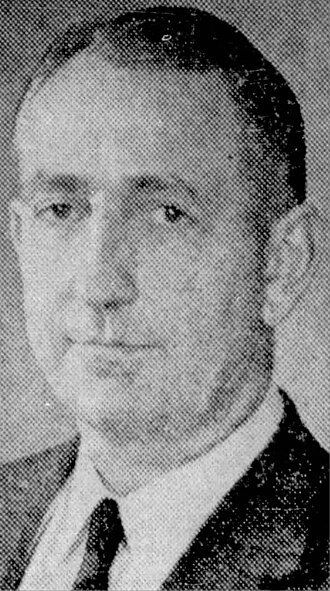
David Packard
Co-founder of HP
Where to hear and read about David Packard1 episode or test

David Packard co-founded HP in a Palo Alto garage and grew it into a company larger than the General Electric that once told him electronics had no future, profitable every year for 50 years. The lesson most worth taking from him is that a company exists to make a unique contribution to customers, with profit as the result that funds more contribution, never as the goal itself.
I think many people assume wrongly that a company exists simply to make money
David Packard (Founder of HP)
David Packard: the story and the lessons
1David Packard's early years: curiosity, persistence and teamwork
Packard read encyclopedias and built models as a boy, which led him to electronics. He spent hours with the family World Book Encyclopedia and built small bridges, motors and generators in the backyard.
He chose engineering in grade school and narrowed it to electrical engineering through radio. An explosion during his boyhood experiments left his left thumb distorted for life.
His father taught him persistence by refusing to let him quit. At 11 Packard got a horse that bucked and threw him at full gallop, and his father would not let him give up on it.
The horse knew tricks such as running along a barbed-wire fence to scrape him off. Packard's verdict: "I finally learned how to handle the horse."
A coach taught him that will and teamwork decide close contests. His coach, Mr. Porter, said that when two teams are equally good, teamwork and the will to win decide the game.
Packard turned this into a management rule: get the best people, stress teamwork and fire them up to win.
2How Stanford and General Electric set Packard on the path to HP
Professor Fred Terman pulled Packard into the circle that became HP. Terman invited Packard to take his graduate radio course in senior year, which Packard called the start of the events that created Hewlett-Packard.
Terman took students to visit Palo Alto radio firms and noted most were built by people without much education, so sound theory should be an advantage. Four classmates, including Bill Hewlett, became fast friends, and many later worked at HP for over 30 years.
The group planned a company before graduating, with no product in mind. The Great Depression and a General Electric job offer for Packard set the plan aside.
Terman urged him to take the GE job because he would learn things useful for their own venture.
Packard followed his interest in electronics after GE said it had no future. On his first day at GE, a manager steered him toward heavy utility equipment because electronics had no future there.
HP later grew larger than all of General Electric was at the time of that advice, an irony Packard still thought about 40 years later.
Fixing exploding tubes at GE gave Packard management by walking around. Responsible for quality on failing mercury vapor rectifier tubes, he worked on the factory floor with eager workers whose written instructions from engineering were inadequate.
Together they tested for every cause of failure, and every tube in the batch passed its final test. His conclusion: "personal communication was often necessary to back up written instructions."
3How Packard and Hewlett started HP in a garage
They formed the company before they knew what to make. Minutes of the first meeting in Bill's garage were titled "tentative organization plans" and listed ideas like high-frequency receivers, medical equipment and television.
They did contract work to pay the bills while they searched. Packard took Stanford classes, worked with Bill and worked evenings at Charlie Litton's lab. The order of the name, HP rather than PH, was settled by a coin flip.
Packard cut his ties to GE and chose the riskier, bigger life. He resigned from GE nearly a year after leaving for Palo Alto.
His wife Lucille always remembered dropping the resignation letter in the mailbox, feeling hopeful and excited.
A cheap, good audio oscillator won Disney as HP's first big customer. Disney's sound engineer Bud Hawkins planned to buy oscillators from General Radio at $400 each for Fantasia; HP's cost under $100.
They named it the Model 200A so HP would look like it had been around a while. A two-page flyer to about 25 prospects from Terman's list brought orders with checks within weeks, and HP was profitable from its first year.
Doing every job themselves taught what business school could not. Packard and Hewlett built products, priced and shipped them, kept the books, wrote ads and swept up.
Charlie Litton, a rival in the same industry, treated them as "compatriots," lending his shop and hosting seminars on business philosophy. Packard took Litton's do-it-yourself habit too, later buying a bulldozer and helping build more than 20 miles of ranch roads.
Packard shopped for credit until a local banker said yes. Bank of America sent a man who was not impressed, so Packard went to Jud Crary, president of the small Palo Alto National Bank, who wrote out a note to sign.
That began a long relationship; when HP outgrew the bank's lending limit it moved to the associate bank, Wells Fargo.
4Running HP through World War II
Packard kept his own pay low while Hewlett served in the Army. He held his salary below what it should have been because paying himself more than Bill's Army pay was not fair.
Government business did not mean inflated prices. HP held costs down so the government "could not get better products from anyone else at a lower price."
Asking the Navy what else it needed opened new product lines. HP sold standard products to the Naval Research Laboratory and also asked which other instruments it wanted.
The orders taught HP to make instruments it had never built before.
Every new instrument stayed within measuring and testing electronics. Packard chose complementary products over unrelated businesses and took on "no more than we could reasonably handle."
That focus built a solid base doing what HP did best.
5David Packard's rules for profit, debt and the long term
Packard judged HP by its contribution to customers, not its earnings. If HP's products offered nothing unique and improved no one's life, he would call it a failure however much money it made.
Most founders ask how they can succeed; Packard and Hewlett asked what they could contribute. Success paid for more contribution, which brought more success.
Profit is the value a company adds, and it funds growth. People, materials, facilities, money and time become products that customers pay more for than they cost to make.
Watching Depression foreclosures made Packard refuse long-term debt. Helping his father, a bankruptcy referee, he saw firms that mortgaged assets lose everything while debt-free firms struggled but survived.
HP ran pay as you go for more than half a century and found reinvested profits could finance 100% growth a year.
He grew only as fast as profits allowed. A retired engineer sent by Wells Fargo warned him that "more businesses die from indigestion than starvation."
Packard said he saw the truth of that advice many times afterward.
Packard refused to cut R&D to lift quarterly earnings. Profits can always be raised for a while by cutting new product investment, but "in the long run we will pay a severe price."
His reason: "good new products are the lifeblood of technical companies."
6Why Packard would never run a me-too company
Packard and Hewlett built only products that added something new. "Bill and I knew we didn't want to be a me too company merely copying products already on the market."
Steve Jobs passing on the netbook, which held 20% of the laptop market, and Edwin Land refusing me-too products follow the same instinct.
A focused, differentiated base let HP outgrow its first market. In 1964 HP sold $25 million, all instruments and no computers; by 1994 computer products brought in $20 billion, about 80% of sales.
HP began before computers existed and was pulled into the computer age by doing its best with the opportunities in front of it.
7How Packard led and hired
Steady, gentle pressure moves people better than force. Driving cattle on his ranch, he found pushing too hard scattered them and slacking off let them drift back.
He said "applying steady gentle pressure from the rear worked best" and that the insight stayed useful through his management career.
Packard demanded customer satisfaction second to none, or new leaders. He told managers it was the only acceptable goal and that those who could not reach it would be replaced.
He wanted every person at HP to think about how their work served customers.
Packard rewarded an engineer who defied orders to ship a winner. Told to drop a display monitor, Chuck House showed a prototype to customers on a California trip and got it rushed into production; HP sold more than 17,000, worth $35 million.
Packard gave him a medal for "extraordinary contempt and defiance beyond the normal call of engineering duty." The line between insubordination and entrepreneurship, he held, is the intent to make HP succeed.
A Stanford program gave HP a lasting hiring edge. Under the Honors Cooperative program, built with Terman, recruits earned graduate degrees at Stanford on full HP salary with tuition paid.
More than 400 HP engineers earned advanced degrees through it, and it let HP "hire the top engineering graduates from universities all across the country."
8What HP's Japanese unit taught Packard about quality
Packard let a young Japanese manager take over the joint venture. After years of middling results under an American manager, the local manager asked to run it himself; Hewlett and Packard agreed and it grew faster the next year.
HP's quality targets were too low because they matched rivals'. HP's circuit board failure rate was about 4 per thousand, like the industry; the Japanese unit reached 10 per million, 400 times better.
The Japanese team made every adjustment as accurately as possible while Palo Alto made them as quickly as possible. Many divisions then raised targets far beyond what they thought possible.
Quality comes from detail and a whole organization committed to it. "Gains in quality come from meticulous attention to detail."
Packard said the approach works only if everyone in the organization is dedicated to quality.
9Packard's legacy and his view of the future
Packard set the career standard for Silicon Valley. He went from a garage to the Fortune 50, spoke for his industry and became the Valley's unofficial mayor.
Jobs, who at 12 called Hewlett for parts and later worked an HP summer job, wanted to build the kind of company Hewlett and Packard built.
He gave away nearly everything he made. Packard left nearly all of his $5.6 billion estate to charity, and by 1995 his and Hewlett's gifts to Stanford matched, in present value, the Stanfords' founding gift.
In his 80s Packard expected more frontiers ahead than behind. As a Stanford sophomore he had lamented being born 100 years too late, then watched the 20th century's progress.
His rule: "the state of change is proportional to the level of effort expended," and future growth must come from new products, not copies.

David Packard (Founder of HP)
David Packard's HP grew from a Palo Alto garage into a company larger than the one that told him electronics had no future. He did it by funding growth from profit, staying focused on complementary instruments, refusing to build me-too products, and measuring the company by what it contributed to customers.
Packard read encyclopedias and built models as a boy, which led him to electronics. He spent hours with the family World Book Encyclopedia and built small bridges, motors and generators in the backyard.
He chose engineering in grade school and narrowed it to electrical engineering through radio. An explosion during his boyhood experiments left his left thumb distorted for life.
His father taught him persistence by refusing to let him quit. At 11 Packard got a horse that bucked and threw him at full gallop, and his father would not let him give up on it.
The horse knew tricks such as running along a barbed-wire fence to scrape him off. Packard's verdict: "I finally learned how to handle the horse."
A coach taught him that will and teamwork decide close contests. His coach, Mr. Porter, said that when two teams are equally good, teamwork and the will to win decide the game.
Packard turned this into a management rule: get the best people, stress teamwork and fire them up to win.
Professor Fred Terman pulled Packard into the circle that became HP. Terman invited Packard to take his graduate radio course in senior year, which Packard called the start of the events that created Hewlett-Packard.
Terman took students to visit Palo Alto radio firms and noted most were built by people without much education, so sound theory should be an advantage. Four classmates, including Bill Hewlett, became fast friends, and many later worked at HP for over 30 years.
The group planned a company before graduating, with no product in mind. The Great Depression and a General Electric job offer for Packard set the plan aside.
Terman urged him to take the GE job because he would learn things useful for their own venture.
Packard followed his interest in electronics after GE said it had no future. On his first day at GE, a manager steered him toward heavy utility equipment because electronics had no future there.
HP later grew larger than all of General Electric was at the time of that advice, an irony Packard still thought about 40 years later.
Fixing exploding tubes at GE gave Packard management by walking around. Responsible for quality on failing mercury vapor rectifier tubes, he worked on the factory floor with eager workers whose written instructions from engineering were inadequate.
Together they tested for every cause of failure, and every tube in the batch passed its final test. His conclusion: "personal communication was often necessary to back up written instructions."
They formed the company before they knew what to make. Minutes of the first meeting in Bill's garage were titled "tentative organization plans" and listed ideas like high-frequency receivers, medical equipment and television.
They did contract work to pay the bills while they searched. Packard took Stanford classes, worked with Bill and worked evenings at Charlie Litton's lab. The order of the name, HP rather than PH, was settled by a coin flip.
Packard cut his ties to GE and chose the riskier, bigger life. He resigned from GE nearly a year after leaving for Palo Alto.
His wife Lucille always remembered dropping the resignation letter in the mailbox, feeling hopeful and excited.
A cheap, good audio oscillator won Disney as HP's first big customer. Disney's sound engineer Bud Hawkins planned to buy oscillators from General Radio at $400 each for Fantasia; HP's cost under $100.
They named it the Model 200A so HP would look like it had been around a while. A two-page flyer to about 25 prospects from Terman's list brought orders with checks within weeks, and HP was profitable from its first year.
Doing every job themselves taught what business school could not. Packard and Hewlett built products, priced and shipped them, kept the books, wrote ads and swept up.
Charlie Litton, a rival in the same industry, treated them as "compatriots," lending his shop and hosting seminars on business philosophy. Packard took Litton's do-it-yourself habit too, later buying a bulldozer and helping build more than 20 miles of ranch roads.
Packard shopped for credit until a local banker said yes. Bank of America sent a man who was not impressed, so Packard went to Jud Crary, president of the small Palo Alto National Bank, who wrote out a note to sign.
That began a long relationship; when HP outgrew the bank's lending limit it moved to the associate bank, Wells Fargo.
Packard kept his own pay low while Hewlett served in the Army. He held his salary below what it should have been because paying himself more than Bill's Army pay was not fair.
Government business did not mean inflated prices. HP held costs down so the government "could not get better products from anyone else at a lower price."
Asking the Navy what else it needed opened new product lines. HP sold standard products to the Naval Research Laboratory and also asked which other instruments it wanted.
The orders taught HP to make instruments it had never built before.
Every new instrument stayed within measuring and testing electronics. Packard chose complementary products over unrelated businesses and took on "no more than we could reasonably handle."
That focus built a solid base doing what HP did best.
Packard judged HP by its contribution to customers, not its earnings. If HP's products offered nothing unique and improved no one's life, he would call it a failure however much money it made.
Most founders ask how they can succeed; Packard and Hewlett asked what they could contribute. Success paid for more contribution, which brought more success.
Profit is the value a company adds, and it funds growth. People, materials, facilities, money and time become products that customers pay more for than they cost to make.
Watching Depression foreclosures made Packard refuse long-term debt. Helping his father, a bankruptcy referee, he saw firms that mortgaged assets lose everything while debt-free firms struggled but survived.
HP ran pay as you go for more than half a century and found reinvested profits could finance 100% growth a year.
He grew only as fast as profits allowed. A retired engineer sent by Wells Fargo warned him that "more businesses die from indigestion than starvation."
Packard said he saw the truth of that advice many times afterward.
Packard refused to cut R&D to lift quarterly earnings. Profits can always be raised for a while by cutting new product investment, but "in the long run we will pay a severe price."
His reason: "good new products are the lifeblood of technical companies."
Packard and Hewlett built only products that added something new. "Bill and I knew we didn't want to be a me too company merely copying products already on the market."
Steve Jobs passing on the netbook, which held 20% of the laptop market, and Edwin Land refusing me-too products follow the same instinct.
A focused, differentiated base let HP outgrow its first market. In 1964 HP sold $25 million, all instruments and no computers; by 1994 computer products brought in $20 billion, about 80% of sales.
HP began before computers existed and was pulled into the computer age by doing its best with the opportunities in front of it.
Steady, gentle pressure moves people better than force. Driving cattle on his ranch, he found pushing too hard scattered them and slacking off let them drift back.
He said "applying steady gentle pressure from the rear worked best" and that the insight stayed useful through his management career.
Packard demanded customer satisfaction second to none, or new leaders. He told managers it was the only acceptable goal and that those who could not reach it would be replaced.
He wanted every person at HP to think about how their work served customers.
Packard rewarded an engineer who defied orders to ship a winner. Told to drop a display monitor, Chuck House showed a prototype to customers on a California trip and got it rushed into production; HP sold more than 17,000, worth $35 million.
Packard gave him a medal for "extraordinary contempt and defiance beyond the normal call of engineering duty." The line between insubordination and entrepreneurship, he held, is the intent to make HP succeed.
A Stanford program gave HP a lasting hiring edge. Under the Honors Cooperative program, built with Terman, recruits earned graduate degrees at Stanford on full HP salary with tuition paid.
More than 400 HP engineers earned advanced degrees through it, and it let HP "hire the top engineering graduates from universities all across the country."
Packard let a young Japanese manager take over the joint venture. After years of middling results under an American manager, the local manager asked to run it himself; Hewlett and Packard agreed and it grew faster the next year.
HP's quality targets were too low because they matched rivals'. HP's circuit board failure rate was about 4 per thousand, like the industry; the Japanese unit reached 10 per million, 400 times better.
The Japanese team made every adjustment as accurately as possible while Palo Alto made them as quickly as possible. Many divisions then raised targets far beyond what they thought possible.
Quality comes from detail and a whole organization committed to it. "Gains in quality come from meticulous attention to detail."
Packard said the approach works only if everyone in the organization is dedicated to quality.
Packard set the career standard for Silicon Valley. He went from a garage to the Fortune 50, spoke for his industry and became the Valley's unofficial mayor.
Jobs, who at 12 called Hewlett for parts and later worked an HP summer job, wanted to build the kind of company Hewlett and Packard built.
He gave away nearly everything he made. Packard left nearly all of his $5.6 billion estate to charity, and by 1995 his and Hewlett's gifts to Stanford matched, in present value, the Stanfords' founding gift.
In his 80s Packard expected more frontiers ahead than behind. As a Stanford sophomore he had lamented being born 100 years too late, then watched the 20th century's progress.
His rule: "the state of change is proportional to the level of effort expended," and future growth must come from new products, not copies.