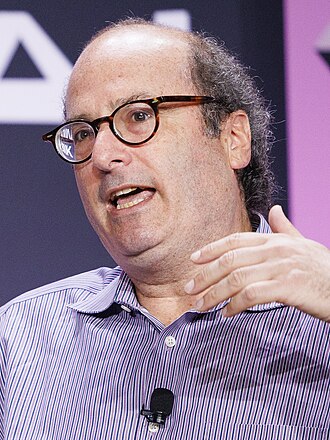
David Grann
Narrative nonfiction author and staff writer
Where to hear and read about David Grann1 episode or test

David Grann is a staff writer and author of narrative nonfiction, including Killers of the Flower Moon, The Wager and The Lost City of Z. The thing most worth learning from him is to research far more than you need, then cut it down to the few astonishing details that carry the scene.
The reader does not care at all about the backstory of you getting that fact.
Meet The Writer Behind Killers of the Flower Moon
David Grann: the story and the lessons
1How David Grann chooses a story worth years
Grann goes hunting for ideas instead of waiting for inspiration. After a book that took years, he sits in his office exhausted and afraid he will never find another idea. Then he phones people from news stories, follows footnotes and searches archives.
A long interest in mutinies led him to a scanned 18th century journal by John Byron, a 16-year-old midshipman on the Wager. He says "you keep waiting for that divine inspiration. It will never come."
He tests every idea with three questions before committing. Does the story get under his skin, is there enough underlying research to tell it, and is it about something deeper? A wonderful story with no surviving records can never be told.
The third test asks why anyone in 2025 should care about the 1740s. He calls intricate, salacious crimes gothic crime stories, enjoys reading them, and would not spend years on them.
A strange phrase in a news brief can start an investigation. He used to scan short newspaper briefs. One said Aryan Brotherhood leaders had been arrested while in prison, and he asked how you run a gang from solitary.
That two-sentence item grew into a long story on the Aryan Brotherhood.
Grann never starts knowing what a story is about. He usually knows nothing when research begins, and he hopes to know the meaning by the writing stage. Two years into Killers of the Flower Moon, he found other killings unconnected to the single evil figure the FBI had blamed.
The book became about a culture of killing, and the draft he had planned was demolished. His research had been organized around the old idea, so it took time to get his bearings. "the themes grow out of the material."
2How Grann researches like a detective
Grann treats research as the foundation of nonfiction writing. He says the only difference between a writer and a non-writer is willingness to sit for hours, whether fixing one sentence or going through endless boxes. Vivid scenes are built from details the research supplies.
Unlike a fiction writer, a nonfiction writer cannot do the second skill without the first. He says people sometimes forget that research comes first.
He keeps a 200-page outline behind a single 3,000-word chapter. The outline logs each person and scene: biography, physical details, how people spoke, every participant's account, and descriptions or photographs of the place.
That mass of fact lets him rebuild a moment faithfully. His example details are whether someone walked with a limp and what color their eyes were.
Weeks of tedium in the archives led to a case no one had solved. Working mainly in a National Archives branch in Fort Worth, about the size of an airport hangar, he found an unmarked, unindexed folder holding key evidence, including secret grand jury testimony.
Documents alone let him link two new cases to a murderer and name a killer nobody had named. That killer was never charged, which Grann calls one of the great horrors of the story.
Grann goes to the place, even when none of it reaches the page. Two years into The Wager, he went to Wager Island in winter, as the castaways had, to test whether the journals exaggerated. Storms kept his boat in harbor for about five days.
A forecast of about 32 degrees seemed mild, but 25 to 30 mph wind and constant rain or sleet meant hypothermia, which made him ask how it shaped their decisions. He also camped on the trail Molly Burkhart took to boarding school as a girl. None of it appears in the books, but it informed them.
He builds characters from documents and renders them fully, not kindly. He cannot describe a wink or a tear unless a source recorded it, so he uses letters, writings, observations, the house they grew up in, lineage and class.
He avoids hagiography that glosses over sins and avoids absolving bad people. He feels a moral duty to render them fully, even 300 years later.
3How Grann cuts research down to the few details that matter
Grann cut the shipbuilding material he worked hardest to master. Chapter one of The Wager began with 10,000 to 20,000 words on building a ship. His wife, the journalist Kira Brunner Grann, gasped "oh god no" at the pages, and he cut it.
He had visited Nelson's ship in England and been tutored by British historians, so the cuts were hard won. The one fact kept was that a single ship took 4,000 trees.
He keeps only the most revealing facts and separates them from the research. After gathering everything, he asks which facts reveal most. A ship taking 4,000 trees stays, and 10,000 words on the weather go. A few lines on how the rain fell will do.
At Cape Horn, one image of seamen gripping the rigging as living sails, in a ship pitching 45 degrees each way, shows the storm and the ordeal at once. "You need to separate research from what you're trying to communicate with the research."
Grann gives his first chapter to his wife and watches her. Kira reads with a pen while he peeks at her reactions from around a corner. Her groan at the ship chapter told him what to cut.
He was angry at first, then calmed down and admitted she was right. He kept cutting until the very end, saying you cannot get so wedded to your material.
He collects how people talk and write, not only how they look. He notes diction, speed of speech and mannerisms. The Wager's gunner was not upper class and wrote like Hemingway, with no adjectives or adverbs, against the ornate prose of most 18th century writers.
The style itself revealed the man. "he wrote like a bullet he wrote like Hemingway"
He picks names that make an image on their own. The Flower Moon opening describes tall plants stealing light and water from small flowers, which die in May, when one of the first murders happens. It works as a metaphor for the whole book.
Spider wort and black-eyed Susan came from the Osage writer John Joseph Mathews, which also anchors the paragraph in Osage tradition, since it is an Osage story.
He looks for the small human act inside the big event. Before the gunner left the captain on the island, the two enemies shook hands, then went back to hating each other. Grann says that small detail tells you something about the human condition.
He prefers telling big events from the bottom up through ordinary people carrying their own burdens, such as a spurned love or creditors, and says he rarely writes about prime ministers or dictators.
4How Grann structures and opens a book
Grann tells events in the order the people lived them. He writes chronologically, without hindsight, so the reader shares the suspense of people who did not know whether they would see their families again.
He calls hindsight an artifice, because people live history without knowing how it ends. "you live inside of history"
He plans suspense at two levels: the whole story and each chapter end. He reads a lot of suspense fiction to learn where to stop a chapter. The chapter ending on page 110 of The Wager closes on the ship being left to its own destiny, pushing you into chapter seven.
He learned the pull of withheld endings from his grandmother's oral stories. When editors at The Hill moved his last paragraph to the top, he saw it would ruin a story.
He writes a short prologue that promises stakes and says trust me. For The Lost City of Z, an 800 to 1,000 word prologue left him lost in the jungle, a scene from late in the book. He finds prologues the hardest part because they force him to view the story from above.
It needs stakes, suspense, meaning and, hopefully, beauty, with the themes woven in subtly. "what you're doing in the prologue is you're saying, trust me."
Grann writes the first sentence only after he understands the book. The Wager opens with "The only impartial witness was the sun," written near the end, perhaps with the full manuscript done. The line had tormented him for years.
It fits a book about a fight over the truth, where every survivor tells a partial version, and it is also literally true.
He cut a favorite last line because the sentence before said more. For two years he planned to end The Wager on the eternal hush of the sea. Once written, it was poetic, but the preceding sentence carried the larger themes.
He says a beautiful line is not enough reason to keep it.
He puts himself in a book only when it helps the reader. A friend told him The Lost City of Z needed more of him, so he wrote himself in as Larry David in the jungle, a present-day journey mirroring the past. He cut his Wager Island trip entirely.
He sees himself as a detective serving the story. "You are always in service to the story."

Meet The Writer Behind Killers of the Flower Moon
David Grann explains how deep archival research, a trip to the real place, and ruthless cutting turn a mass of facts into a story readers finish in one sitting. The technique worth hearing is his 200-page outline per chapter, followed by distilling it to the few astonishing details that carry the scene.
Grann goes hunting for ideas instead of waiting for inspiration. After a book that took years, he sits in his office exhausted and afraid he will never find another idea. Then he phones people from news stories, follows footnotes and searches archives.
A long interest in mutinies led him to a scanned 18th century journal by John Byron, a 16-year-old midshipman on the Wager. He says "you keep waiting for that divine inspiration. It will never come."
He tests every idea with three questions before committing. Does the story get under his skin, is there enough underlying research to tell it, and is it about something deeper? A wonderful story with no surviving records can never be told.
The third test asks why anyone in 2025 should care about the 1740s. He calls intricate, salacious crimes gothic crime stories, enjoys reading them, and would not spend years on them.
A strange phrase in a news brief can start an investigation. He used to scan short newspaper briefs. One said Aryan Brotherhood leaders had been arrested while in prison, and he asked how you run a gang from solitary.
That two-sentence item grew into a long story on the Aryan Brotherhood.
Grann never starts knowing what a story is about. He usually knows nothing when research begins, and he hopes to know the meaning by the writing stage. Two years into Killers of the Flower Moon, he found other killings unconnected to the single evil figure the FBI had blamed.
The book became about a culture of killing, and the draft he had planned was demolished. His research had been organized around the old idea, so it took time to get his bearings. "the themes grow out of the material."
Grann treats research as the foundation of nonfiction writing. He says the only difference between a writer and a non-writer is willingness to sit for hours, whether fixing one sentence or going through endless boxes. Vivid scenes are built from details the research supplies.
Unlike a fiction writer, a nonfiction writer cannot do the second skill without the first. He says people sometimes forget that research comes first.
He keeps a 200-page outline behind a single 3,000-word chapter. The outline logs each person and scene: biography, physical details, how people spoke, every participant's account, and descriptions or photographs of the place.
That mass of fact lets him rebuild a moment faithfully. His example details are whether someone walked with a limp and what color their eyes were.
Weeks of tedium in the archives led to a case no one had solved. Working mainly in a National Archives branch in Fort Worth, about the size of an airport hangar, he found an unmarked, unindexed folder holding key evidence, including secret grand jury testimony.
Documents alone let him link two new cases to a murderer and name a killer nobody had named. That killer was never charged, which Grann calls one of the great horrors of the story.
Grann goes to the place, even when none of it reaches the page. Two years into The Wager, he went to Wager Island in winter, as the castaways had, to test whether the journals exaggerated. Storms kept his boat in harbor for about five days.
A forecast of about 32 degrees seemed mild, but 25 to 30 mph wind and constant rain or sleet meant hypothermia, which made him ask how it shaped their decisions. He also camped on the trail Molly Burkhart took to boarding school as a girl. None of it appears in the books, but it informed them.
He builds characters from documents and renders them fully, not kindly. He cannot describe a wink or a tear unless a source recorded it, so he uses letters, writings, observations, the house they grew up in, lineage and class.
He avoids hagiography that glosses over sins and avoids absolving bad people. He feels a moral duty to render them fully, even 300 years later.
Grann cut the shipbuilding material he worked hardest to master. Chapter one of The Wager began with 10,000 to 20,000 words on building a ship. His wife, the journalist Kira Brunner Grann, gasped "oh god no" at the pages, and he cut it.
He had visited Nelson's ship in England and been tutored by British historians, so the cuts were hard won. The one fact kept was that a single ship took 4,000 trees.
He keeps only the most revealing facts and separates them from the research. After gathering everything, he asks which facts reveal most. A ship taking 4,000 trees stays, and 10,000 words on the weather go. A few lines on how the rain fell will do.
At Cape Horn, one image of seamen gripping the rigging as living sails, in a ship pitching 45 degrees each way, shows the storm and the ordeal at once. "You need to separate research from what you're trying to communicate with the research."
Grann gives his first chapter to his wife and watches her. Kira reads with a pen while he peeks at her reactions from around a corner. Her groan at the ship chapter told him what to cut.
He was angry at first, then calmed down and admitted she was right. He kept cutting until the very end, saying you cannot get so wedded to your material.
He collects how people talk and write, not only how they look. He notes diction, speed of speech and mannerisms. The Wager's gunner was not upper class and wrote like Hemingway, with no adjectives or adverbs, against the ornate prose of most 18th century writers.
The style itself revealed the man. "he wrote like a bullet he wrote like Hemingway"
He picks names that make an image on their own. The Flower Moon opening describes tall plants stealing light and water from small flowers, which die in May, when one of the first murders happens. It works as a metaphor for the whole book.
Spider wort and black-eyed Susan came from the Osage writer John Joseph Mathews, which also anchors the paragraph in Osage tradition, since it is an Osage story.
He looks for the small human act inside the big event. Before the gunner left the captain on the island, the two enemies shook hands, then went back to hating each other. Grann says that small detail tells you something about the human condition.
He prefers telling big events from the bottom up through ordinary people carrying their own burdens, such as a spurned love or creditors, and says he rarely writes about prime ministers or dictators.
Grann tells events in the order the people lived them. He writes chronologically, without hindsight, so the reader shares the suspense of people who did not know whether they would see their families again.
He calls hindsight an artifice, because people live history without knowing how it ends. "you live inside of history"
He plans suspense at two levels: the whole story and each chapter end. He reads a lot of suspense fiction to learn where to stop a chapter. The chapter ending on page 110 of The Wager closes on the ship being left to its own destiny, pushing you into chapter seven.
He learned the pull of withheld endings from his grandmother's oral stories. When editors at The Hill moved his last paragraph to the top, he saw it would ruin a story.
He writes a short prologue that promises stakes and says trust me. For The Lost City of Z, an 800 to 1,000 word prologue left him lost in the jungle, a scene from late in the book. He finds prologues the hardest part because they force him to view the story from above.
It needs stakes, suspense, meaning and, hopefully, beauty, with the themes woven in subtly. "what you're doing in the prologue is you're saying, trust me."
Grann writes the first sentence only after he understands the book. The Wager opens with "The only impartial witness was the sun," written near the end, perhaps with the full manuscript done. The line had tormented him for years.
It fits a book about a fight over the truth, where every survivor tells a partial version, and it is also literally true.
He cut a favorite last line because the sentence before said more. For two years he planned to end The Wager on the eternal hush of the sea. Once written, it was poetic, but the preceding sentence carried the larger themes.
He says a beautiful line is not enough reason to keep it.
He puts himself in a book only when it helps the reader. A friend told him The Lost City of Z needed more of him, so he wrote himself in as Larry David in the jungle, a present-day journey mirroring the past. He cut his Wager Island trip entirely.
He sees himself as a detective serving the story. "You are always in service to the story."