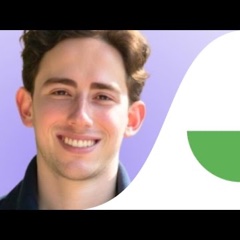
David Futoran
Cofounder and CEO of Honeydew
Where to hear and read about David Futoran1 episode or test

David Futoran is cofounder and CEO of Honeydew, a telehealth service that treats moderate to severe acne, including with Accutane, through licensed dermatologists in all 50 states. The most useful lesson from him is to take the hard, operationally heavy version of a problem that commoditized rivals skip, because that work becomes the moat.
It's not a science problem. It's a logistics and access problem.
How Honeydew is Reinventing Telehealth for Skincare
David Futoran: the story and the lessons
1David Futoran's path to Honeydew
Futoran grew up around doctors and lost his father at 16. His Soviet Jewish immigrant parents became doctors in America, and he spent summers working in their offices. His father died when he was 16, which pushed him to ask early what mattered and how to spend his time.
He concluded he loved helping people one on one and could do it at much larger scale. He expected that to mean healthcare, but not skincare or Honeydew.
Ten years of severe acne made him the patient Honeydew serves. He had severe cystic acne for almost 10 years. Living in New York, with more dermatologists than almost anywhere and a family of physicians, he still couldn't get care.
If he couldn't get it, he couldn't imagine what the rest of the country faced. He is on Accutane now and says he's grateful he went on it.
He met his cofounder Dr. Joel Spitz as Spitz's patient. Spitz is the dermatologist who treated and cleared his skin in person. They met by chance at an appointment and have built together for three and a half years.
Futoran thinks Spitz was the one who pitched him. Covid had made telemedicine normal by then.
Spitz is a working 50-50 cofounder who keeps the business clinically sound. Spitz is a Princeton and Columbia trained, board-certified dermatologist whose textbook is taught in every dermatology residency in the country. He builds clinical protocols, trains and screens clinicians, supervises them and handles complicated escalations.
He weighs what is a good business opportunity against what is safer and better than the standard of care, and several new verticals came from his ideas. Futoran's aim was to solve acne in the best way, not the lowest-friction way.
2Why Honeydew took on Accutane
Futoran chose the hard treatments that commoditized rivals avoid. Existing telederm players sell topical creams, ED pills or hair loss pills, and some earn well into nine figures. Generics worth $5 are branded and sold for $50 a month.
The easier model is recurring revenue on a branded simple product with no operational lift. None of them offered the full-strength FDA topicals and oral medication Futoran needed.
Accutane works when nothing else does, but the rules make it a hassle. It can endanger a baby during pregnancy, so only a 30-day supply can be issued and patients return every month. An FDA program has every doctor, patient and pharmacist complete time-sensitive tasks on a government site each month.
Dermatologist waits run 3 to 6 months, and far fewer offices will prescribe Accutane at all. Futoran says the pros greatly outweigh the operational complexity.
He argues the fears around Accutane are decades out of date. The fears date from 20 to 40 years ago, including side effect lawsuits that were later overturned. Low doses work as well as higher ones, so patients get a better experience with the same results.
He cites a meta-analysis of over a million patients in which people who finished Accutane were significantly less likely to commit suicide than those with other treatment or none. Standard acne care is chronic antibiotics, which harm the gut, and few people mention that.
Starting niche gave a small startup leverage over suppliers. Brick-and-mortar offices see about 50 Accutane patients a month, so a few thousand a month made Honeydew the biggest online player almost immediately. That won exclusive distribution deals and made it the lowest-cost provider in the nation for many of its medications.
"It's so much better to start niche and have focused acquisition, product, etc. strategy."
He offers a cash price because insurance leaves prescriptions unfilled. Over a third of derm prescriptions are never picked up, usually because of price. Honeydew's partnerships let it offer a cash price that beats even good coupon prices.
A patient may wait six months for a visit and then face a $600 tube of cream at CVS. Many college students also think insurance is free, when their parents pay the copays and deductibles.
3How Futoran took Honeydew nationwide
Futoran learned a national online company is fifty small companies. Each state has its own laws, and medical licensing is the hardest part because boards limit licenses. He was naive at first and assumed being online meant serving the whole country.
One Texas application took six months, was rejected, and required a dean's letter about a gap year 30 years ago. His cofounder was fingerprinted a million times and is now licensed in 51 jurisdictions.
Adding Florida doubled the business overnight. Honeydew spent six months only in New York, where acquisition was expensive. After Florida it shifted to launching as many states as fast as possible.
More states mean more people to target, more data for ad platforms to find the right people, and faster word of mouth.
Provider supply, not the physical product, is the real constraint. Partners handle the physical products. There are too few dermatologists and the gap is widening, so nurse practitioners and physician assistants extend each dermatologist's reach.
A long wait list of providers wants to work there, but onboarding, training and licensing take time.
He plans provider hiring ahead because demand swings daily. Too few providers can turn same-day availability into a month-long wait within days, while too many leave providers with thin caseloads and they quit. For eight weeks in a row, same-day or next-day appointments were open to over 90% of the country.
Faster licensing, extenders and better forecasting helped, and one national licensing pool means one equation instead of 50. "Hiring is not a day-to-day decision. It's a long-term decision."
4How Honeydew finds patients
Futoran built product and operations before spending heavily on marketing. Because the business is operationally complex, Honeydew invested first in technology, supply partnerships and the back end. Acquisition is now roughly 70% paid and 30% organic.
Organic is starting to grow after little early investment. Acne is a painkiller product, so patients don't churn after a month.
Honeydew started on Google, and it is still the largest channel. Google works because there are great keywords with high search volume that few advertisers compete for. Meta launched only about six months before the interview.
Most consumer companies default to Meta, so Futoran sees a big opportunity on Google.
Futoran answers questions himself on the Accutane subreddit. He spends a lot of time there answering questions and engaging with content, and it has brought in real customers.
Reddit works like Google because people gather around one specific problem, so success on one often predicts the other.
He found many small creators beat one big influencer. Honeydew's largest creator had a million followers on TikTok, and her video performed no better than videos from micro influencers paid $100 to $200. Creators with real stories post, get organic traction, then Honeydew boosts the best with Spark Ads and reuses clips in Meta and TikTok ads.
The million-follower creator turned out to be a Honeydew customer. The acne audience is mostly Gen Z and the condition is highly visual, which suits video.
Honeydew keeps real patients in ads and finds creators by DMing. It has tried generative content tools but avoids AI humans in video and ads, because a healthcare service should show real patients. It uses Upfluence as a creator engagement platform and for contracting.
The most effective method is still hands-on DMing. Futoran's TikTok For You page is full of people on Accutane, so he scrolls and messages them directly.
A month at a mall booth produced zero signups. Futoran stood at a rented mall booth from 9am to 6pm every day for a month with a large poster of his own acne.
"I think we got a total of zero signups the entire month." He says he would not do it again.
5How Honeydew onboards and prices
Futoran lets patients see a doctor before asking for a credit card. The first video visit needs no card. He chose this early, with no traction, to favor volume and learning over noise reduction, and it has held for three and a half years.
The cost is more no-shows, but patients who sign up stay in treatment a long time, so the company makes it up on the back end. Other telehealth founders were surprised by the policy, and he says it may change later.
He tailors onboarding to how ready each channel's visitors are to buy. Honeydew began only on Google, so every early customer was at the bottom of the funnel. Meta ads reached people who weren't actively searching and behaved differently in the flow.
"Somebody coming from Google has a very different commitment to buying than somebody coming from Meta."
He treats pricing and packaging as seriously as product market fit. An Accutane patient differs from a custom topical patient, and someone on an injectable taken every three months should not pay a monthly plan. Edge cases like patients with multiple conditions add to this.
It is his main focus for the next six months. "Pricing market fit is so game changing if you get it right in a business."
6Where Futoran takes Honeydew next
He wants Honeydew to be a patient's skincare partner for life. Plans start with post-Accutane maintenance to prevent relapse, then wrinkles, pigmentation, scarring and skin texture. Bringing lab work and medication pickup into one Honeydew checkout is another growth vector.
Early experiments on deeper services show good results. He compares it to Strava moving from cycling to running, and Duolingo spending over a decade on languages before adding other subjects.
Eczema and psoriasis are next because new drugs exist but access doesn't. Each already has hundreds of patients, and drug innovation in both conditions is booming. Hidradenitis suppurativa is also a target.
Futoran says having solved access for Accutane, the hardest case, positions Honeydew well for these complex medications.
He will buy commoditized AI diagnostic tools rather than build them. He expects visual diagnostic tools for dermatology to be commoditized because many companies are building them well, and some already diagnose accurately. Honeydew would plug one in and spend its effort on patient experience and operations.
"We're not going to be the ones that build that tool."
He uses an LLM to route patient messages by owner and urgency. The care team can't tell who a message belongs to or how urgent it is until a human reads it. An LLM reads it and routes it to the right person at the right urgency.
Futoran says small operational gains like this are why tech-enabled health services are now investable. In 2023 many VCs called such businesses non-investable, and he didn't believe it then.

How Honeydew is Reinventing Telehealth for Skincare
David Futoran explains how Honeydew built a telehealth service for moderate to severe acne by taking on the hard-to-prescribe treatment (Accutane) that commoditized competitors avoid. He covers going nationwide, supply-constrained provider scheduling, micro-influencer and paid acquisition, and a no-credit-card first visit, with adding Florida doubling the business overnight.
Futoran grew up around doctors and lost his father at 16. His Soviet Jewish immigrant parents became doctors in America, and he spent summers working in their offices. His father died when he was 16, which pushed him to ask early what mattered and how to spend his time.
He concluded he loved helping people one on one and could do it at much larger scale. He expected that to mean healthcare, but not skincare or Honeydew.
Ten years of severe acne made him the patient Honeydew serves. He had severe cystic acne for almost 10 years. Living in New York, with more dermatologists than almost anywhere and a family of physicians, he still couldn't get care.
If he couldn't get it, he couldn't imagine what the rest of the country faced. He is on Accutane now and says he's grateful he went on it.
He met his cofounder Dr. Joel Spitz as Spitz's patient. Spitz is the dermatologist who treated and cleared his skin in person. They met by chance at an appointment and have built together for three and a half years.
Futoran thinks Spitz was the one who pitched him. Covid had made telemedicine normal by then.
Spitz is a working 50-50 cofounder who keeps the business clinically sound. Spitz is a Princeton and Columbia trained, board-certified dermatologist whose textbook is taught in every dermatology residency in the country. He builds clinical protocols, trains and screens clinicians, supervises them and handles complicated escalations.
He weighs what is a good business opportunity against what is safer and better than the standard of care, and several new verticals came from his ideas. Futoran's aim was to solve acne in the best way, not the lowest-friction way.
Futoran chose the hard treatments that commoditized rivals avoid. Existing telederm players sell topical creams, ED pills or hair loss pills, and some earn well into nine figures. Generics worth $5 are branded and sold for $50 a month.
The easier model is recurring revenue on a branded simple product with no operational lift. None of them offered the full-strength FDA topicals and oral medication Futoran needed.
Accutane works when nothing else does, but the rules make it a hassle. It can endanger a baby during pregnancy, so only a 30-day supply can be issued and patients return every month. An FDA program has every doctor, patient and pharmacist complete time-sensitive tasks on a government site each month.
Dermatologist waits run 3 to 6 months, and far fewer offices will prescribe Accutane at all. Futoran says the pros greatly outweigh the operational complexity.
He argues the fears around Accutane are decades out of date. The fears date from 20 to 40 years ago, including side effect lawsuits that were later overturned. Low doses work as well as higher ones, so patients get a better experience with the same results.
He cites a meta-analysis of over a million patients in which people who finished Accutane were significantly less likely to commit suicide than those with other treatment or none. Standard acne care is chronic antibiotics, which harm the gut, and few people mention that.
Starting niche gave a small startup leverage over suppliers. Brick-and-mortar offices see about 50 Accutane patients a month, so a few thousand a month made Honeydew the biggest online player almost immediately. That won exclusive distribution deals and made it the lowest-cost provider in the nation for many of its medications.
"It's so much better to start niche and have focused acquisition, product, etc. strategy."
He offers a cash price because insurance leaves prescriptions unfilled. Over a third of derm prescriptions are never picked up, usually because of price. Honeydew's partnerships let it offer a cash price that beats even good coupon prices.
A patient may wait six months for a visit and then face a $600 tube of cream at CVS. Many college students also think insurance is free, when their parents pay the copays and deductibles.
Futoran learned a national online company is fifty small companies. Each state has its own laws, and medical licensing is the hardest part because boards limit licenses. He was naive at first and assumed being online meant serving the whole country.
One Texas application took six months, was rejected, and required a dean's letter about a gap year 30 years ago. His cofounder was fingerprinted a million times and is now licensed in 51 jurisdictions.
Adding Florida doubled the business overnight. Honeydew spent six months only in New York, where acquisition was expensive. After Florida it shifted to launching as many states as fast as possible.
More states mean more people to target, more data for ad platforms to find the right people, and faster word of mouth.
Provider supply, not the physical product, is the real constraint. Partners handle the physical products. There are too few dermatologists and the gap is widening, so nurse practitioners and physician assistants extend each dermatologist's reach.
A long wait list of providers wants to work there, but onboarding, training and licensing take time.
He plans provider hiring ahead because demand swings daily. Too few providers can turn same-day availability into a month-long wait within days, while too many leave providers with thin caseloads and they quit. For eight weeks in a row, same-day or next-day appointments were open to over 90% of the country.
Faster licensing, extenders and better forecasting helped, and one national licensing pool means one equation instead of 50. "Hiring is not a day-to-day decision. It's a long-term decision."
Futoran built product and operations before spending heavily on marketing. Because the business is operationally complex, Honeydew invested first in technology, supply partnerships and the back end. Acquisition is now roughly 70% paid and 30% organic.
Organic is starting to grow after little early investment. Acne is a painkiller product, so patients don't churn after a month.
Honeydew started on Google, and it is still the largest channel. Google works because there are great keywords with high search volume that few advertisers compete for. Meta launched only about six months before the interview.
Most consumer companies default to Meta, so Futoran sees a big opportunity on Google.
Futoran answers questions himself on the Accutane subreddit. He spends a lot of time there answering questions and engaging with content, and it has brought in real customers.
Reddit works like Google because people gather around one specific problem, so success on one often predicts the other.
He found many small creators beat one big influencer. Honeydew's largest creator had a million followers on TikTok, and her video performed no better than videos from micro influencers paid $100 to $200. Creators with real stories post, get organic traction, then Honeydew boosts the best with Spark Ads and reuses clips in Meta and TikTok ads.
The million-follower creator turned out to be a Honeydew customer. The acne audience is mostly Gen Z and the condition is highly visual, which suits video.
Honeydew keeps real patients in ads and finds creators by DMing. It has tried generative content tools but avoids AI humans in video and ads, because a healthcare service should show real patients. It uses Upfluence as a creator engagement platform and for contracting.
The most effective method is still hands-on DMing. Futoran's TikTok For You page is full of people on Accutane, so he scrolls and messages them directly.
A month at a mall booth produced zero signups. Futoran stood at a rented mall booth from 9am to 6pm every day for a month with a large poster of his own acne.
"I think we got a total of zero signups the entire month." He says he would not do it again.
Futoran lets patients see a doctor before asking for a credit card. The first video visit needs no card. He chose this early, with no traction, to favor volume and learning over noise reduction, and it has held for three and a half years.
The cost is more no-shows, but patients who sign up stay in treatment a long time, so the company makes it up on the back end. Other telehealth founders were surprised by the policy, and he says it may change later.
He tailors onboarding to how ready each channel's visitors are to buy. Honeydew began only on Google, so every early customer was at the bottom of the funnel. Meta ads reached people who weren't actively searching and behaved differently in the flow.
"Somebody coming from Google has a very different commitment to buying than somebody coming from Meta."
He treats pricing and packaging as seriously as product market fit. An Accutane patient differs from a custom topical patient, and someone on an injectable taken every three months should not pay a monthly plan. Edge cases like patients with multiple conditions add to this.
It is his main focus for the next six months. "Pricing market fit is so game changing if you get it right in a business."
He wants Honeydew to be a patient's skincare partner for life. Plans start with post-Accutane maintenance to prevent relapse, then wrinkles, pigmentation, scarring and skin texture. Bringing lab work and medication pickup into one Honeydew checkout is another growth vector.
Early experiments on deeper services show good results. He compares it to Strava moving from cycling to running, and Duolingo spending over a decade on languages before adding other subjects.
Eczema and psoriasis are next because new drugs exist but access doesn't. Each already has hundreds of patients, and drug innovation in both conditions is booming. Hidradenitis suppurativa is also a target.
Futoran says having solved access for Accutane, the hardest case, positions Honeydew well for these complex medications.
He will buy commoditized AI diagnostic tools rather than build them. He expects visual diagnostic tools for dermatology to be commoditized because many companies are building them well, and some already diagnose accurately. Honeydew would plug one in and spend its effort on patient experience and operations.
"We're not going to be the ones that build that tool."
He uses an LLM to route patient messages by owner and urgency. The care team can't tell who a message belongs to or how urgent it is until a human reads it. An LLM reads it and routes it to the right person at the right urgency.
Futoran says small operational gains like this are why tech-enabled health services are now investable. In 2023 many VCs called such businesses non-investable, and he didn't believe it then.