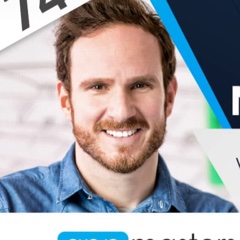
David Cremades
CMO at From the Bench
Where to hear and read about David Cremades1 episode or test

David Cremades is CMO at From the Bench, a sports manager game studio with over 60M downloads that grew from an agency side project. The thing most worth learning from him is how a small studio grows without costly paid installs, using official licenses, constant store tests, mid-size YouTubers and tested ad placements.
saying no is sometimes more important than saying yes
Licensing, ASO & Ad Monetization with David Cremades
David Cremades: the story and the lessons
1How From the Bench grew out of an agency side project
A manager game built for friends became the studio's core product. In 2005 a founder at an e-commerce agency made a manager game for himself and his friends, with no design at all. The mechanics were good, so players in Spain started to claim it.
The agency had developers and designers, so it built the game into a real product. It was not a mobile game, and it still had thousands of players.
The game was split into its own company to show where revenue came from. It was unclear whether the agency earned from games or from e-commerce, so a new company was the easiest way to separate the revenue. From the Bench was created in 2008.
E-commerce and gaming are very different businesses, so keeping them in one company made little sense.
2How From the Bench built a portfolio of sports licenses
Cremades treats official licenses as marketing spend. With no budget for campaigns early on, the studio signed official licenses because a licensed game brings organic downloads on release. A new release under the NFL license still brings downloads today.
"in the end you are paying for marketing but in a different way paying for the license"
The Real Madrid deal runs on revenue share with no upfront fee. Real Madrid was the first partner, since 2009, on a revenue share of about 50%. Costs scale with game revenue.
NFL and NBA licenses cost more upfront and earn less, and sometimes the ask is more than the license is worth. So "you have to do your market research before signing the agreement".
Small licenses built the track record that won bigger ones. Working with Real Madrid made other clubs trust the studio, and it held 30 or 40 football licenses before approaching the NBA. The NBA then worked only with 2K and EA Sports, yet a small company from Alicante in southeast Spain still got in.
The NFL license came inbound. After the NBA manager game existed, the league asked for a similar game under its license, and it had only two games at the time, so saying yes was easy.
US leagues need two licenses, one for teams and one for players. The NFL owns team rights and the NFLPA owns player rights, so a game needs both agreements, which takes about twice the time and probably more money.
The NBA held every right in one license until last season, when it split. The new NBPA had low resources and asked for a year with no licensing. The studio plans to return.
Finding the right licensing contact at a club is a hunt. Clubs rarely have anyone in charge of licensing. Marketing teams may have only three or four people, and often none of them owns mobile.
A LinkedIn search for licensing at a club gave poor results, and filtering by company and location worked better. A tip from the host is to connect first with a mutual contact so you become a second connection.
3How David Cremades runs store listing experiments
Store listing tests are the main growth lever. Paid installs cost too much, so every part of the listing gets tested because nobody can predict what moves downloads. Each game gets experiments, and some tests give no result at all.
The team runs them anyway.
Putting licensed players in the icon lifted downloads 30% in one day. The Real Madrid license requires five players in the icon, so each one is tiny, and it still beat the old icon. The change was rolled out in all countries.
The license sets the rules for each test, so both sides review the numbers and decide together. Real Madrid has a rigid style guide.
He swaps the featured players in the icon by country. The same team has different star players in different markets, so the studio shows the player most famous locally. Google Trends compares candidate players in each country before choosing.
"if you are having Real Madrid in Brazil you will use different country different players"
Keywords are localized into many languages. Google Play listings use all available languages, and every iOS game gets at least four or five. The team focuses on the countries that matter most to it.
Small games host odd keyword experiments that make no sense on paper and sometimes surprise them.
Without design resources, he tests the store description. Icon and screenshot tests need designers and creatives. When those are unavailable, the team tests descriptions and text instead.
Results come slowly, but it is an easy way to raise downloads.
Screenshot orientation and listing video gave mixed or no results. Portrait or landscape screenshots made no visible difference after a recent switch, though the studio had no data to show. Listing video helped in some tests and failed in others, and most of the time the version without video won.
The team used portrait on the advice of a Spanish agency, Upcave.
He avoids ASO wins that mislead users about the product. Screenshots that made a manager game look like a simulator brought more installs but disappointed players and drew bad ratings. Google Play counts retention and ratings in ranking, so those users can cost rank later.
"receiving more downloads is not always a bit the best option"
4Cremades on influencer marketing that pays off
Mid-size YouTube creators are the most cost-effective paid channel. Mid-size means roughly 100K to 1 to 2 million followers. These creators are more involved because they want to grow their audience and take many sponsorships.
Agencies are faster but cost much more and usually bring big influencers, so budget decides. "from our side the mid-size is the most cost-effective influencers"
One video of about $2,000 ranked the game in three countries. The creator was Delantero09, based in Spain, with viewers in Argentina, Mexico and Spain. The game ranked number 2 in Mexico, number 1 in Argentina and number 10 in Spain, at a very low cost per install.
Downloads from that campaign were still arriving more than a year later.
He posts the campaign on a marketplace and always negotiates. On a bidding marketplace such as Famebit you post the campaign, target country and channel topic, then receive offers, a bit like Upwork for influencer marketing. Negotiating gets a better price and better conditions.
The platform takes a cut of about 10%, judging from its website. It was bought by YouTube and may have changed its model since.
He prefers YouTube to Instagram for gaming campaigns. A video stays live and keeps being found through search, while an Instagram post or story is quickly replaced in the feed. A creator can also spend several minutes explaining the game.
Gamers already use YouTube as their source of new games, so the audience fits.
5How From the Bench tunes ad monetization
Ad revenue rose once someone owned it and developers got involved. Until about two years ago nobody optimized ads. The studio used default mediation and earned without knowing if it was good, then revenue rose a lot once it became a focus.
Developers dislike adding SDKs, but they became willing once they saw revenue rise just from switching networks. "nobody in the company was optimizing that part"
He tries several mediation networks instead of trusting vendor claims. Every mediation company claims to be the best, so the studio uses a mediation partner and tests networks one by one.
It also runs A/B tests on how many interstitials to show each user and on daily caps for rewarded videos.
Only 2 to 4% of players pay, so video ads monetize the rest. That leaves about 95% of users unmonetized. Rewarded video fits natural moments such as doubling the daily prize or refilling energy or lives.
Offering a video when lives run out is an obvious spot that many games miss. "you have 95% of the of the users that are not paying and you need to monetize them"
Each ad placement gets its own cap, and he uses many placements. An energy refill video can be watched twice a day, while a pre-match booster has a separate cap. The goal is to get as many users as possible to watch at least one video.
Users play differently, so different placements catch different people. More users watching fewer videos each earns more than fewer users watching many.
6Why Cremades says no to exciting side projects
Fame in the industry brings offers, and he picks them carefully. Most opportunities take time and fail, so he focuses on what brings revenue and tries other things afterward.
"saying no is sometimes more important than saying yes"
A Chinese Super League manager game wasted a lot of team time. A Chinese company offered the project and it looked exciting. The studio spent a lot of time on it, and the partner never released the game.

Licensing, ASO & Ad Monetization with David Cremades
Practical lessons from a sports manager game studio with over 60M downloads on licensing deals, ASO experiments, mid-size influencer campaigns and tuning rewarded video ads. A single icon change showing real players lifted downloads 30% in one day, and one roughly $2,000 YouTube video pushed the game to number one in Argentina.
A manager game built for friends became the studio's core product. In 2005 a founder at an e-commerce agency made a manager game for himself and his friends, with no design at all. The mechanics were good, so players in Spain started to claim it.
The agency had developers and designers, so it built the game into a real product. It was not a mobile game, and it still had thousands of players.
The game was split into its own company to show where revenue came from. It was unclear whether the agency earned from games or from e-commerce, so a new company was the easiest way to separate the revenue. From the Bench was created in 2008.
E-commerce and gaming are very different businesses, so keeping them in one company made little sense.
Cremades treats official licenses as marketing spend. With no budget for campaigns early on, the studio signed official licenses because a licensed game brings organic downloads on release. A new release under the NFL license still brings downloads today.
"in the end you are paying for marketing but in a different way paying for the license"
The Real Madrid deal runs on revenue share with no upfront fee. Real Madrid was the first partner, since 2009, on a revenue share of about 50%. Costs scale with game revenue.
NFL and NBA licenses cost more upfront and earn less, and sometimes the ask is more than the license is worth. So "you have to do your market research before signing the agreement".
Small licenses built the track record that won bigger ones. Working with Real Madrid made other clubs trust the studio, and it held 30 or 40 football licenses before approaching the NBA. The NBA then worked only with 2K and EA Sports, yet a small company from Alicante in southeast Spain still got in.
The NFL license came inbound. After the NBA manager game existed, the league asked for a similar game under its license, and it had only two games at the time, so saying yes was easy.
US leagues need two licenses, one for teams and one for players. The NFL owns team rights and the NFLPA owns player rights, so a game needs both agreements, which takes about twice the time and probably more money.
The NBA held every right in one license until last season, when it split. The new NBPA had low resources and asked for a year with no licensing. The studio plans to return.
Finding the right licensing contact at a club is a hunt. Clubs rarely have anyone in charge of licensing. Marketing teams may have only three or four people, and often none of them owns mobile.
A LinkedIn search for licensing at a club gave poor results, and filtering by company and location worked better. A tip from the host is to connect first with a mutual contact so you become a second connection.
Store listing tests are the main growth lever. Paid installs cost too much, so every part of the listing gets tested because nobody can predict what moves downloads. Each game gets experiments, and some tests give no result at all.
The team runs them anyway.
Putting licensed players in the icon lifted downloads 30% in one day. The Real Madrid license requires five players in the icon, so each one is tiny, and it still beat the old icon. The change was rolled out in all countries.
The license sets the rules for each test, so both sides review the numbers and decide together. Real Madrid has a rigid style guide.
He swaps the featured players in the icon by country. The same team has different star players in different markets, so the studio shows the player most famous locally. Google Trends compares candidate players in each country before choosing.
"if you are having Real Madrid in Brazil you will use different country different players"
Keywords are localized into many languages. Google Play listings use all available languages, and every iOS game gets at least four or five. The team focuses on the countries that matter most to it.
Small games host odd keyword experiments that make no sense on paper and sometimes surprise them.
Without design resources, he tests the store description. Icon and screenshot tests need designers and creatives. When those are unavailable, the team tests descriptions and text instead.
Results come slowly, but it is an easy way to raise downloads.
Screenshot orientation and listing video gave mixed or no results. Portrait or landscape screenshots made no visible difference after a recent switch, though the studio had no data to show. Listing video helped in some tests and failed in others, and most of the time the version without video won.
The team used portrait on the advice of a Spanish agency, Upcave.
He avoids ASO wins that mislead users about the product. Screenshots that made a manager game look like a simulator brought more installs but disappointed players and drew bad ratings. Google Play counts retention and ratings in ranking, so those users can cost rank later.
"receiving more downloads is not always a bit the best option"
Mid-size YouTube creators are the most cost-effective paid channel. Mid-size means roughly 100K to 1 to 2 million followers. These creators are more involved because they want to grow their audience and take many sponsorships.
Agencies are faster but cost much more and usually bring big influencers, so budget decides. "from our side the mid-size is the most cost-effective influencers"
One video of about $2,000 ranked the game in three countries. The creator was Delantero09, based in Spain, with viewers in Argentina, Mexico and Spain. The game ranked number 2 in Mexico, number 1 in Argentina and number 10 in Spain, at a very low cost per install.
Downloads from that campaign were still arriving more than a year later.
He posts the campaign on a marketplace and always negotiates. On a bidding marketplace such as Famebit you post the campaign, target country and channel topic, then receive offers, a bit like Upwork for influencer marketing. Negotiating gets a better price and better conditions.
The platform takes a cut of about 10%, judging from its website. It was bought by YouTube and may have changed its model since.
He prefers YouTube to Instagram for gaming campaigns. A video stays live and keeps being found through search, while an Instagram post or story is quickly replaced in the feed. A creator can also spend several minutes explaining the game.
Gamers already use YouTube as their source of new games, so the audience fits.
Ad revenue rose once someone owned it and developers got involved. Until about two years ago nobody optimized ads. The studio used default mediation and earned without knowing if it was good, then revenue rose a lot once it became a focus.
Developers dislike adding SDKs, but they became willing once they saw revenue rise just from switching networks. "nobody in the company was optimizing that part"
He tries several mediation networks instead of trusting vendor claims. Every mediation company claims to be the best, so the studio uses a mediation partner and tests networks one by one.
It also runs A/B tests on how many interstitials to show each user and on daily caps for rewarded videos.
Only 2 to 4% of players pay, so video ads monetize the rest. That leaves about 95% of users unmonetized. Rewarded video fits natural moments such as doubling the daily prize or refilling energy or lives.
Offering a video when lives run out is an obvious spot that many games miss. "you have 95% of the of the users that are not paying and you need to monetize them"
Each ad placement gets its own cap, and he uses many placements. An energy refill video can be watched twice a day, while a pre-match booster has a separate cap. The goal is to get as many users as possible to watch at least one video.
Users play differently, so different placements catch different people. More users watching fewer videos each earns more than fewer users watching many.
Fame in the industry brings offers, and he picks them carefully. Most opportunities take time and fail, so he focuses on what brings revenue and tries other things afterward.
"saying no is sometimes more important than saying yes"
A Chinese Super League manager game wasted a lot of team time. A Chinese company offered the project and it looked exciting. The studio spent a lot of time on it, and the partner never released the game.