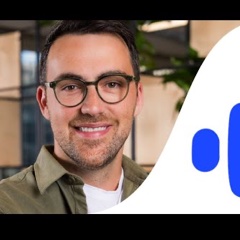
Connor Zwick
Cofounder and CEO of Speak
Where to hear and read about Connor Zwick1 episode or test

Connor Zwick is cofounder and CEO of Speak, an AI-first language tutor built around speaking out loud that raised a Series C at a $1 billion valuation. The thing most worth learning from him is to enter the hardest, best-served market first, build a product that is truly 10x better there, then copy the playbook locally elsewhere.
the only way we would be able to rise above the noise in a market like that would be if the product was actually truly differentiated.
How Speak Built a $1B AI Language Learning App
Connor Zwick: the story and the lessons
1Connor Zwick's path from Flashcards+ to Speak
Zwick built his first app as a teenager to fix his own problem. As the iPhone launched and he was teaching himself to program, he made Flashcards+ because his friends used note cards. It was later sold to Chegg.
He knew nothing about growth, but in the early App Store good apps rose to the top. A VC wanted to invest when he was 17 and he said no.
The Thiel Fellowship gave him a community more than a credential. He liked Harvard but stopped going to class and spent his time building, flying to San Francisco to meet people in tech. He applied in the fellowship's second year.
He says he might have dropped out anyway, and calls the community the insanely valuable part.
Thiel classmates introduced him and Andrew to deep learning early. Chris Olah, later an Anthropic cofounder, was already discussing neural networks in 2012. Around 2015 the pair spent about a year and a half learning AI.
Google was publishing key papers but locked its doors, so they snuck into Stanford and Berkeley courses and tried to implement the papers themselves.
Zwick started Speak with one narrow technical wedge: accented speech. Incumbent speech models had roughly an 80% error rate on learner accents, which is why Duolingo and Rosetta Stone offered little speaking. Zwick and Andrew trained their own model over a weekend on scraped YouTube data and beat state-of-the-art accent detection records.
The plan was that the wedge would bring distribution and data, which would fund compute and better models, aiming at a full end-to-end tutor in about 10 years.
2How Zwick grew Speak by starting in South Korea
Zwick picked Korea by evidence and chose the hardest market on purpose. Speak started with no market in mind, then did research and traveled to talk to users. Korea spends a stat of 1% of GDP on English, and skyscrapers in Gangnam hold English classrooms.
Because the market was so well served, only a 10x better product could win. Speak stayed on Korean speakers learning English for about four years, in a market neither cofounder had visited before starting.
He expanded only when the product was stable and LLMs sped up localization. Japan came once product market fit was strong, the pedagogy was settled and LLMs made curriculum localization much faster than the huge upfront Korean build.
Going from one market to two exposed problems Speak had not anticipated. It automated the fixes, then went from the second market to many within a year, reaching 12+ first languages and five learnable languages.
Speak hired a head of Japan on launch day. Zwick did not run Japan from San Francisco. Each market gets its own team on day one, with a framework from the center and autonomy to make the brand feel Japanese or Korean.
Korea was effectively international expansion from the start, so Speak had no naivety left by Japan.
Speak treats marketing in each country as brand building. PR, earned media and owned social feed flywheels into performance marketing, especially creatives. Speak is the number one English education brand in Korea, with 30 to 40% top-of-mind and 70 to 80% aided awareness.
About 10% of South Koreans have tried it. The playbook was copied to Japan, Taiwan and the US, and work now runs in parallel across markets.
3What drove Speak's product growth and how Zwick handles AI risk
Zwick tests with users alone, because behavior changes when the team is present. Early Bay Area learners acted very differently when Speak's team sat in the room than when they tried the product alone.
Alone, they had no fear of judgment and spoke freely. That revealed the core benefit of speaking to an AI rather than a person.
Growth came in step jumps whenever the core models improved. The first phone recognizer gave reliable feedback on individual sounds, and the whole funnel got substantially stronger.
Zwick says the real shape was a series of leaps, driven by model changes more than interface tweaks.
Speak launched open-ended roleplay once language models were good enough. For the first years weak language models kept lessons rigid. When LLMs improved, Speak was early to roleplay, where learners practice any scenario.
Roleplay changed long-term retention and time spent in the app.
He designs for failure because no human checks Speak's output. Building on a model that works 90 to 99 percent of the time changes how you test and plan for failure. A visible failure is easier to handle than a hallucination nobody can spot live.
Zwick separates what seems possible in a demo from what is consistently good in practice, and calls it less a technical challenge than a product one.
Zwick learned that over-moderating AI was the bigger risk. Speak put GPT-4 in production three or four months before ChatGPT, with 30 power users. One averaged about 8 hours a day for 3 days, using the tutor as a simulated boyfriend.
The team added heavy moderation to avoid a viral screenshot, but users offended at being censored in their own scenarios proved the larger risk, so Speak dialed it back.
4Zwick's views on AI costs, motivation and the tutor ahead
He tells teams not to constrain themselves around AI costs. Speak assumes costs will keep falling, so any feature with some ROI should be built. A premium subscription leaves margin room.
Token use for tutoring is far lower than for coding agents, though speech and multimodality are still expensive. The falling-cost claim is a belief, not shown with data.
Zwick checks whether token use tracks value before choosing a model. Tools where per-token usage correlates strongly with value face the most cost pressure. Speak is not one of them, which lets it stay on the frontier of new models.
He bets on relevance and relationship over streaks and dopamine loops. Speak solved personalization first, since a personalized lesson is by definition more relevant. Its aha moment is realizing you can actually speak out loud.
He treats Duolingo's 700-day streaks as proof gamification retains users, but believes relevance is better. He sees Duolingo as a complementary good that validates the market.
Zwick wants a superhuman tutor that plans, tests mastery and builds curriculum. He cites Bloom's 2 sigma effect: one-on-one mastery learning lifts students two standard deviations above classroom teaching. He expects mastery evaluation, pedagogical planning and dynamic curriculum to be solved in 3 to 5 years.
No outcome data on learner fluency is given, so the timeline is a stated belief. His case: "Everyone knows it's possible. It's just not feasible to offer it to people."
He keeps Speak lean by leaning on connected tools. Zwick says smaller teams are enough now and fights communication overhead as the company grows. Connected tools like Notion and Linear get a new hire context much faster than a year ago.
He names scaling while staying nimble as the hardest company problem.

How Speak Built a $1B AI Language Learning App
Speak's CEO explains how an AI-first language app built around speaking out loud grew by starting in one hard market, South Korea, and then copying a local, brand-led playbook into new countries. Speak recently raised a Series C at a $1 billion valuation, and about 10% of all South Koreans have tried the product.
Zwick built his first app as a teenager to fix his own problem. As the iPhone launched and he was teaching himself to program, he made Flashcards+ because his friends used note cards. It was later sold to Chegg.
He knew nothing about growth, but in the early App Store good apps rose to the top. A VC wanted to invest when he was 17 and he said no.
The Thiel Fellowship gave him a community more than a credential. He liked Harvard but stopped going to class and spent his time building, flying to San Francisco to meet people in tech. He applied in the fellowship's second year.
He says he might have dropped out anyway, and calls the community the insanely valuable part.
Thiel classmates introduced him and Andrew to deep learning early. Chris Olah, later an Anthropic cofounder, was already discussing neural networks in 2012. Around 2015 the pair spent about a year and a half learning AI.
Google was publishing key papers but locked its doors, so they snuck into Stanford and Berkeley courses and tried to implement the papers themselves.
Zwick started Speak with one narrow technical wedge: accented speech. Incumbent speech models had roughly an 80% error rate on learner accents, which is why Duolingo and Rosetta Stone offered little speaking. Zwick and Andrew trained their own model over a weekend on scraped YouTube data and beat state-of-the-art accent detection records.
The plan was that the wedge would bring distribution and data, which would fund compute and better models, aiming at a full end-to-end tutor in about 10 years.
Zwick picked Korea by evidence and chose the hardest market on purpose. Speak started with no market in mind, then did research and traveled to talk to users. Korea spends a stat of 1% of GDP on English, and skyscrapers in Gangnam hold English classrooms.
Because the market was so well served, only a 10x better product could win. Speak stayed on Korean speakers learning English for about four years, in a market neither cofounder had visited before starting.
He expanded only when the product was stable and LLMs sped up localization. Japan came once product market fit was strong, the pedagogy was settled and LLMs made curriculum localization much faster than the huge upfront Korean build.
Going from one market to two exposed problems Speak had not anticipated. It automated the fixes, then went from the second market to many within a year, reaching 12+ first languages and five learnable languages.
Speak hired a head of Japan on launch day. Zwick did not run Japan from San Francisco. Each market gets its own team on day one, with a framework from the center and autonomy to make the brand feel Japanese or Korean.
Korea was effectively international expansion from the start, so Speak had no naivety left by Japan.
Speak treats marketing in each country as brand building. PR, earned media and owned social feed flywheels into performance marketing, especially creatives. Speak is the number one English education brand in Korea, with 30 to 40% top-of-mind and 70 to 80% aided awareness.
About 10% of South Koreans have tried it. The playbook was copied to Japan, Taiwan and the US, and work now runs in parallel across markets.
Zwick tests with users alone, because behavior changes when the team is present. Early Bay Area learners acted very differently when Speak's team sat in the room than when they tried the product alone.
Alone, they had no fear of judgment and spoke freely. That revealed the core benefit of speaking to an AI rather than a person.
Growth came in step jumps whenever the core models improved. The first phone recognizer gave reliable feedback on individual sounds, and the whole funnel got substantially stronger.
Zwick says the real shape was a series of leaps, driven by model changes more than interface tweaks.
Speak launched open-ended roleplay once language models were good enough. For the first years weak language models kept lessons rigid. When LLMs improved, Speak was early to roleplay, where learners practice any scenario.
Roleplay changed long-term retention and time spent in the app.
He designs for failure because no human checks Speak's output. Building on a model that works 90 to 99 percent of the time changes how you test and plan for failure. A visible failure is easier to handle than a hallucination nobody can spot live.
Zwick separates what seems possible in a demo from what is consistently good in practice, and calls it less a technical challenge than a product one.
Zwick learned that over-moderating AI was the bigger risk. Speak put GPT-4 in production three or four months before ChatGPT, with 30 power users. One averaged about 8 hours a day for 3 days, using the tutor as a simulated boyfriend.
The team added heavy moderation to avoid a viral screenshot, but users offended at being censored in their own scenarios proved the larger risk, so Speak dialed it back.
He tells teams not to constrain themselves around AI costs. Speak assumes costs will keep falling, so any feature with some ROI should be built. A premium subscription leaves margin room.
Token use for tutoring is far lower than for coding agents, though speech and multimodality are still expensive. The falling-cost claim is a belief, not shown with data.
Zwick checks whether token use tracks value before choosing a model. Tools where per-token usage correlates strongly with value face the most cost pressure. Speak is not one of them, which lets it stay on the frontier of new models.
He bets on relevance and relationship over streaks and dopamine loops. Speak solved personalization first, since a personalized lesson is by definition more relevant. Its aha moment is realizing you can actually speak out loud.
He treats Duolingo's 700-day streaks as proof gamification retains users, but believes relevance is better. He sees Duolingo as a complementary good that validates the market.
Zwick wants a superhuman tutor that plans, tests mastery and builds curriculum. He cites Bloom's 2 sigma effect: one-on-one mastery learning lifts students two standard deviations above classroom teaching. He expects mastery evaluation, pedagogical planning and dynamic curriculum to be solved in 3 to 5 years.
No outcome data on learner fluency is given, so the timeline is a stated belief. His case: "Everyone knows it's possible. It's just not feasible to offer it to people."
He keeps Speak lean by leaning on connected tools. Zwick says smaller teams are enough now and fights communication overhead as the company grows. Connected tools like Notion and Linear get a new hire context much faster than a year ago.
He names scaling while staying nimble as the hardest company problem.