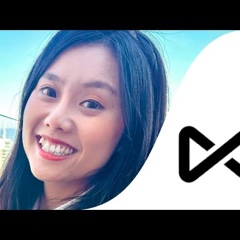
Coco Mao
Cofounder and CEO of OpenArt, former Google product builder
Where to hear and read about Coco Mao1 episode or test

Coco Mao is cofounder and CEO of OpenArt, a former Google product builder who took an AI image community to a video storytelling platform with ARR above $30M. The thing most worth learning from her is to ship the most embarrassing MVP fast, then pair it with a real go-to-market channel and a differentiated use case.
what's the most embarrassing MVP we could build?
How OpenArt is Using AI to Reinvent Content Creation
Coco Mao: the story and the lessons
1How Coco Mao got from Google to OpenArt
Mao spent seven years at Google before starting a company. She wanted a startup from her first day at Google but had just graduated, had no idea what to build, and had visa issues that eased once she had a green card.
She chose to grow inside a company that could teach her and widen her network. Her advice to would-be founders: there is light at the end of the tunnel.
Google's internal incubator let her test a startup with a safety net. The incubator ran from 2016 to 2023 and was described as a kind of YC inside Google. It accepted and funded her idea, a short video platform with no AI, while TikTok was still early.
She met her current cofounder there. The startup was later acquired by Google Search, and she says fear of another small outcome pushed her toward a bigger bet at OpenArt.
After quitting Google, Mao and her cofounder tried a new idea weekly. They left in January 2022 with a creator economy idea that worked only somewhat, then tested one new idea every week for about half a year.
She says her story is not the usual 'great idea, quit, instant product-market fit'. The two simply wanted to work together.
Playing with DALL-E 2 in August 2022 sparked OpenArt. This was three months before ChatGPT launched, when 'generative AI' was not yet a common term. When Stable Diffusion went open source, they integrated several models beside DALL-E 2 and became an aggregator.
2How Mao launched OpenArt with an embarrassing MVP
Mao builds the most embarrassing MVP that tests a theory. The first product crawled AI images from Reddit and Discord and showed the prompts beside them. It took under a week to build.
Posted on Hacker News as 'Pinterest for AI images', it hit number one that day and brought the first traffic.
Showing the prompt beside each image solved blank-page paralysis. With no ChatGPT yet, people had no habit of writing prompts and did not know what to type. Pairing each image with its prompt gave Pinterest-style inspiration and a reason to return.
That pain point drove the initial traffic and started the flywheel.
Early users were too varied to fit one segment. After talking to hundreds of users, Mao found them very hard to summarize, an answer investors find unsatisfying. Tabletop gamers such as D&D players were one early signal.
She stresses they were not representative. Small community pockets spread the product by word of mouth: she once met two users in the same D&D group, and one had shared OpenArt with the other.
Mao treats go-to-market as at least as important as product. A good product is the baseline, and strong go-to-market brings users in while the product keeps them. With ten users you can't iterate much on the product.
She argues the old idea that good products sell themselves has passed, since everyone is now building and vibe coding apps. Quote: "go to market is as important or even more important than" the product.
3How OpenArt grew through SEO
SEO was the one channel that worked while the team was lean. Growth was slow in 2023 because the small team ignored go-to-market. Basic SEO on the homepage, landing page and each feature page kept working through that period.
Starting early and owning a domain matching the category helped OpenArt rank near the top for AI art. Mao tells founders to pick a good domain name for this reason. Top keywords like AI art generator are now very hard to rank for.
Programmatic SEO added thousands of niche pages on top. Templated pages for queries such as 3D art generator or DND image generator each bring little volume, but thousands or tens of thousands add up.
Pinterest and Canva scaled SEO this way. Quote: "each of them may not give you a large volume, but then when you have like thousands or even tens of thousands of these pages, they really add up."
Mao keeps every templated page distinct and fast. Duplicate pages can hurt domain authority, so each page needs differentiated, high-quality content. Details like page performance and image size count too.
A shortcut for finding keywords is to copy what competitors already running programmatic SEO rank for.
OpenArt translates SEO pages for its top subscribers' countries. The team looked up where its top subscribers live and translated its thousands of pages for those markets.
Country subfolders and links from high-authority local sites can jumpstart international growth. Mao also sees chatbot search, or GEO, as a possible new channel that good SEO already helps with.
Mao caps paid marketing so an ad policy change cannot sink OpenArt. Paid scales well, but she says a company should not rely on it too heavily. OpenArt mixes paid, organic, SEO and social, and diversifying go-to-market is the top priority.
Social gets the most effort because it is nearly free. The YouTube channel grew from about 30k to almost 200k. Boosting creator content with paid ads on YouTube is not cracked yet, but she wants to keep trying.
4Why Mao moved OpenArt from images to video storytelling
Growth to $10M ARR still left a differentiation problem. Revenue grew from 1M to 10M in 2024, yet investors kept asking how OpenArt differed from other image tools and aggregators.
Talking to users revealed that wanting consistent characters meant they wanted to tell stories.
Mao used 3 to 4 million monthly users to test the storytelling thesis. Storytelling is a broad idea: a film, a short TikTok video and an ad all count. It needs characters, narrative and audio together, which single-image sites lack.
Video is the best story format, and video models improved sharply early in the year. She feared a small outcome would mean a missed chance in a gold rush.
The image product became the base for the video product. Image-to-video is used far more than text-to-video. Starting from an image gives more control and costs less.
The move forced three changes: upselling existing users, new go-to-market channels and a new subscription. Some users did not realize they needed video or stories at all.
5How OpenArt changed its credit pricing
Mao replaced unlimited credits with hard limits and add-on packs. Unlimited credits worked for images but would have bankrupted OpenArt once video arrived. Users complained loudly on Discord but kept buying.
Quote: "we would be bankrupt if we don't change our subscription." She reads complaints as emotional investment, and those users stay if treated fairly.
OpenArt tiers differ by credits, not by gated features. The Essential, Advanced and Infinite tiers differ mainly in credit amount, and the free tier gives only trial credits. Users who run out simply upgrade.
Quote: "We tried to feature guard things and then we didn't find it work very well for us."
Credits can only be bought with a subscription. This targets engaged users, since credit-only buyers tend to forget the product, and it ties credit purchases to recurring revenue.
Users first could buy about 10 or 20 packs, then asked for more, so the cap was expanded.
6Mao on metrics and competing with model labs
Mao watches retention and gross margin beyond acquisition numbers. Revenue comes first, then retention, because users who stay enlarge the base and the effect compounds by monthly cohort. Gross margin decides whether a GenAI startup lasts.
With negative margins a company survives only on heavy funding or while waiting to be acquired. Quote: "if you have retention right, each month your cohort retention will like it's a compounding effect."
Mao plans app-layer value that a raw model cannot give. As Sora 2 closes in on storytelling, she plans finer control over longer stories and fine-tuning a model cannot directly output.
She also sees value in helping creators build and own a character world, like Mickey Mouse with legal protection and Donald Duck around him. Whether AI-made characters can be copyrighted is a gray zone.
Mao wants network effects, which she calls the gold. OpenArt aims to be the platform where people both make and experience stories, more interactive and playable. How it differentiates as a platform is still an open question for her.
Her stated goal for the next one to two years is to democratize visual storytelling. She considers five years too long to predict.
OpenArt uses open source models for flexibility beyond closed APIs. The team does not train its own models. It integrates closed model APIs but uses open models for creative or tailored work.
Mao says open source now catches up with closed models within weeks or months.
7How Mao leads and what she would change
Mao regrets not moving faster and learning more rigorously. She calls speed and iteration the biggest edge for an AI application startup. The team launches MVPs quickly, but iterating after the MVP is the harder part.
She would also be more rigorous about what each experiment teaches.
A week away showed her hands-on leadership did not scale. With about 10 people and a daily sync but no task tracking, work became chaotic when she was out for a week last year.
OpenArt now uses task management and gives people more freedom to experiment. Her cofounder is better at autonomy and keeps reminding her. Her clockmaker analogy: build the conditions for the company to thrive, then hand it off.
Scaling the team without losing speed is her open question. The team was about 10 people early this year, so revenue per employee is very high. The goal is to hire enough people to deliver what the company wants to achieve.
She describes working in AI as thrilling and anxious, with every day bringing something new and a constant feeling of falling behind.

How OpenArt is Using AI to Reinvent Content Creation
OpenArt's CEO explains how an embarrassing one-week MVP, SEO and a pivot from image generation to video storytelling took the company from 1 million to 10 million in ARR in 2024, to over $30M in ARR. The episode covers programmatic SEO, credit-based pricing changes, which growth metrics matter, and how an app company competes with foundation model labs.
Mao spent seven years at Google before starting a company. She wanted a startup from her first day at Google but had just graduated, had no idea what to build, and had visa issues that eased once she had a green card.
She chose to grow inside a company that could teach her and widen her network. Her advice to would-be founders: there is light at the end of the tunnel.
Google's internal incubator let her test a startup with a safety net. The incubator ran from 2016 to 2023 and was described as a kind of YC inside Google. It accepted and funded her idea, a short video platform with no AI, while TikTok was still early.
She met her current cofounder there. The startup was later acquired by Google Search, and she says fear of another small outcome pushed her toward a bigger bet at OpenArt.
After quitting Google, Mao and her cofounder tried a new idea weekly. They left in January 2022 with a creator economy idea that worked only somewhat, then tested one new idea every week for about half a year.
She says her story is not the usual 'great idea, quit, instant product-market fit'. The two simply wanted to work together.
Playing with DALL-E 2 in August 2022 sparked OpenArt. This was three months before ChatGPT launched, when 'generative AI' was not yet a common term. When Stable Diffusion went open source, they integrated several models beside DALL-E 2 and became an aggregator.
Mao builds the most embarrassing MVP that tests a theory. The first product crawled AI images from Reddit and Discord and showed the prompts beside them. It took under a week to build.
Posted on Hacker News as 'Pinterest for AI images', it hit number one that day and brought the first traffic.
Showing the prompt beside each image solved blank-page paralysis. With no ChatGPT yet, people had no habit of writing prompts and did not know what to type. Pairing each image with its prompt gave Pinterest-style inspiration and a reason to return.
That pain point drove the initial traffic and started the flywheel.
Early users were too varied to fit one segment. After talking to hundreds of users, Mao found them very hard to summarize, an answer investors find unsatisfying. Tabletop gamers such as D&D players were one early signal.
She stresses they were not representative. Small community pockets spread the product by word of mouth: she once met two users in the same D&D group, and one had shared OpenArt with the other.
Mao treats go-to-market as at least as important as product. A good product is the baseline, and strong go-to-market brings users in while the product keeps them. With ten users you can't iterate much on the product.
She argues the old idea that good products sell themselves has passed, since everyone is now building and vibe coding apps. Quote: "go to market is as important or even more important than" the product.
SEO was the one channel that worked while the team was lean. Growth was slow in 2023 because the small team ignored go-to-market. Basic SEO on the homepage, landing page and each feature page kept working through that period.
Starting early and owning a domain matching the category helped OpenArt rank near the top for AI art. Mao tells founders to pick a good domain name for this reason. Top keywords like AI art generator are now very hard to rank for.
Programmatic SEO added thousands of niche pages on top. Templated pages for queries such as 3D art generator or DND image generator each bring little volume, but thousands or tens of thousands add up.
Pinterest and Canva scaled SEO this way. Quote: "each of them may not give you a large volume, but then when you have like thousands or even tens of thousands of these pages, they really add up."
Mao keeps every templated page distinct and fast. Duplicate pages can hurt domain authority, so each page needs differentiated, high-quality content. Details like page performance and image size count too.
A shortcut for finding keywords is to copy what competitors already running programmatic SEO rank for.
OpenArt translates SEO pages for its top subscribers' countries. The team looked up where its top subscribers live and translated its thousands of pages for those markets.
Country subfolders and links from high-authority local sites can jumpstart international growth. Mao also sees chatbot search, or GEO, as a possible new channel that good SEO already helps with.
Mao caps paid marketing so an ad policy change cannot sink OpenArt. Paid scales well, but she says a company should not rely on it too heavily. OpenArt mixes paid, organic, SEO and social, and diversifying go-to-market is the top priority.
Social gets the most effort because it is nearly free. The YouTube channel grew from about 30k to almost 200k. Boosting creator content with paid ads on YouTube is not cracked yet, but she wants to keep trying.
Growth to $10M ARR still left a differentiation problem. Revenue grew from 1M to 10M in 2024, yet investors kept asking how OpenArt differed from other image tools and aggregators.
Talking to users revealed that wanting consistent characters meant they wanted to tell stories.
Mao used 3 to 4 million monthly users to test the storytelling thesis. Storytelling is a broad idea: a film, a short TikTok video and an ad all count. It needs characters, narrative and audio together, which single-image sites lack.
Video is the best story format, and video models improved sharply early in the year. She feared a small outcome would mean a missed chance in a gold rush.
The image product became the base for the video product. Image-to-video is used far more than text-to-video. Starting from an image gives more control and costs less.
The move forced three changes: upselling existing users, new go-to-market channels and a new subscription. Some users did not realize they needed video or stories at all.
Mao replaced unlimited credits with hard limits and add-on packs. Unlimited credits worked for images but would have bankrupted OpenArt once video arrived. Users complained loudly on Discord but kept buying.
Quote: "we would be bankrupt if we don't change our subscription." She reads complaints as emotional investment, and those users stay if treated fairly.
OpenArt tiers differ by credits, not by gated features. The Essential, Advanced and Infinite tiers differ mainly in credit amount, and the free tier gives only trial credits. Users who run out simply upgrade.
Quote: "We tried to feature guard things and then we didn't find it work very well for us."
Credits can only be bought with a subscription. This targets engaged users, since credit-only buyers tend to forget the product, and it ties credit purchases to recurring revenue.
Users first could buy about 10 or 20 packs, then asked for more, so the cap was expanded.
Mao watches retention and gross margin beyond acquisition numbers. Revenue comes first, then retention, because users who stay enlarge the base and the effect compounds by monthly cohort. Gross margin decides whether a GenAI startup lasts.
With negative margins a company survives only on heavy funding or while waiting to be acquired. Quote: "if you have retention right, each month your cohort retention will like it's a compounding effect."
Mao plans app-layer value that a raw model cannot give. As Sora 2 closes in on storytelling, she plans finer control over longer stories and fine-tuning a model cannot directly output.
She also sees value in helping creators build and own a character world, like Mickey Mouse with legal protection and Donald Duck around him. Whether AI-made characters can be copyrighted is a gray zone.
Mao wants network effects, which she calls the gold. OpenArt aims to be the platform where people both make and experience stories, more interactive and playable. How it differentiates as a platform is still an open question for her.
Her stated goal for the next one to two years is to democratize visual storytelling. She considers five years too long to predict.
OpenArt uses open source models for flexibility beyond closed APIs. The team does not train its own models. It integrates closed model APIs but uses open models for creative or tailored work.
Mao says open source now catches up with closed models within weeks or months.
Mao regrets not moving faster and learning more rigorously. She calls speed and iteration the biggest edge for an AI application startup. The team launches MVPs quickly, but iterating after the MVP is the harder part.
She would also be more rigorous about what each experiment teaches.
A week away showed her hands-on leadership did not scale. With about 10 people and a daily sync but no task tracking, work became chaotic when she was out for a week last year.
OpenArt now uses task management and gives people more freedom to experiment. Her cofounder is better at autonomy and keeps reminding her. Her clockmaker analogy: build the conditions for the company to thrive, then hand it off.
Scaling the team without losing speed is her open question. The team was about 10 people early this year, so revenue per employee is very high. The goal is to hire enough people to deliver what the company wants to achieve.
She describes working in AI as thrilling and anxious, with every day bringing something new and a constant feeling of falling behind.