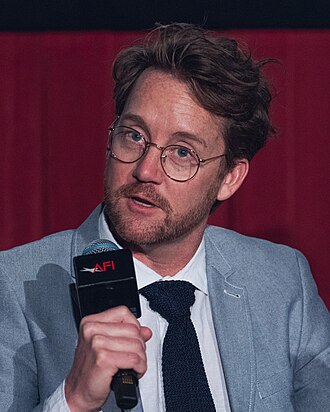
Clint Bentley
Where to hear and read about Clint Bentley1 episode or test

Clint Bentley is a filmmaker who writes and directs with Greg Kwedar, making Trans Pecos, Jockey, Sing Sing and Train Dreams. The habit most worth stealing is to overwrite a scene in full, then let the shoot and the edit show how little of it the film needs.
Do you want the good writing or do you want a good scene?
Why You Should Write Less Dialogue — Clint Bentley and Greg Kwedar
Clint Bentley: the story and the lessons
1Clint Bentley's path and his partnership with Greg Kwedar
Bentley started as a fiction writer in love with words. He was drawn to the sound of words and to where a paragraph should break. Kwedar taught him to ask first whether you are actually telling a story.
Bentley says that is the foundation and the rest is how it gets delivered. He links Train Dreams to a cave painting or an ancient oral poem through the story.
Bentley and Kwedar stopped watching as fans and started educating themselves. Once they saw themselves as practitioners, they hunted for pockets of film history they had not seen. Bentley brought the classics Kwedar missed, and Kwedar sniffed out who was worth watching now.
They find silent films and films from the 1920s and 30s often take bigger risks than current releases, which cuts against the idea that art always moves forward.
Their two instincts correct each other. Kwedar would shoot an idea off a napkin today. Bentley pushes it from a good idea to a great moment.
Bentley says an artist has to stay a student and childlike, and recalls a Picasso show of doodles and glued construction paper made over breakfast.
Their one-line mission filters which work they take. Kwedar, a former accounting student, wrote it over 15 years ago: tell stories of human connection in impossible places. It still fits, and matters more as offers arrive.
Bentley does not check scenes against it. He compares it to wanting to be a good person without thinking about it at the coffee shop. On Train Dreams they asked where the light was, so a brutal logging world would not turn the writing cynical.
2How Bentley built Train Dreams from the dirt up
Bentley and Kwedar soaked in the real place before writing. They rented a cabin on the river where Denis Johnson lived, paid a naturalist for a day, and talked to strangers in logging-town bars. They finished the first draft in the cabin.
A Kootenai man restocking sturgeon at a hatchery shaped a character and gave the opening image of a 10-foot fish hanging from a pole.
Time on location made them read a familiar text differently. They played the audiobook, read by Will Patton, who now narrates the film, while driving. It recontextualized passages they had read many times on paper.
A night controlled burn showed them the power of the fire in the story's Nolla chapter. Kwedar's word for what this adds is texture.
Bentley kept the novella's spirit and let its words go. They transcribed the story of the man shot by his dog straight from the book. After it was trimmed, it no longer fit the developing narrative, and it was dropped from that form.
They earned the right to change the book by reading logging books, loggers' journals and Forest Service rangers' journals, then going to the place. Johnson's novella runs only 117 pages, yet details like loggers using sap to repair their hands show deep research.
Bentley kept a hero that screenwriting 101 would forbid. The lead is passive and quiet, and early on he is swept up in a killing he doesn't condone, which haunts him. Bentley says that is the book's man, who feels deeply in ways he can't voice.
Three times he learns something others already know. Bentley says it isn't that he should have known: he simply doesn't know much, yet he is deep.
Bentley pushed one line through about 45 passes. The Ferris wheel speech is his. They asked what machine people of that time would name and what metaphor fits.
It had to be an idea Grainier could plausibly voice, though he could never build the sentence himself. The goal was that nobody could tell Johnson's words from Bentley's. Bentley kept refining until a couple of days before Sundance.
Bentley let the edit overrule the ending he shot. They shot the novella's celebrated ending, but in the edit the airplane sequence felt like the real end. They cut it about 35 ways and built everything before it to lead there.
They first resisted with a 'surely not.' A basement bathroom found by production designer Alex Scholler became Grainier seeing himself in a mirror for the first time in years. All four of their released films ended differently from what they first shot.
3Bentley on dialogue and overwriting
Bentley treats dialogue as a last resort. A screenwriter mentor gave them the rule, and it made no sense until they learned it by doing. On Trans Pecos a long truck scene became one line and some looks, and it was far better.
Talky films like His Girl Friday and Before Sunrise are a different beast, and the rule does not apply to them. The model is silent cinema.
Bentley writes too much on purpose, then cuts. On the page a scene is one dimension, and performance, camera and setting speak into it later. You cannot know what to turn into a look until the whole excess is written.
On Jockey they wrote at least half the script while filming, and much of it never made the cut. Actors, designers and the cinematographer absorb every line, and it shows even when unsaid.
Bentley cut a favorite voiceover because the scene didn't work. He was proud of a voiceover about the deep history of the land and the glaciers. It did not connect in the edit, and sound designer Lee Alivan told him it was good writing but not a good scene.
When writing and scene compete, the scene wins.
A single silent beat can make one line stick. In one scene Art talks nonstop and is hard to follow, meant to be heard as energy spilling into the world. His later single line, 'It's all beautiful, ain't it?', is the one that sticks.
Train Dreams would sit at the far low end of any word count among screenplays, so each spoken line has to carry weight.
Bentley shapes improvised moments until they match the scripted ones. They set up a space, such as actors feeding chickens, let it play, and shape the footage in the edit. The pilot Amelia, a real pilot who had never acted, replaced an awkward scripted line with 'you better hold on to something.'
Audiences took her line as thematic. Bentley wants no felt difference between what was made up that day and what was written years earlier.
4How Bentley handles real life, tone and feedback
Bentley gives quiet, ordinary life the weight of a heist. Falling in love or a peaceful day with family deserves depth and respect without schmaltz. When Grainier later meets a girl, it does not become a Hollywood romance.
One viewer left the screening gloomy for days and found it wonderful. Subtle emotions like quiet sadness are easy to skip in filmmaking.
Bentley adjusted the marriage back and forth until it felt real. It needed both infatuation and the depth of years, including a quarrel over money. Early cuts had too many barbs, and later ones were called too sweet.
Early viewers said the couple didn't even like each other. Bentley points out that quarrelling doesn't mean the love is gone.
Bentley treats a note as something to try, not a verdict. Early on they took notes too personally. Now the answer is 'just try it' and see what is there.
A note given in the spirit of 'we may be wrong' works, while a mandate makes the artist bristle. Watching people watch is a note in itself.
They mix informed readers with cold ones. A small circle reads first, and Linda Halbert has read almost every draft in over a decade. Readers who know the intent say what isn't coming across, and friends who know nothing ask what the film is about.
Financiers and producers come later.
A note often points at a problem earlier in the script. Once you lose perspective, feedback shakes the tree. A reader may flag a scene that feels wrong while the real cause sits much earlier.
Feedback shows where the work needs to go, not always what to fix.
5Bentley's working principles
Bentley's father taught him to pay attention. He grew up on a Florida cattle ranch, where it meant not being too loud walking through the woods. He applies it to writing, editing, production and meetings with actors.
He says sometimes it was just a reaction to him doing something stupid.
Trust the process, because the process is where the life is. The phrase comes from the prison program at the center of Sing Sing. Focus on small details like the shot list, and a big sequence or a love story will play out.
They aim to make the process healthy, go on an adventure into the world they write about, and imbue the work with the values they live by.
He counts a film a success only if it outgrows the plan. A film that only meets the original vision is not a success. It has to surprise the makers and still feel true to the intention.
They ask collaborators what is underneath the starting idea and what is beyond it.
Bentley borrows frames from other films to fix empty shots. An empty frame of Joel Edgerton chopping a log on a burnt acre still felt bare. Cinematographer Adolpho Veloso set a curved burnt stick between camera and actor and dropped the camera low, echoing a Tarkovsky shot from Ivan's Childhood.
The stick hems the man in, like his grief. They invented it on the spot to fix a problem, and the meaning came afterward.
Bentley builds playlists and mood reels, then clears them away. Both directors start a playlist while writing. Mood reels pair key shots with a piece of music, like a tone poem, to name the feeling they want.
They show composer Bryce Dessner early, then pull out all the temp music so he starts from a blank slate with a common language. He has scored all their films.

Why You Should Write Less Dialogue — Clint Bentley and Greg Kwedar
Two filmmakers who write together explain how they adapt a beloved book, build a story from real places, and cut dialogue until the film does the talking. The habit worth stealing is overwriting a scene in full, then letting the shoot and the edit show how much of it is needed.
Bentley started as a fiction writer in love with words. He was drawn to the sound of words and to where a paragraph should break. Kwedar taught him to ask first whether you are actually telling a story.
Bentley says that is the foundation and the rest is how it gets delivered. He links Train Dreams to a cave painting or an ancient oral poem through the story.
Bentley and Kwedar stopped watching as fans and started educating themselves. Once they saw themselves as practitioners, they hunted for pockets of film history they had not seen. Bentley brought the classics Kwedar missed, and Kwedar sniffed out who was worth watching now.
They find silent films and films from the 1920s and 30s often take bigger risks than current releases, which cuts against the idea that art always moves forward.
Their two instincts correct each other. Kwedar would shoot an idea off a napkin today. Bentley pushes it from a good idea to a great moment.
Bentley says an artist has to stay a student and childlike, and recalls a Picasso show of doodles and glued construction paper made over breakfast.
Their one-line mission filters which work they take. Kwedar, a former accounting student, wrote it over 15 years ago: tell stories of human connection in impossible places. It still fits, and matters more as offers arrive.
Bentley does not check scenes against it. He compares it to wanting to be a good person without thinking about it at the coffee shop. On Train Dreams they asked where the light was, so a brutal logging world would not turn the writing cynical.
Bentley and Kwedar soaked in the real place before writing. They rented a cabin on the river where Denis Johnson lived, paid a naturalist for a day, and talked to strangers in logging-town bars. They finished the first draft in the cabin.
A Kootenai man restocking sturgeon at a hatchery shaped a character and gave the opening image of a 10-foot fish hanging from a pole.
Time on location made them read a familiar text differently. They played the audiobook, read by Will Patton, who now narrates the film, while driving. It recontextualized passages they had read many times on paper.
A night controlled burn showed them the power of the fire in the story's Nolla chapter. Kwedar's word for what this adds is texture.
Bentley kept the novella's spirit and let its words go. They transcribed the story of the man shot by his dog straight from the book. After it was trimmed, it no longer fit the developing narrative, and it was dropped from that form.
They earned the right to change the book by reading logging books, loggers' journals and Forest Service rangers' journals, then going to the place. Johnson's novella runs only 117 pages, yet details like loggers using sap to repair their hands show deep research.
Bentley kept a hero that screenwriting 101 would forbid. The lead is passive and quiet, and early on he is swept up in a killing he doesn't condone, which haunts him. Bentley says that is the book's man, who feels deeply in ways he can't voice.
Three times he learns something others already know. Bentley says it isn't that he should have known: he simply doesn't know much, yet he is deep.
Bentley pushed one line through about 45 passes. The Ferris wheel speech is his. They asked what machine people of that time would name and what metaphor fits.
It had to be an idea Grainier could plausibly voice, though he could never build the sentence himself. The goal was that nobody could tell Johnson's words from Bentley's. Bentley kept refining until a couple of days before Sundance.
Bentley let the edit overrule the ending he shot. They shot the novella's celebrated ending, but in the edit the airplane sequence felt like the real end. They cut it about 35 ways and built everything before it to lead there.
They first resisted with a 'surely not.' A basement bathroom found by production designer Alex Scholler became Grainier seeing himself in a mirror for the first time in years. All four of their released films ended differently from what they first shot.
Bentley treats dialogue as a last resort. A screenwriter mentor gave them the rule, and it made no sense until they learned it by doing. On Trans Pecos a long truck scene became one line and some looks, and it was far better.
Talky films like His Girl Friday and Before Sunrise are a different beast, and the rule does not apply to them. The model is silent cinema.
Bentley writes too much on purpose, then cuts. On the page a scene is one dimension, and performance, camera and setting speak into it later. You cannot know what to turn into a look until the whole excess is written.
On Jockey they wrote at least half the script while filming, and much of it never made the cut. Actors, designers and the cinematographer absorb every line, and it shows even when unsaid.
Bentley cut a favorite voiceover because the scene didn't work. He was proud of a voiceover about the deep history of the land and the glaciers. It did not connect in the edit, and sound designer Lee Alivan told him it was good writing but not a good scene.
When writing and scene compete, the scene wins.
A single silent beat can make one line stick. In one scene Art talks nonstop and is hard to follow, meant to be heard as energy spilling into the world. His later single line, 'It's all beautiful, ain't it?', is the one that sticks.
Train Dreams would sit at the far low end of any word count among screenplays, so each spoken line has to carry weight.
Bentley shapes improvised moments until they match the scripted ones. They set up a space, such as actors feeding chickens, let it play, and shape the footage in the edit. The pilot Amelia, a real pilot who had never acted, replaced an awkward scripted line with 'you better hold on to something.'
Audiences took her line as thematic. Bentley wants no felt difference between what was made up that day and what was written years earlier.
Bentley gives quiet, ordinary life the weight of a heist. Falling in love or a peaceful day with family deserves depth and respect without schmaltz. When Grainier later meets a girl, it does not become a Hollywood romance.
One viewer left the screening gloomy for days and found it wonderful. Subtle emotions like quiet sadness are easy to skip in filmmaking.
Bentley adjusted the marriage back and forth until it felt real. It needed both infatuation and the depth of years, including a quarrel over money. Early cuts had too many barbs, and later ones were called too sweet.
Early viewers said the couple didn't even like each other. Bentley points out that quarrelling doesn't mean the love is gone.
Bentley treats a note as something to try, not a verdict. Early on they took notes too personally. Now the answer is 'just try it' and see what is there.
A note given in the spirit of 'we may be wrong' works, while a mandate makes the artist bristle. Watching people watch is a note in itself.
They mix informed readers with cold ones. A small circle reads first, and Linda Halbert has read almost every draft in over a decade. Readers who know the intent say what isn't coming across, and friends who know nothing ask what the film is about.
Financiers and producers come later.
A note often points at a problem earlier in the script. Once you lose perspective, feedback shakes the tree. A reader may flag a scene that feels wrong while the real cause sits much earlier.
Feedback shows where the work needs to go, not always what to fix.
Bentley's father taught him to pay attention. He grew up on a Florida cattle ranch, where it meant not being too loud walking through the woods. He applies it to writing, editing, production and meetings with actors.
He says sometimes it was just a reaction to him doing something stupid.
Trust the process, because the process is where the life is. The phrase comes from the prison program at the center of Sing Sing. Focus on small details like the shot list, and a big sequence or a love story will play out.
They aim to make the process healthy, go on an adventure into the world they write about, and imbue the work with the values they live by.
He counts a film a success only if it outgrows the plan. A film that only meets the original vision is not a success. It has to surprise the makers and still feel true to the intention.
They ask collaborators what is underneath the starting idea and what is beyond it.
Bentley borrows frames from other films to fix empty shots. An empty frame of Joel Edgerton chopping a log on a burnt acre still felt bare. Cinematographer Adolpho Veloso set a curved burnt stick between camera and actor and dropped the camera low, echoing a Tarkovsky shot from Ivan's Childhood.
The stick hems the man in, like his grief. They invented it on the spot to fix a problem, and the meaning came afterward.
Bentley builds playlists and mood reels, then clears them away. Both directors start a playlist while writing. Mood reels pair key shots with a piece of music, like a tone poem, to name the feeling they want.
They show composer Bryce Dessner early, then pull out all the temp music so he starts from a blank slate with a common language. He has scored all their films.