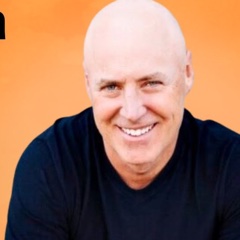
Christopher Lochhead
Author of Play Bigger and Niche Down, co-creator of Category Pirates, former three-time public company CMO
Where to hear and read about Christopher Lochhead1 book · 1 episode or test
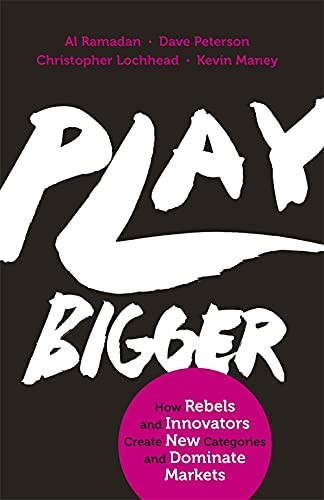 Book · notes comingPlay Bigger

 Lenny's PodcastHow to become a category pirate | Christopher Lochhead (Author of Play Bigger, Niche Down, more)
Christopher Lochhead is a marketer, former three-time public company CMO and co-author of Play Bigger and Niche Down, known as the godfather of category design. The thing most worth learning from him is to decide on purpose whether to compete in a category or design a new one, because the category leader takes most of the value.
The category made the brand not the other way around.
How to become a category pirate | Christopher Lochhead (Author of Play Bigger, Niche Down, more)
Christopher Lochhead: the story and the lessons
1Who Christopher Lochhead is
Lochhead has been a marketer all his adult life and bets on new things. He says it has never been a better time to build something new. His test for a legendary career is looking back and saying, "I was part of this."
His message to innovators is that the future needs them.
He is known as the godfather of category design. He is a 13-time number one bestselling co-author, including Play Bigger and Niche Down, a former three-time public company CMO, and advises over 50 venture-backed startups.
Play Bigger came out in 2016, and he co-created Category Pirates.
He publishes the criticism of his own work. Negative reviews of his books and podcast sit on his website, and he ran a full-page ad in Podcast Magazine made only of negative quotes.
His case is that anyone breaking new ground gets attacked: Picasso was called stupid, the Beatles and Elvis terrible, and hip-hop was ridiculed and banned before it became America's top music category. He adds that it removes the fear, adds humor, and filters for his audience. "This is going to happen to all of us."
He rejects creator models that sell envy. He refuses any model where the creator is the leader and the audience the follower, such as posing in front of planes so viewers wish they were the influencer.
A name on the brand is fine to him if the content isn't about the person.
2Lochhead's case for designing a category instead of competing
One company takes most of a category's value. A study of every US venture-backed tech company from 2000 to 2015, published in HBR, found one company earns 76% of a category's market cap and valuation. Building a better product in an existing category means fighting for the other 24%.
The data was peer reviewed, and Stanford professors told him no one had it.
Most founders choose to compete without knowing they chose. Amazon lists roughly 100,000 marketing books and 60,000 to 80,000 business strategy books, almost all about how to compete and win. His claim is that nobody legendary ever won that way.
He says to decide early and on purpose whether to capture existing demand or create new demand. The category makes the product, the brand and the company, so the category choice comes before the feature list.
He says design, not create, because first to ship is not a category. People hear category creation and think of Myspace or GeoCities, being first with a set of features. Lochhead says a market can be designed like a product or a culture, by creating a new distinction in value.
He treats category design as the most radical differentiation. Many software companies put analyst reports and feature grids on their homepage, such as 25 features against 125, which invites comparison. Legendary innovators wanted to be irreplaceable, so customers would ask "switch to what?"
He urges founders to design a future instead of extending the past. He cites Roger Martin's split between reflective and reflexive thinking and says most people think they are reflective when they are not. The founders of Tesla and Rivian are obsessed that we aren't all in EVs already.
He quotes Mike Maples, who calls great entrepreneurs visitors from the future telling us how it's going to be. For Lochhead, the first law of category design is thinking about thinking.
3Why Lochhead says the better product loses
Threads had every advantage and still faded. At launch it passed ChatGPT as the fastest-growing app ever. It was free, sat on top of Meta's user base, and was billed as a Twitter killer, yet it declined after the launch spike.
Lochhead says it was marketed as Twitter, just better, and expects Meta to write off over a billion dollars.
A strong brand does not carry into another category. Red Bull reasoned its brand could sell anything and made a cola. Ballmer told his team to copy the Apple Stores exactly, and Microsoft reportedly lost $400 million to $1 billion. Nobody bought the Amazon Fire phone.
Each attacked an incumbent category queen without a new problem. In his view the companies mistook the brand for the cause of their success.
The root error is believing the best product wins. When the problem and its solution are both well understood, nobody needs a new solution, however good yours is. He predicts venture capitalists will burn at least half a trillion dollars on me-too AI startups in five years.
Big companies can afford to fail. He says the real loss is inventors whose products never launched because they didn't fit a problem people value.
Gojo stayed obsessed with the problem and created two categories. The founders, a husband and wife working in a factory more than 80 years ago, disliked bar soap and invented liquid soap. They then asked how to wash hands without water and got hand sanitizer, which became Purell.
Most founders fall in love with their product, but Gojo owned the problem. The founding family still owns the company. Winning means a meaningful share of the world agrees with your definition of the problem.
4How Lochhead uses language to make a category stick
He defines languaging as the strategic use of language to change thinking. Old words fail a new idea, but too many new words lose the audience. His rule is to meet the category where it is, then bring people forward with a point of view.
He also advises listening to the words, because you hear things you normally miss.
Otis renamed the safety elevator a vertical railway. The safety elevator got a shrug because it was a solution with no problem. The railway framing, about moving up and down instead of across land, gave people the mental scaffolding to picture tall buildings.
Elisha Otis started in a market with zero demand, and Otis is now the category queen of elevators.
Starbucks changed the words to escape a cheap coffee market. Coffee started at 10 cents, and Starbucks needed an average price of $3. It taught people words like "double grande latte" so the product no longer read as the same thing.
Vente was made up and sounds Italian, and nobody said double grande latte 25 years ago. "It's very hard to charge three bucks for a thing that everybody currently pays a quarter for, if you call it the same thing."
Lomi framed a new way to solve food waste, not a gadget. Its smart home composter sells at about $400 into a market that was zero at launch, and cuts composting from three to six months to three to six hours. It pitched a personal benefit of less mess alongside a mission of pulling harmful gases out of the atmosphere.
Americans throw away 40 to 60% of their food. Lochhead calls Lomi the first kitchen appliance in 20 years to earn counter space, and Jay-Z was an early investor. By contrast, Dean Kamen launched the Segway on "isn't this cool?" and nothing happened.
The company that creates the category's language wins. He points to OpenAI and the sudden spread of the term "large language model," which not long ago nobody said.
A new layer of the tech stack needs its own words, or buyers say it is cool but see no reason to buy it.
5What Lochhead says Gong got right and wrong
Gong started right by claiming a credible slice of a new space. Revenue was emerging as a space because CRM, ERP and BI didn't serve it. A startup claiming an SAP-style suite for revenue would not have been believed.
Lochhead discloses that he knows Clari, its founder Andy and its team, and has done some work with them.
He says every mega category starts as many niches. CRM began as separate support, help desk, sales and marketing companies, and sales configurators were once among the hottest. The best-of-breed pitch against end-to-end platforms doesn't work, and he says Microsoft proved it over 30 years ago.
After about five years, he says, your biggest growth barrier is your current category.
Staying in the niche let Clari frame the bigger category. Gong stayed niched while Clari framed the end-to-end agenda, and Lochhead says Clari is now crushing the space.
Moving up later makes you a copycat of whoever framed the bigger category first, and means fighting for category king in what he calls "fifth dan black belt" category wars. "You can only be as big and successful as your market category."
How to become a category pirate | Christopher Lochhead (Author of Play Bigger, Niche Down, more)
Category design means defining a new problem and a new language for it, so you earn most of the value instead of fighting over the leftovers of an existing market. The episode backs this with the finding that one company takes most of a tech category's value, plus examples such as Purell, Otis, Starbucks and Lomi, and failures such as Threads, Red Bull Cola and Gong.
Lochhead has been a marketer all his adult life and bets on new things. He says it has never been a better time to build something new. His test for a legendary career is looking back and saying, "I was part of this."
His message to innovators is that the future needs them.
He is known as the godfather of category design. He is a 13-time number one bestselling co-author, including Play Bigger and Niche Down, a former three-time public company CMO, and advises over 50 venture-backed startups.
Play Bigger came out in 2016, and he co-created Category Pirates.
He publishes the criticism of his own work. Negative reviews of his books and podcast sit on his website, and he ran a full-page ad in Podcast Magazine made only of negative quotes.
His case is that anyone breaking new ground gets attacked: Picasso was called stupid, the Beatles and Elvis terrible, and hip-hop was ridiculed and banned before it became America's top music category. He adds that it removes the fear, adds humor, and filters for his audience. "This is going to happen to all of us."
He rejects creator models that sell envy. He refuses any model where the creator is the leader and the audience the follower, such as posing in front of planes so viewers wish they were the influencer.
A name on the brand is fine to him if the content isn't about the person.
One company takes most of a category's value. A study of every US venture-backed tech company from 2000 to 2015, published in HBR, found one company earns 76% of a category's market cap and valuation. Building a better product in an existing category means fighting for the other 24%.
The data was peer reviewed, and Stanford professors told him no one had it.
Most founders choose to compete without knowing they chose. Amazon lists roughly 100,000 marketing books and 60,000 to 80,000 business strategy books, almost all about how to compete and win. His claim is that nobody legendary ever won that way.
He says to decide early and on purpose whether to capture existing demand or create new demand. The category makes the product, the brand and the company, so the category choice comes before the feature list.
He says design, not create, because first to ship is not a category. People hear category creation and think of Myspace or GeoCities, being first with a set of features. Lochhead says a market can be designed like a product or a culture, by creating a new distinction in value.
He treats category design as the most radical differentiation. Many software companies put analyst reports and feature grids on their homepage, such as 25 features against 125, which invites comparison. Legendary innovators wanted to be irreplaceable, so customers would ask "switch to what?"
He urges founders to design a future instead of extending the past. He cites Roger Martin's split between reflective and reflexive thinking and says most people think they are reflective when they are not. The founders of Tesla and Rivian are obsessed that we aren't all in EVs already.
He quotes Mike Maples, who calls great entrepreneurs visitors from the future telling us how it's going to be. For Lochhead, the first law of category design is thinking about thinking.
Threads had every advantage and still faded. At launch it passed ChatGPT as the fastest-growing app ever. It was free, sat on top of Meta's user base, and was billed as a Twitter killer, yet it declined after the launch spike.
Lochhead says it was marketed as Twitter, just better, and expects Meta to write off over a billion dollars.
A strong brand does not carry into another category. Red Bull reasoned its brand could sell anything and made a cola. Ballmer told his team to copy the Apple Stores exactly, and Microsoft reportedly lost $400 million to $1 billion. Nobody bought the Amazon Fire phone.
Each attacked an incumbent category queen without a new problem. In his view the companies mistook the brand for the cause of their success.
The root error is believing the best product wins. When the problem and its solution are both well understood, nobody needs a new solution, however good yours is. He predicts venture capitalists will burn at least half a trillion dollars on me-too AI startups in five years.
Big companies can afford to fail. He says the real loss is inventors whose products never launched because they didn't fit a problem people value.
Gojo stayed obsessed with the problem and created two categories. The founders, a husband and wife working in a factory more than 80 years ago, disliked bar soap and invented liquid soap. They then asked how to wash hands without water and got hand sanitizer, which became Purell.
Most founders fall in love with their product, but Gojo owned the problem. The founding family still owns the company. Winning means a meaningful share of the world agrees with your definition of the problem.
He defines languaging as the strategic use of language to change thinking. Old words fail a new idea, but too many new words lose the audience. His rule is to meet the category where it is, then bring people forward with a point of view.
He also advises listening to the words, because you hear things you normally miss.
Otis renamed the safety elevator a vertical railway. The safety elevator got a shrug because it was a solution with no problem. The railway framing, about moving up and down instead of across land, gave people the mental scaffolding to picture tall buildings.
Elisha Otis started in a market with zero demand, and Otis is now the category queen of elevators.
Starbucks changed the words to escape a cheap coffee market. Coffee started at 10 cents, and Starbucks needed an average price of $3. It taught people words like "double grande latte" so the product no longer read as the same thing.
Vente was made up and sounds Italian, and nobody said double grande latte 25 years ago. "It's very hard to charge three bucks for a thing that everybody currently pays a quarter for, if you call it the same thing."
Lomi framed a new way to solve food waste, not a gadget. Its smart home composter sells at about $400 into a market that was zero at launch, and cuts composting from three to six months to three to six hours. It pitched a personal benefit of less mess alongside a mission of pulling harmful gases out of the atmosphere.
Americans throw away 40 to 60% of their food. Lochhead calls Lomi the first kitchen appliance in 20 years to earn counter space, and Jay-Z was an early investor. By contrast, Dean Kamen launched the Segway on "isn't this cool?" and nothing happened.
The company that creates the category's language wins. He points to OpenAI and the sudden spread of the term "large language model," which not long ago nobody said.
A new layer of the tech stack needs its own words, or buyers say it is cool but see no reason to buy it.
Gong started right by claiming a credible slice of a new space. Revenue was emerging as a space because CRM, ERP and BI didn't serve it. A startup claiming an SAP-style suite for revenue would not have been believed.
Lochhead discloses that he knows Clari, its founder Andy and its team, and has done some work with them.
He says every mega category starts as many niches. CRM began as separate support, help desk, sales and marketing companies, and sales configurators were once among the hottest. The best-of-breed pitch against end-to-end platforms doesn't work, and he says Microsoft proved it over 30 years ago.
After about five years, he says, your biggest growth barrier is your current category.
Staying in the niche let Clari frame the bigger category. Gong stayed niched while Clari framed the end-to-end agenda, and Lochhead says Clari is now crushing the space.
Moving up later makes you a copycat of whoever framed the bigger category first, and means fighting for category king in what he calls "fifth dan black belt" category wars. "You can only be as big and successful as your market category."