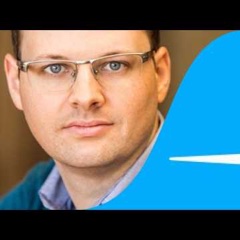
Casey Winters
Cofounder and CEO of SuperMe, former growth and product leader at Eventbrite, Pinterest and GrubHub
Where to hear and read about Casey Winters2 episodes and tests

 SubversiveHow SuperMe is Building the Professional Network for the AI Era
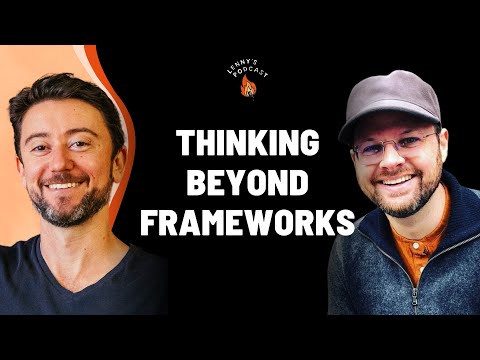
 Lenny's PodcastThinking beyond frameworks | Casey Winters (Pinterest, Eventbrite, Airbnb, Tinder, Reddit, Grubhub)
Casey Winters is a growth and product leader who ran growth at GrubHub and Pinterest, was chief product officer at Eventbrite, and now cofounds SuperMe, an AI-native professional network. The most useful lesson from him is to think for yourself instead of following frameworks, and to build things with real network effects and defensibility rather than short-term speed.
If you want to build an iconic company, that short-term speed is not really what matters. It's can you sustain it over a very long period of time.
How SuperMe is Building the Professional Network for the AI Era
Casey Winters: the story and the lessons
1Casey Winters' path from Apartments.com to SuperMe
Winters refused to choose between product and marketing. Managers told him to pick a lane, but he believed learning everything was the path to executive impact. At Apartments.com he built a cost-per-lead framework across SEO, affiliate, email and paid search, then studied why visitors didn't convert and why they chose Craigslist.
He also launched side businesses, including a real estate site to compete with Zillow and Trulia, which gave him early visibility with the CEO.
At GrubHub and Pinterest he rebuilt whole growth systems, not single channels. At GrubHub he was first marketer with a $1 million Series A and one brief: get more people to order food. He led demand growth through the IPO and ran growth there for five and a half years.
At Pinterest, cheap signups vanished when Facebook shut off the open graph. He built SEO, then rebuilt signup, onboarding and notifications around it, moving notifications from what friends save to personal recommendations.
Advising early teams taught him which fires to fix now. He advised Airbnb, Reddit, Thumbtack, Canva and others, and learned that early teams are first-timers who need help sorting urgent problems from ones that can wait.
As Eventbrite's CPO he took hard action to reach break even. He steered the company through the pandemic to break even and laid off 45% of Eventbrite in his first year. He rewrote the strategy on a Saturday and pitched private equity by Monday.
He led product there for about three years, then stepped back in October as the leverage points moved away from his strengths. He kept advising on what he does best.
After Eventbrite he spread his time across several small bets. He advised Eventbrite and Whatnot, held a board seat, angel invested in marketplaces and in startups he calls tech debt as a service, and revamped the product strategy program at Reforge.
SuperMe began with a remark from his future cofounder. While Winters was advising Whatnot, Ludo, his former head of growth engineering at Pinterest, said no one was building networks with AI. They cofounded SuperMe, planning to grow it over 5 to 10 years.
Winters says he founded the company to stay close to how product development is changing, and to turn years of manual teaching, advising and writing into software for everyone.
2How Winters is building SuperMe
SuperMe gives each expert an AI profile and searches across all of them. Each profile answers from its owner's opinions, says "I don't know" when it has no basis, and the owner sees every answer and can add context. Users share specifics, such as a Series B fintech with a given problem, and the profile tailors its advice.
Search across profiles is what makes it a network, and each added profile improves search.
Winters returns several expert views with attribution instead of one answer. A homepage question finds who should answer, pulls a perspective from several experts, summarizes, and lets users open full conversations with any of them.
It automates what founders already do: "you ask a bunch of people, you make up your own mind."
A voice-clone content tool failed to spread. Experts talked into a mic and AI structured the rant into audio and video in their cloned voice. The content was good 10 out of 10 times, but it wasn't shareable or viral and people didn't know what to say.
It prompted the human instead of the AI, and it wasn't the come-for-the-tool, stay-for-the-network product he wanted. Going community-first also did not work.
He saw a working crawler was a fulfillment product, not a network. An agent built a profile from public content in about 10 minutes, and people shared them on LinkedIn. Winters judged it "not a network product, that's a fulfillment product," which led to search across profiles.
Failed experiments felt scary, since each raised the question of whether anything would work.
Overloaded senior experts supply profiles and operators with live problems consume them. Experts 15 or more years into their careers use profiles to handle advice requests that swamp their inboxes. Founders, growth leaders and mid-career PMs ask for personalized advice. The official launch came in November of the previous year.
The 3 to 5 year vision is an AI profile for every professional. Winters sees recruiting as a spectrum, from an agent that does the job to a full-time hire, with advisors and interim roles between. About 99% of hiring is full-time today, and SuperMe wants to map expertise across all of it.
A hiring manager could phone screen the AI profile first, skipping nine of ten steps.
3Why Winters thinks SuperMe can beat ChatGPT and Claude
General chatbots answer with the internet's average, so he sources only top experts. SuperMe sources only the best people in growth, product or engineering, and shows each expert's background and past companies, which makes answers more trustworthy than a black-box model.
Winters says internal evaluations found its answers better than ChatGPT and Claude. The sources show no data for that claim.
He expects the sourcing edge to fade as models improve. Winters expects models to learn that a 20-year veteran beats a new grad with one viral post, as Google got better at sourcing. He says the advantage is "not going to be long-term sustainable."
The real moat is private knowledge that never reaches the public internet. SuperMe syncs meeting notes, documents, Slack and email. Each item is screened for professional relevance and privacy, and items like an upcoming funding round or a performance review are judged too private to share.
Unique data is a key metric. Winters says "most of how the best people think about these problems isn't actually available on the public internet."
Owners choose how public each synced item is. For every piece of content the owner picks private, company only, network only or public, and the system only proposes a level. This makes people willing to connect sensitive sources, and it lets people who are not very public represent themselves.
Winters says long-term defensibility matters more than fast AI growth. He compares AI now to the first mobile era, when short-term winners faded before the next wave produced Uber, Snapchat and DoorDash. He asks, "are you going to have any revenue in 2030."
He says he will only build with network effects and strong defensibility. He also says growth leaders should warn the CEO when the current growth model won't build defensible value.
4How Winters plans SuperMe's growth
He keeps traditional growth loops because AI changed distribution little. Content, virality, paid and sales still matter. Profile and content sharing brought in the first 3,000 users, and trusted nominations could rank people by topic, like PageRank for people.
He wants SuperMe to be a tool call inside the apps users already use. Some users already call SuperMe from Claude Code and Google Docs. Without ads, SuperMe needs usage rather than eyeballs, so it can grow through other tools.
"You shouldn't need to be on SuperMe to get value from super profiles." He is not yet sure whether pricing will be subscription or transactional.
Agent growth loops are his big bet because the field is greenfield. Synced work shows what a user is doing, such as raising debt financing, so a user's agent could group-chat the best profiles and report back only if it learned something valuable.
Today value comes only when users search or open a profile. The outside trigger builds the habit, though trust is earned over time and "no one gives that fully day one."
He treats open rate as the calibration signal for agent outreach. If users open under 20% of agent recommendations, the agent is spammy. If they open over 80%, it should do far more of it.
Human feedback on how useful each contact was would tune how much engagement the network initiates.
5How Winters builds a small AI-native team
SuperMe stays at eight people to limit coordination cost. The team has one ops and growth person, one designer, and engineers for the rest. Enterprise startups can jump from three founders to 15 people because they follow a playbook, but consumer networks have none.
Former consumer founders advised staying as small as possible while looking for the network's spark.
Every hire is onboarded like an engineer. Winters thinks the biggest gains from AI coding are outside engineering, since designers, marketers and ops people now have engineering power. He says anyone not engineering-first "is not going to make it," and that this has worked out "crazy well."
He keeps hiring juniors and teaches them the AI way on day one. He calls the idea of never hiring juniors again "ridiculous." Juniors have no bias against AI coding and can be productive fast, and strong CS grads are more available as big companies hire fewer.
He notes Shopify said it still loves junior talent.
He screens for agency and drops passive hires fast. The ops hire laid out in the interview what he would do and proposed the next step himself. At GrubHub a QA engineer with a great resume waited to be told what to do, and the CTO fired her after a week.
Winters and Ludo are both biased to action and accept that it is sometimes wrong. "Founder Casey" cannot run the playbooks "Eventbrite CPO Casey" would, so people must figure things out.
Good hires know when to ask an expert and when to just try. An employee set up email infrastructure and IP warming by asking experts on the network, because that knowledge is settled. Where the old way no longer applies, they reason it through and test.
He warns that cheap code is an excuse to skip strategy. Building first can stand in for deciding what to build. Incumbents began to "DDoS their customers" with too much product at once, such as a conference announcing 12 new features, and too many launches hide what works.
He thinks many posts about five agents running at once never say what was built, and that much of it is "probably just slop."
He and Ludo sit in opposite corners of the zero-to-one 2x2. Winters is minimum features and maximum design. Ludo is maximum features and minimum design, with many experiments and MVP-style first versions. Their separate mental processes made the product process incoherent.
They now require a clear signal for what works and debate whether each unproven item truly compounds, for example by collecting unique data or driving invites. He wrote the essay "0 to 1 is a subtraction problem" because no one had warned him about this.
Bold design and focus let a tiny GrubHub punch above its weight. GrubHub's Chicago train ads used construction paper and cursing characters about the irrationality of hunger, at a fraction of what Verizon spent. He learned extreme focus from Matt and Mike there.
Brands get less divisive as they scale, so "you got to go a little bit bigger when you're earlier stage."
6Winters' rules for product judgment and leading founders
Winters says frameworks are a toolkit, not a coloring book. He blames zero interest rates for a generation of PMs who follow process as if they worked at Google, with heavy research, design and analyst support. Startups need PMs who wear many hats and decide with little information.
"The job is not to learn every framework possible, the job is to figure out how to add value to customers that translates into value to the business."
He reserves research for big, uncertain problems and otherwise ships. Research suits problems that are big but poorly defined, or well understood but lacking the right solution. For a login redesign, copy what the top unicorns did, since customers already know those patterns.
"Many times the fastest way to learn is to ship." He pushed Eventbrite PMs to do this after they kept proposing heavy research on low-uncertainty problems.
He interviews PMs with real scenarios, not rehearsed stories. He skips work history and asks how a candidate would approach real scenarios, wanting a few reasonable ideas and a fast way to test them without analyst support or research.
Red flags are solutions needing months of engineering before any signal, ignoring time to impact, and not separating metrics to improve from metrics to guard.
He assigns one directly responsible individual per cross-functional project. Eventbrite calls this person the driver and Whatnot calls them the DRI. Once they make the call, everyone disagrees and commits and nobody escalates.
If the call is wrong, the team learns after shipping.
He uses AI for tedious tasks, not facts. Notion AI wrote his bio with a Google Trends start that never happened, and about half was made up. He finds it good for spreadsheet formulas and Zapier setups, where wrong answers are easy to spot.
It is "trained on sounding smart rather than always necessarily being smart," so he sees framework-filling PMs as the ones at risk.
He says founders should direct new leaders until they prove they know more. Erica Warren told Winters a month after joining Grubhub, "you're in all my meetings, I got this." He backed off and she crushed it.
Founders' intuition is hard to explain, so handing it off early is a mistake. Employees should say either "I need direction" or "I got it, trust me."
He persuades stubborn founders with the evidence they trust. At Pinterest no one knew Winters, so he asked heads of growth at Dropbox and Facebook to say what he was saying, and hearing it from them convinced people.
If the founder still refuses, disagree and commit or leave, since it is their company.
After product-market fit, he says stop doing what doesn't scale. What got a startup to fit won't get it to the next phase. Scale the product that works instead of inventing new ones, and stop routing every decision through the founder.
A competitor Grubhub acquired still ran everything through its founders, which limited its market launches and restaurant signups.
A CPO is a company executive first and a product executive second. Winters had to show he cared about sales, marketing and legal before his own team, and lay out the product team's strengths, weaknesses and timeline for peers who cannot judge product.
Executives get no performance plan, and he has never heard a CPO say they are crushing it. Eventbrite ran function deep dives covering current state, issues and a three to five year plan.
He was wrong about GrubHub's driver app and the founders were right. GrubHub's founders overruled Winters and built a driver app. He doubted that drivers with no tie to Grubhub would download it, but it was needed to match rivals' own delivery networks.
Adoption stayed low at first. Grubhub pushed restaurants with more orders and UI prominence, and they pushed their drivers.
7What Winters knows about network effects and marketplaces
Winters defines three network effects and says most products must add more than one. Direct effects, as in WhatsApp, cross-side effects, such as restaurants and diners, and data effects, as in Pinterest saves and Duolingo lessons.
Only pure messaging stays direct. Selling ads or serving both creators and consumers makes a network cross-side, and personalization brings in data effects.
He calls it a marketplace only if suppliers join for demand. If suppliers join mainly for tooling or payments, as at early Eventbrite, it is SaaS-like without cross-side effects. Patreon found nobody wanted artists to be discoverable, while Substack made discovery useful by solving a broader need.
"The primary reason supply signs up is that you're going to bring them extra business."
He says start as a marketplace and add software, not the reverse. A marketplace adding SaaS gets acquisition, workflow or retention and less disintermediation. Fair built the wholesale marketplace first, then a free tool to onboard brands' existing retailers.
Eventbrite began with tools and now drives 25 percent of ticket sales itself, but Winters says it likely needs about 50 percent. OpenTable sold to Booking.com for $2.6B, which later wrote it down below $1B.
He credits Zillow with making a dull listing site sticky. Real-time home values gave buyers and sellers the same reason to return, which Winters calls a genuine innovation others rarely pulled off.
8Winters on why GrubHub lost to DoorDash
Rivals beat GrubHub's network effect by expanding selection. DoorDash and Postmates delivered from restaurants with no deal, starting in less dense suburbs with restaurants that had never delivered. They looked far more comprehensive, then used billions in funding to sign national chains.
Winters left at the end of 2013, so he speaks from public knowledge, not from inside.
GrubHub's asset-light model and public promises boxed it in. It had raised $80M in venture capital and $100M in its IPO by pitching a profitable marketplace. Matching rivals meant raising money and debt that would destroy profit and could drop the stock 90 percent.
Rivals raised $100M every six months. The pandemic turned DoorDash's margins positive and emptied offices, wiping out Seamless corporate ordering.
His rule: assume the disruptor is right and overreact. When a rival's model looks unprofitable, assume it can find a way to make money. Copy it quickly or buy it.
He thinks Grubhub could have bought DoorDash several times, a Netflix-style bet on a new model. "The only rational reaction is overreaction."
9Winters on consumer subscription startups
He says consumer subscriptions need annual retention above 60 to 70 percent. Unlike B2B SaaS, a retained consumer pays the same in year two as in year one, so there is no net dollar retention. Few companies reach it: Netflix, Amazon Prime, Spotify and Duolingo.
Winters says net dollar retention matters more than the predictable revenue investors credit.
He tells founders relying on paid acquisition plus freemium to pivot now. Paid acquisition gets worse as you scale. Blue Apron raised $300M at a $2B valuation and is now worth about $50M.
The alternatives are social loops, a supply side with a reason to refer, or network effects. He can model in two hours exactly when such a company runs out of money, and many end up pivoting to B2B.
He says staying small and profitable buys time to adapt. Calm stayed around 10 people and basically never lost money, so it could pivot when app tracking transparency disrupted paid acquisition. Headspace grew to hundreds.
Grammarly, Duolingo and Noom also stayed small and scrappy while they found what worked.
How SuperMe is Building the Professional Network for the AI Era
Casey Winters explains how SuperMe builds an AI-native professional network of expert avatars, how it tries to stay defensible against ChatGPT and Claude, and how he runs a tiny AI-native team. He shares what failed early (voice clips, community-first), what worked (instant profiles from public content, multi-expert search), and why long-term defensibility matters more than fast AI growth.
Winters refused to choose between product and marketing. Managers told him to pick a lane, but he believed learning everything was the path to executive impact. At Apartments.com he built a cost-per-lead framework across SEO, affiliate, email and paid search, then studied why visitors didn't convert and why they chose Craigslist.
He also launched side businesses, including a real estate site to compete with Zillow and Trulia, which gave him early visibility with the CEO.
At GrubHub and Pinterest he rebuilt whole growth systems, not single channels. At GrubHub he was first marketer with a $1 million Series A and one brief: get more people to order food. He led demand growth through the IPO and ran growth there for five and a half years.
At Pinterest, cheap signups vanished when Facebook shut off the open graph. He built SEO, then rebuilt signup, onboarding and notifications around it, moving notifications from what friends save to personal recommendations.
Advising early teams taught him which fires to fix now. He advised Airbnb, Reddit, Thumbtack, Canva and others, and learned that early teams are first-timers who need help sorting urgent problems from ones that can wait.
As Eventbrite's CPO he took hard action to reach break even. He steered the company through the pandemic to break even and laid off 45% of Eventbrite in his first year. He rewrote the strategy on a Saturday and pitched private equity by Monday.
He led product there for about three years, then stepped back in October as the leverage points moved away from his strengths. He kept advising on what he does best.
SuperMe began with a remark from his future cofounder. While Winters was advising Whatnot, Ludo, his former head of growth engineering at Pinterest, said no one was building networks with AI. They cofounded SuperMe, planning to grow it over 5 to 10 years.
Winters says he founded the company to stay close to how product development is changing, and to turn years of manual teaching, advising and writing into software for everyone.
SuperMe gives each expert an AI profile and searches across all of them. Each profile answers from its owner's opinions, says "I don't know" when it has no basis, and the owner sees every answer and can add context. Users share specifics, such as a Series B fintech with a given problem, and the profile tailors its advice.
Search across profiles is what makes it a network, and each added profile improves search.
Winters returns several expert views with attribution instead of one answer. A homepage question finds who should answer, pulls a perspective from several experts, summarizes, and lets users open full conversations with any of them.
It automates what founders already do: "you ask a bunch of people, you make up your own mind."
A voice-clone content tool failed to spread. Experts talked into a mic and AI structured the rant into audio and video in their cloned voice. The content was good 10 out of 10 times, but it wasn't shareable or viral and people didn't know what to say.
It prompted the human instead of the AI, and it wasn't the come-for-the-tool, stay-for-the-network product he wanted. Going community-first also did not work.
He saw a working crawler was a fulfillment product, not a network. An agent built a profile from public content in about 10 minutes, and people shared them on LinkedIn. Winters judged it "not a network product, that's a fulfillment product," which led to search across profiles.
Failed experiments felt scary, since each raised the question of whether anything would work.
Overloaded senior experts supply profiles and operators with live problems consume them. Experts 15 or more years into their careers use profiles to handle advice requests that swamp their inboxes. Founders, growth leaders and mid-career PMs ask for personalized advice. The official launch came in November of the previous year.
The 3 to 5 year vision is an AI profile for every professional. Winters sees recruiting as a spectrum, from an agent that does the job to a full-time hire, with advisors and interim roles between. About 99% of hiring is full-time today, and SuperMe wants to map expertise across all of it.
A hiring manager could phone screen the AI profile first, skipping nine of ten steps.
General chatbots answer with the internet's average, so he sources only top experts. SuperMe sources only the best people in growth, product or engineering, and shows each expert's background and past companies, which makes answers more trustworthy than a black-box model.
Winters says internal evaluations found its answers better than ChatGPT and Claude. The sources show no data for that claim.
He expects the sourcing edge to fade as models improve. Winters expects models to learn that a 20-year veteran beats a new grad with one viral post, as Google got better at sourcing. He says the advantage is "not going to be long-term sustainable."
The real moat is private knowledge that never reaches the public internet. SuperMe syncs meeting notes, documents, Slack and email. Each item is screened for professional relevance and privacy, and items like an upcoming funding round or a performance review are judged too private to share.
Unique data is a key metric. Winters says "most of how the best people think about these problems isn't actually available on the public internet."
Owners choose how public each synced item is. For every piece of content the owner picks private, company only, network only or public, and the system only proposes a level. This makes people willing to connect sensitive sources, and it lets people who are not very public represent themselves.
Winters says long-term defensibility matters more than fast AI growth. He compares AI now to the first mobile era, when short-term winners faded before the next wave produced Uber, Snapchat and DoorDash. He asks, "are you going to have any revenue in 2030."
He says he will only build with network effects and strong defensibility. He also says growth leaders should warn the CEO when the current growth model won't build defensible value.
He keeps traditional growth loops because AI changed distribution little. Content, virality, paid and sales still matter. Profile and content sharing brought in the first 3,000 users, and trusted nominations could rank people by topic, like PageRank for people.
He wants SuperMe to be a tool call inside the apps users already use. Some users already call SuperMe from Claude Code and Google Docs. Without ads, SuperMe needs usage rather than eyeballs, so it can grow through other tools.
"You shouldn't need to be on SuperMe to get value from super profiles." He is not yet sure whether pricing will be subscription or transactional.
Agent growth loops are his big bet because the field is greenfield. Synced work shows what a user is doing, such as raising debt financing, so a user's agent could group-chat the best profiles and report back only if it learned something valuable.
Today value comes only when users search or open a profile. The outside trigger builds the habit, though trust is earned over time and "no one gives that fully day one."
He treats open rate as the calibration signal for agent outreach. If users open under 20% of agent recommendations, the agent is spammy. If they open over 80%, it should do far more of it.
Human feedback on how useful each contact was would tune how much engagement the network initiates.
SuperMe stays at eight people to limit coordination cost. The team has one ops and growth person, one designer, and engineers for the rest. Enterprise startups can jump from three founders to 15 people because they follow a playbook, but consumer networks have none.
Former consumer founders advised staying as small as possible while looking for the network's spark.
Every hire is onboarded like an engineer. Winters thinks the biggest gains from AI coding are outside engineering, since designers, marketers and ops people now have engineering power. He says anyone not engineering-first "is not going to make it," and that this has worked out "crazy well."
He keeps hiring juniors and teaches them the AI way on day one. He calls the idea of never hiring juniors again "ridiculous." Juniors have no bias against AI coding and can be productive fast, and strong CS grads are more available as big companies hire fewer.
He notes Shopify said it still loves junior talent.
He screens for agency and drops passive hires fast. The ops hire laid out in the interview what he would do and proposed the next step himself. At GrubHub a QA engineer with a great resume waited to be told what to do, and the CTO fired her after a week.
Winters and Ludo are both biased to action and accept that it is sometimes wrong. "Founder Casey" cannot run the playbooks "Eventbrite CPO Casey" would, so people must figure things out.
Good hires know when to ask an expert and when to just try. An employee set up email infrastructure and IP warming by asking experts on the network, because that knowledge is settled. Where the old way no longer applies, they reason it through and test.
He warns that cheap code is an excuse to skip strategy. Building first can stand in for deciding what to build. Incumbents began to "DDoS their customers" with too much product at once, such as a conference announcing 12 new features, and too many launches hide what works.
He thinks many posts about five agents running at once never say what was built, and that much of it is "probably just slop."
He and Ludo sit in opposite corners of the zero-to-one 2x2. Winters is minimum features and maximum design. Ludo is maximum features and minimum design, with many experiments and MVP-style first versions. Their separate mental processes made the product process incoherent.
They now require a clear signal for what works and debate whether each unproven item truly compounds, for example by collecting unique data or driving invites. He wrote the essay "0 to 1 is a subtraction problem" because no one had warned him about this.
Bold design and focus let a tiny GrubHub punch above its weight. GrubHub's Chicago train ads used construction paper and cursing characters about the irrationality of hunger, at a fraction of what Verizon spent. He learned extreme focus from Matt and Mike there.
Brands get less divisive as they scale, so "you got to go a little bit bigger when you're earlier stage."
Thinking beyond frameworks | Casey Winters (Pinterest, Eventbrite, Airbnb, Tinder, Reddit, Grubhub)
Casey Winters explains how to avoid being a framework-following product manager, when to trust founder intuition versus team expertise, how the three types of network effects work, and why consumer subscription startups are so hard. The Grubhub story shows how a network effect that looked unbeatable was undone by a disruptor that expanded selection with a business model the incumbent could not afford to copy.
Advising early teams taught him which fires to fix now. He advised Airbnb, Reddit, Thumbtack, Canva and others, and learned that early teams are first-timers who need help sorting urgent problems from ones that can wait.
As Eventbrite's CPO he took hard action to reach break even. He steered the company through the pandemic to break even and laid off 45% of Eventbrite in his first year. He rewrote the strategy on a Saturday and pitched private equity by Monday.
He led product there for about three years, then stepped back in October as the leverage points moved away from his strengths. He kept advising on what he does best.
After Eventbrite he spread his time across several small bets. He advised Eventbrite and Whatnot, held a board seat, angel invested in marketplaces and in startups he calls tech debt as a service, and revamped the product strategy program at Reforge.
Winters says frameworks are a toolkit, not a coloring book. He blames zero interest rates for a generation of PMs who follow process as if they worked at Google, with heavy research, design and analyst support. Startups need PMs who wear many hats and decide with little information.
"The job is not to learn every framework possible, the job is to figure out how to add value to customers that translates into value to the business."
He reserves research for big, uncertain problems and otherwise ships. Research suits problems that are big but poorly defined, or well understood but lacking the right solution. For a login redesign, copy what the top unicorns did, since customers already know those patterns.
"Many times the fastest way to learn is to ship." He pushed Eventbrite PMs to do this after they kept proposing heavy research on low-uncertainty problems.
He interviews PMs with real scenarios, not rehearsed stories. He skips work history and asks how a candidate would approach real scenarios, wanting a few reasonable ideas and a fast way to test them without analyst support or research.
Red flags are solutions needing months of engineering before any signal, ignoring time to impact, and not separating metrics to improve from metrics to guard.
He assigns one directly responsible individual per cross-functional project. Eventbrite calls this person the driver and Whatnot calls them the DRI. Once they make the call, everyone disagrees and commits and nobody escalates.
If the call is wrong, the team learns after shipping.
He uses AI for tedious tasks, not facts. Notion AI wrote his bio with a Google Trends start that never happened, and about half was made up. He finds it good for spreadsheet formulas and Zapier setups, where wrong answers are easy to spot.
It is "trained on sounding smart rather than always necessarily being smart," so he sees framework-filling PMs as the ones at risk.
He says founders should direct new leaders until they prove they know more. Erica Warren told Winters a month after joining Grubhub, "you're in all my meetings, I got this." He backed off and she crushed it.
Founders' intuition is hard to explain, so handing it off early is a mistake. Employees should say either "I need direction" or "I got it, trust me."
He persuades stubborn founders with the evidence they trust. At Pinterest no one knew Winters, so he asked heads of growth at Dropbox and Facebook to say what he was saying, and hearing it from them convinced people.
If the founder still refuses, disagree and commit or leave, since it is their company.
After product-market fit, he says stop doing what doesn't scale. What got a startup to fit won't get it to the next phase. Scale the product that works instead of inventing new ones, and stop routing every decision through the founder.
A competitor Grubhub acquired still ran everything through its founders, which limited its market launches and restaurant signups.
A CPO is a company executive first and a product executive second. Winters had to show he cared about sales, marketing and legal before his own team, and lay out the product team's strengths, weaknesses and timeline for peers who cannot judge product.
Executives get no performance plan, and he has never heard a CPO say they are crushing it. Eventbrite ran function deep dives covering current state, issues and a three to five year plan.
He was wrong about GrubHub's driver app and the founders were right. GrubHub's founders overruled Winters and built a driver app. He doubted that drivers with no tie to Grubhub would download it, but it was needed to match rivals' own delivery networks.
Adoption stayed low at first. Grubhub pushed restaurants with more orders and UI prominence, and they pushed their drivers.
Winters defines three network effects and says most products must add more than one. Direct effects, as in WhatsApp, cross-side effects, such as restaurants and diners, and data effects, as in Pinterest saves and Duolingo lessons.
Only pure messaging stays direct. Selling ads or serving both creators and consumers makes a network cross-side, and personalization brings in data effects.
He calls it a marketplace only if suppliers join for demand. If suppliers join mainly for tooling or payments, as at early Eventbrite, it is SaaS-like without cross-side effects. Patreon found nobody wanted artists to be discoverable, while Substack made discovery useful by solving a broader need.
"The primary reason supply signs up is that you're going to bring them extra business."
He says start as a marketplace and add software, not the reverse. A marketplace adding SaaS gets acquisition, workflow or retention and less disintermediation. Fair built the wholesale marketplace first, then a free tool to onboard brands' existing retailers.
Eventbrite began with tools and now drives 25 percent of ticket sales itself, but Winters says it likely needs about 50 percent. OpenTable sold to Booking.com for $2.6B, which later wrote it down below $1B.
He credits Zillow with making a dull listing site sticky. Real-time home values gave buyers and sellers the same reason to return, which Winters calls a genuine innovation others rarely pulled off.
Rivals beat GrubHub's network effect by expanding selection. DoorDash and Postmates delivered from restaurants with no deal, starting in less dense suburbs with restaurants that had never delivered. They looked far more comprehensive, then used billions in funding to sign national chains.
Winters left at the end of 2013, so he speaks from public knowledge, not from inside.
GrubHub's asset-light model and public promises boxed it in. It had raised $80M in venture capital and $100M in its IPO by pitching a profitable marketplace. Matching rivals meant raising money and debt that would destroy profit and could drop the stock 90 percent.
Rivals raised $100M every six months. The pandemic turned DoorDash's margins positive and emptied offices, wiping out Seamless corporate ordering.
His rule: assume the disruptor is right and overreact. When a rival's model looks unprofitable, assume it can find a way to make money. Copy it quickly or buy it.
He thinks Grubhub could have bought DoorDash several times, a Netflix-style bet on a new model. "The only rational reaction is overreaction."
He says consumer subscriptions need annual retention above 60 to 70 percent. Unlike B2B SaaS, a retained consumer pays the same in year two as in year one, so there is no net dollar retention. Few companies reach it: Netflix, Amazon Prime, Spotify and Duolingo.
Winters says net dollar retention matters more than the predictable revenue investors credit.
He tells founders relying on paid acquisition plus freemium to pivot now. Paid acquisition gets worse as you scale. Blue Apron raised $300M at a $2B valuation and is now worth about $50M.
The alternatives are social loops, a supply side with a reason to refer, or network effects. He can model in two hours exactly when such a company runs out of money, and many end up pivoting to B2B.
He says staying small and profitable buys time to adapt. Calm stayed around 10 people and basically never lost money, so it could pivot when app tracking transparency disrupted paid acquisition. Headspace grew to hundreds.
Grammarly, Duolingo and Noom also stayed small and scrappy while they found what worked.