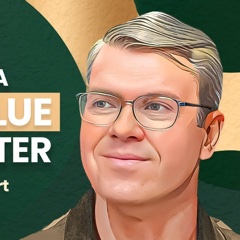
Byrne Hobart
Writer of The Diff, a newsletter on tech and finance
Where to hear and read about Byrne Hobart1 episode or test

Byrne Hobart writes The Diff, a newsletter on tech and finance that draws smart readers through depth on narrow topics. The most useful thing to learn from him is to write the last important piece on a story, backed by a notes file and a guarded day, instead of racing to be first.
you can choose a narrow enough topic that you will be the person who has worked the hardest on explaining this one thing.
How to Write a High-Value Newsletter for Silicon Valley’s Finest | Byrne Hobart | How I Write
Byrne Hobart: the story and the lessons
1How Byrne Hobart's newsletter grew into a network
The Diff started as writing for fun and became a paid job-search tool. It began as writing for fun, then became a way to stay in the loop for his next job. Fearing COVID would block job interviews, he made it paid in early 2020.
Spring 2020 suited online content, because white-collar workers had commuting time freed up and spent it on work-adjacent reading, which industry newsletters fit well.
Hobart writes the newsletter he would open first and readers self-select. Curious people who want to go deep on odd business and tech topics find it on their own, so he does little to manage reader quality.
He does not worry about smart readers running out. A narrower domain focus draws smarter people inside that domain.
Hobart finds the reader network is worth more than the subscriptions. Sharp comments from founders and curious readers led him to start connecting them. That side is growing faster than the subscriptions.
Doubling subscribers roughly doubles the value of the writing, while doubling a network more than doubles its connections.
Hobart treats a newsletter as a brand and customer list that can become a business. Ray Dalio, Bill Gurley, Sevin Rosen and Charles Schwab all started from newsletters. Pension heads read Dalio's memo and traded on it, then asked him to manage their money.
Bridgewater thus moved from selling ideas to charging a fee on assets. Hobart notes that writing investment memos without writing checks trains clear thinking, so a writer can later write the memo and the check.
Hobart assumes everyone in a niche will hear about his work. The talented people in a niche fit in a group chat or one slightly bigger. After his 30-year mortgage piece, he found his wife was one of 36 people on the first Write of Passage Zoom session.
He does not craft his network. People ping him more than he pings them, because writing lets people he would not otherwise meet find him.
2Hobart's writing routine and how he guards his day
Hobart keeps one big notes file that grows ideas into drafts. The file holds every idea at every stage. Some entries are one line, like a company to look into. Others grow into questions, then paragraphs, links and quotes until writing is just copy and paste.
Letting notes accumulate also means his viewpoint can shift halfway through a draft before he commits. He calls that annoying but fun.
Hobart writes about books as he reads them. Writing as he reads makes the salient points stick. He reads each new thing against earlier reading to see which patterns hold and which break.
He can point at a random book on his shelf and often recall only three new things from it. He says experience took him from a 50% to a 90% shot at a piece he is proud of, and more output brings the next ideas.
Hobart wrote at lunch with a timer and no internet. With a full-time job, he wrote notes on paper in advance, then set a half hour timer at lunch and wrote while eating. He added links and edited afterward.
Cutting off the internet kept the session on the draft, and he could produce a decent chunk in that one lunch.
Hobart sleeps on a draft and sends it the next morning. He writes most of the issue during the day and sends it the next morning, because a draft is much easier to edit after sleep.
He had written that COVID would matter less if there is ever a vaccine. The next morning's top headline was that vaccine tests succeeded, so he rewrote the piece.
Hobart takes a non-text break when a piece stalls. Showers, walks, workouts or getting the kids ready let loose ideas collide. About 10% of his topic and conclusion sentences come to him in the shower.
Email is a poor break because it swaps one text stream for another. When stuck on an opening or ending, a walk beats writing ten frustrated topic sentences.
Hobart plans his day tightly because distractions keep improving. He wakes around 5 AM, blocks the day into calls and deep research, and leaves no slack. By 4 PM the calendar is spoken for until 8, and at 8 PM he is tired and reads a book.
Someone's job is to make social media and games more distracting, so his defenses have to keep evolving.
3How Hobart picks topics and earns attention
Hobart writes the last important piece on a story, not the first. Being first is a random, one-dimensional race among outlets, like Joe Weisenthal lining up two tweets for jobs day. Hobart competes on timing and quality by writing what the event meant.
Longer pieces do slightly better, because a definitive take is what people cite when explaining a topic to someone else. In his words, 'there's always demand for the last important piece on it.'
Hobart accepts that effort only weakly predicts which pieces take off. He wishes the link were stronger, and says many newsletter writers complain that their favorite pieces do poorly. The aim is to improve the odds, not guarantee a hit.
His success rate beats racing to be first, but he says it will not even approach 50%.
Hobart picks a topic narrow enough to outwork everyone on it. He does not want to be outworked in a domain, so he shrinks the domain. Robert Caro moved to the Texas hill country for two years to get to know people around Lyndon Johnson.
Hobart's point is that if someone beats you, it should be because they would have beaten you anyway.
Hobart looks for topics where two of his odd interests overlap. He lists unusual interests and looks for where they meet in the real world. His example is probability and poetry, asking what makes an unknown poet become well known.
Odd interests often trace back to a few core traits. Random pairings are usually silly because no good analogy exists, but one may have no competition. He cites Paul Graham writing about programmers as painters, because he writes what he knows.
Hobart turns single-company profiles into models, then writes the exceptions. His gas station piece found that stations earn on lotto tickets, cigarettes and snacks, because gas brings the foot traffic. That model later explained why Starbucks suits EV charging.
A company that breaks the pattern is worth a piece asking why. A gas station selling no candy or cigarettes would be a puzzle worth studying.
Hobart does not try to force a distinctive voice. He has only written a lot and picked up tricks. He thinks a deliberately distinctive voice is try-hard and embarrassing at first, and may never become good.
When an editor cuts a sentence he likes, he asks whether it was self-indulgent. Half the time the cut is right.
4How Hobart reads sources, tests ideas and fixes weak spots
Hobart asks who was talking and why before trusting a story. After a collapse, ex-employees have free time and want to blame others. He reads Smartest Guys in the Room as ex-Enron staff each blaming another part of Enron.
If only two people were in the room and one looks bad, the other is likely the source. That does not mean they lie, only that the version flatters them.
Hobart asks for the case against his ideas. He seeks people unlikely to say every idea is great. He also stretches the newsletter into topics he is less sure of, so experts reply with context he lacks.
Readers who know the topic forward the piece and respond, which feeds the next one.
Hobart adds commentary so a link roundup is more than a list. Hacker News or the right subreddit already supply plain link lists, so he builds in a unique take, often about why a piece got written.
Books in his weekend links often signal a coming post. Long reads are usually just a weekend pleasure.
Hobart admires memos that spell out the decision and cut ambiguity. He describes the Amazon memo as beaten into shape so it states the plan, the metric, what success is and who owns what. The meeting starts only after everyone has finished reading.
The artifact may be forgotten once the decision works, but the thinking it forced is the value. Writing lets you reorder, cut and push details into footnotes.
Hobart assumes some readers find a point new and elaborates. Something can be a cliche inside an industry and unknown outside it. His rule is to assume some readers learn it for the first time.
In tech and finance he never has to explain AWS. With liquid natural gas, he had to weigh technical depth against an angry email from a 30-year industry veteran.
Hobart splits an overgrown draft and titles it Part One. When a topic has more to say than one issue can hold, he adds 'Part One' to the title and publishes the rest the next day.
He lists judging how much attention a piece deserves as one of his weakest areas.
Hobart's titles are often plain and sometimes stop matching the piece. With no better angle he writes 'Understanding' plus a company name, like Understanding Jane Street. His mistake is writing a title early, then finding its theme ended up in a deleted footnote.
He now rereads the title against the finished piece. On Twitter, quotable sentences and screenshot-worthy paragraphs count for more than headlines, though headlines still matter for search.

How to Write a High-Value Newsletter for Silicon Valley’s Finest | Byrne Hobart | How I Write
Byrne Hobart explains how he turns deep research into a high-density newsletter that smart readers in tech and finance keep reading. His most useful habits are a single running notes file, sleeping on a draft before sending it, and writing the last important piece on a story instead of racing to be first.
The Diff started as writing for fun and became a paid job-search tool. It began as writing for fun, then became a way to stay in the loop for his next job. Fearing COVID would block job interviews, he made it paid in early 2020.
Spring 2020 suited online content, because white-collar workers had commuting time freed up and spent it on work-adjacent reading, which industry newsletters fit well.
Hobart writes the newsletter he would open first and readers self-select. Curious people who want to go deep on odd business and tech topics find it on their own, so he does little to manage reader quality.
He does not worry about smart readers running out. A narrower domain focus draws smarter people inside that domain.
Hobart finds the reader network is worth more than the subscriptions. Sharp comments from founders and curious readers led him to start connecting them. That side is growing faster than the subscriptions.
Doubling subscribers roughly doubles the value of the writing, while doubling a network more than doubles its connections.
Hobart treats a newsletter as a brand and customer list that can become a business. Ray Dalio, Bill Gurley, Sevin Rosen and Charles Schwab all started from newsletters. Pension heads read Dalio's memo and traded on it, then asked him to manage their money.
Bridgewater thus moved from selling ideas to charging a fee on assets. Hobart notes that writing investment memos without writing checks trains clear thinking, so a writer can later write the memo and the check.
Hobart assumes everyone in a niche will hear about his work. The talented people in a niche fit in a group chat or one slightly bigger. After his 30-year mortgage piece, he found his wife was one of 36 people on the first Write of Passage Zoom session.
He does not craft his network. People ping him more than he pings them, because writing lets people he would not otherwise meet find him.
Hobart keeps one big notes file that grows ideas into drafts. The file holds every idea at every stage. Some entries are one line, like a company to look into. Others grow into questions, then paragraphs, links and quotes until writing is just copy and paste.
Letting notes accumulate also means his viewpoint can shift halfway through a draft before he commits. He calls that annoying but fun.
Hobart writes about books as he reads them. Writing as he reads makes the salient points stick. He reads each new thing against earlier reading to see which patterns hold and which break.
He can point at a random book on his shelf and often recall only three new things from it. He says experience took him from a 50% to a 90% shot at a piece he is proud of, and more output brings the next ideas.
Hobart wrote at lunch with a timer and no internet. With a full-time job, he wrote notes on paper in advance, then set a half hour timer at lunch and wrote while eating. He added links and edited afterward.
Cutting off the internet kept the session on the draft, and he could produce a decent chunk in that one lunch.
Hobart sleeps on a draft and sends it the next morning. He writes most of the issue during the day and sends it the next morning, because a draft is much easier to edit after sleep.
He had written that COVID would matter less if there is ever a vaccine. The next morning's top headline was that vaccine tests succeeded, so he rewrote the piece.
Hobart takes a non-text break when a piece stalls. Showers, walks, workouts or getting the kids ready let loose ideas collide. About 10% of his topic and conclusion sentences come to him in the shower.
Email is a poor break because it swaps one text stream for another. When stuck on an opening or ending, a walk beats writing ten frustrated topic sentences.
Hobart plans his day tightly because distractions keep improving. He wakes around 5 AM, blocks the day into calls and deep research, and leaves no slack. By 4 PM the calendar is spoken for until 8, and at 8 PM he is tired and reads a book.
Someone's job is to make social media and games more distracting, so his defenses have to keep evolving.
Hobart writes the last important piece on a story, not the first. Being first is a random, one-dimensional race among outlets, like Joe Weisenthal lining up two tweets for jobs day. Hobart competes on timing and quality by writing what the event meant.
Longer pieces do slightly better, because a definitive take is what people cite when explaining a topic to someone else. In his words, 'there's always demand for the last important piece on it.'
Hobart accepts that effort only weakly predicts which pieces take off. He wishes the link were stronger, and says many newsletter writers complain that their favorite pieces do poorly. The aim is to improve the odds, not guarantee a hit.
His success rate beats racing to be first, but he says it will not even approach 50%.
Hobart picks a topic narrow enough to outwork everyone on it. He does not want to be outworked in a domain, so he shrinks the domain. Robert Caro moved to the Texas hill country for two years to get to know people around Lyndon Johnson.
Hobart's point is that if someone beats you, it should be because they would have beaten you anyway.
Hobart looks for topics where two of his odd interests overlap. He lists unusual interests and looks for where they meet in the real world. His example is probability and poetry, asking what makes an unknown poet become well known.
Odd interests often trace back to a few core traits. Random pairings are usually silly because no good analogy exists, but one may have no competition. He cites Paul Graham writing about programmers as painters, because he writes what he knows.
Hobart turns single-company profiles into models, then writes the exceptions. His gas station piece found that stations earn on lotto tickets, cigarettes and snacks, because gas brings the foot traffic. That model later explained why Starbucks suits EV charging.
A company that breaks the pattern is worth a piece asking why. A gas station selling no candy or cigarettes would be a puzzle worth studying.
Hobart does not try to force a distinctive voice. He has only written a lot and picked up tricks. He thinks a deliberately distinctive voice is try-hard and embarrassing at first, and may never become good.
When an editor cuts a sentence he likes, he asks whether it was self-indulgent. Half the time the cut is right.
Hobart asks who was talking and why before trusting a story. After a collapse, ex-employees have free time and want to blame others. He reads Smartest Guys in the Room as ex-Enron staff each blaming another part of Enron.
If only two people were in the room and one looks bad, the other is likely the source. That does not mean they lie, only that the version flatters them.
Hobart asks for the case against his ideas. He seeks people unlikely to say every idea is great. He also stretches the newsletter into topics he is less sure of, so experts reply with context he lacks.
Readers who know the topic forward the piece and respond, which feeds the next one.
Hobart adds commentary so a link roundup is more than a list. Hacker News or the right subreddit already supply plain link lists, so he builds in a unique take, often about why a piece got written.
Books in his weekend links often signal a coming post. Long reads are usually just a weekend pleasure.
Hobart admires memos that spell out the decision and cut ambiguity. He describes the Amazon memo as beaten into shape so it states the plan, the metric, what success is and who owns what. The meeting starts only after everyone has finished reading.
The artifact may be forgotten once the decision works, but the thinking it forced is the value. Writing lets you reorder, cut and push details into footnotes.
Hobart assumes some readers find a point new and elaborates. Something can be a cliche inside an industry and unknown outside it. His rule is to assume some readers learn it for the first time.
In tech and finance he never has to explain AWS. With liquid natural gas, he had to weigh technical depth against an angry email from a 30-year industry veteran.
Hobart splits an overgrown draft and titles it Part One. When a topic has more to say than one issue can hold, he adds 'Part One' to the title and publishes the rest the next day.
He lists judging how much attention a piece deserves as one of his weakest areas.
Hobart's titles are often plain and sometimes stop matching the piece. With no better angle he writes 'Understanding' plus a company name, like Understanding Jane Street. His mistake is writing a title early, then finding its theme ended up in a deleted footnote.
He now rereads the title against the finished piece. On Twitter, quotable sentences and screenshot-worthy paragraphs count for more than headlines, though headlines still matter for search.