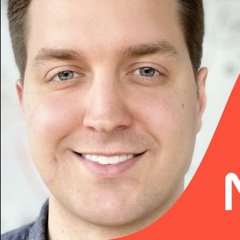
Brent Zajaczkowski
VP of Product Growth at Noom
Where to hear and read about Brent Zajaczkowski1 episode or test

Brent Zajaczkowski is VP of Product Growth at Noom, where he runs experiment-driven growth for one of the largest online weight loss platforms. The lesson most worth taking is how Noom moved from optimizing a funnel to expanding product-market fit, with higher-LTV clinical programs and a free tier, once GLP-1 rivals broke its paid channel economics.
I think our onboarding flow is in many ways that aha moment for people.
How Noom Avoided PMF Collapse in the Wake of GLP-1s
Brent Zajaczkowski: the story and the lessons
1Brent Zajaczkowski's path from engineer to Noom growth lead
Zajaczkowski moved from engineering to product growth by running his own experiments. He started as a software engineer at TripAdvisor, which had an experiment-driven culture, then ran acquisition, SEO and onboarding tests at the tutoring marketplace Wyzant.
At TripAdvisor, mentors let him define, build, run and analyze experiments as an engineer, and that led to a product role.
He joined Noom in 2020, when people stuck at home focused on habits. The company grew fast in that period. Noom now uses weight loss as the entry point to a broader preventive health and longevity business.
It has added clinical access, a GLP-1 program and a micro dose GLP-1 program, and he expects the expansion to continue over the next couple of years.
His growth team is split between building new programs and tuning existing flows. One half asks what the next program is, how it goes to market and what its purchase and nurture flows look like. The other half improves purchase flows, retention and counter offers shown to people about to cancel.
The mix of optimization and expansion is recent. Today both are in scope.
Zajaczkowski pushes his team to act and measure instead of debating. He credits former TripAdvisor CEO Steve Kaufer's mantra, "speed wins". When his team is stuck on a decision, he pushes them to pick something, do it and measure it.
He warns it should not turn into short-sighted micro-optimizations or avoid big swings. As he puts it: "if you're not doing something you're not learning."
2Why Noom's long onboarding flow works
Zajaczkowski treats Noom's long onboarding as the aha moment, not an obstacle. Conventional wisdom says to shorten onboarding. For Noom the aha moment is believing this program will work where past attempts failed, and the questions, tone and understanding build that belief.
Users have often failed many times, so a flow that looks like a calorie tracker is an instant turnoff.
The long flow came from a culture of testing, not one design decision. It predates him, and nearly everyone who joins wants to shorten it first, including him. Rarely did anyone get a no on a test, and there were never hard caps on what you could try.
A test needed only a first-principles reason. The flow landed where it did "following the winds".
Fast onboarding suits products whose value arrives at signup, and Noom's does not. He compares a video streaming service, where you sign up quickly and the value is on your TV. Noom's results come only after the user does the work.
Noom's questions surface hidden thoughts, then give users a label for them. The curriculum is built on cognitive behavioral therapy, which connects thoughts to feelings to behaviors. In the clean plate club example, a full adult thinks leaving food is wasteful, feels guilt and keeps eating.
Once the thought has a label, the user can challenge it, for example by saving the food for tomorrow. He ties this to Peter Thiel's idea that every startup rests on a secret: the psychology under weight loss.
Noom personalizes reactively to answers instead of locking users into personas. The core user is a woman in her 30s or 40s juggling work and family, and the flow leans into pressures like time. Within that group it adapts to each answer, including showing different testimonial versions.
A behavioral profile quiz gives users a label, but hardcoding people into three types would take away from the sense that the program fits their struggles.
Checkout best practices did not lift conversion after the long flow. Noom tried many and often shipped them. They solved real problems but did not move the needle.
His guess is that the flow builds so much motivation that checkout friction matters less than on an e-commerce site. His advice is to test transactional best practices instead of assuming they transfer.
3How Zajaczkowski runs experiments and tests motivation
Noom swaps whole code shards instead of branching for each test. Most tooling is built in-house, with Mixpanel for PM self-service analysis. On purchase flows, a failed test is shut off and its code is never touched again.
Heavy branching slows launches because teams worry about bugs exposing users to an experience nobody intended.
He builds the two-day version of a test and invests only after it wins. For uncertain experiments the quick version gets signal. If it loses, the code is thrown away. If it wins, it earns higher-quality code and a rollout to 100% of users.
Strategic bets that will be built on get stable code from the start. Deciding which tests sit where is "a bit of an art".
Noom puts research questions inside onboarding to catch users in the right mindset. Experiments run alongside surveys and usability tests, and a few screens in the flow can beat a survey. Survey results depend on whether it reaches the right people in the right mindset.
Learning what problem users have then shows what to build to get them to sign up.
Charging 50 cents for the trial gave users skin in the game. Most users pay for the trial, with some choice in the amount. Conversion barely changed, but retention per exposure improved.
A card on file also eases the jump to the full subscription. He compares it to Orange Theory's late cancellation fees and the older fitness app Packed.
A re-onboarding flow told lapsed users that falling off the wagon is normal. Users who slip often cancel because they feel they failed. The flow frames a lapse of a week or two as part of most successful journeys and asks them to recommit.
It was a "pretty massive improvement" to engagement and retention among users who would otherwise have abandoned. He sees it as the same motivation lever as the trial fee, applied later.
He says the metrics furthest from acquisition cap how much you can spend. If users do not retain or move into other offerings, LTV suffers, and that limits responsible acquisition spend. A user who buys and leaves because of product gaps also hurts growth.
4How Noom adapted when GLP-1s flooded its paid channels
Zajaczkowski reads the GLP-1 hit as a channel problem, not vanished demand. GLP-1 providers and pharma companies targeted the same audience in the same paid channels. With higher LTVs they could afford rising CACs, which made Noom's lower-LTV weight product hard to grow.
He calls it "more of like a product channel fit collapse". Medication is costly and pairs with behavior change, so the market shrank but did not vanish.
GLP-1s are a partial substitute, so Noom's legacy pricing has held so far. He contrasts them with AI's effect on Stack Overflow, where ChatGPT or Claude gave the same answers faster at the same cost. Noom has not cut prices on its older products and has changed new weight and premium pricing little.
Noom saw this coming years ahead and had already partnered with pharma on studies pairing behavior change with medication. He points to Wegovy's FDA approval for chronic weight management, around 2021, as the turning point.
Noom sells more support mid-journey because success ends the subscription. Once weight is lost, willingness to pay fades, as with a dating app after you find a partner. Maintenance and other health areas brought only small successes.
Premium tiers added one-on-one human coaching and personalized plans. Clinical care and medication now give a step up at a plateau and a step down after success. "Success in the program means you leave the program."
Noom attacked both LTV and CAC with expansion bets. On LTV, it launched four to six clinical programs in about a year, including injectable and oral GLP-1 options, so it could compete in paid channels again. On CAC, it kept pushing referrals, word of mouth and cheaper channels.
The clinical push turned a digital product into an operational business that ships medication in many cases and works with pharmacies.
A free tier rewarding micro habits widens the funnel at the low end. It rewards small daily actions like hitting a step goal or eating a healthy snack with gift cards or donations. It targets people who want health help but lack the money or don't know what to buy.
It had launched publicly only about a week before the recording. Users who need more can move into weight loss with or without medication. He compares it to Sweatcoin on the low end and Headspace's move into therapy and psychiatry on the high end.
5How Noom uses AI to personalize and cut friction
Noom's AI companion Wellie replaces the wait for a coach. It knows what the user logged and how their weight journey is going, and helps in the moment, such as while cooking or shopping.
Clinicians confirm and redirect its advice. He expects it to improve with more signals like Apple Health data and eventually biomarkers, which could also route people to the right product.
AI photo meal logging makes calorie tracking nearly effortless. Users snap a photo and get calories and macros logged, which cuts the typing, autocomplete and guessing of manual entry.
Accuracy is imperfect, but weight loss mostly needs generally right choices. In the free tier it only flags healthy green foods in a meal.

How Noom Avoided PMF Collapse in the Wake of GLP-1s
Noom's growth leader explains why a very long, personalized onboarding flow works for a hard-to-solve problem, which experiments tapped user motivation, and how the company adapted when GLP-1 drugs flooded its paid channels. The result is a playbook for moving from pure optimization to product-market fit expansion with a higher-LTV clinical offer and a free low-CAC tier.
Zajaczkowski moved from engineering to product growth by running his own experiments. He started as a software engineer at TripAdvisor, which had an experiment-driven culture, then ran acquisition, SEO and onboarding tests at the tutoring marketplace Wyzant.
At TripAdvisor, mentors let him define, build, run and analyze experiments as an engineer, and that led to a product role.
He joined Noom in 2020, when people stuck at home focused on habits. The company grew fast in that period. Noom now uses weight loss as the entry point to a broader preventive health and longevity business.
It has added clinical access, a GLP-1 program and a micro dose GLP-1 program, and he expects the expansion to continue over the next couple of years.
His growth team is split between building new programs and tuning existing flows. One half asks what the next program is, how it goes to market and what its purchase and nurture flows look like. The other half improves purchase flows, retention and counter offers shown to people about to cancel.
The mix of optimization and expansion is recent. Today both are in scope.
Zajaczkowski pushes his team to act and measure instead of debating. He credits former TripAdvisor CEO Steve Kaufer's mantra, "speed wins". When his team is stuck on a decision, he pushes them to pick something, do it and measure it.
He warns it should not turn into short-sighted micro-optimizations or avoid big swings. As he puts it: "if you're not doing something you're not learning."
Zajaczkowski treats Noom's long onboarding as the aha moment, not an obstacle. Conventional wisdom says to shorten onboarding. For Noom the aha moment is believing this program will work where past attempts failed, and the questions, tone and understanding build that belief.
Users have often failed many times, so a flow that looks like a calorie tracker is an instant turnoff.
The long flow came from a culture of testing, not one design decision. It predates him, and nearly everyone who joins wants to shorten it first, including him. Rarely did anyone get a no on a test, and there were never hard caps on what you could try.
A test needed only a first-principles reason. The flow landed where it did "following the winds".
Fast onboarding suits products whose value arrives at signup, and Noom's does not. He compares a video streaming service, where you sign up quickly and the value is on your TV. Noom's results come only after the user does the work.
Noom's questions surface hidden thoughts, then give users a label for them. The curriculum is built on cognitive behavioral therapy, which connects thoughts to feelings to behaviors. In the clean plate club example, a full adult thinks leaving food is wasteful, feels guilt and keeps eating.
Once the thought has a label, the user can challenge it, for example by saving the food for tomorrow. He ties this to Peter Thiel's idea that every startup rests on a secret: the psychology under weight loss.
Noom personalizes reactively to answers instead of locking users into personas. The core user is a woman in her 30s or 40s juggling work and family, and the flow leans into pressures like time. Within that group it adapts to each answer, including showing different testimonial versions.
A behavioral profile quiz gives users a label, but hardcoding people into three types would take away from the sense that the program fits their struggles.
Checkout best practices did not lift conversion after the long flow. Noom tried many and often shipped them. They solved real problems but did not move the needle.
His guess is that the flow builds so much motivation that checkout friction matters less than on an e-commerce site. His advice is to test transactional best practices instead of assuming they transfer.
Noom swaps whole code shards instead of branching for each test. Most tooling is built in-house, with Mixpanel for PM self-service analysis. On purchase flows, a failed test is shut off and its code is never touched again.
Heavy branching slows launches because teams worry about bugs exposing users to an experience nobody intended.
He builds the two-day version of a test and invests only after it wins. For uncertain experiments the quick version gets signal. If it loses, the code is thrown away. If it wins, it earns higher-quality code and a rollout to 100% of users.
Strategic bets that will be built on get stable code from the start. Deciding which tests sit where is "a bit of an art".
Noom puts research questions inside onboarding to catch users in the right mindset. Experiments run alongside surveys and usability tests, and a few screens in the flow can beat a survey. Survey results depend on whether it reaches the right people in the right mindset.
Learning what problem users have then shows what to build to get them to sign up.
Charging 50 cents for the trial gave users skin in the game. Most users pay for the trial, with some choice in the amount. Conversion barely changed, but retention per exposure improved.
A card on file also eases the jump to the full subscription. He compares it to Orange Theory's late cancellation fees and the older fitness app Packed.
A re-onboarding flow told lapsed users that falling off the wagon is normal. Users who slip often cancel because they feel they failed. The flow frames a lapse of a week or two as part of most successful journeys and asks them to recommit.
It was a "pretty massive improvement" to engagement and retention among users who would otherwise have abandoned. He sees it as the same motivation lever as the trial fee, applied later.
He says the metrics furthest from acquisition cap how much you can spend. If users do not retain or move into other offerings, LTV suffers, and that limits responsible acquisition spend. A user who buys and leaves because of product gaps also hurts growth.
Zajaczkowski reads the GLP-1 hit as a channel problem, not vanished demand. GLP-1 providers and pharma companies targeted the same audience in the same paid channels. With higher LTVs they could afford rising CACs, which made Noom's lower-LTV weight product hard to grow.
He calls it "more of like a product channel fit collapse". Medication is costly and pairs with behavior change, so the market shrank but did not vanish.
GLP-1s are a partial substitute, so Noom's legacy pricing has held so far. He contrasts them with AI's effect on Stack Overflow, where ChatGPT or Claude gave the same answers faster at the same cost. Noom has not cut prices on its older products and has changed new weight and premium pricing little.
Noom saw this coming years ahead and had already partnered with pharma on studies pairing behavior change with medication. He points to Wegovy's FDA approval for chronic weight management, around 2021, as the turning point.
Noom sells more support mid-journey because success ends the subscription. Once weight is lost, willingness to pay fades, as with a dating app after you find a partner. Maintenance and other health areas brought only small successes.
Premium tiers added one-on-one human coaching and personalized plans. Clinical care and medication now give a step up at a plateau and a step down after success. "Success in the program means you leave the program."
Noom attacked both LTV and CAC with expansion bets. On LTV, it launched four to six clinical programs in about a year, including injectable and oral GLP-1 options, so it could compete in paid channels again. On CAC, it kept pushing referrals, word of mouth and cheaper channels.
The clinical push turned a digital product into an operational business that ships medication in many cases and works with pharmacies.
A free tier rewarding micro habits widens the funnel at the low end. It rewards small daily actions like hitting a step goal or eating a healthy snack with gift cards or donations. It targets people who want health help but lack the money or don't know what to buy.
It had launched publicly only about a week before the recording. Users who need more can move into weight loss with or without medication. He compares it to Sweatcoin on the low end and Headspace's move into therapy and psychiatry on the high end.
Noom's AI companion Wellie replaces the wait for a coach. It knows what the user logged and how their weight journey is going, and helps in the moment, such as while cooking or shopping.
Clinicians confirm and redirect its advice. He expects it to improve with more signals like Apple Health data and eventually biomarkers, which could also route people to the right product.
AI photo meal logging makes calorie tracking nearly effortless. Users snap a photo and get calories and macros logged, which cuts the typing, autocomplete and guessing of manual entry.
Accuracy is imperfect, but weight loss mostly needs generally right choices. In the free tier it only flags healthy green foods in a meal.