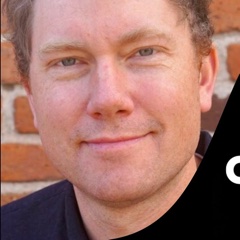
Brandon Gador
Product Growth Lead at onX
Where to hear and read about Brandon Gador1 episode or test

Brandon Gador is Product Growth Lead at onX, where a horizontal growth team of about four supports separate apps for hunting, off-roading, backcountry and fishing. The most useful thing to learn from him is how to run a small growth team through an experimentation system and real user research instead of a roadmap and personal instinct.
there's nothing more valuable than watching people go through your onboarding flow and the questions that they have.
How onX Built a Portfolio of Apps to Grow ARR by 10x
Brandon Gador: the story and the lessons
1Brandon Gador's path from fintech to onX
Gador left fintech to build for outdoor passions he lives himself. He hunts, fishes, backcountry skis and mountain bikes, and had used onX for years before joining in 2023. Fintech taught him product, but he wanted a problem of his own.
He says "I love Gusto but I don't wake up every day thinking about payroll."
He learned product at three companies before onX. He started in Intuit's rotational program, then moved to Lending Club and Gusto. He was Lending Club's fifth PM and the team was about 60 when he left. Gusto's PM team grew from 12 to 14 to over 60.
onX is his third scaling startup. Here leadership asks whether it is hiring the right people, not how many.
He built a Strava for whitetail hunters as a side project. The project was called Quiver, a Strava geared towards whitetail hunters. It showed an interest in building outdoor products before he worked at onX.
Being onX's customer became a blind spot he had to correct. Gador signed up for onX in 2014 and found that today's new users are completely different people. He says he may have leaned too hard on his own experience at first and wishes foundational research had started sooner.
Hunting season is the busiest time, so work has to land before it starts. What power users want differs from what new users want.
2How Gador runs a small growth team across four businesses
Gador organizes one horizontal growth team around the customer journey. About four people support hunt, off-road, backcountry and fishing, which are effectively four businesses. Priorities follow impact and where the team can learn fastest.
A winning pattern can move quickly between verticals, but few experiments win across all of them because personas and growth stages differ.
He replaced roadmap asks with an agreed problem and metric. Early on, stakeholders asked what growth would build, and the team could only name a problem and a metric. That felt terrifying, but stacked wins earned more freedom to operate.
His framing: "let's align on the problem to solve and the metric you want us to move."
Everyone on the team brings a one-page experiment idea. The engineering manager made it an expectation for every team member, not just PMs. Stakeholders with ideas get the same template and join the idea review.
The process was borrowed from Pinterest, on the view that PMs are often too close to the product to have the best ideas.
He fixed experiment velocity first, then tuned for win rate and impact. The first six months went to learning the business and the customer. The last year went to raising velocity and shoring up A/B testing infrastructure and result reporting.
Now that the team tracks velocity, impact and win rate, it tunes for the right win rate and enough big wins in the pipeline, not maximum experiment count.
He admits the multi-business setup is hard and still debates its shape. Growth works with four stakeholder groups and four ways of growing, and each vertical has several personas. Gador keeps debating with the engineering manager and design leader whether to split into vertical-specific pods.
He says "I'm not going to lie, it's not easy," and sometimes wants to go deep on just one business.
3What Gador learned about onboarding, paywalls and copy
Gador watches real new users go through onboarding. Watching people and hearing their questions produced small iterations with outsized gains. It also produced bigger swings that have not proven out yet.
Research showed the first 30 seconds matter, not the first 30 days. The team had planned around the first 30 days. New users land on a map that throws the kitchen sink of features at them, so growth now partners with feature teams on introductions and habit loops.
Hunt users skew older, and Gador pictures his dad fumbling through signup. Simplifying the first experience is still unsolved.
He pushed paywall views toward 100% of new users. Paywall view rate is one of the most critical metrics, and getting every new user to see the paywall is among the biggest moves for conversion. The team paired it with simplifying screens to what they need to say.
His team's rule on copy is don't sleep on it. CTA copy changes have been consistently successful at onX. The team mixes small, cheap copy tests in among its bigger swings.
Gador treats activation as an open problem for outdoor products. People only go outside so many times a year, and they are offline once in the field. A Strava user can run right after opening the app, but onX users rarely can.
Finding the right activation metric is still a live challenge for the team.
4Gador on onX's portfolio of apps and its market
onX builds a separate app for each activity so each goes deep. A 2019 decision chose tailored apps over one app for many activities. Off-road came first, then backcountry skiing, then fishing this year. The off-road app is built for a driver with a phone pinned to the dash, not as a reskin of hunt.
Heavy investment in the shared platform means the fishing app launched with CarPlay and Android Auto built in.
Hunting's ceiling pushed onX into adjacent outdoor markets. Only about 13 million hunting tags are bought a year. The fishing app targets still-water Midwest anglers, started in Minnesota and is now in about five states.
Last year's Trout Routes acquisition, aimed at fly fishers, helped spin up the fishing product.
Word of mouth drives most of onX's growth. Since its 2018 Series A, onX has grown ARR 10x and its team more than 300%, mostly through word of mouth. Ambassadors and influencers amplify it, some paid and some organic, while SEO plays a smaller role than at AllTrails.
Sharing varies by activity: hunters don't post their spots, but off-roaders share a great trail as a story.
onX builds for the objective-oriented user, not the casual one. An onX user has a goal, such as an archery elk hunter scouting an eight-day backpack hunt or a skier chasing spring objectives. AllTrails serves the casual weekend hiker.
The result is a deep feature set that now needs simplifying for new users.
A narrow market makes onX lean on trials over freemium. The free tier is thin because backcountry skiers are far fewer than casual hikers. About 90% of AllTrails users are free, and Gador says onX keeps reassessing where the line sits.
The brand is also less known than AllTrails. Most people he meets in Denver have not heard of onX, which leaves room to grow the global brand.
He backs features that solve one segment's real problem. Examples are cellular trail cam integration and a Moultrie partnership for eastern private-land hunters, satellite imagery to see last year's snow line, and a dispersed camping layer stitched from many land agencies.
The camping layer replaced illegal roadside camping and overrun dropped pins.
Gador won't trust AI alone with data that gets people home. He calls AI today a solution chasing a problem. It could connect onX's data into more tailored experiences, but the data must be reliable, relevant and responsible.
The dispersed camping layer still needed work with land agencies to get correct data.

How onX Built a Portfolio of Apps to Grow ARR by 10x
onX's growth lead explains how a four-person horizontal growth team supports vertical apps for hunting, off-roading, backcountry and fishing, by building an experimentation system, doing user research and fixing the paywall and onboarding. Since its 2018 Series A the company has grown ARR 10x and its team more than 300%, mostly through word of mouth.
Gador left fintech to build for outdoor passions he lives himself. He hunts, fishes, backcountry skis and mountain bikes, and had used onX for years before joining in 2023. Fintech taught him product, but he wanted a problem of his own.
He says "I love Gusto but I don't wake up every day thinking about payroll."
He learned product at three companies before onX. He started in Intuit's rotational program, then moved to Lending Club and Gusto. He was Lending Club's fifth PM and the team was about 60 when he left. Gusto's PM team grew from 12 to 14 to over 60.
onX is his third scaling startup. Here leadership asks whether it is hiring the right people, not how many.
He built a Strava for whitetail hunters as a side project. The project was called Quiver, a Strava geared towards whitetail hunters. It showed an interest in building outdoor products before he worked at onX.
Being onX's customer became a blind spot he had to correct. Gador signed up for onX in 2014 and found that today's new users are completely different people. He says he may have leaned too hard on his own experience at first and wishes foundational research had started sooner.
Hunting season is the busiest time, so work has to land before it starts. What power users want differs from what new users want.
Gador organizes one horizontal growth team around the customer journey. About four people support hunt, off-road, backcountry and fishing, which are effectively four businesses. Priorities follow impact and where the team can learn fastest.
A winning pattern can move quickly between verticals, but few experiments win across all of them because personas and growth stages differ.
He replaced roadmap asks with an agreed problem and metric. Early on, stakeholders asked what growth would build, and the team could only name a problem and a metric. That felt terrifying, but stacked wins earned more freedom to operate.
His framing: "let's align on the problem to solve and the metric you want us to move."
Everyone on the team brings a one-page experiment idea. The engineering manager made it an expectation for every team member, not just PMs. Stakeholders with ideas get the same template and join the idea review.
The process was borrowed from Pinterest, on the view that PMs are often too close to the product to have the best ideas.
He fixed experiment velocity first, then tuned for win rate and impact. The first six months went to learning the business and the customer. The last year went to raising velocity and shoring up A/B testing infrastructure and result reporting.
Now that the team tracks velocity, impact and win rate, it tunes for the right win rate and enough big wins in the pipeline, not maximum experiment count.
He admits the multi-business setup is hard and still debates its shape. Growth works with four stakeholder groups and four ways of growing, and each vertical has several personas. Gador keeps debating with the engineering manager and design leader whether to split into vertical-specific pods.
He says "I'm not going to lie, it's not easy," and sometimes wants to go deep on just one business.
Gador watches real new users go through onboarding. Watching people and hearing their questions produced small iterations with outsized gains. It also produced bigger swings that have not proven out yet.
Research showed the first 30 seconds matter, not the first 30 days. The team had planned around the first 30 days. New users land on a map that throws the kitchen sink of features at them, so growth now partners with feature teams on introductions and habit loops.
Hunt users skew older, and Gador pictures his dad fumbling through signup. Simplifying the first experience is still unsolved.
He pushed paywall views toward 100% of new users. Paywall view rate is one of the most critical metrics, and getting every new user to see the paywall is among the biggest moves for conversion. The team paired it with simplifying screens to what they need to say.
His team's rule on copy is don't sleep on it. CTA copy changes have been consistently successful at onX. The team mixes small, cheap copy tests in among its bigger swings.
Gador treats activation as an open problem for outdoor products. People only go outside so many times a year, and they are offline once in the field. A Strava user can run right after opening the app, but onX users rarely can.
Finding the right activation metric is still a live challenge for the team.
onX builds a separate app for each activity so each goes deep. A 2019 decision chose tailored apps over one app for many activities. Off-road came first, then backcountry skiing, then fishing this year. The off-road app is built for a driver with a phone pinned to the dash, not as a reskin of hunt.
Heavy investment in the shared platform means the fishing app launched with CarPlay and Android Auto built in.
Hunting's ceiling pushed onX into adjacent outdoor markets. Only about 13 million hunting tags are bought a year. The fishing app targets still-water Midwest anglers, started in Minnesota and is now in about five states.
Last year's Trout Routes acquisition, aimed at fly fishers, helped spin up the fishing product.
Word of mouth drives most of onX's growth. Since its 2018 Series A, onX has grown ARR 10x and its team more than 300%, mostly through word of mouth. Ambassadors and influencers amplify it, some paid and some organic, while SEO plays a smaller role than at AllTrails.
Sharing varies by activity: hunters don't post their spots, but off-roaders share a great trail as a story.
onX builds for the objective-oriented user, not the casual one. An onX user has a goal, such as an archery elk hunter scouting an eight-day backpack hunt or a skier chasing spring objectives. AllTrails serves the casual weekend hiker.
The result is a deep feature set that now needs simplifying for new users.
A narrow market makes onX lean on trials over freemium. The free tier is thin because backcountry skiers are far fewer than casual hikers. About 90% of AllTrails users are free, and Gador says onX keeps reassessing where the line sits.
The brand is also less known than AllTrails. Most people he meets in Denver have not heard of onX, which leaves room to grow the global brand.
He backs features that solve one segment's real problem. Examples are cellular trail cam integration and a Moultrie partnership for eastern private-land hunters, satellite imagery to see last year's snow line, and a dispersed camping layer stitched from many land agencies.
The camping layer replaced illegal roadside camping and overrun dropped pins.
Gador won't trust AI alone with data that gets people home. He calls AI today a solution chasing a problem. It could connect onX's data into more tailored experiences, but the data must be reliable, relevant and responsible.
The dispersed camping layer still needed work with land agencies to get correct data.