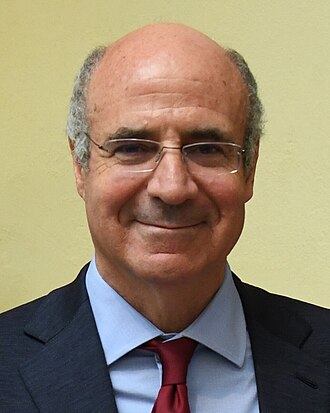
Bill Browder
Investor turned human rights campaigner and author of Red Notice and Freezing Order
Where to hear and read about Bill Browder1 episode or test

Bill Browder is a hedge fund manager turned human rights campaigner who wrote Red Notice and Freezing Order with no writing training. The thing most worth learning from him is that gripping work comes from storytelling: on every page, ask why a reader should care about the next sentence.
Anything can be exciting. And again, it's not about the writing. It's about the storytelling.
How to Write a Book People Can’t Put Down — Bill Browder
Bill Browder: the story and the lessons
1Bill Browder's path from Russian investor to campaigner
Browder left Salomon Brothers to invest in Russia and made 800%. In the mid-1990s he left Salomon Brothers and raised his own fund, which started with $25 million. It made 800% on his money.
A night in a Moscow airport turned him into a campaigner. On his 261st trip in 2005 he was detained, then put on a plane to London. He hired the lawyer Sergei Magnitsky to find out why.
Magnitsky was captured by the Russians, tortured and murdered. Browder quit business to campaign full time, and the Magnitsky Act passed in 2012, freezing assets and banning travel for human rights violators.
Browder wrote Red Notice to get a movie made, and it did the campaign's work. Officials gave him half an hour at most, and Hollywood told him a book would make a film a hundred times easier. He expected nobody to read it, but Red Notice became an international bestseller in 2015.
During COVID an Australian senator inspired by the book contacted him cold, and a Magnitsky act passed in Australia after Zoom calls alone. Hollywood still won't touch the story, because nobody wants to be on Putin's list.
Browder went public because hiding would have been more dangerous. Everyone told him to keep his head down and set up a scholarship fund for Magnitsky's son and widow. He believes the Russians would have killed him and nobody would have known why.
A widely read book means everyone would know who did it and why. It doesn't make him safe, but it makes killing him without consequences a poor prospect.
Browder calls writing a book a bet most writers lose. His books cost about four hours a day, five days a week, for three years. A campaigner could end up with 500 readers and no change.
The payoff is about twelve hours with a reader, where an article gets a skim. Readers still stop him in the street to talk about specific stories.
2How Browder finds the truth by asking the obvious question
Browder talks to people instead of only reading screens. He says an investor who only reads a screen learns nothing, and a parliament staffer who only reads The Economist gets the headlines. Coffee, lunch or breakfast with people shows what is really going on.
People want to talk, brag and impress. The same habit drove his investing and later his research into who was stealing and how.
Browder found Russian preferred shares by asking a CFO a simple question. A refinery CFO asked whether he meant ordinary or preferred shares. The preferred shares carried a guaranteed dividend of 10% of profits and traded at $1 against $10 for ordinary shares.
His broker said no one had ever asked. He found nothing wrong, bought them and made a huge profit. An oil expert would have been lost in equipment quality: "some people are too smart for their own good."
3How Browder plans a book before he writes it
Browder tests every sentence by asking why anyone should care. He treats every page as the first page, not just the opening ten. He has a stack of unread books by his bed, each dropped after ten boring pages.
He says many authors write to write, while he writes for a reader ready to put the book on the pile. "Why should anyone give a damn about what I'm saying in the next sentence?"
Browder starts with the arc, then picks chapters by their drama. He asks why the book is interesting to anyone other than himself. Red Notice runs from rags to riches, to flying too close to the sun, to tragedy, to seeking justice.
Only then does he list the interesting events as chapter titles, about 45 of them, before writing any.
Browder writes a mini book first and sells publishers on it. For a 140,000-word book he writes about 50,000 words, a mini chapter per chapter, with the drama, challenges and resolutions already laid out. Chapters run ten pages at most.
A publisher sees less risk in a mini book, so he gets a decent advance. The deadline and the money turn the mini chapters into real ones, which he finds the satisfying part.
Browder ends every chapter on an open uncertainty. Each chapter holds a challenge that is overcome or partly overcome, and ends with one the reader wants resolved in the next, like miniseries episodes.
His courtship chapter was planned as a challenge: standing out from his wife's many other options. The payoff was the copy of Tuesdays with Morrie he gave her.
4How Browder finds the drama and makes readers care
Browder digs out the drama in dull material. A dull New York deposition in Freezing Order became a thrilling chapter after he spent a month reading the transcripts. The thread was a former lawyer who switched sides and used the deposition to dig up personal details the Russian mafia could use to kill him.
The Salomon Brothers chapter on the Chinese wall worked once he found the rival who wanted to report him. Readers said they never knew Chinese walls could be so exciting.
Browder builds scenes on emotions readers share. Betrayal, fear and the mafia are things strangers relate to. He asks what in his own story will make someone else interested, since everyone is interested in their own life.
"They can relate with betrayal. A lawyer betrayed me."
Browder describes a place with two or three sharp details. Moscow's Sheremetyevo airport gets its smell and brass ceiling fixtures that look like coffee cans. Together they say dated, strange and unkempt.
Readers have little capacity for detail. He picks specific touch points, like a particular hotel instead of the London Eye. Readers who knew Villa Este or Sheremetyevo wrote to say they recognized them instantly.
Browder gives new characters just enough detail to be likable or rotten. Good guys show humanity and charm, bad guys show their rottenness, and neither is a caricature. He asks why he is spending time on someone.
Some details are held back because they matter chapters later.
Browder makes readers invest in people before tragedy hits. His third book follows Vladimir Kara-Murza, who helped pass the Magnitsky Act and was sentenced to 25 years in a Siberian penal colony. New readers won't care yet, and repeating the first two books would bore the others.
He plans to weave in other stories first so readers root for the people when bad things happen.
5How Browder researches, drafts and finishes
Browder reconstructs scenes by interviewing the people who were there. At 61 he cannot recall every event, so he asks other characters what they remember of a specific day and takes rigorous notes.
He can't interview the bad guys. He built the portrait of his traitor lawyer from court transcripts and deposition quotes, because that lawyer would sue over any error.
Browder goes back over scenes until the details return. Revisiting a situation again and again brings back the details that make a scene visual. About 40% of the inspiration for each book comes in the shower.
He keeps his phone close to note ideas, and the three-year writing period lets them arrive at different times. Writing is torture at the blank page and turns satisfying once he can reread and enjoy the text.
Browder sums up a scene in a sentence or two at chapter end. He believes in show, don't tell, but says a closing line puts the nail in properly. The Red Notice chapter on Magnitsky's arrest ends: "It had a rule of men and those men were crooks."
Browder closes a book with the change in himself. Red Notice recalls the thrill of a Polish stock that rose ten times, then sets it against the Brussels balcony with Magnitsky's widow and son as the European Parliament condemned the injustice done to the family.
The last line says there is no feeling as satisfying as getting some measure of justice in a highly unjust world. It calls back a line from early in the book and sums up his arc from narrow finance guy to fighter for justice.
Browder sends drafts to ten honest friends, not only literary ones. They mark it up and say what they really think. By the time his editor sees it, she has almost nothing to fix.
His wife, son and agent all told him his second book sucked. He asked for three more months and rewrote about a third of it.
Browder writes in small blocks of time wherever he is. With young kids, a gym routine and business, he gets two to three hours a day, three days a week. He writes on planes, trains and beaches.
He expects the third book to take longer than the first two because that schedule is not enough.

How to Write a Book People Can’t Put Down — Bill Browder
Bill Browder, a hedge fund manager with no writing training, explains how he builds page-turners by asking on every page why a reader should care about the next sentence. His method is to write a third-length mini book first, then fill it in chapter by chapter, with drama, stakes and a cliffhanger planned before the prose.
Browder left Salomon Brothers to invest in Russia and made 800%. In the mid-1990s he left Salomon Brothers and raised his own fund, which started with $25 million. It made 800% on his money.
A night in a Moscow airport turned him into a campaigner. On his 261st trip in 2005 he was detained, then put on a plane to London. He hired the lawyer Sergei Magnitsky to find out why.
Magnitsky was captured by the Russians, tortured and murdered. Browder quit business to campaign full time, and the Magnitsky Act passed in 2012, freezing assets and banning travel for human rights violators.
Browder wrote Red Notice to get a movie made, and it did the campaign's work. Officials gave him half an hour at most, and Hollywood told him a book would make a film a hundred times easier. He expected nobody to read it, but Red Notice became an international bestseller in 2015.
During COVID an Australian senator inspired by the book contacted him cold, and a Magnitsky act passed in Australia after Zoom calls alone. Hollywood still won't touch the story, because nobody wants to be on Putin's list.
Browder went public because hiding would have been more dangerous. Everyone told him to keep his head down and set up a scholarship fund for Magnitsky's son and widow. He believes the Russians would have killed him and nobody would have known why.
A widely read book means everyone would know who did it and why. It doesn't make him safe, but it makes killing him without consequences a poor prospect.
Browder calls writing a book a bet most writers lose. His books cost about four hours a day, five days a week, for three years. A campaigner could end up with 500 readers and no change.
The payoff is about twelve hours with a reader, where an article gets a skim. Readers still stop him in the street to talk about specific stories.
Browder talks to people instead of only reading screens. He says an investor who only reads a screen learns nothing, and a parliament staffer who only reads The Economist gets the headlines. Coffee, lunch or breakfast with people shows what is really going on.
People want to talk, brag and impress. The same habit drove his investing and later his research into who was stealing and how.
Browder found Russian preferred shares by asking a CFO a simple question. A refinery CFO asked whether he meant ordinary or preferred shares. The preferred shares carried a guaranteed dividend of 10% of profits and traded at $1 against $10 for ordinary shares.
His broker said no one had ever asked. He found nothing wrong, bought them and made a huge profit. An oil expert would have been lost in equipment quality: "some people are too smart for their own good."
Browder tests every sentence by asking why anyone should care. He treats every page as the first page, not just the opening ten. He has a stack of unread books by his bed, each dropped after ten boring pages.
He says many authors write to write, while he writes for a reader ready to put the book on the pile. "Why should anyone give a damn about what I'm saying in the next sentence?"
Browder starts with the arc, then picks chapters by their drama. He asks why the book is interesting to anyone other than himself. Red Notice runs from rags to riches, to flying too close to the sun, to tragedy, to seeking justice.
Only then does he list the interesting events as chapter titles, about 45 of them, before writing any.
Browder writes a mini book first and sells publishers on it. For a 140,000-word book he writes about 50,000 words, a mini chapter per chapter, with the drama, challenges and resolutions already laid out. Chapters run ten pages at most.
A publisher sees less risk in a mini book, so he gets a decent advance. The deadline and the money turn the mini chapters into real ones, which he finds the satisfying part.
Browder ends every chapter on an open uncertainty. Each chapter holds a challenge that is overcome or partly overcome, and ends with one the reader wants resolved in the next, like miniseries episodes.
His courtship chapter was planned as a challenge: standing out from his wife's many other options. The payoff was the copy of Tuesdays with Morrie he gave her.
Browder digs out the drama in dull material. A dull New York deposition in Freezing Order became a thrilling chapter after he spent a month reading the transcripts. The thread was a former lawyer who switched sides and used the deposition to dig up personal details the Russian mafia could use to kill him.
The Salomon Brothers chapter on the Chinese wall worked once he found the rival who wanted to report him. Readers said they never knew Chinese walls could be so exciting.
Browder builds scenes on emotions readers share. Betrayal, fear and the mafia are things strangers relate to. He asks what in his own story will make someone else interested, since everyone is interested in their own life.
"They can relate with betrayal. A lawyer betrayed me."
Browder describes a place with two or three sharp details. Moscow's Sheremetyevo airport gets its smell and brass ceiling fixtures that look like coffee cans. Together they say dated, strange and unkempt.
Readers have little capacity for detail. He picks specific touch points, like a particular hotel instead of the London Eye. Readers who knew Villa Este or Sheremetyevo wrote to say they recognized them instantly.
Browder gives new characters just enough detail to be likable or rotten. Good guys show humanity and charm, bad guys show their rottenness, and neither is a caricature. He asks why he is spending time on someone.
Some details are held back because they matter chapters later.
Browder makes readers invest in people before tragedy hits. His third book follows Vladimir Kara-Murza, who helped pass the Magnitsky Act and was sentenced to 25 years in a Siberian penal colony. New readers won't care yet, and repeating the first two books would bore the others.
He plans to weave in other stories first so readers root for the people when bad things happen.
Browder reconstructs scenes by interviewing the people who were there. At 61 he cannot recall every event, so he asks other characters what they remember of a specific day and takes rigorous notes.
He can't interview the bad guys. He built the portrait of his traitor lawyer from court transcripts and deposition quotes, because that lawyer would sue over any error.
Browder goes back over scenes until the details return. Revisiting a situation again and again brings back the details that make a scene visual. About 40% of the inspiration for each book comes in the shower.
He keeps his phone close to note ideas, and the three-year writing period lets them arrive at different times. Writing is torture at the blank page and turns satisfying once he can reread and enjoy the text.
Browder sums up a scene in a sentence or two at chapter end. He believes in show, don't tell, but says a closing line puts the nail in properly. The Red Notice chapter on Magnitsky's arrest ends: "It had a rule of men and those men were crooks."
Browder closes a book with the change in himself. Red Notice recalls the thrill of a Polish stock that rose ten times, then sets it against the Brussels balcony with Magnitsky's widow and son as the European Parliament condemned the injustice done to the family.
The last line says there is no feeling as satisfying as getting some measure of justice in a highly unjust world. It calls back a line from early in the book and sums up his arc from narrow finance guy to fighter for justice.
Browder sends drafts to ten honest friends, not only literary ones. They mark it up and say what they really think. By the time his editor sees it, she has almost nothing to fix.
His wife, son and agent all told him his second book sucked. He asked for three more months and rewrote about a third of it.
Browder writes in small blocks of time wherever he is. With young kids, a gym routine and business, he gets two to three hours a day, three days a week. He writes on planes, trains and beaches.
He expects the third book to take longer than the first two because that schedule is not enough.