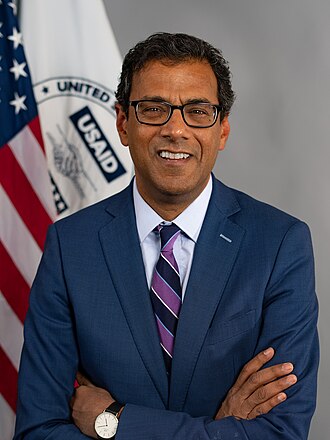
Atul Gawande
Surgeon, public health researcher and staff writer at The New Yorker
Where to hear and read about Atul Gawande1 episode or test

Atul Gawande is a surgeon, public health researcher and New Yorker staff writer who taught himself to write and is the author of Being Mortal. The thing most worth learning from him is to write about the problems that confuse you, in small steady blocks, and to save the real improvement for revision.
Writing is my way of grappling with the problems that confuse me.
How to Use Writing to Improve Your Thinking — Atul Gawande
Atul Gawande: the story and the lessons
1How Atul Gawande found his work before 40
Gawande tried many things and kept the three that gave him energy. He tried the Hill, a band, labs and an internet magazine. He kept surgery, public health policy and writing, which made no sense together.
As a surgical resident he still spent an hour and a half or two at home researching and writing. That told him writing gave him energy instead of exhausting him.
He follows a friend's rule: say yes to everything before 40. Before 40 you can't know what you're good at, so you test it by noting which parts of an activity energize you and which exhaust you. After 40 you say no and commit to the few things you will care about for a long time.
The world shifts too: when he graduated the internet wasn't a thing, and many of today's jobs didn't exist to train for.
His scattered work turns out to be one subject: humanity seen through health. Medicine learned to double human lifespan but not to deliver that reliably, affordably and in a way people can navigate. About 25 years ago he began researching how to improve surgical outcomes at population scale.
Checklists and systems replaced improvement through punishment and training. The aim is to make the right thing easier and the wrong thing harder.
Writing began as a favor to a friend launching Slate. In 1996 the magazine couldn't pay journalists, so the founder asked friends to write. Gawande's first piece was a near stream-of-consciousness diary from surgery duty as a second-year resident, essentially a blog.
He says he wasn't born a writer, unlike medicine, which came to him naturally.
He learned to rewrite from an editor friend and then the New Yorker. Jake Weissberg named what worked and what didn't and told him to do more of the first and less of the second. Gawande had never rewritten anything in college. His first New Yorker piece, about 4,000 words, took 22 back-and-forths, five complete rewrites and nine months.
A typical piece now needs three or four revisions. His reaction at first was "who rewrites anything?", but each round made the piece better, so he couldn't object.
His first book arrived in 2002, a year before training ended. It was a collection of essays, two-thirds already published in the New Yorker. His writing time had been uneven, with 800-word Slate pieces and then one or two New Yorker pieces a year.
After signing the contract he lay on his living room carpet wondering what he'd done, and his agent talked him off the ledge.
2Why Gawande writes about what confuses him
Gawande writes about problems he can't answer, working them out in a journal first. His topics are ideas that surprise him or problems that stop him short. He journals until he sees a way through, then writes through it.
His books each began with a discomfort: first the unease of being imperfect on a learning curve, later patients he couldn't fix.
Being Mortal came from asking what people want besides living longer. He had written about the end of life before, and each conclusion left him unsure of his role. After about 200 interviews he concluded that people have priorities beyond living longer and that the way to learn them is to ask. Clinicians ask less than a quarter of the time.
The line "not a good death but a good life to the very end" changed how he practices.
A few concrete questions get people to reveal what they value. A palliative care clinician taught him to ask about hopes, fears, what a person will sacrifice and the minimum acceptable quality of life. One patient said football on television and chocolate ice cream would be enough.
With his father, who had a brain tumor, the questions showed that was not enough for him. He wanted to keep operating, then to connect with people, and ran for Rotary district governor and visited 66 clubs in a year.
He waits until an idea has both meaning and a vehicle. His running idea list in an Apple note is past 400 items, and many have no legs. The itch case, a woman who scratched through her skull, sat for years as a cool story with no larger frame of meaning.
For the handwashing piece, the vehicle was the infection-control leader who said she didn't go to medical school to be the handwashing police. The opening could have been her confrontation with a staff member, not a dramatic case.
He feeds writer friends dinner when a draft is still malleable. At about three-quarters through, five or six writer friends get a deadline and a time box. He asks for the book's emotional heart, not line edits.
For Being Mortal, all of them said to halve the nursing home history and add more of his father. He had thought the family story too indulgent, and sharing it meant being more vulnerable in print.
He tests a book for an intellectual, a narrative and an emotional heart. His next book is about how minds change. Its intellectual heart is the surgical checklist, adopted in 75% of the world's operating rooms within about a decade.
It still lacks its emotional heart, probably why we want others to change at all.
3How Gawande schedules and drafts his writing
Gawande set a modest goal of 30 hours a month and used dead time. As a resident that came to about an hour a day on average, with high variance. He used the gaps between operations to read and research, and weekends to get a draft down.
The time grew as he gained control of his schedule and reserved bigger blocks near the end of training and in practice.
He treats a book as a math problem. A book of 90,000 to 100,000 words means about 2,000 words a week, written in 30-minute increments. He wants two blocks done by 9:00 and at least eight a day, and he is writing well over 30 hours a month for an early 2026 deadline.
Three years in government left no time to write. The arithmetic turns vague dread into a daily target: "it's a math problem to me."
He drafts forward without stopping and fixes it in revision. When something isn't working he moves on and returns to it later. The first draft is always painful, but he knows revisions will make it better.
Research, drafting and revising overlap. He once hated revising and now looks forward to it.
He aims for pieces people will still want in five or ten years. Breaking news is not his role. Evergreen topics can run at any time, so his pieces can wait two to four months, since deadline pieces get space first.
An 8,000 to 10,000 word cover story is generally the only big piece in an issue.
He writes for readers like himself and trusts his own interest. He pictures a shrinking group of friends willing to sit with 10,000 words, or 80,000 or more for a book.
He is surprised the books have done well, since he assumed other readers were not like him.
4Gawande's rules for sentences, scenes and openings
Gawande checks that each sentence adds a new, visual piece of information. For complex subjects he shortens sentences so ideas stay crisp, uses action verbs and asks whether each sentence is necessary. His passage on aging teeth began twice as long with run-on sentences.
Enamel wearing away, shrinking blood supply and less saliva can all be pictured. The question he asks: "Am I conveying a new piece of information with each sentence?"
He stopped stacking metaphors once the facts could tell the story. In his Slate days he used a metaphor in one sentence that made no sense in the next, such as a picket fence of teeth, then gravestones.
With a vivid subject like teeth, the image can stand alone.
His editor taught him to show scenes as if filming with a GoPro. Henry Finder told him to imagine telling the story with a GoPro on his head. His first piece covered an EKG program that read heart attacks and a Canadian hernia factory, but never showed what an EKG looks like.
The fix was to show the difference between the spikes a cardiologist sees and what a machine sees.
He varies how pieces open so readers don't see the machinery. A book where every chapter opens in the emergency room becomes predictable. He sometimes opens with a surprising idea and sometimes with a scene.
His editor labeled pieces by shape: an O starts where it ends, and a W has three peaks and advances left to right. Learning this took years.
He decides what effect he wants on the reader first. For The Itch he aimed to tell a macabre story, illuminate something larger about the brain and make the reader itchy.
The New Yorker let him use fiction's techniques and jokes in a reporting piece, which he says he couldn't have done at the New York Times.
He uses the real professional terms and defines them. He dislikes being talked down to and avoids "kitty words". Terms like "white enamel" give readers new images without losing them.
He sees jargon at its worst as a private club that gatekeeps outsiders and hides unclear thinking.
He bans the passive voice and demands the headline in scientific papers. He forces co-authors to drop phrases like "the statistical analysis was done" and to say what they think the work means instead of listing ten results.
Authors who have lived with a study for months or years should be able to state its meaning.
5How Gawande uses AI, and where he stops
Gawande uses AI for research leads but verifies every quote. He ran several models to find first-hand 19th-century surgical accounts of how anesthesia spread. It cut three months of library work to two weeks, though the models made up the quotes.
He used the real accounts they pointed to and ended up with ten genuinely good ones. He calls it "Google on steroids."
He asks several models to cut a draft and compares the results. Asked to trim a 4,000-word talk to 2,000 words, three platforms gave six versions, none at the right length. All of them were useful for finding the fat.
Every version cut his opening anecdote, which made him admit it was cute but unnecessary.
He finds AI drafts not useful and doesn't expect it to replace doctors. In writing he keeps AI to research and copy-editing. In medicine he argues the hard part begins after the diagnosis: weighing trade-offs, patients' goals and the system.

How to Use Writing to Improve Your Thinking — Atul Gawande
Gawande, a surgeon who taught himself to write, shows how to treat writing as a way of working through problems that confuse you, and how to turn that into a steady, measurable craft. The technique worth hearing is his habit of breaking a book into word counts and 30 minute blocks, drafting forward without stopping, then saving the real improvement for revision.
Gawande tried many things and kept the three that gave him energy. He tried the Hill, a band, labs and an internet magazine. He kept surgery, public health policy and writing, which made no sense together.
As a surgical resident he still spent an hour and a half or two at home researching and writing. That told him writing gave him energy instead of exhausting him.
He follows a friend's rule: say yes to everything before 40. Before 40 you can't know what you're good at, so you test it by noting which parts of an activity energize you and which exhaust you. After 40 you say no and commit to the few things you will care about for a long time.
The world shifts too: when he graduated the internet wasn't a thing, and many of today's jobs didn't exist to train for.
His scattered work turns out to be one subject: humanity seen through health. Medicine learned to double human lifespan but not to deliver that reliably, affordably and in a way people can navigate. About 25 years ago he began researching how to improve surgical outcomes at population scale.
Checklists and systems replaced improvement through punishment and training. The aim is to make the right thing easier and the wrong thing harder.
Writing began as a favor to a friend launching Slate. In 1996 the magazine couldn't pay journalists, so the founder asked friends to write. Gawande's first piece was a near stream-of-consciousness diary from surgery duty as a second-year resident, essentially a blog.
He says he wasn't born a writer, unlike medicine, which came to him naturally.
He learned to rewrite from an editor friend and then the New Yorker. Jake Weissberg named what worked and what didn't and told him to do more of the first and less of the second. Gawande had never rewritten anything in college. His first New Yorker piece, about 4,000 words, took 22 back-and-forths, five complete rewrites and nine months.
A typical piece now needs three or four revisions. His reaction at first was "who rewrites anything?", but each round made the piece better, so he couldn't object.
His first book arrived in 2002, a year before training ended. It was a collection of essays, two-thirds already published in the New Yorker. His writing time had been uneven, with 800-word Slate pieces and then one or two New Yorker pieces a year.
After signing the contract he lay on his living room carpet wondering what he'd done, and his agent talked him off the ledge.
Gawande writes about problems he can't answer, working them out in a journal first. His topics are ideas that surprise him or problems that stop him short. He journals until he sees a way through, then writes through it.
His books each began with a discomfort: first the unease of being imperfect on a learning curve, later patients he couldn't fix.
Being Mortal came from asking what people want besides living longer. He had written about the end of life before, and each conclusion left him unsure of his role. After about 200 interviews he concluded that people have priorities beyond living longer and that the way to learn them is to ask. Clinicians ask less than a quarter of the time.
The line "not a good death but a good life to the very end" changed how he practices.
A few concrete questions get people to reveal what they value. A palliative care clinician taught him to ask about hopes, fears, what a person will sacrifice and the minimum acceptable quality of life. One patient said football on television and chocolate ice cream would be enough.
With his father, who had a brain tumor, the questions showed that was not enough for him. He wanted to keep operating, then to connect with people, and ran for Rotary district governor and visited 66 clubs in a year.
He waits until an idea has both meaning and a vehicle. His running idea list in an Apple note is past 400 items, and many have no legs. The itch case, a woman who scratched through her skull, sat for years as a cool story with no larger frame of meaning.
For the handwashing piece, the vehicle was the infection-control leader who said she didn't go to medical school to be the handwashing police. The opening could have been her confrontation with a staff member, not a dramatic case.
He feeds writer friends dinner when a draft is still malleable. At about three-quarters through, five or six writer friends get a deadline and a time box. He asks for the book's emotional heart, not line edits.
For Being Mortal, all of them said to halve the nursing home history and add more of his father. He had thought the family story too indulgent, and sharing it meant being more vulnerable in print.
He tests a book for an intellectual, a narrative and an emotional heart. His next book is about how minds change. Its intellectual heart is the surgical checklist, adopted in 75% of the world's operating rooms within about a decade.
It still lacks its emotional heart, probably why we want others to change at all.
Gawande set a modest goal of 30 hours a month and used dead time. As a resident that came to about an hour a day on average, with high variance. He used the gaps between operations to read and research, and weekends to get a draft down.
The time grew as he gained control of his schedule and reserved bigger blocks near the end of training and in practice.
He treats a book as a math problem. A book of 90,000 to 100,000 words means about 2,000 words a week, written in 30-minute increments. He wants two blocks done by 9:00 and at least eight a day, and he is writing well over 30 hours a month for an early 2026 deadline.
Three years in government left no time to write. The arithmetic turns vague dread into a daily target: "it's a math problem to me."
He drafts forward without stopping and fixes it in revision. When something isn't working he moves on and returns to it later. The first draft is always painful, but he knows revisions will make it better.
Research, drafting and revising overlap. He once hated revising and now looks forward to it.
He aims for pieces people will still want in five or ten years. Breaking news is not his role. Evergreen topics can run at any time, so his pieces can wait two to four months, since deadline pieces get space first.
An 8,000 to 10,000 word cover story is generally the only big piece in an issue.
He writes for readers like himself and trusts his own interest. He pictures a shrinking group of friends willing to sit with 10,000 words, or 80,000 or more for a book.
He is surprised the books have done well, since he assumed other readers were not like him.
Gawande checks that each sentence adds a new, visual piece of information. For complex subjects he shortens sentences so ideas stay crisp, uses action verbs and asks whether each sentence is necessary. His passage on aging teeth began twice as long with run-on sentences.
Enamel wearing away, shrinking blood supply and less saliva can all be pictured. The question he asks: "Am I conveying a new piece of information with each sentence?"
He stopped stacking metaphors once the facts could tell the story. In his Slate days he used a metaphor in one sentence that made no sense in the next, such as a picket fence of teeth, then gravestones.
With a vivid subject like teeth, the image can stand alone.
His editor taught him to show scenes as if filming with a GoPro. Henry Finder told him to imagine telling the story with a GoPro on his head. His first piece covered an EKG program that read heart attacks and a Canadian hernia factory, but never showed what an EKG looks like.
The fix was to show the difference between the spikes a cardiologist sees and what a machine sees.
He varies how pieces open so readers don't see the machinery. A book where every chapter opens in the emergency room becomes predictable. He sometimes opens with a surprising idea and sometimes with a scene.
His editor labeled pieces by shape: an O starts where it ends, and a W has three peaks and advances left to right. Learning this took years.
He decides what effect he wants on the reader first. For The Itch he aimed to tell a macabre story, illuminate something larger about the brain and make the reader itchy.
The New Yorker let him use fiction's techniques and jokes in a reporting piece, which he says he couldn't have done at the New York Times.
He uses the real professional terms and defines them. He dislikes being talked down to and avoids "kitty words". Terms like "white enamel" give readers new images without losing them.
He sees jargon at its worst as a private club that gatekeeps outsiders and hides unclear thinking.
He bans the passive voice and demands the headline in scientific papers. He forces co-authors to drop phrases like "the statistical analysis was done" and to say what they think the work means instead of listing ten results.
Authors who have lived with a study for months or years should be able to state its meaning.
Gawande uses AI for research leads but verifies every quote. He ran several models to find first-hand 19th-century surgical accounts of how anesthesia spread. It cut three months of library work to two weeks, though the models made up the quotes.
He used the real accounts they pointed to and ended up with ten genuinely good ones. He calls it "Google on steroids."
He asks several models to cut a draft and compares the results. Asked to trim a 4,000-word talk to 2,000 words, three platforms gave six versions, none at the right length. All of them were useful for finding the fat.
Every version cut his opening anecdote, which made him admit it was cute but unnecessary.
He finds AI drafts not useful and doesn't expect it to replace doctors. In writing he keeps AI to research and copy-editing. In medicine he argues the hard part begins after the diagnosis: weighing trade-offs, patients' goals and the system.