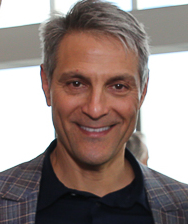
Ari Emanuel
Co-founder of Endeavor, CEO of TKO and founder of MARI
Where to hear and read about Ari Emanuel1 episode or test

Ari Emanuel co-founded Endeavor with three other agents and a phone, took over William Morris, bought IMG and the UFC, and now runs TKO and the live-events company MARI. The lesson most worth taking from him is that relentless outreach plus a clear thesis, held through fear and setbacks, creates deals no plan could produce.
I realized that rage and anger and the way I was operating the business, you could never get to really big heights.
Building an Empire with Risk, Rage & 200 Phone Calls A Day | Ari Emanuel, WME & TKO
Ari Emanuel: the story and the lessons
1How Ari Emanuel started Endeavor with a table and a phone
Emanuel built his agency on one premise taken from a book. His boss Bill Block read George Gilder's 1992 book Life After Television; Emanuel read it and called Gilder. The premise: distribution would change, there would be more television, and content creators would grow more valuable.
That belief was all he and three partners needed to start the business in 1995.
Four agents left ICM with no money and no income. Tom Strickler, Rick Rosen, David Greenblatt and Emanuel left together; ICM sued, so their commissions sat in escrow. Emanuel calls them "four demons in a room rolling calls."
ICM's press coverage made the new firm look bigger than it was.
A banker lent them $1 million with no collateral. Russell Goldman at City National made the loan. Years later, when Goldman was selling City National and asked for some of the IMG bonds, Egon Durban worked out a way to place them and Goldman was repaid.
Emanuel never had a fallback. In his words, "It was agency or die," and he never considered doing anything else. He agrees with Jeff Bezos that plan B should be to make plan A work.
What he hopes readers take from his book is how hard building a business is, with troubles all the way.
2How Ari Emanuel took over William Morris
His tantrum in the first meeting delayed the merger four years. In 2003 the William Morris leaders laughed at the idea; Emanuel says he screwed up the meeting while Patrick Whitesell was perfect. The deal that could have happened in 2003 was done around 2009.
"I played a horrible game of chess there."
He treated the merger as a conquest and weakened the target first. A Harvard professor told him there is no such thing as a merger, only a conqueror and a conquered. For four years he and Whitesell stole clients and agents and listened for dissension on the street.
When dissent grew, a top William Morris agent told Emanuel it was time to talk again, and the deal closed in about six months.
David Geffen cut his fear down to one move. Emanuel was frozen, feeling that if Endeavor was not safe, he was not safe. Geffen told him to "merge with William Morris, get in traffic and get hit."
Emanuel says it took him years to act and he should have listened earlier. Geffen's style is one action, "fire that guy, buy that company, marry that girl," not eight or ten.
He won over the rival's own unhappy leaders before closing. After approval, senior William Morris equity holders called to say it would not work. Emanuel met separately with the heads of music and non-scripted, who hated the leadership, and let them into the plan.
He negotiated majority and supermajority board rules; the man who expected the top job lacked the two-thirds vote.
He paid $44 million in buyouts and calls it his best deal. CEO Jim Wiatt took $24 million to leave and the expected successor took $20 million, during the 2008 to 2009 crisis when banks refused loans and cash was tight.
Emanuel frames it as buying a century-old roster for almost nothing, and it led to IMG. When he got cold feet, Whitesell asked, "You don't think you can take this guy out?"
3Why Ari Emanuel decided to own assets, not just represent clients
He studied the move Mike Ovitz never made. Ovitz, Ron Meyer and Bill Haber built a new business by packaging movies, yet Ovitz never bought an ad agency even after taking Coke's advertising.
Emanuel, Whitesell, Mark Shapiro and Durban concluded: "we want to own an asset" for where the world was going.
The thesis was owning sports on top of representation. IMG added events, sports, production and licensing to movies, TV, music, theater and books. Emanuel expected streaming to shift toward ad-supported plans and saw that sports keeps viewers engaged.
He found his key partner through a fundraising favor. Raising a merchant bank fund called Rain, Emanuel met Egon Durban, who had sold Skype to Microsoft and grasped that content needs distribution. A call to Marc Andreessen led to that introduction.
Emanuel values that Durban "learns everything about the company" and brings ideas.
Durban's single big bid ended the IMG auction. After owner Teddy Forstmann died, Durban asked for three weeks and the numbers. Against a rival offer of about $1.9 billion, they bid about $2.4 billion and won.
Durban's reasoning: "You're never going to remember it," only the lost deal. Emanuel later refused deal team requests to shave bids by $100 or $200 million.
The value ended up somewhere nobody expected. The founders fought to keep IMG's college business executives, but that business was worth almost nothing; the international business was the real value.
His conclusion: "You just got to constantly be working at stuff."
4Ari Emanuel's $4.2 billion bet on the UFC
He saw that you never insult partners about what they built. When the UFC asked to double its fee as Spike's highest-rated show, a Spike executive said "We made you" and implied they could be replaced. Emanuel moved the UFC to Fox.
"You don't insult somebody from what they created as if you can just recreate Dana White."
He got the seller to name the number first. He asked Lorenzo Fertitta what number he saw with his eyes closed; it started with a four. Emanuel had known the company 20 years and had run the license-fee math.
Dana White urged the Fertittas to sell to someone who loved the business, and Emanuel paid a little less than rivals offered.
The planned buyers vanished and the stress made him sick. Fox sold to Disney and lost its reason to renew; Brexit shook the banks; Amazon's roughly $260 million deal came back at about $140 million. Emanuel had put clients' money in too.
Durban, backed by KKR and Michael Dell's preferred equity, held steady and "took my hand and walked me through everything."
A new ESPN executive made the deal while he pitched a rival. When Kevin Mayer replaced John Skipper and wanted a direct-to-consumer play, he sent a WhatsApp agreeing to the $300 million price. Emanuel slid the phone to Shapiro mid-pitch to Viacom and ended the meeting.
The deal took about three and a half months, with four months left on their timeline.
Dana White's demand for ten episodes forced a bluff. ESPN offered eight episodes; White refused anything under ten though there was no other buyer. Emanuel yelled at Mayer that stars need ESPN exposure to sell the paywall, and Bob Iger told his team to give them ten.
Asking about pay-per-views turned it into a home run. At the celebration Emanuel asked why pay-per-views should be pitched separately; Iger had not known they were available. ESPN bought them that Monday in a seven-year deal worth almost $4 billion, close to the purchase price.
Emanuel took it as proof direct-to-consumer was coming.
5Why Ari Emanuel rolls the calls
He reads about someone, then calls until they call back. He shouts "roll the calls" down the hallway and from his car. He read about Michael Rapino on vacation and had him called; Rapino's company was worth $200 million then and Rapino put him on his board.
Humor and self-deprecation keep his persistence from seeming like stalking. "The way you get into the puzzle for me is on the phone."
He treats dealmaking as a puzzle learned from packaging movies. Representing artists like Scorsese, Jonah Hill and Aaron Sorkin taught him to assemble projects and work through conflict, a skill he now applies to whole companies.
Teachers like Durban and Michael Dell showed him how to build a company as an art form.
Entourage, which he expected to hurt him, ended cold meetings. He sold the show, refused to watch it and assumed it would harm him. Instead everyone picked up the phone and would meet him even on "stupid ideas."
Manager Steve Levinson had told him it would be the best thing that ever happened to him.
6Ari Emanuel's thesis for MARI and live events
Elon Musk convinced him live events are safe from AI. Musk, talking about AI as early as 2007, said live entertainment cannot be disintermediated by it. That became the idea behind MARI, started about a year ago with Mark Shapiro and others.
TKO is pure sports; MARI holds the Miami Open, the Madrid Open, Escape from Alcatraz, Barrett-Jackson and Collectcon.
He tells a nervous team to stop telling stories and call. When MARI's CFO panicked over the fundraise, Emanuel borrowed from Brené Brown that the stories in our heads are not reality. "All we got to do is just keep on making the calls."
The CFO calmed down.
7How Ari Emanuel outgrew rage without losing ambition
His anger came from trying to control outcomes. His therapist, "Dr. Calm," taught him there is his plan and then somebody else's; playing the chess match out in his head led to rage when it went differently.
His dyslexia, in a family where education was everything, left him afraid of being found out.
A crash and a stress illness showed he was not invincible. A car accident at 32 and later stress-related illness led to therapy, an Indian meditation retreat and 5-MeO-DMT. He also saw the toll on his marriage and family.
Before trying the drug he asked his brother Zeke one question: "Can it kill me?"
Dropping the legacy ego project left the drive intact. He now wants a meaningful life rather than a legacy, noting Alfred Sloan was the top businessman of 1953 and is now barely known. He still starts calls at 5 a.m. and claims "zero halfassing."
Jeff Bezos told him it is okay to get off the field; Emanuel finds that time off makes him sharper on it. He rejects Marc Andreessen's worry that psychedelics make founders work less.

Building an Empire with Risk, Rage & 200 Phone Calls A Day | Ari Emanuel, WME & TKO
Ari Emanuel built a talent agency into an empire by owning assets, not just representing clients, and by calling people nonstop until partners like Egon Durban appeared. His $4.2 billion UFC purchase looked reckless until a single ESPN rights deal worth almost $4 billion proved the thesis.
Emanuel built his agency on one premise taken from a book. His boss Bill Block read George Gilder's 1992 book Life After Television; Emanuel read it and called Gilder. The premise: distribution would change, there would be more television, and content creators would grow more valuable.
That belief was all he and three partners needed to start the business in 1995.
Four agents left ICM with no money and no income. Tom Strickler, Rick Rosen, David Greenblatt and Emanuel left together; ICM sued, so their commissions sat in escrow. Emanuel calls them "four demons in a room rolling calls."
ICM's press coverage made the new firm look bigger than it was.
A banker lent them $1 million with no collateral. Russell Goldman at City National made the loan. Years later, when Goldman was selling City National and asked for some of the IMG bonds, Egon Durban worked out a way to place them and Goldman was repaid.
Emanuel never had a fallback. In his words, "It was agency or die," and he never considered doing anything else. He agrees with Jeff Bezos that plan B should be to make plan A work.
What he hopes readers take from his book is how hard building a business is, with troubles all the way.
His tantrum in the first meeting delayed the merger four years. In 2003 the William Morris leaders laughed at the idea; Emanuel says he screwed up the meeting while Patrick Whitesell was perfect. The deal that could have happened in 2003 was done around 2009.
"I played a horrible game of chess there."
He treated the merger as a conquest and weakened the target first. A Harvard professor told him there is no such thing as a merger, only a conqueror and a conquered. For four years he and Whitesell stole clients and agents and listened for dissension on the street.
When dissent grew, a top William Morris agent told Emanuel it was time to talk again, and the deal closed in about six months.
David Geffen cut his fear down to one move. Emanuel was frozen, feeling that if Endeavor was not safe, he was not safe. Geffen told him to "merge with William Morris, get in traffic and get hit."
Emanuel says it took him years to act and he should have listened earlier. Geffen's style is one action, "fire that guy, buy that company, marry that girl," not eight or ten.
He won over the rival's own unhappy leaders before closing. After approval, senior William Morris equity holders called to say it would not work. Emanuel met separately with the heads of music and non-scripted, who hated the leadership, and let them into the plan.
He negotiated majority and supermajority board rules; the man who expected the top job lacked the two-thirds vote.
He paid $44 million in buyouts and calls it his best deal. CEO Jim Wiatt took $24 million to leave and the expected successor took $20 million, during the 2008 to 2009 crisis when banks refused loans and cash was tight.
Emanuel frames it as buying a century-old roster for almost nothing, and it led to IMG. When he got cold feet, Whitesell asked, "You don't think you can take this guy out?"
He studied the move Mike Ovitz never made. Ovitz, Ron Meyer and Bill Haber built a new business by packaging movies, yet Ovitz never bought an ad agency even after taking Coke's advertising.
Emanuel, Whitesell, Mark Shapiro and Durban concluded: "we want to own an asset" for where the world was going.
The thesis was owning sports on top of representation. IMG added events, sports, production and licensing to movies, TV, music, theater and books. Emanuel expected streaming to shift toward ad-supported plans and saw that sports keeps viewers engaged.
He found his key partner through a fundraising favor. Raising a merchant bank fund called Rain, Emanuel met Egon Durban, who had sold Skype to Microsoft and grasped that content needs distribution. A call to Marc Andreessen led to that introduction.
Emanuel values that Durban "learns everything about the company" and brings ideas.
Durban's single big bid ended the IMG auction. After owner Teddy Forstmann died, Durban asked for three weeks and the numbers. Against a rival offer of about $1.9 billion, they bid about $2.4 billion and won.
Durban's reasoning: "You're never going to remember it," only the lost deal. Emanuel later refused deal team requests to shave bids by $100 or $200 million.
The value ended up somewhere nobody expected. The founders fought to keep IMG's college business executives, but that business was worth almost nothing; the international business was the real value.
His conclusion: "You just got to constantly be working at stuff."
He saw that you never insult partners about what they built. When the UFC asked to double its fee as Spike's highest-rated show, a Spike executive said "We made you" and implied they could be replaced. Emanuel moved the UFC to Fox.
"You don't insult somebody from what they created as if you can just recreate Dana White."
He got the seller to name the number first. He asked Lorenzo Fertitta what number he saw with his eyes closed; it started with a four. Emanuel had known the company 20 years and had run the license-fee math.
Dana White urged the Fertittas to sell to someone who loved the business, and Emanuel paid a little less than rivals offered.
The planned buyers vanished and the stress made him sick. Fox sold to Disney and lost its reason to renew; Brexit shook the banks; Amazon's roughly $260 million deal came back at about $140 million. Emanuel had put clients' money in too.
Durban, backed by KKR and Michael Dell's preferred equity, held steady and "took my hand and walked me through everything."
A new ESPN executive made the deal while he pitched a rival. When Kevin Mayer replaced John Skipper and wanted a direct-to-consumer play, he sent a WhatsApp agreeing to the $300 million price. Emanuel slid the phone to Shapiro mid-pitch to Viacom and ended the meeting.
The deal took about three and a half months, with four months left on their timeline.
Dana White's demand for ten episodes forced a bluff. ESPN offered eight episodes; White refused anything under ten though there was no other buyer. Emanuel yelled at Mayer that stars need ESPN exposure to sell the paywall, and Bob Iger told his team to give them ten.
Asking about pay-per-views turned it into a home run. At the celebration Emanuel asked why pay-per-views should be pitched separately; Iger had not known they were available. ESPN bought them that Monday in a seven-year deal worth almost $4 billion, close to the purchase price.
Emanuel took it as proof direct-to-consumer was coming.
He reads about someone, then calls until they call back. He shouts "roll the calls" down the hallway and from his car. He read about Michael Rapino on vacation and had him called; Rapino's company was worth $200 million then and Rapino put him on his board.
Humor and self-deprecation keep his persistence from seeming like stalking. "The way you get into the puzzle for me is on the phone."
He treats dealmaking as a puzzle learned from packaging movies. Representing artists like Scorsese, Jonah Hill and Aaron Sorkin taught him to assemble projects and work through conflict, a skill he now applies to whole companies.
Teachers like Durban and Michael Dell showed him how to build a company as an art form.
Entourage, which he expected to hurt him, ended cold meetings. He sold the show, refused to watch it and assumed it would harm him. Instead everyone picked up the phone and would meet him even on "stupid ideas."
Manager Steve Levinson had told him it would be the best thing that ever happened to him.
Elon Musk convinced him live events are safe from AI. Musk, talking about AI as early as 2007, said live entertainment cannot be disintermediated by it. That became the idea behind MARI, started about a year ago with Mark Shapiro and others.
TKO is pure sports; MARI holds the Miami Open, the Madrid Open, Escape from Alcatraz, Barrett-Jackson and Collectcon.
He tells a nervous team to stop telling stories and call. When MARI's CFO panicked over the fundraise, Emanuel borrowed from Brené Brown that the stories in our heads are not reality. "All we got to do is just keep on making the calls."
The CFO calmed down.
His anger came from trying to control outcomes. His therapist, "Dr. Calm," taught him there is his plan and then somebody else's; playing the chess match out in his head led to rage when it went differently.
His dyslexia, in a family where education was everything, left him afraid of being found out.
A crash and a stress illness showed he was not invincible. A car accident at 32 and later stress-related illness led to therapy, an Indian meditation retreat and 5-MeO-DMT. He also saw the toll on his marriage and family.
Before trying the drug he asked his brother Zeke one question: "Can it kill me?"
Dropping the legacy ego project left the drive intact. He now wants a meaningful life rather than a legacy, noting Alfred Sloan was the top businessman of 1953 and is now barely known. He still starts calls at 5 a.m. and claims "zero halfassing."
Jeff Bezos told him it is okay to get off the field; Emanuel finds that time off makes him sharper on it. He rejects Marc Andreessen's worry that psychedelics make founders work less.