
April Dunford
Author of Obviously Awesome and positioning consultant
Where to hear and read about April Dunford1 book · 2 episodes and tests
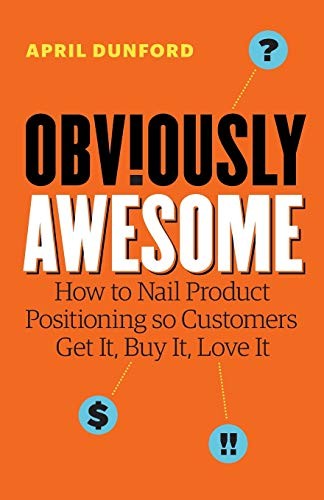 Book · notes comingObviously Awesome

 Lenny's PodcastA step-by-step guide to crafting a sales pitch that wins | April Dunford (author of Sales Pitch)
 Lenny's PodcastHow to nail your product positioning | April Dunford (Obviously Awesome)
April Dunford is a B2B positioning consultant and author of Obviously Awesome and Sales Pitch, who has worked with about 200 companies. The thing most worth learning from her is to build positioning from the value only your product delivers and the customers who care most, then turn it into a pitch that makes the buyer's choice feel safe.
Your trick in the positioning is to be able to articulate, why are we the best kind of solution for this particular type of customer? That's it.
How to nail your product positioning | April Dunford (Obviously Awesome)
April Dunford: the story and the lessons
1April Dunford's path from a failing product to positioning specialist
Dunford learned positioning by fixing a product that was not selling. She studied engineering, then took a product marketing job at a startup straight out of school. She was handed a product that was not selling, and repositioning it made it hugely successful.
The company was acquired, her boss quit, and she became VP of marketing. She concluded that when positioning is wrong everything suffers, and when it is right the money follows.
She built her own method because none existed. She read books and took courses but found no methodology. She was VP of marketing at seven startups, and six were acquired. About five or six years ago she moved to consulting, only for B2B tech.
Her clients are mostly post-Series A or B startups, often around $5 million to $10 million in revenue, plus a few big companies stitching acquisitions into one business unit. She has advised companies like Google and Epic Games.
Her father's toy shop taught her to treat setbacks as normal. Her father ran a toy shop for tourists in Canadian cottage country for 30 to 40 years. The business swung between good and broke, and his attitude was to keep going.
Her motto is 'nothing's a big deal': good events turn out less great and bad ones less bad.
She wrote Sales Pitch because everyone's pitch is bad and no book showed how. Obviously Awesome is her how-to book on positioning. Sales Pitch, subtitled 'How to Craft a Story to Stand Out and Win', came after 25 years of positioning work.
Her goal is to be useful, so she wants readers to say the book unlocked something, not that they enjoyed it. She also runs a podcast and newsletter called Positioning.
2Dunford's five-step method for product positioning
Dunford starts by listing what you must beat to win a deal. In B2B that means the status quo (spreadsheet, pen and paper, interns, email) plus whoever lands on the buyer's short list. About 40% of B2B deals are lost to no decision, which really means losing to the status quo.
She warns against counting only lookalike products as the competition.
She derives value from capabilities alternatives lack, not team opinions. List features and company capabilities the alternatives do not have, including pricing and services, then ask 'so what?' of each until you reach customer value. That guarantees the value themes are differentiated.
Asking the team why everyone loves the product gives opinions with no way to test them. LevelJump's chain ran from being built on Salesforce, to joined sales data, to measuring ramp time and time to quota, to reps making revenue faster.
Best-fit customers and market category come after the value is known. Group the value into two or three themes, define the accounts that care most about them, and only then pick the category that makes the value obvious to those customers.
Starting from a category and working backward gives no way to judge whether it is a good one.
Dunford says better means a value plus the people who care about it. Simpler can beat more features, and more features can beat simpler. Better for a small company is not better for a large enterprise.
The trick is to say why you are the best solution for one particular type of customer.
She segments B2B customers by company traits, not demographic personas. Useful traits include size, revenue, geography, team makeup, budget or software already used. An example is a creative team of more than three people with a set budget and one particular tool.
A good segment is actionable: sales can build a target list from it and marketing can aim campaigns at it. She looks for what the customers who love you have in common.
Help Scout shows the method on a crowded market. Help Scout sells customer service software against the gorilla Zendesk. Its value is service that deepens customer relationships, and e-commerce brands care most because service is almost their only contact with customers.
Its chatbot only appears when a real person is there to chat. A phone company wanting lower call center costs is a poor fit.
Technology without a clear value and buyer fails, as the Segway showed. The Segway was pitched only as a revolution in human transport and raised $100 million from backers like Steve Jobs and Jeff Bezos. Buyers could not tell whether to compare it to a car or a bicycle.
Magic Leap and Google Glass later tightened up with specific B2B use cases. Dunford calls the pattern a 'gee whiz' launch.
3How Dunford aligns a company and its team on positioning
Dunford finds most weak positioning is misalignment, not wrong wording. Founder, marketing, sales and product each hold a slightly different version. She says this is the majority of cases she sees.
Positioning cooked up by one department and heaved over the wall does not get adopted.
A founder who once knew the market can get left behind by it. A founder who crushed every pitch grows the company, then new leaders do not understand the story as the founder does. Or the market shifts and the head of product or marketing senses the company is positioned for the old one.
Each leader sees only a slice, so everyone must be brought together to work through it.
She runs positioning as a cross-functional workshop until everyone agrees. Marketing, product, sales, customer success and the CEO sit in one room. Dunford runs it as a week-long sprint, and teams on their own can do it in a couple of days.
'You're not done until everybody thinks that what we've come up with is good.'
Messaging and branding wait until positioning is done. The homepage text cannot be written until you know who it is for and what your value is against the alternatives. A brand cannot stand for anything until the target buyer and differences are known.
She dislikes the term 'brand positioning' because the two are different things.
Marketing guards the positioning once it is set. Marketing becomes the steward, or 'positioning police', working with sales and product. The pitch stays locked until positioning has to change, and reps are recertified every quarter with the head of sales.
Who owns it matters less than having one owner.
She hires for enthusiasm and tests persuasive writing. As a VP of marketing she looked for attitude because she could teach almost anything else. Her test is to write two paragraphs selling something you bought recently.
Persuasive writing was the one skill she could not teach. She took the test from a company that made her do it before hiring her.
She hires outside help mainly when alignment stalls or stakes are high. Opinionated executive teams often cannot agree alone, and a facilitator breaks the deadlock. Companies about to hire 10 to 15 salespeople or make a big marketing bet want to get it right once.
She advises everyone to start with the book's method first.
4How Dunford tests whether positioning is working
Dunford judges positioning by whether qualified buyers get excited. A homepage that confuses outsiders can still be strong for a technical B2B product. Postman's page may baffle non-developers but resonates with people building APIs.
Asking non-buyers, like a 'pitch the grandmas' event, adds irrelevant baggage. The test is a qualified prospect hearing the story and wanting to buy.
She spots weak positioning by sitting in on early sales calls. Warning signs are prospects asking you to back up and pitch again, assuming you are a different product, or asking why anyone would pay when a spreadsheet does it.
Weak positioning also shows as a slow mid-pipeline or deals that close and then churn. There is no single metric.
She keeps positioning loose for a brand-new product. With few customers, positioning is a thesis. In her experience the early thesis is partially wrong 100% of the time, so she lets the market pull you before tightening.
Tighten and push hard once customers who love the product share traits, or you can predict which pitches will go well.
Good positioning goes stale, so she reviews it on purpose. The product and market both change, so good positioning can turn bad. Great positioning feels like magic because it seems obvious, as Postman's 'a platform for building and using APIs' does.
Getting to that simple line was not simple, and Postman's pitch three years earlier was nothing like it.
5How Dunford structures a winning sales pitch
Dunford splits the pitch into a market setup and a value follow-through. The setup holds the insight, the pros and cons of alternatives and the perfect world. The follow-through is an intro, differentiated value, proof, silent objections and the ask.
Spend only a few minutes on setup, then more than half of a 30 to 45 minute call on differentiated value. Help Scout's old pitch clicked through every dropdown menu.
She makes the setup a discovery conversation, not a lecture. Ask what they use now, whether they considered alternatives and what constraints they have. By the end you either agree it is a good fit or agree it is not for them.
Most pitch decks have no place for discovery, so it happens outside the pitch.
She ends the setup by getting the buyer to agree to a perfect world. State the criteria a good solution should meet and ask the buyer to agree. Help Scout's was as easy as an inbox, never outgrown, built for amazing service.
If only your product ticks those boxes, agreement means 'I've already won the deal and I haven't even talked about us yet.' A no shows early that you are not aligned.
She opens with an insight, not a trend. A trend is visible to every competitor and points too far into the future. Help Scout's insight was that digital businesses treat customer service as a growth driver, not a cost center.
The insight is often the reason founders built the product, and can be worked backward from the differentiated value. She says Andy Raskin's trend-first structure suits investors better than buyers.
She adds proof and silent objections before the ask. Proof is a before and after customer case study or independent third-party data. Silent objections include 'sounds hard to adopt', 'probably expensive' and security needs.
The ask is whatever your sales process needs next: the sale, a proof of concept or defining a project.
She fixes positioning first, because a weak pitch usually means weak positioning. Teams that skip straight to the pitch often get one that does not work. She takes clients back to positioning, then maps it onto the pitch and tests it.
Positioning takes about a week with her clients.
6How Dunford sells to a buyer afraid of choosing wrong
Dunford says indecision, not rivals, kills many B2B deals. 40 to 60% of B2B purchase processes end in no decision. The buyer has often never bought this kind of software and a bad pick could cost standing or a job.
She teaches buyers how to buy by mapping the market, for Help Scout: shared inbox, help desk software, or us. Then she says which few criteria matter for a customer like them.
She refuses to use FOMO on indecisive buyers. Matt Dixon's analysis of 2.5 million recorded sales calls found FOMO makes indecisive buyers less likely to close. Pressure adds stress to someone already frozen.
She suggests smaller deal pieces, money-back guarantees and support that covers things going wrong.
She wins the champion first, then arms them against everyone else. A B2B purchase involves five to seven people, but the champion researches, builds the shortlist and takes the first calls. If positioning fails with the champion, 'we're dead in the water'.
Raise other groups' objections early: SOC 2 for IT, a training plan for end users, an ROI calculator for the boss. She calls one-page personas for every role a waste of time.
She sells with calm confidence and walks away from poor fits. Know exactly why and for whom you win, and say plainly when you are not the right pick. A small, non-growing e-commerce business should use a free shared inbox.
An old boss taught her to understand her value and best-fit customer and not chase anyone else. She qualifies upstream with product signals or an inside sales call.
7How Dunford rolls out and tests a new pitch
Dunford pilots a new pitch with the best rep on qualified prospects. Train the best rep with the head of sales and test on qualified prospects, not existing customers shaped by the old positioning. Huddle after each call to tune it.
Once the rep refuses to go back to the old pitch, film it and let that rep teach the team. Her phrase for the wrong way is 'Good luck, Chuck.'
Sales must help build the pitch or it never sticks. Reps know the old pitch by heart and will not drop it without a fight. A pitch thrown over the wall brings excuses.
Positioning written in a marketing bubble gets thrown out and sales returns to the pitch used since 'the year of the flood'.
A pitch can be live within a month, sometimes two weeks. The fastest case was a new pitch in use within two weeks. Few qualified prospects stretch testing, and bigger companies are slower.
Tuning is small: a word that trips people up, or a slide moved.
Tightening a weak pitch pays off quickly with no new spend. Some clients doubled the share of first calls that became opportunities. At one company Dunford doubled revenue in two quarters, though that was a big positioning shift, which is unusual.
Customers who arrived through the old positioning are generally not bothered by the new one.
8Dunford on categories, niches and frameworks
Dunford says start in a niche of an existing category. Most companies begin as a niche play in an existing category, so buyers already know what they are. Salesforce began as CRM for very small businesses.
Dominant players redefine the category later: Qualtrics was survey software until about $300 million in revenue, and Snowflake began as data warehousing for the cloud. Most category creators, like MySpace and Ask Jeeves, do not win.
Her own startup used the bowling pin strategy and sold for about $1 billion. Her early company planned CRM for investment banks, then retail banking, banking, insurance, financial services and finally enterprise. They drew the pins for their investors.
Siebel acquired them for about $1 billion. The idea is to win a segment the leader ignores, then expand from it.
She tells teams to treat any framework, including hers, as a starting point. Test what fits your situation and steal from wherever works.
Her warning: don't be a slave to it. If one rule always worked, this wouldn't be so hard.
A step-by-step guide to crafting a sales pitch that wins | April Dunford (author of Sales Pitch)
A B2B sales pitch should be built on positioning: set up the market with an insight, then prove differentiated value, instead of walking through features. April Dunford has seen companies double first-call-to-opportunity conversion, and once doubled revenue in two quarters, by tightening the pitch.
She built her own method because none existed. She read books and took courses but found no methodology. She was VP of marketing at seven startups, and six were acquired. About five or six years ago she moved to consulting, only for B2B tech.
Her clients are mostly post-Series A or B startups, often around $5 million to $10 million in revenue, plus a few big companies stitching acquisitions into one business unit. She has advised companies like Google and Epic Games.
Her father's toy shop taught her to treat setbacks as normal. Her father ran a toy shop for tourists in Canadian cottage country for 30 to 40 years. The business swung between good and broke, and his attitude was to keep going.
Her motto is 'nothing's a big deal': good events turn out less great and bad ones less bad.
She wrote Sales Pitch because everyone's pitch is bad and no book showed how. Obviously Awesome is her how-to book on positioning. Sales Pitch, subtitled 'How to Craft a Story to Stand Out and Win', came after 25 years of positioning work.
Her goal is to be useful, so she wants readers to say the book unlocked something, not that they enjoyed it. She also runs a podcast and newsletter called Positioning.
She derives value from capabilities alternatives lack, not team opinions. List features and company capabilities the alternatives do not have, including pricing and services, then ask 'so what?' of each until you reach customer value. That guarantees the value themes are differentiated.
Asking the team why everyone loves the product gives opinions with no way to test them. LevelJump's chain ran from being built on Salesforce, to joined sales data, to measuring ramp time and time to quota, to reps making revenue faster.
Help Scout shows the method on a crowded market. Help Scout sells customer service software against the gorilla Zendesk. Its value is service that deepens customer relationships, and e-commerce brands care most because service is almost their only contact with customers.
Its chatbot only appears when a real person is there to chat. A phone company wanting lower call center costs is a poor fit.
Marketing guards the positioning once it is set. Marketing becomes the steward, or 'positioning police', working with sales and product. The pitch stays locked until positioning has to change, and reps are recertified every quarter with the head of sales.
Who owns it matters less than having one owner.
She hires for enthusiasm and tests persuasive writing. As a VP of marketing she looked for attitude because she could teach almost anything else. Her test is to write two paragraphs selling something you bought recently.
Persuasive writing was the one skill she could not teach. She took the test from a company that made her do it before hiring her.
Dunford splits the pitch into a market setup and a value follow-through. The setup holds the insight, the pros and cons of alternatives and the perfect world. The follow-through is an intro, differentiated value, proof, silent objections and the ask.
Spend only a few minutes on setup, then more than half of a 30 to 45 minute call on differentiated value. Help Scout's old pitch clicked through every dropdown menu.
She makes the setup a discovery conversation, not a lecture. Ask what they use now, whether they considered alternatives and what constraints they have. By the end you either agree it is a good fit or agree it is not for them.
Most pitch decks have no place for discovery, so it happens outside the pitch.
She ends the setup by getting the buyer to agree to a perfect world. State the criteria a good solution should meet and ask the buyer to agree. Help Scout's was as easy as an inbox, never outgrown, built for amazing service.
If only your product ticks those boxes, agreement means 'I've already won the deal and I haven't even talked about us yet.' A no shows early that you are not aligned.
She opens with an insight, not a trend. A trend is visible to every competitor and points too far into the future. Help Scout's insight was that digital businesses treat customer service as a growth driver, not a cost center.
The insight is often the reason founders built the product, and can be worked backward from the differentiated value. She says Andy Raskin's trend-first structure suits investors better than buyers.
She adds proof and silent objections before the ask. Proof is a before and after customer case study or independent third-party data. Silent objections include 'sounds hard to adopt', 'probably expensive' and security needs.
The ask is whatever your sales process needs next: the sale, a proof of concept or defining a project.
She fixes positioning first, because a weak pitch usually means weak positioning. Teams that skip straight to the pitch often get one that does not work. She takes clients back to positioning, then maps it onto the pitch and tests it.
Positioning takes about a week with her clients.
Dunford says indecision, not rivals, kills many B2B deals. 40 to 60% of B2B purchase processes end in no decision. The buyer has often never bought this kind of software and a bad pick could cost standing or a job.
She teaches buyers how to buy by mapping the market, for Help Scout: shared inbox, help desk software, or us. Then she says which few criteria matter for a customer like them.
She refuses to use FOMO on indecisive buyers. Matt Dixon's analysis of 2.5 million recorded sales calls found FOMO makes indecisive buyers less likely to close. Pressure adds stress to someone already frozen.
She suggests smaller deal pieces, money-back guarantees and support that covers things going wrong.
She wins the champion first, then arms them against everyone else. A B2B purchase involves five to seven people, but the champion researches, builds the shortlist and takes the first calls. If positioning fails with the champion, 'we're dead in the water'.
Raise other groups' objections early: SOC 2 for IT, a training plan for end users, an ROI calculator for the boss. She calls one-page personas for every role a waste of time.
She sells with calm confidence and walks away from poor fits. Know exactly why and for whom you win, and say plainly when you are not the right pick. A small, non-growing e-commerce business should use a free shared inbox.
An old boss taught her to understand her value and best-fit customer and not chase anyone else. She qualifies upstream with product signals or an inside sales call.
Dunford pilots a new pitch with the best rep on qualified prospects. Train the best rep with the head of sales and test on qualified prospects, not existing customers shaped by the old positioning. Huddle after each call to tune it.
Once the rep refuses to go back to the old pitch, film it and let that rep teach the team. Her phrase for the wrong way is 'Good luck, Chuck.'
Sales must help build the pitch or it never sticks. Reps know the old pitch by heart and will not drop it without a fight. A pitch thrown over the wall brings excuses.
Positioning written in a marketing bubble gets thrown out and sales returns to the pitch used since 'the year of the flood'.
A pitch can be live within a month, sometimes two weeks. The fastest case was a new pitch in use within two weeks. Few qualified prospects stretch testing, and bigger companies are slower.
Tuning is small: a word that trips people up, or a slide moved.
Tightening a weak pitch pays off quickly with no new spend. Some clients doubled the share of first calls that became opportunities. At one company Dunford doubled revenue in two quarters, though that was a big positioning shift, which is unusual.
Customers who arrived through the old positioning are generally not bothered by the new one.
Dunford says start in a niche of an existing category. Most companies begin as a niche play in an existing category, so buyers already know what they are. Salesforce began as CRM for very small businesses.
Dominant players redefine the category later: Qualtrics was survey software until about $300 million in revenue, and Snowflake began as data warehousing for the cloud. Most category creators, like MySpace and Ask Jeeves, do not win.
Her own startup used the bowling pin strategy and sold for about $1 billion. Her early company planned CRM for investment banks, then retail banking, banking, insurance, financial services and finally enterprise. They drew the pins for their investors.
Siebel acquired them for about $1 billion. The idea is to win a segment the leader ignores, then expand from it.
She tells teams to treat any framework, including hers, as a starting point. Test what fits your situation and steal from wherever works.
Her warning: don't be a slave to it. If one rule always worked, this wouldn't be so hard.
How to nail your product positioning | April Dunford (Obviously Awesome)
A step-by-step method for B2B product positioning: start with competitive alternatives, find differentiated value, then pick best-fit customers and a market category, and turn it into a sales story. It comes from April Dunford's work on positioning with about 200 companies, and shows why most weak positioning is a team alignment problem rather than a wording problem.
Dunford learned positioning by fixing a product that was not selling. She studied engineering, then took a product marketing job at a startup straight out of school. She was handed a product that was not selling, and repositioning it made it hugely successful.
The company was acquired, her boss quit, and she became VP of marketing. She concluded that when positioning is wrong everything suffers, and when it is right the money follows.
She built her own method because none existed. She read books and took courses but found no methodology. She was VP of marketing at seven startups, and six were acquired. About five or six years ago she moved to consulting, only for B2B tech.
Her clients are mostly post-Series A or B startups, often around $5 million to $10 million in revenue, plus a few big companies stitching acquisitions into one business unit. She has advised companies like Google and Epic Games.
Dunford starts by listing what you must beat to win a deal. In B2B that means the status quo (spreadsheet, pen and paper, interns, email) plus whoever lands on the buyer's short list. About 40% of B2B deals are lost to no decision, which really means losing to the status quo.
She warns against counting only lookalike products as the competition.
She derives value from capabilities alternatives lack, not team opinions. List features and company capabilities the alternatives do not have, including pricing and services, then ask 'so what?' of each until you reach customer value. That guarantees the value themes are differentiated.
Asking the team why everyone loves the product gives opinions with no way to test them. LevelJump's chain ran from being built on Salesforce, to joined sales data, to measuring ramp time and time to quota, to reps making revenue faster.
Best-fit customers and market category come after the value is known. Group the value into two or three themes, define the accounts that care most about them, and only then pick the category that makes the value obvious to those customers.
Starting from a category and working backward gives no way to judge whether it is a good one.
Dunford says better means a value plus the people who care about it. Simpler can beat more features, and more features can beat simpler. Better for a small company is not better for a large enterprise.
The trick is to say why you are the best solution for one particular type of customer.
She segments B2B customers by company traits, not demographic personas. Useful traits include size, revenue, geography, team makeup, budget or software already used. An example is a creative team of more than three people with a set budget and one particular tool.
A good segment is actionable: sales can build a target list from it and marketing can aim campaigns at it. She looks for what the customers who love you have in common.
Help Scout shows the method on a crowded market. Help Scout sells customer service software against the gorilla Zendesk. Its value is service that deepens customer relationships, and e-commerce brands care most because service is almost their only contact with customers.
Its chatbot only appears when a real person is there to chat. A phone company wanting lower call center costs is a poor fit.
Technology without a clear value and buyer fails, as the Segway showed. The Segway was pitched only as a revolution in human transport and raised $100 million from backers like Steve Jobs and Jeff Bezos. Buyers could not tell whether to compare it to a car or a bicycle.
Magic Leap and Google Glass later tightened up with specific B2B use cases. Dunford calls the pattern a 'gee whiz' launch.
Dunford finds most weak positioning is misalignment, not wrong wording. Founder, marketing, sales and product each hold a slightly different version. She says this is the majority of cases she sees.
Positioning cooked up by one department and heaved over the wall does not get adopted.
A founder who once knew the market can get left behind by it. A founder who crushed every pitch grows the company, then new leaders do not understand the story as the founder does. Or the market shifts and the head of product or marketing senses the company is positioned for the old one.
Each leader sees only a slice, so everyone must be brought together to work through it.
She runs positioning as a cross-functional workshop until everyone agrees. Marketing, product, sales, customer success and the CEO sit in one room. Dunford runs it as a week-long sprint, and teams on their own can do it in a couple of days.
'You're not done until everybody thinks that what we've come up with is good.'
Messaging and branding wait until positioning is done. The homepage text cannot be written until you know who it is for and what your value is against the alternatives. A brand cannot stand for anything until the target buyer and differences are known.
She dislikes the term 'brand positioning' because the two are different things.
She hires outside help mainly when alignment stalls or stakes are high. Opinionated executive teams often cannot agree alone, and a facilitator breaks the deadlock. Companies about to hire 10 to 15 salespeople or make a big marketing bet want to get it right once.
She advises everyone to start with the book's method first.
Dunford judges positioning by whether qualified buyers get excited. A homepage that confuses outsiders can still be strong for a technical B2B product. Postman's page may baffle non-developers but resonates with people building APIs.
Asking non-buyers, like a 'pitch the grandmas' event, adds irrelevant baggage. The test is a qualified prospect hearing the story and wanting to buy.
She spots weak positioning by sitting in on early sales calls. Warning signs are prospects asking you to back up and pitch again, assuming you are a different product, or asking why anyone would pay when a spreadsheet does it.
Weak positioning also shows as a slow mid-pipeline or deals that close and then churn. There is no single metric.
She keeps positioning loose for a brand-new product. With few customers, positioning is a thesis. In her experience the early thesis is partially wrong 100% of the time, so she lets the market pull you before tightening.
Tighten and push hard once customers who love the product share traits, or you can predict which pitches will go well.
Good positioning goes stale, so she reviews it on purpose. The product and market both change, so good positioning can turn bad. Great positioning feels like magic because it seems obvious, as Postman's 'a platform for building and using APIs' does.
Getting to that simple line was not simple, and Postman's pitch three years earlier was nothing like it.
She wins the champion first, then arms them against everyone else. A B2B purchase involves five to seven people, but the champion researches, builds the shortlist and takes the first calls. If positioning fails with the champion, 'we're dead in the water'.
Raise other groups' objections early: SOC 2 for IT, a training plan for end users, an ROI calculator for the boss. She calls one-page personas for every role a waste of time.