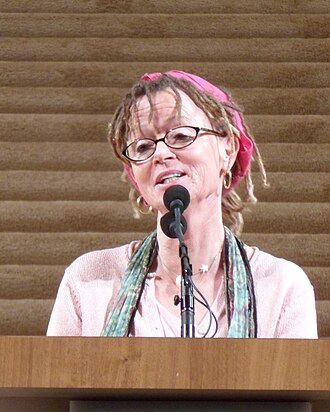
Anne Lamott
Author of Bird by Bird and co-author of Good Writing
Where to hear and read about Anne Lamott1 episode or test

Anne Lamott is the author of Bird by Bird and more than 20 other books, including Good Writing, co-written with her husband Neal Allen. The thing most worth learning from her is to write a terrible first draft on purpose, keep the inner critic out of the room, and make the work good in later cutting passes.
The point is not to try harder. It's to resist less.
How to Become a Better Writer (Anne Lamott Interview)
Anne Lamott: the story and the lessons
1Anne Lamott's path to Bird by Bird and Good Writing
Lamott started her first novel at 23, while her father was dying. Her father, also a writer, was dying of brain cancer and told her to write her version of it.
That gave her a rule she still teaches: change the hair color and height and the person can't recognize themselves or sue.
She sold her first book to Viking at 25. She has heard her inner critic ever since, and at almost 72 she still hears it, even over whether she wore the right blouse.
She pictured it for years as an elitist white male New Yorker writer.
Her authority rests on a craft classic and a long career. Bird by Bird is called one of the best books ever written about writing. Her newest, Good Writing, is her 21st book, co-written with Neal Allen, and holds 36 rules.
She ends every talk and the book with: "You are fully capable of creating good sentences too."
Her father taught her to show up at the same time every day. He told her there is no inspiration, only sitting down daily, and demanded nickel words, not 25-cent words.
She treats the daily habit as a debt of honor for your golden ticket, whether you get published or not.
2How Lamott drafts: bird by bird and badly at first
Lamott writes while seeing only a little of the road. She borrows E. L. Doctorow's image of driving at night with headlights on, and adds fog. She may have an image or a theme but not the ending.
Reaching point B, even two paragraphs later, shows her where to go next.
She lets the first draft be terrible and run long. She compares starting to getting into cold water: you may as well paddle around. Her drafts run a third too long, and she ends with about 600 words she could not have named when she sat down.
"You might as well paddle around for a minute."
She edits in three passes: child, adult, dental. The child's draft lets it all out. The adult draft cuts and finds stronger verbs. The dental draft goes tooth by tooth.
In the second pass she cuts overlong description and the parts that make her look good.
She cuts her own pages firmly but kindly. She borrows Dr. Spock's advice for two-year-olds and tells a favorite passage she likes it but will use it somewhere else.
That keeps cutting from turning into self-attack.
She tells students to stop not writing now. Students say they will start when the last child leaves or when they retire. She says everything in you wants you not to write, so the first rule is to stop not writing.
Rules like cutting the clever lines belong to the second draft. First you write a really terrible first draft.
3How Lamott deals with her inner critic
Lamott treats the critic as an old protective voice, not the truth. It is an internalized voice from about age four or five that once kept her from running into the street. She calls it the superego, terrified of being annihilated.
Neal Allen's book Better Days: Tame Your Inner Critic taught her this on their first date. Her best-known line: perfectionism is the voice of the oppressor.
She gives the critic a face so she can talk to it. Neal's method is to find where it lives, hold it in your hand and speak both parts. She asks who hired it, and it says she did, at about five, out of fear of looking bad.
"Oh, it's you. It's not truth."
She thanks the critic and sends it to the library. She tells it she would like to take over, points out it was in charge during her past embarrassments, and it grudgingly says maybe. She calls it back only if she needs an ethical consultation.
Seeing its face made writing much easier.
4How Lamott fills up and gets unstuck
Lamott says writer's block usually means you are empty. She told Isabel Allende at a panel about 30 years ago: you are not blocked, all the sand has escaped from the burlap sack. The cure is to take the pressure off and fill up.
She pictures a writer collecting scraps for a quilt and handing them to an inner rag bag guy, who lifts the pile up when she is ready to assemble an essay, novel or memoir.
She fills up by paying attention, not by trying harder. Noticing the greenish yellow at the center of an orchid gives her a way to describe someone's eyes later. She does not prescribe more experiences or more friends.
She quotes her priest friend Terry Richie: "The point is not to try harder. It's to resist less."
She writes down overheard moments on an index card. She had students carry a pen and index card in a back pocket. The impatient person muttering behind you in the Whole Foods express line is material.
Writing it down makes a detail almost indelible, and phone notes work the same way. She advises choosing brilliant friends who are not writers, because a writer friend will want to use the great thing they just said.
She skips ahead when a scene is frozen. If she is blocked on page 37, she jumps to page 50 and writes the scene where two enemies stuck in a broken elevator step off, softened.
She says "I don't know" about how they got there and writes from the later scene. Her husband teaches clients that "I don't know" is the portal to freedom.
She shakes the scene like a snow globe. She brings in a new character who knows both people, say from a fifth-grade ice rink party.
Like a Polaroid developing, details you did not notice emerge.
She finds ideas on a 10-minute walk by playing I spy. She tries to spot five things on one block she has never seen, as if she were with a four-year-old. Her husband's line is that everything true and beautiful can be found on any 10-minute walk.
She also has people close their eyes to see an inner scene, then squint at it to bring it into focus before getting it onto paper.
She uses laughter to get back to attention. Sore, tired and facing a media task she didn't want, she laughed at an Irish bartender she could barely understand. She calls laughter "carbonated holiness."
She wrote the story into a piece that same morning. She describes the shift as switching to track B, a new pair of glasses.
5What Lamott writes from: childhood, regret and revenge
Lamott says childhood alone gives you enough to write about. She cites Flannery O'Connor: if you survived your childhood, you have enough to write about for life. She suggests listing every childhood memory from nursery school on.
Her son runs A Writing Room, a 700-writer workshop that posts a daily prompt, often a childhood memory.
She offers "There was a tree" as a prompt that can fill a book. It could be the tree you fell from, one with carved initials, or one where you buried a grandfather's ashes.
Abigail Thomas's prompts also work: write 10 things you've forgotten, then 10 you remember, then something you wish you hadn't said.
She mines what she wishes she hadn't said. Her public life has cost her speaking gigs, and she said desperate things to her son during his meth years. He now has 14 years sober.
She says every parent says what they swore they never would, and that regret is rich material.
She says to write back at the people who hurt you. She tells students the kids who teased them in seventh grade should eat it. Everything is grist for the mill once you change the details, even cruel things said to you, as direct quotes.
Ethan Canin has argued with her for 35 years that a likable main character matters most and you should never write from revenge. She holds that a self-obsessed, pathetic character can still be one you relate to.
6Lamott's rules for sentences and dialogue
Lamott swaps weak verbs for strong ones, over and over. The first rule in Good Writing is to use strong verbs. A guy who walked down the hall becomes someone who stumbled, staggered or army crawled.
Neal Allen handed her his list on their second date. She added "write the hard stuff" and "take out the boring stuff." In the second draft she also cuts words like "very" and "actually."
She uses a thesaurus to find words she knows but never uses. She thought it was cheating until she learned everyone uses it. She calls it part of a battered toolbox of words.
"But a thesaurus just can't be beat."
She uses nickel words so readers never stumble. Neal's rule is to avoid words readers must look up. Citing Shirley Jackson, she says a confused reader is an antagonistic reader.
If she has to look up a word in the first pages in a bookstore, she does not buy the book.
She writes a ton of dialogue and cuts most of it. She reads it aloud, or records a phone voice memo, and cringes at lines that ring false. Readers should know who speaks from rhythm and vocabulary.
Short lines like "good to know" or "whatever" can be funny. Snappy dialogue works only when it is warm.
She uses only "said" and puts strong verbs in the action. Swapping in chuckled, enthused or proclaimed feels artificial and sophomoric. Gestures get a strong verb and no adverb.
This is rule four in Good Writing.
7How Lamott builds a story readers stay with
Lamott gives a book three pages to earn her trust. She looks for clean, pleasing, unshowy sentences, in the spirit of M.F.K. Fisher's one clean, fresh sentence with a period. Forced, clipped dialogue is the main reason she puts a book back.
Neal's rule: "If it's literary, it isn't." She also pays extra for funny.
She gives characters a flaw and something at stake. She quotes screenwriter Randi Mayem Singer: "Tell me a story. Make me care." What a character wants is usually what is at stake, and a stake named early must pay off, like a gun in the first act.
Her own stake is wanting her son and grandson to outlive her.
She structures stories as action, background, development, climax, ending. Alice Adams taught her ABDCE 40 years ago, and it appears in Bird by Bird. Something happens early, then background, development and a climax where the minor chords crash together.
The climax needs a killing of some sort, which can be a person, an illusion or a prejudice. She likens it to a director laying lily pads across a pond.
She wants endings that feel inevitable yet a little surprising. A good ending makes sense in hindsight and repays the trust the reader gave the author. She can't stand it when things end badly for the main character.
She quotes Orson Welles: a movie is happy or sad depending on when you end it.
She learns from movies where to start, stop and stay silent. A few carefully chosen words, like Miles Davis's notes, can hold a momentous moment. A single detail, like an old dog's muzzle gone gray, can cover years of aging.
She says suspense comes from dread over a choice the reader can see coming, as in Middlemarch.
8How Lamott takes and gives criticism
Lamott let a harsh first review change how she edits. Reviews of her first novel, Hard Laughter, called the book's charms harmed by coffee overkill. She was still drinking then.
The line stayed with her, and she began editing herself very differently. She let a later Chicago Tribune jab about Hallelujah Anyway go, since writers don't get to reply.
She and Neal Allen edit each other with a praise sandwich. They have done it for 10 years: what they love, what fails, then what works. When Neal led with what was wrong, she cried.
His usual notes: the first two paragraphs are throat-clearing, and endings come earlier than you think.
She worships good editors for catching what she can't see. A copy editor changed "in total dimes" to "totally in dimes" in a line she had overheard and kept for its rhythm. She restored it.
She never feels overedited and says she is desperately grateful.
She takes only a little criticism and stays the final judge. She advises swapping work with a writer you trust and reading the Paris Review's writers-at-work interviews weekly.
She compares getting better at writing to piano: botch "Farmer in the Dell" first, work up to Chopin.

How to Become a Better Writer (Anne Lamott Interview)
Anne Lamott explains how to write by paying attention, drafting badly on purpose, and then cutting and sharpening in later passes, with her own inner critic technique to keep going. The most useful part is her three-draft method and her concrete tricks for getting unstuck.
Lamott started her first novel at 23, while her father was dying. Her father, also a writer, was dying of brain cancer and told her to write her version of it.
That gave her a rule she still teaches: change the hair color and height and the person can't recognize themselves or sue.
She sold her first book to Viking at 25. She has heard her inner critic ever since, and at almost 72 she still hears it, even over whether she wore the right blouse.
She pictured it for years as an elitist white male New Yorker writer.
Her authority rests on a craft classic and a long career. Bird by Bird is called one of the best books ever written about writing. Her newest, Good Writing, is her 21st book, co-written with Neal Allen, and holds 36 rules.
She ends every talk and the book with: "You are fully capable of creating good sentences too."
Her father taught her to show up at the same time every day. He told her there is no inspiration, only sitting down daily, and demanded nickel words, not 25-cent words.
She treats the daily habit as a debt of honor for your golden ticket, whether you get published or not.
Lamott writes while seeing only a little of the road. She borrows E. L. Doctorow's image of driving at night with headlights on, and adds fog. She may have an image or a theme but not the ending.
Reaching point B, even two paragraphs later, shows her where to go next.
She lets the first draft be terrible and run long. She compares starting to getting into cold water: you may as well paddle around. Her drafts run a third too long, and she ends with about 600 words she could not have named when she sat down.
"You might as well paddle around for a minute."
She edits in three passes: child, adult, dental. The child's draft lets it all out. The adult draft cuts and finds stronger verbs. The dental draft goes tooth by tooth.
In the second pass she cuts overlong description and the parts that make her look good.
She cuts her own pages firmly but kindly. She borrows Dr. Spock's advice for two-year-olds and tells a favorite passage she likes it but will use it somewhere else.
That keeps cutting from turning into self-attack.
She tells students to stop not writing now. Students say they will start when the last child leaves or when they retire. She says everything in you wants you not to write, so the first rule is to stop not writing.
Rules like cutting the clever lines belong to the second draft. First you write a really terrible first draft.
Lamott treats the critic as an old protective voice, not the truth. It is an internalized voice from about age four or five that once kept her from running into the street. She calls it the superego, terrified of being annihilated.
Neal Allen's book Better Days: Tame Your Inner Critic taught her this on their first date. Her best-known line: perfectionism is the voice of the oppressor.
She gives the critic a face so she can talk to it. Neal's method is to find where it lives, hold it in your hand and speak both parts. She asks who hired it, and it says she did, at about five, out of fear of looking bad.
"Oh, it's you. It's not truth."
She thanks the critic and sends it to the library. She tells it she would like to take over, points out it was in charge during her past embarrassments, and it grudgingly says maybe. She calls it back only if she needs an ethical consultation.
Seeing its face made writing much easier.
Lamott says writer's block usually means you are empty. She told Isabel Allende at a panel about 30 years ago: you are not blocked, all the sand has escaped from the burlap sack. The cure is to take the pressure off and fill up.
She pictures a writer collecting scraps for a quilt and handing them to an inner rag bag guy, who lifts the pile up when she is ready to assemble an essay, novel or memoir.
She fills up by paying attention, not by trying harder. Noticing the greenish yellow at the center of an orchid gives her a way to describe someone's eyes later. She does not prescribe more experiences or more friends.
She quotes her priest friend Terry Richie: "The point is not to try harder. It's to resist less."
She writes down overheard moments on an index card. She had students carry a pen and index card in a back pocket. The impatient person muttering behind you in the Whole Foods express line is material.
Writing it down makes a detail almost indelible, and phone notes work the same way. She advises choosing brilliant friends who are not writers, because a writer friend will want to use the great thing they just said.
She skips ahead when a scene is frozen. If she is blocked on page 37, she jumps to page 50 and writes the scene where two enemies stuck in a broken elevator step off, softened.
She says "I don't know" about how they got there and writes from the later scene. Her husband teaches clients that "I don't know" is the portal to freedom.
She shakes the scene like a snow globe. She brings in a new character who knows both people, say from a fifth-grade ice rink party.
Like a Polaroid developing, details you did not notice emerge.
She finds ideas on a 10-minute walk by playing I spy. She tries to spot five things on one block she has never seen, as if she were with a four-year-old. Her husband's line is that everything true and beautiful can be found on any 10-minute walk.
She also has people close their eyes to see an inner scene, then squint at it to bring it into focus before getting it onto paper.
She uses laughter to get back to attention. Sore, tired and facing a media task she didn't want, she laughed at an Irish bartender she could barely understand. She calls laughter "carbonated holiness."
She wrote the story into a piece that same morning. She describes the shift as switching to track B, a new pair of glasses.
Lamott says childhood alone gives you enough to write about. She cites Flannery O'Connor: if you survived your childhood, you have enough to write about for life. She suggests listing every childhood memory from nursery school on.
Her son runs A Writing Room, a 700-writer workshop that posts a daily prompt, often a childhood memory.
She offers "There was a tree" as a prompt that can fill a book. It could be the tree you fell from, one with carved initials, or one where you buried a grandfather's ashes.
Abigail Thomas's prompts also work: write 10 things you've forgotten, then 10 you remember, then something you wish you hadn't said.
She mines what she wishes she hadn't said. Her public life has cost her speaking gigs, and she said desperate things to her son during his meth years. He now has 14 years sober.
She says every parent says what they swore they never would, and that regret is rich material.
She says to write back at the people who hurt you. She tells students the kids who teased them in seventh grade should eat it. Everything is grist for the mill once you change the details, even cruel things said to you, as direct quotes.
Ethan Canin has argued with her for 35 years that a likable main character matters most and you should never write from revenge. She holds that a self-obsessed, pathetic character can still be one you relate to.
Lamott swaps weak verbs for strong ones, over and over. The first rule in Good Writing is to use strong verbs. A guy who walked down the hall becomes someone who stumbled, staggered or army crawled.
Neal Allen handed her his list on their second date. She added "write the hard stuff" and "take out the boring stuff." In the second draft she also cuts words like "very" and "actually."
She uses a thesaurus to find words she knows but never uses. She thought it was cheating until she learned everyone uses it. She calls it part of a battered toolbox of words.
"But a thesaurus just can't be beat."
She uses nickel words so readers never stumble. Neal's rule is to avoid words readers must look up. Citing Shirley Jackson, she says a confused reader is an antagonistic reader.
If she has to look up a word in the first pages in a bookstore, she does not buy the book.
She writes a ton of dialogue and cuts most of it. She reads it aloud, or records a phone voice memo, and cringes at lines that ring false. Readers should know who speaks from rhythm and vocabulary.
Short lines like "good to know" or "whatever" can be funny. Snappy dialogue works only when it is warm.
She uses only "said" and puts strong verbs in the action. Swapping in chuckled, enthused or proclaimed feels artificial and sophomoric. Gestures get a strong verb and no adverb.
This is rule four in Good Writing.
Lamott gives a book three pages to earn her trust. She looks for clean, pleasing, unshowy sentences, in the spirit of M.F.K. Fisher's one clean, fresh sentence with a period. Forced, clipped dialogue is the main reason she puts a book back.
Neal's rule: "If it's literary, it isn't." She also pays extra for funny.
She gives characters a flaw and something at stake. She quotes screenwriter Randi Mayem Singer: "Tell me a story. Make me care." What a character wants is usually what is at stake, and a stake named early must pay off, like a gun in the first act.
Her own stake is wanting her son and grandson to outlive her.
She structures stories as action, background, development, climax, ending. Alice Adams taught her ABDCE 40 years ago, and it appears in Bird by Bird. Something happens early, then background, development and a climax where the minor chords crash together.
The climax needs a killing of some sort, which can be a person, an illusion or a prejudice. She likens it to a director laying lily pads across a pond.
She wants endings that feel inevitable yet a little surprising. A good ending makes sense in hindsight and repays the trust the reader gave the author. She can't stand it when things end badly for the main character.
She quotes Orson Welles: a movie is happy or sad depending on when you end it.
She learns from movies where to start, stop and stay silent. A few carefully chosen words, like Miles Davis's notes, can hold a momentous moment. A single detail, like an old dog's muzzle gone gray, can cover years of aging.
She says suspense comes from dread over a choice the reader can see coming, as in Middlemarch.
Lamott let a harsh first review change how she edits. Reviews of her first novel, Hard Laughter, called the book's charms harmed by coffee overkill. She was still drinking then.
The line stayed with her, and she began editing herself very differently. She let a later Chicago Tribune jab about Hallelujah Anyway go, since writers don't get to reply.
She and Neal Allen edit each other with a praise sandwich. They have done it for 10 years: what they love, what fails, then what works. When Neal led with what was wrong, she cried.
His usual notes: the first two paragraphs are throat-clearing, and endings come earlier than you think.
She worships good editors for catching what she can't see. A copy editor changed "in total dimes" to "totally in dimes" in a line she had overheard and kept for its rhythm. She restored it.
She never feels overedited and says she is desperately grateful.
She takes only a little criticism and stays the final judge. She advises swapping work with a writer you trust and reading the Paris Review's writers-at-work interviews weekly.
She compares getting better at writing to piano: botch "Farmer in the Dell" first, work up to Chopin.